

Your chest tightens for a second, and your mind is already racing. Was that just stress, or something serious? You check your pulse. You search your symptoms. You try to calm down, but every attempt seems to make you notice your body even more.
That loop is terrifying. It can make your own body feel like an unsafe place to live.
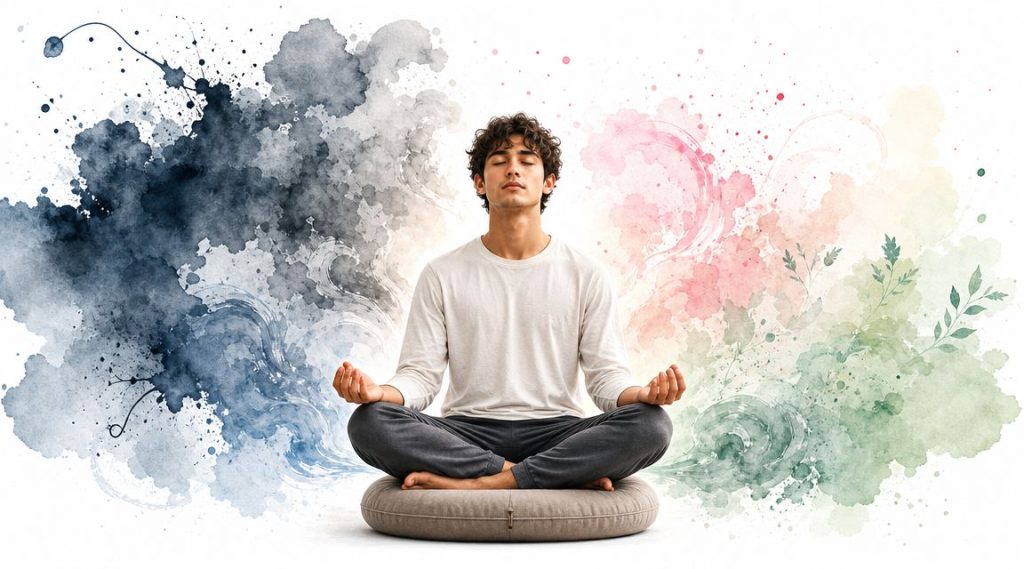
Meditation for health anxiety can help, but only when it's used in a way that respects how health anxiety behaves. If you've ever tried to “just breathe” and ended up more panicked, you're not doing it wrong. You likely need a gentler starting point and a clearer map.
Table of Contents
- You Can Heal From Health Anxiety
- How Meditation Retrains Your Anxious Brain
- Four Practical Meditations to Start Today
- Your Daily Meditation Plan From 5 to 30 Minutes
- When Meditation Makes You More Anxious
- Making Peace a Permanent Part of Your Life
You Can Heal From Health Anxiety
You notice a headache. Then comes the scan. Is it pressure? Sharp? New? Dangerous? A few minutes later you're comparing symptoms, replaying old doctor visits, and trying to figure out whether you're missing something urgent. Even when someone reassures you, relief barely lasts.
That pattern can wear you down. Health anxiety often feels less like “worry” and more like being trapped in a private emergency that keeps restarting.
The fear is real, but it isn't a life sentence
Healing begins when you stop treating yourself like the problem. Your brain and nervous system have learned to react to ordinary sensations as if they're threats. Learned patterns can be retrained.
That's why meditation for health anxiety matters. Not because it instantly erases scary thoughts, but because it gives you a new response when fear surges. Instead of chasing certainty, you practice staying present long enough for the alarm to settle.
You are not weak, dramatic, or beyond help. You're dealing with a threat system that's overprotective.
Many people find it helpful to combine meditation with other perspectives on anxiety, including sleep, stress load, nervous system regulation, and lifestyle patterns. If you want a broader lens, these naturopathic insights for anxiety offer a thoughtful look at anxiety recovery from multiple angles.
Recovery looks like safety returning to your body
At first, progress may be subtle. Maybe you wait a little longer before searching symptoms. Maybe a skipped heartbeat still scares you, but it doesn't ruin your whole evening. Maybe you can feel a sensation without instantly turning it into a story.
Those shifts matter. They're signs that your system is learning, “I can feel this without spiraling.”
If you want a fuller picture of what this condition can look like day to day, this guide on coping with hypochondriasis can help put words to the experience. Sometimes understanding the pattern reduces the shame around it.
A panic-free life usually isn't built through force. It's built through repetition, patience, and many small moments of returning to safety.
How Meditation Retrains Your Anxious Brain
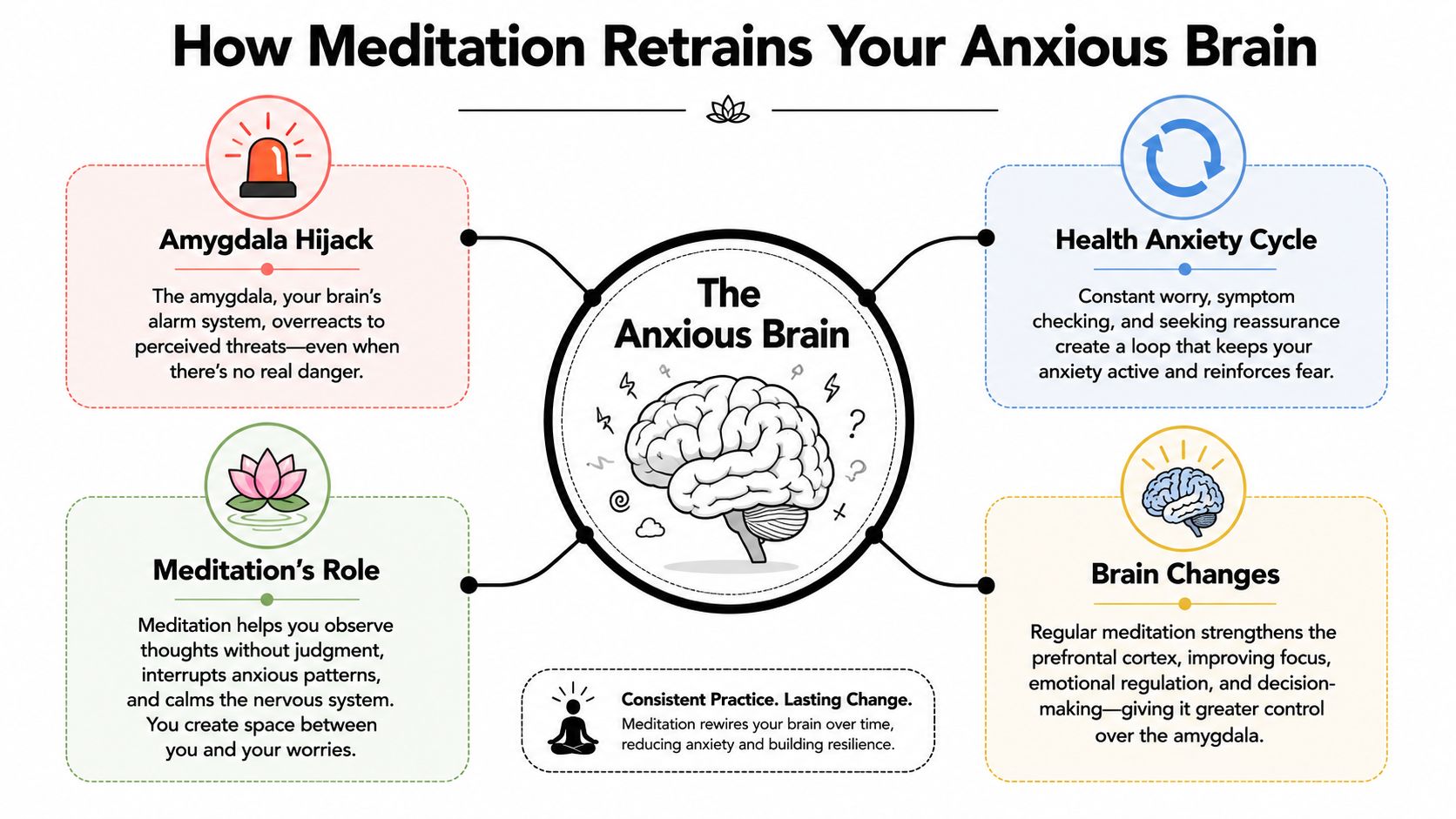
Health anxiety often works like a smoke alarm that goes off when you make toast. The alarm is loud, urgent, and hard to ignore, even when there's no fire. Your body produces sensations all day, but an anxious brain can tag those sensations as dangerous before you've had time to think clearly.
A major NIH review found that mindfulness-based approaches were evaluated in analyses with more than 12,000 participants and were as effective as other evidence-based therapies for anxiety (NIH overview of meditation and mindfulness). That matters because health anxiety is fueled by anxiety processes such as threat scanning, catastrophic interpretation, and repeated nervous system activation.
Why the alarm feels so convincing
The frightening part isn't only the thought, “What if this is serious?” It's the speed. Sensation and interpretation can fuse together so fast that they seem like the same thing.
A flutter in your chest becomes danger. A wave of dizziness becomes proof. A stomach sensation becomes a prediction.
When this keeps happening, your nervous system stays on high alert. You monitor more. You react faster. The cycle reinforces itself.
What meditation changes
Meditation doesn't ask you to prove that nothing is wrong. It teaches a pause between sensation and story. In that pause, you can notice, “My chest feels tight” without immediately adding, “so something terrible is happening.”
That's a major shift. You're not suppressing thoughts. You're changing your relationship to them.
Practical rule: The skill isn't having a blank mind. The skill is noticing where your mind went and returning on purpose.
The American Psychological Association notes that researchers reviewed more than 200 studies of mindfulness among healthy people and found mindfulness-based therapy was especially effective for reducing stress, anxiety, and depression (APA on mindfulness meditation). If you want a gentle explanation of what this feels like in real life, this piece on being present with mindfulness captures the tone well.
You don't need to master this alone. A library of evidence-based anxiety resources can help you understand what your brain is doing while you practice.
Four Practical Meditations to Start Today
At 2:14 a.m., you notice a sensation in your chest. Within seconds, your mind is racing ahead, scanning, predicting, bracing. In that state, the wrong meditation can feel like turning a flashlight onto the very thing that scares you.
That is why health anxiety needs a gentler approach. You do not have to start with intense body awareness. You can build tolerance in layers, the same way you would let sore eyes adjust to light after being in a dark room. Start with the practice that matches your level of activation, then work up from there.
Use these four meditations as options, not assignments. The goal is to teach your brain, “I can notice fear without feeding it.”
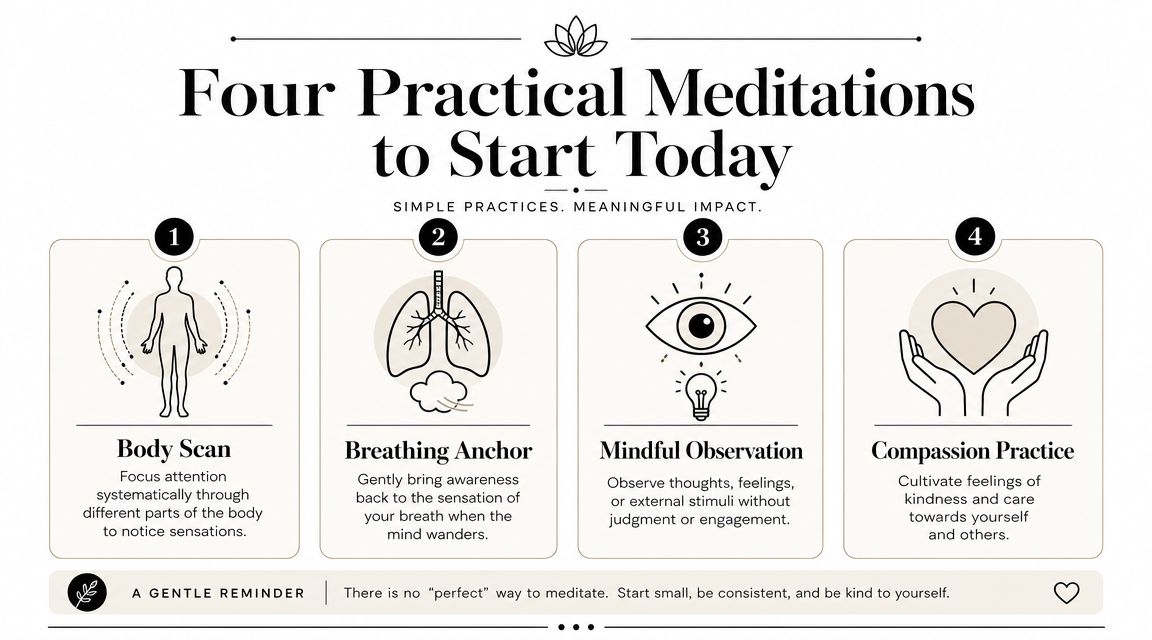
Early on, it helps to see the options visually.
Start with the tool that matches your state
- External grounding for acute spirals
Use this first when your mind is shouting danger. External grounding turns your attention toward the room around you, which gives your nervous system a simpler job. Instead of solving the body, you orient to the present.
Try this:
- Name what you see: Pick a few ordinary objects and say them slowly.
- Name what you hear: Let sounds be sounds, without deciding what they mean.
- Feel one contact point: Your feet on the floor, your back on the chair, or your hands touching.
Short script: “I'm here in this room. I can see the window. I can hear the fan. I can feel the chair under me. Right now, I am safe enough to orient.”
- Breathing anchor for steadying attention
Once the panic is a little lower, the breath can become a simple home base. For some people with health anxiety, breath focus feels calming. For others, it feels loaded at first. If breathing makes you monitor too hard, keep it light. Notice one easy inhale and one easy exhale, then stop counting and let the breath be natural.
Research on mindfulness-based cognitive therapy for health anxiety describes a pattern that fits well here: brief attention to the body, then sitting practice with the breath as an anchor, while catastrophic thoughts are noticed as mental events rather than facts (MBCT guidance for health anxiety).
Short script: “Breathing in, I know I'm breathing in. Breathing out, I know I'm breathing out. A fear thought is here. I return to this breath.”
If you want more structure during a panic spike, these breathing exercises to calm panic can help when your mind feels too scrambled to choose a practice.
A good video can make this feel less abstract. This one speaks directly to the challenge of using meditation when body awareness itself can feel scary.
- Body scan for rebuilding trust
This practice works best after you have some stability with grounding or breath. A body scan is not a hunt for symptoms. It is training in how to notice sensation without turning each sensation into a verdict.
Move slowly. Spend a few moments on one area, then shift to the next. If a certain body part feels too triggering, skip it and come back later. That is not avoidance. It is pacing. You are teaching your nervous system that contact with the body can happen in a measured, safe way.
Short script: “Warmth in the chest. Tightness in the throat. Tingling in the hands. Sensations are present. I do not need to solve them right now.”
A simple script for the observe and label practice
- Observe and label for intrusive health thoughts
This practice is for the mental side of health anxiety, the rapid interpretations, checking urges, and what-if chains that follow a sensation.
When a thought appears, label it:
- “Worrying.”
- “Catastrophizing.”
- “Checking urge.”
- “What-if story.”
Then return to one anchor, such as sound, your feet, or one breath.
Labeling works like putting folders on a messy desk. The papers are still there, but they are no longer scattered everywhere. Your mind starts to recognize, “This is a fear pattern,” instead of treating every thought like urgent news.
Wandering attention isn't failure. Returning on purpose is the skill you are building.
A fourth option can also include a brief compassion practice at the end of any meditation. Place a hand where it feels comforting and say, “This is hard. Fear is here. I can meet this moment gently.” Health anxiety often hurts twice. First with fear, then with self-criticism. Compassion softens that second wound.
Your Daily Meditation Plan From 5 to 30 Minutes
At 8:17 a.m., your chest feels strange, your mind jumps to the worst-case explanation, and part of you wonders whether meditation will help or make you notice even more. This is why a clear plan matters. Health anxiety gets louder when every practice decision feels uncertain.
A steady routine gives your brain fewer chances to bargain, scan, and second-guess. You are not trying to force calm on command. You are teaching your nervous system, through repetition, that attention can rest somewhere safe and return without panic.
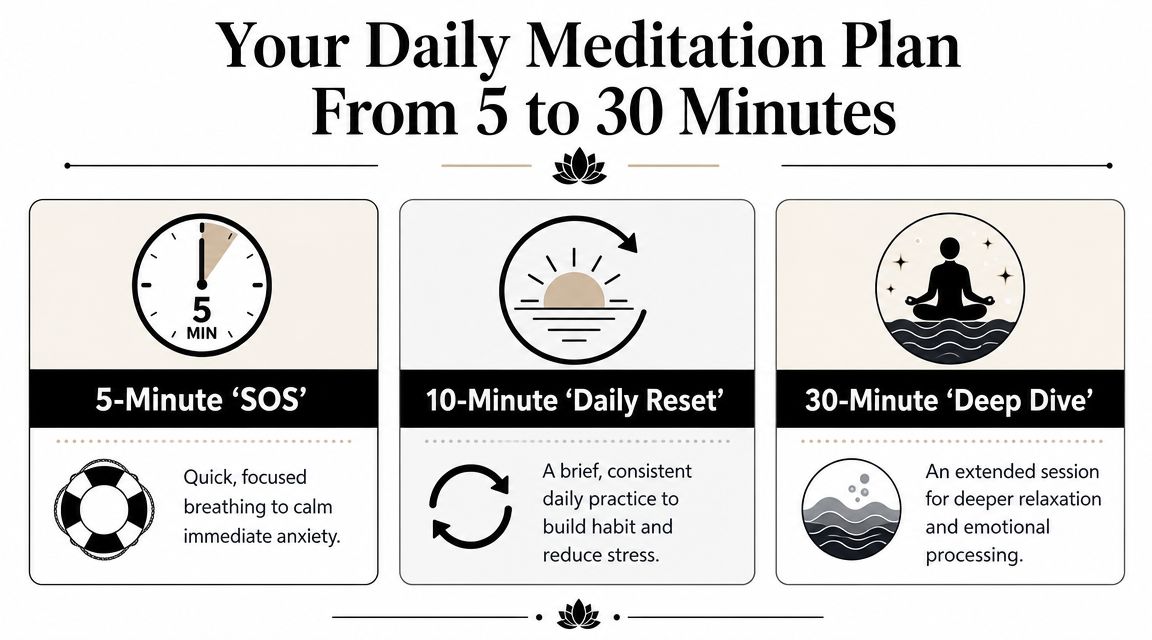
Which plan fits which moment
| Plan | Best for | What to do |
|---|---|---|
| 5-minute SOS | A sudden spike in fear | Begin with something outside the body, such as sounds in the room or colors you can see. Then rest attention on one simple anchor, like your feet on the floor or one easy breath cycle. |
| 15-minute daily reset | Building steadiness | Spend a few minutes settling. Then use a short, broad body scan and a few minutes of gentle attention training. |
| 30-minute close look | Slower retraining when you have space | Start with grounding, continue with a longer body scan, and finish by noticing thoughts without following them. |
Use the shortest plan that feels doable today. That is how confidence grows.
The body scan can help with health anxiety when you use it as observation, not investigation. You are noticing broad areas and simple qualities such as warmth, pressure, or tension. You are not asking, “What does this mean?” You are practicing, “This is a sensation, and I can let it be here for a moment.” As noted earlier, body scan instructions often emphasize noticing sensations without judging them. That shift matters because health anxiety tends to turn every body signal into a threat message.
What consistency really looks like
Consistency is less about length and more about repetition. A five-minute practice you do each day teaches safety better than a thirty-minute plan you avoid all week.
Try these rules:
- Choose one base plan for the week. Repeating the same structure helps the brain settle faster.
- Make the practice smaller before you skip it. Two calm minutes still count as training.
- End with outward attention. Notice the room, light, sounds, and objects around you before standing up.
- Track what helps you feel steadier. A few notes can show patterns you miss in the moment. You can also keep other tools to manage anxiety nearby if structure helps you stay grounded.
A good routine also respects your window of tolerance. On a jagged, high-alert day, the 5-minute SOS plan may be the right fit for the whole week. On steadier days, the 15-minute reset can help you build skill. The 30-minute option works best when longer inward focus feels supportive, not like a test you have to pass.
If you want the practice to feel less effortful, pair it with a familiar daily cue, such as after brushing your teeth or before lunch. Repetition works like walking the same path through tall grass. Each pass makes the route easier to find.
Some people also notice that rhythmic, absorbed activities help the mind settle before meditation. For a related example of how focused rhythm can support calmer attention, see achieving a flow state with BionicGym.
Progress will not always feel dramatic. It often looks quieter than that. You pause before checking. You recover faster after a body sensation. You spend a little less time treating fear like proof. That is real change.
When Meditation Makes You More Anxious
Some people sit down to meditate and feel worse within seconds. Their heartbeat becomes louder. Their breathing feels strange. Their attention narrows onto every sensation they've been fearing all day.
If that's happened to you, your reaction makes sense.
Why this happens
A key challenge in health anxiety is that some meditations ask you to focus on bodily sensations, which are often the very source of fear. That can backfire if the practice isn't paced carefully. A more nuanced approach is to begin with external-sensory grounding before moving toward inward-focused meditation, so the person feels safe and in control, as discussed in the guided material above.
This doesn't mean meditation is harmful. It means the wrong style at the wrong time can feel like symptom monitoring instead of healing.
If a practice turns into checking, widen the lens.
How to adjust without giving up
Use this quick decision guide:
- If breath focus makes you panic: Shift to sounds in the room or the feeling of your feet on the floor.
- If body scan becomes a symptom hunt: Move faster, use broader zones like “upper body” instead of tiny details, or keep your eyes open.
- If silence feels intense: Use a guided voice or soft ambient sound.
- If you feel flooded: Stop, orient to the room, and return later with a lower-intensity practice.
The question isn't, “Can I force myself through this?” The better question is, “What version of practice helps my nervous system learn safety?”
If you want more support with this exact problem, this guide on overcoming anxiety during meditation can help you troubleshoot without abandoning the practice altogether.
Making Peace a Permanent Part of Your Life
Formal meditation matters, but daily life is where trust in your body really grows. You build that trust in ordinary moments. Standing in line. Waiting for a text back. Noticing a sensation and choosing not to investigate it for the next few breaths.
The American Psychological Association highlights that over 200 studies show mindfulness is especially effective for reducing stress, anxiety, and depression. That supports its role as a legitimate tool alongside established therapy approaches for mental wellness, as noted earlier in the linked APA overview.
Bring the practice into ordinary moments
Try micro-practices that don't require a cushion or a quiet room:
- Morning pause: Before looking at your phone, feel one full inhale and exhale.
- Symptom pause: When you notice a body sensation, name it neutrally before adding meaning.
- Transition pause: At a doorway, red light, or sink, relax your shoulders and soften your jaw.
These moments teach your brain that calm doesn't only happen in emergencies after reassurance. It can become a familiar baseline.
Meditation works even better with other tools
Meditation creates space. CBT helps you use that space. When fear says, “This sensation means danger,” mindfulness helps you notice the thought without instantly obeying it. Then cognitive tools can help you question the story more clearly.
Some people also benefit from practices that train absorbed, steady attention in other ways. If that interests you, this piece on achieving a flow state with BionicGym offers another perspective on focused mental states and regulation.
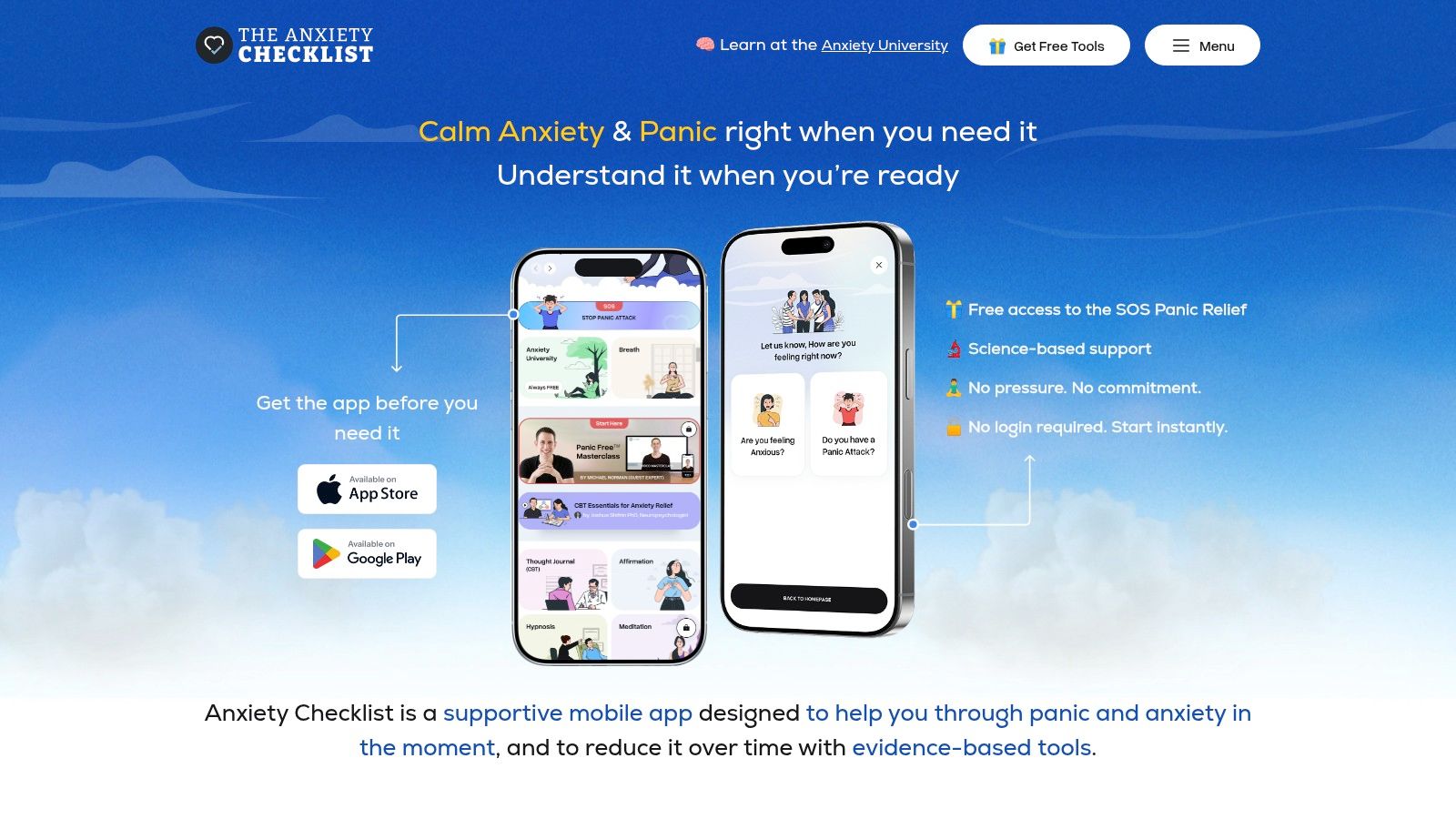
For ongoing support, one option is tools to manage anxiety. The Anxiety Checklist app includes guided meditations, SOS exercises, and CBT-based tools that can help with both in-the-moment panic and longer-term retraining.
Healing from health anxiety isn't about never feeling a strange sensation again. It's about no longer handing every sensation the power to terrify you.
If you want steady support while you practice, The Anxiety Checklist offers guided help for panic spikes, daily calming routines, and longer-term anxiety tools. Use it as a companion while you retrain your mind and nervous system to feel safe again.