

In short
A morning anxiety attack can begin before you have a clear thought: the body wakes in alarm, then fear of the sensations intensifies it. Start by checking for medical red flags, orienting to the room, and breathing gently. If episodes recur or disrupt daily life, arrange a clinical assessment rather than assuming cortisol is the whole cause.
Key takeaways
- Morning anxiety describes when symptoms occur; it does not diagnose their cause or rule out a physical health problem.
- A 2025 Endocrine Reviews synthesis describes a normal cortisol increase during the first 30 to 45 minutes after waking, but that response does not explain every morning panic episode.
- A safety check should come before grounding or breathing when symptoms are new, severe, or different from the usual pattern.
- NIMH panic-disorder guidance says recurrent unexpected attacks followed by at least one month of worry or behavior change may meet panic-disorder criteria; diagnosis requires a clinician.
- New chest pressure, severe breathing difficulty, fainting, one-sided weakness, or trouble speaking requires emergency assessment rather than self-help.
Table of contents
- What should you do in the first 15 minutes after waking in panic?
- Is this a panic attack, morning anxiety, or a medical problem?
- Why does anxiety flare in the morning?
- What morning routine helps break the cycle?
- When does morning anxiety need professional or emergency help?
- What else do people ask about morning anxiety attacks?
- What should you do next?
This guide provides educational self-help, not a diagnosis or a way to exclude a medical condition. If the symptoms are new, severe, or unlike a previously evaluated panic pattern, seek medical care rather than assuming anxiety is responsible.
What should you do in the first 15 minutes after waking in panic?
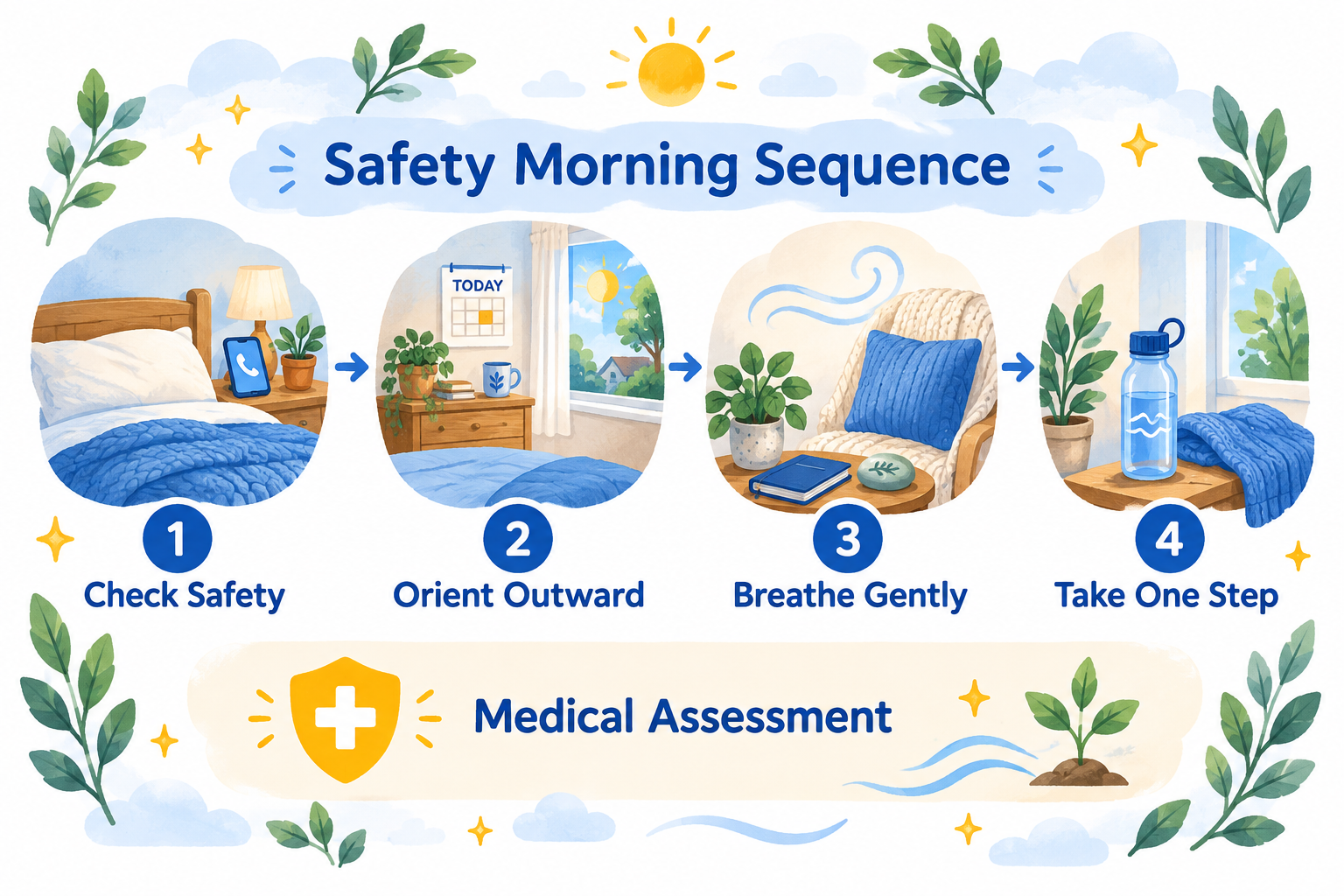
Treat the first 15 minutes as a sequence, not a test that must be passed. Check safety first, reduce stimulation, let breathing settle without forcing it, and then take one ordinary action such as sitting up or walking to the bathroom.
The sequence below is a practical editorial framework, not a validated medical protocol. Adapt it with a clinician if a health condition, pregnancy, medication, or disability changes what is safe.
Minutes 0 to 2: check for emergency signs
Pause before labeling the episode as anxiety. Call the local emergency number if there is new or severe chest pressure, squeezing or pain; pain spreading into the arm, back, neck or jaw; major shortness of breath; fainting; sudden one-sided weakness; facial drooping; confusion; or trouble speaking.
Those signs overlap with the American Heart Association’s heart attack warning signs and the CDC’s May 2026 stroke warning signs. Do not use a breathing exercise to wait out a possible heart attack or stroke.
If the sensations match a familiar panic pattern that has already been medically evaluated and no emergency signs are present, continue with the next step.
Minutes 2 to 5: orient attention outside the alarm
Place both feet on the floor or press them into the mattress. State the date, where you are, and the first ordinary task of the morning. Then name several colors, sounds, textures, or solid objects in the room.
The aim is not to prove that nothing bad can happen. The aim is to shift some attention away from internal scanning, pulse checking, and catastrophic predictions.
If counting or listing becomes another performance test, simplify the task. Touch one cool object, notice one steady sound, or describe the shape of the nearest piece of furniture.
Minutes 5 to 10: let breathing become gentler
Let the breath move as deeply as is comfortable without pulling in oversized breaths. Breathe in and out gently, using an even count only if counting helps.
The NHS breathing guidance reviewed in June 2026 advises comfortable, unforced breathing and regular practice. If focusing on breathing increases panic, return to sensory grounding instead of forcing the exercise.
Avoid trying to achieve the perfect breath or checking the heart rate after every cycle. Those checks can keep attention fixed on the sensations that are already frightening.
Minutes 10 to 15: complete one ordinary action
Choose one small physical action: sit up, use the bathroom, drink water, open the curtains, put on clothes, or begin preparing breakfast. Do not mentally rehearse the entire day before completing the next visible step.
If caffeine reliably adds shakiness, nausea, palpitations, or anxiousness, wait until the initial surge has settled before deciding whether to have it. Do not make abrupt changes to heavy daily caffeine use during a panic episode.
A preselected SOS tool can also reduce decision load. Anxiety Checklist’s SOS Panic Relief provides instant grounding and guided affirmations without requiring a login, but it is educational self-help rather than medical or emergency care.
The goal of the first 15 minutes is not to force calm; it is to stay safe and stop adding urgency to the body’s alarm.
Is this a panic attack, morning anxiety, or a medical problem?
Morning anxiety describes the timing of distress, while a panic attack describes a sudden wave of intense fear or discomfort with physical and cognitive symptoms. A medical problem can produce overlapping symptoms, so timing alone cannot identify the cause.
| Pattern | Typical onset | Common experience | Sensible next move |
|---|---|---|---|
| Morning anxiety | Present on waking or builds as the day comes to mind | Dread, rumination, muscle tension, nausea, restlessness or difficulty starting tasks | Use the safety-first plan and track the pattern |
| Panic attack | Sudden surge that can occur while awake or during sleep | Racing heart, sweating, trembling, breathlessness, dizziness, chest or stomach pain, tingling, fear of dying or losing control | Check for emergency signs, then use familiar coping steps and seek assessment if attacks recur |
| Possible medical emergency | New, severe, unusual or accompanied by focal neurological signs | Chest pressure, spreading pain, major breathing difficulty, collapse, one-sided weakness, facial drooping or speech difficulty | Call the local emergency number immediately |
NIMH states that a panic attack may last from a few minutes to an hour or sometimes longer. Morning anxiety has no standard duration because it is a descriptive pattern rather than a separate diagnosis.
Morning anxiety and panic can occur together. A person may wake with a vague sense of dread and then panic after interpreting a racing heart or tight chest as evidence of danger. Review the fuller list of panic attack symptoms if the distinction remains unclear, but use emergency care for new or unusual symptoms.
The safest distinction is based on the full symptom pattern and medical context, not simply the fact that the episode happened after waking.
Why does anxiety flare in the morning?
There is rarely one universal cause. Morning attacks can involve normal waking physiology, anticipated stress, learned fear of mornings, disrupted sleep, caffeine or alcohol effects, a panic episode during sleep, or an underlying anxiety condition.
The cortisol awakening response is real, but it is not a complete diagnosis
The 2025 Endocrine Reviews synthesis describes the cortisol awakening response as a rapid cortisol increase across the first 30 to 45 minutes after waking. Researchers propose that the response helps prepare the body for anticipated activity and daily demands.
That finding supports the existence of a normal wake-up process. It does not establish that a particular morning attack was caused by “high cortisol,” and it does not mean that the normal response is harmful.
Online explanations often reduce morning anxiety to a cortisol spike. The evidence supports a more cautious conclusion: waking physiology can provide noticeable sensations, while stress, interpretation, sleep, substances, health, and learned behavior help determine what happens next.
Fear of the sensations can create a learned alarm
As of August 2026, NIMH describes panic attacks as possible false alarms in which ordinary survival responses activate too often or too strongly. A pounding heart can then be interpreted as catastrophe, which produces more fear and stronger sensations.
After several difficult mornings, waking itself may become a cue. The mind begins checking: Is the heart racing? Is the dread back? Will today be ruined? That monitoring can turn the expectation of panic into part of the trigger.
This does not mean the symptoms are imaginary. It means the interpretation and response can intensify a real physical alarm.
Sleep, caffeine, alcohol, and anticipated demands can add to the pattern
Poor or interrupted sleep can leave fewer mental resources for handling physical arousal and uncertainty. Panic attacks may also occur during sleep, according to NIMH, so some people awaken after the attack has already begun.
As of August 2026, FDA caffeine guidance lists anxiety, jitters, palpitations, nausea, and sleep disruption among signs of excessive caffeine. Sensitivity varies, so the useful question is whether the amount and timing correlate with symptoms in the individual pattern.
Current NIAAA clinician guidance on alcohol and anxiety states that heavy drinking and repeated withdrawal can escalate anxiety. Anxiety-like symptoms can also occur after a single heavy drinking episode.
The morning flare usually makes more sense as an interaction among body activation, sleep, substances, anticipated stress, and learned fear than as one hormone acting alone.
What morning routine helps break the cycle?

Use a routine that lowers the number of decisions and gathers evidence rather than demanding a perfect mood. Repeat the same short sequence for about two weeks, then review what changed and what consistently preceded the episodes.
A two-week tracking window is a practical suggestion, not a guideline requirement. Stop self-monitoring if it becomes compulsive or makes symptoms worse.
- Write the first steps before bed. Keep a card near the bed with four prompts: check emergency signs, place feet down, use one calming tool, and start one ordinary task. Morning panic is a poor time to design a coping plan.
- Keep the opening sequence predictable. Use the bathroom, drink water, open the curtains, and get dressed in roughly the same order when possible. Predictability reduces unnecessary decisions without requiring the anxiety to disappear first.
- Track inputs instead of changing everything at once. Record sleep timing, awakenings, caffeine, alcohol, medication changes, and unusual stress. If reducing daily caffeine, the FDA advises reducing it gradually because withdrawal can be unpleasant.
- Use a four-line CBT-style record. Note the first sensation, the feared prediction, the action taken, and what happened afterward. For example: racing heart; “the whole day is ruined”; got dressed without repeated pulse checks; symptoms eased enough to eat. Structured daily anxiety relief practices can support this routine between acute episodes.
- Reduce avoidance in small, safe steps. If a medical professional has cleared the symptoms, try beginning one planned activity without waiting for zero anxiety. NIMH describes CBT as a well-studied treatment for changing how a person thinks, behaves, and reacts to panic sensations. Severe avoidance or exposure work should be addressed with a qualified clinician rather than improvised alone.
The record is not there to prove that every symptom is harmless. It creates specific information that a healthcare professional can use and helps expose predictions that repeatedly fail to occur.
A useful morning routine makes the next action easier and teaches that anxiety can be present without running the morning.
When does morning anxiety need professional or emergency help?
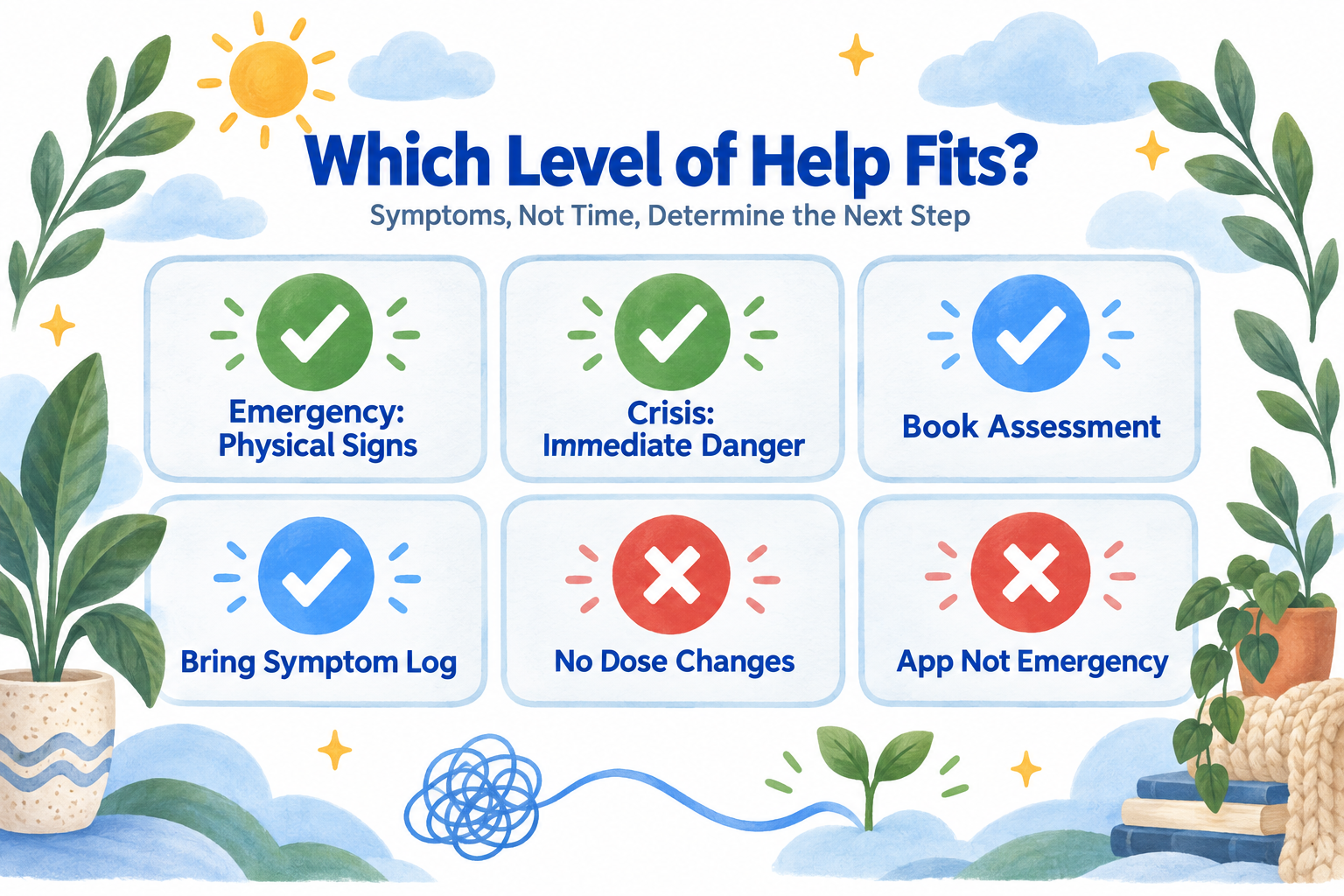
Arrange professional help when episodes recur, worsen, disrupt sleep or work, create avoidance, or make the next morning feel threatening before bedtime. Use emergency services for new or severe symptoms that may represent a heart attack, stroke, serious breathing problem, loss of consciousness, or immediate danger.
Schedule a clinical appointment when the pattern keeps returning
Seek an assessment if morning panic is becoming frequent, if it has caused missed work or canceled plans, or if fear of waking is disrupting sleep. Help is also appropriate when symptoms start after a medication or substance change or when the pattern includes repeated nighttime waking, heavy alcohol use, or another unexplained physical symptom.
Bring a short record containing:
- When the symptoms began and whether they started during sleep or after a thought.
- The physical and cognitive symptoms present.
- Approximate duration and what happened afterward.
- Sleep timing and nighttime awakenings.
- Caffeine, alcohol, medications, supplements, and recent changes.
- Avoidance, reassurance seeking, or repeated checking caused by the episode.
NIMH explains that a clinician may review the history and perform a physical examination to check whether an unrelated physical problem is contributing. Recurrent unexpected attacks followed by at least one month of persistent worry or behavior change may support a panic-disorder diagnosis, but there is no need to wait a month before asking for help.
CBT is a research-supported treatment for panic disorder. NICE panic-disorder recommendations current in 2026 recommend CBT for moderate to severe panic disorder and say an antidepressant may be considered in defined circumstances. Medication choice, dose, and timing require a prescriber; do not start, stop, or retime medication based on an online article.
Get emergency or crisis help when safety is uncertain
Call the local emergency number for severe chest pressure, pain spreading into the upper body, major shortness of breath, fainting, sudden weakness on one side, facial drooping, confusion, or speech difficulty. In the United States, call 911 rather than driving when heart attack or stroke signs are present.
Immediate help is also needed if there is a risk of self-harm or harm to someone else. As of August 2026, the 988 Suicide & Crisis Lifeline provides free, confidential support by call, text, or chat across the United States and its territories. People elsewhere can use Anxiety Checklist’s country-specific crisis and emergency resources or their local emergency number.
Anxiety Checklist and its SOS tools are not emergency services and cannot diagnose the cause of severe physical symptoms.
Recurring morning panic deserves assessment; symptoms that could be medical or life-threatening deserve emergency care, not self-help.
What else do people ask about morning anxiety attacks?
People commonly ask what causes panic on waking, how to calm an attack quickly, and why anxiety feels strongest in the morning. The answers below are concise, but persistent or unusual symptoms still require individualized assessment.
What causes panic attacks when waking up?
Panic attacks on waking can reflect a panic episode that began during sleep, a rapid fear response to normal waking sensations, anticipated stress, poor sleep, caffeine or alcohol effects, or an anxiety disorder. The cortisol awakening response may add arousal, but cortisol alone does not explain every episode. Recurrent attacks need assessment.
How to stop an anxiety attack fast?
There is no guaranteed way to stop an anxiety attack instantly. First check for emergency signs, then orient to the room, place both feet down, let breathing become gentle without forcing it, and take one small ordinary action. If attacks recur, professional care can address the cycle rather than only the episode.
Why do I feel nervous in the morning?
Morning nervousness can come from normal wake-up arousal, anticipated demands, poor sleep, an established anxiety pattern, caffeine, alcohol effects, or a panic episode that began during sleep. The phrase morning anxiety describes timing, not a diagnosis. A clinician can help identify the pattern when symptoms recur or impair daily life.
Why does my anxiety flare in the morning?
Anxiety may flare in the morning because waking sensations arrive before distractions, the brain reconnects with anticipated stress, or previous bad mornings have taught the body to expect danger. Cortisol normally rises after waking, but that response is only one possible contributor. Sleep, substances, health conditions, and anxiety disorders also matter.
Morning anxiety has several possible drivers, so the useful question is not only why it happens but which pattern appears in your mornings.
What should you do next?
Prepare the first-15-minutes plan before bed and record recurring episodes without trying to diagnose them alone. If the attacks are new, frequent, worsening, or disruptive, take the record to a healthcare or mental-health professional.
For low-friction self-help between episodes, open the free SOS Panic Relief before the next difficult morning. The tool requires no login or setup, but it does not replace medical treatment, emergency services, or professional care.
Prepare before the next morning: one safety check, one calming tool, one ordinary action, and a plan for professional help if the pattern continues.