


You wake up after 2 hours of sleep and your body already knows before your mind catches up.
Your eyes feel hot. Your chest feels tight. The smallest task, answering a text, getting dressed, making coffee, can feel strangely heavy. If you live with anxiety, the fear often lands first. “What if I panic today?” “What if I can’t function?” “What if this means I’m going backward?”
I know that spiral well. A bad night can make the next morning feel like proof that life is about to fall apart. It is not proof of that. It is a stressed brain and body reacting exactly the way stressed brains and bodies react.
One rough night does not mean you are broken. It does not erase progress. It does not mean panic is waiting to win.
There is a difference between feeling terrible and being powerless. You may feel wrung out today, but you can still make smart decisions, lower the intensity of the day, and interrupt the loop between low sleep and high anxiety. If overthinking is adding fuel to the fire, this guide on https://anxietychecklist.com/overthinking-and-anxiety can help you spot the mental habits that make a hard morning feel even worse.
Hope starts with understanding. Once you know what sleep loss is doing to your brain, your body, and your anxious thoughts, the day becomes easier to manage. The fear becomes more specific. And specific fear is much easier to manage than vague dread.
That 3 AM Feeling of Dread and the Promise of a Better Day
At 3 AM, everything feels louder.
The clock seems accusatory. Your mind starts bargaining. If I fall asleep now, maybe I can still save tomorrow. Then another wave comes. Your heart bumps harder, your thoughts get darker, and the pressure to sleep becomes the very thing keeping you awake.
For many people with anxiety, 2 hours of sleep is not just tiring. It feels threatening. The body is exhausted, but the mind starts scanning for danger. A single bad night can stir up old fears about panic attacks, work mistakes, driving, parenting, or just making it through the day without unraveling.
That reaction makes sense. Anxiety hates uncertainty, and sleep deprivation creates a lot of it. Your thoughts feel less reliable. Your emotions feel closer to the surface. Small discomforts feel larger than they did yesterday.
Still, there is a promise hidden inside this miserable kind of morning. The promise is not that you will feel amazing by noon. It is that you can respond in a way that protects your nervous system instead of frightening it further.
You do not need a heroic day. You need a gentler one.
Think of today as a recovery day, not a performance day. Your job is to reduce strain, stay safe, and avoid making anxious predictions into hard rules. “I slept badly” is true. “I cannot cope” is a fear statement. Those are not the same.
A low-sleep day asks for lower expectations, steadier routines, and kinder self-talk.
People heal from anxiety by learning this distinction over and over. The bad night happens. The dread arrives. Then they practice a different response. That is how confidence grows. Not from perfect sleep, but from realizing you can still care for yourself when sleep goes wrong.
What 2 Hours of Sleep Does to Your Brain
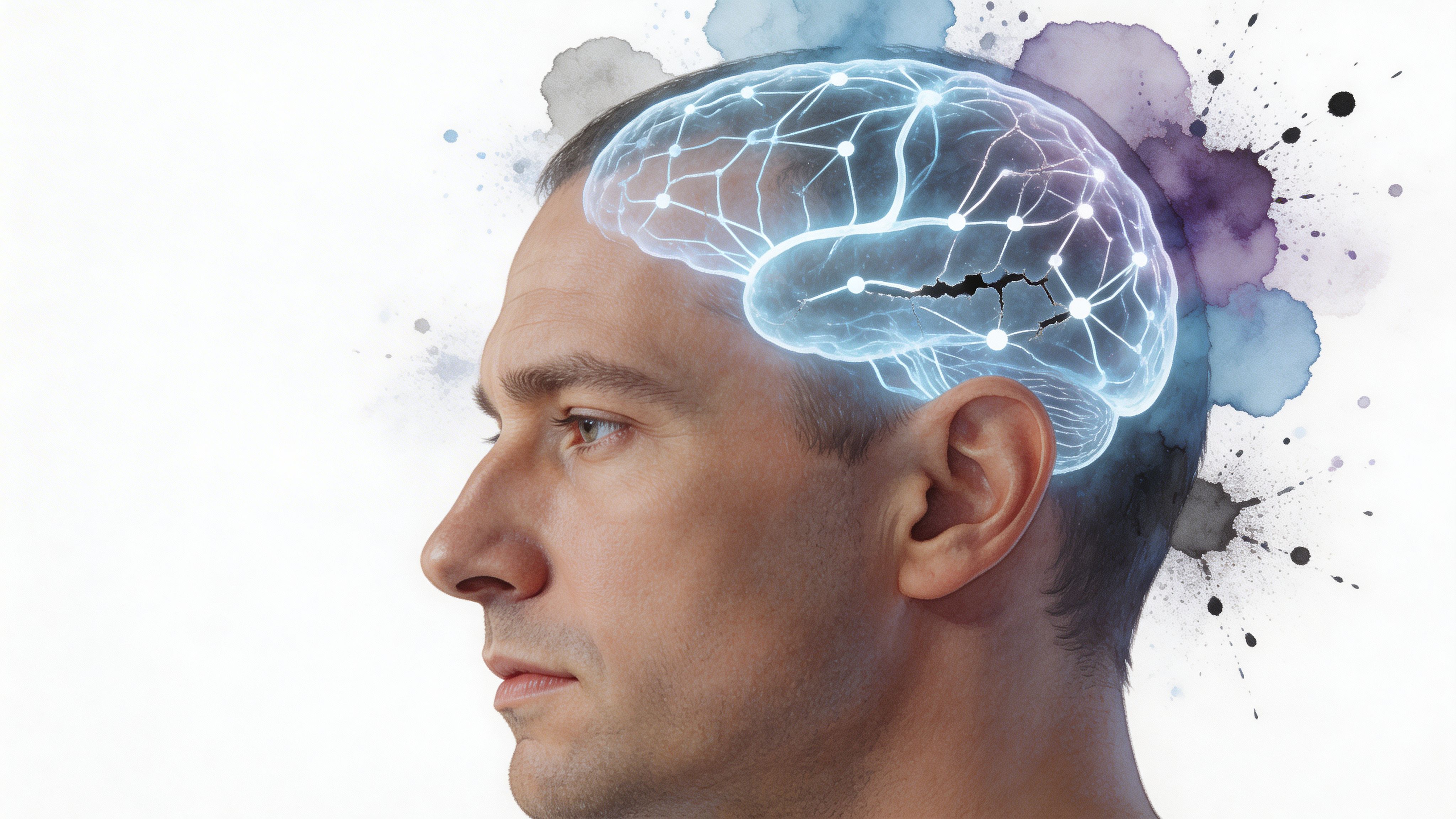
Your brain after 2 hours of sleep is not lazy, weak, or dramatic. It is underpowered.
A simple way to think about sleep is this. During healthy sleep, your brain runs important overnight maintenance. It sorts experiences, stabilizes memories, and helps different brain regions coordinate with each other. When sleep gets cut down to almost nothing, that maintenance does not happen well.
Why memory and thinking feel so strange
Severe sleep restriction to 2 hours can disrupt the brain’s ability to form new memories by blocking long-term potentiation, often shortened to LTP, a key process for learning. In the research summary provided, memory performance can drop by up to 40%, and in anxiety-prone people, panic recall can worsen when communication between the hippocampus and amygdala is weakened (PMC review on sleep deprivation and memory).
In plain language, your brain’s “save” function gets unreliable.
That is why you may read the same sentence three times. You may walk into a room and forget why. You may struggle to hold onto details from a conversation that happened a minute ago. This is not a character flaw. It is a biological effect of severe sleep loss.
Consider this analogy: a team of janitors walking off the night shift. Papers pile up. Trash bins overflow. Important files do not get sorted. By morning, the office is still open, but it is much harder to work.
Why your emotions feel bigger than usual
Sleep deprivation also makes emotional regulation worse.
When your brain is tired, it becomes harder to keep fear in context. The anxious part of the brain gets louder, while the systems that help with perspective and self-control do a poorer job. That can make normal stress feel urgent and make old fears feel freshly dangerous.
If you live with panic, this matters. Sensations such as a racing heart, dizziness, nausea, or feeling detached can seem more threatening after almost no sleep. Your brain is less able to say, “This is unpleasant, but not dangerous.”
A short explanation may help before the next paragraph dives deeper.
The anxious brain on low sleep
A tired brain also has a harder time filtering what deserves attention.
On a normal day, you can often ignore some background worry. On 2 hours of sleep, your mind may grab onto every uncomfortable thought. You notice the skipped heartbeat. The awkward email. The weird feeling in your arms. The possibility that you might not cope.
That is why a bad night can make anxiety feel very convincing. Not because the fears are more true, but because your brain has fewer resources to challenge them.
If your thinking feels foggy and your fear feels sharp, that mismatch is a known effect of severe sleep loss.
One of the most calming realizations for anxious people is this. The intensity you feel today is not a reliable measurement of danger. It is often a measurement of depletion.
The Physical Toll and Your Performance Risks
Your body pays a price too.
After 2 hours of sleep, people often focus on the mental fog first. But the physical side matters just as much, especially when you need to drive, work, care for children, or make decisions under pressure.
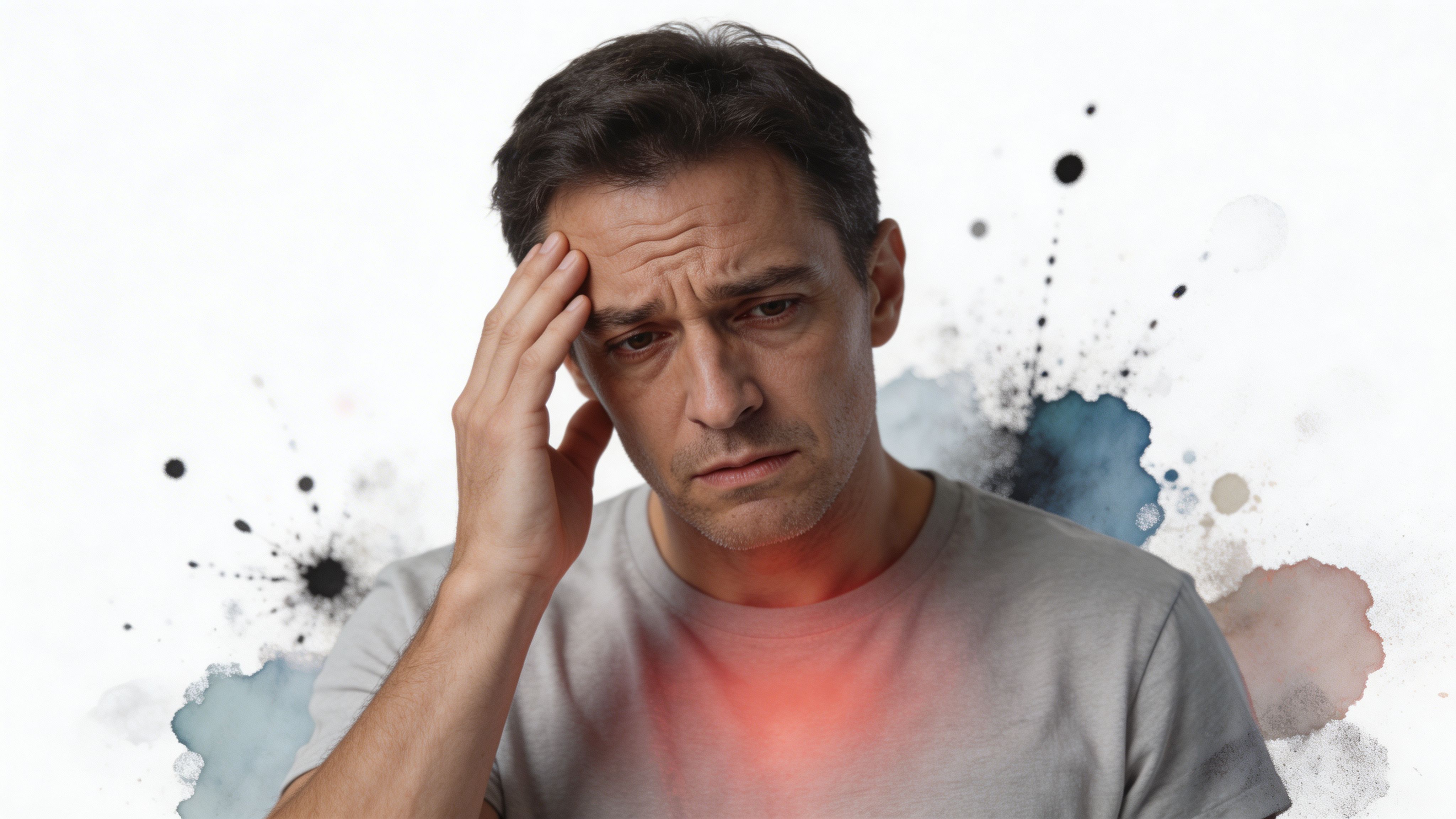
Attention drops and mistakes rise
Getting only 2 hours of sleep can lead to a 20 to 35% deficit in sustained attention and executive control. The same source notes that each extra 30 minutes of waking during the night slows processing speed, and error rates on vigilance tasks can be up to 50% higher, a level described as comparable to intoxication (Penn State Health news summary).
Those numbers matter because they match what people feel in real life.
You may notice that your reaction time is off. You might miss an exit while driving, misread a message, forget a step in a routine, or say yes to something you should have postponed. Tasks that normally feel automatic can suddenly require full concentration.
What this means for your day
On a low-sleep day, it helps to make decisions as if your performance is reduced, because it is.
Consider these situations more carefully than usual:
- Driving long distances: If you feel your eyes dipping or your attention drifting, stop.
- High-stakes work: Delay tasks that involve major judgment, financial decisions, or safety checks if you can.
- Conflict-heavy conversations: Sleep loss lowers patience. Hard talks can wait.
- Intense exercise: If your body feels shaky, scale back.
This is not fear-mongering. It is respect for the limits of a tired nervous system.
Your body is not failing you
A rough low-sleep day can also feel physically “wrong.” Your chest may feel fluttery. Your stomach may tighten. Your muscles may ache. You may feel both wired and tired at the same time.
For people with anxiety, those sensations can be scary. But they often reflect stress activation and exhaustion, not personal weakness. Your body is trying to keep you going with limited fuel. That effort can feel rough.
The safest mindset is simple. Treat today like a reduced-capacity day, not a normal day you should push through.
That shift protects you. It also lowers shame, which helps anxiety settle faster.
Your Same-Day Survival Guide
When you have had 2 hours of sleep, the goal is not to “win” the day. The goal is to get through it with the least friction possible.
Some strategies help because they support alertness. Others help because they stop anxiety from taking over the entire day. Use both.
Start with triage, not ambition
First, cut today down to essentials.
Ask yourself three questions:
- What must happen today?
- What can be delayed?
- What will make me feel worse if I force it?
That quick filter prevents the classic low-sleep mistake, which is trying to compensate by pushing harder. That usually backfires. Sleep deprivation and anxiety both respond better to simplification.
Immediate Coping Tactics for a 2-Hour Sleep Day
| Tactic | How to Implement | Anxiety-Specific Tip |
|---|---|---|
| Caffeine | Use it early in the day, not as an all-day drip. Keep it purposeful rather than constant. | If caffeine makes your heart race, pair it with food and remind yourself that stimulation can mimic anxiety without meaning danger. |
| Short nap | Try a 20-minute nap if you can. Keep it brief so you do not wake up groggy. | Set an alarm before lying down. Anxious people often rest better when the end point is clear. |
| Bright light | Get outside soon after waking, or sit near bright natural light. | Light can anchor your day when your mind feels unsteady. Use it as a cue that your body is still following a rhythm. |
| Micro-rests | Take short breaks with eyes closed, slower breathing, and less screen input. | During one break, practice a guided breathing pattern from https://anxietychecklist.com/breathing-exercises-anxiety to lower panic escalation. |
A few practical rules that help
- Protect the afternoon: If you can schedule easier tasks later, do it. Many people feel a sharper dip as the day wears on.
- Eat regularly: Skipping meals can make fatigue and anxiety blend together in a way that feels alarming.
- Reduce unnecessary stimulation: Too much scrolling, noise, or multitasking can make a tired brain more frantic.
- Talk to yourself clearly: Replace “I’m a mess” with “I’m sleep deprived, so I need a smaller day.”
If panic starts building
Low sleep can make panic feel closer. Have a script ready before you need it.
Try this:
- Name what is happening: “This is sleep deprivation plus anxiety.”
- Lower the task demand: Sit down, loosen your jaw, rest your shoulders.
- Focus outward: Find five things you can see, four you can feel, three you can hear.
- Delay conclusions: Do not decide your future while exhausted.
That last point matters. A low-sleep brain loves catastrophic predictions. It is a terrible time to judge your healing, your job performance, your relationships, or your future.
On a bad sleep day, use fewer decisions, fewer battles, and more structure.
That is not avoidance. It is smart nervous system care.
A 24 to 72 Hour Plan to Reset and Recover
One bad night feels urgent, but recovery usually works better when you stop looking for a miracle fix.
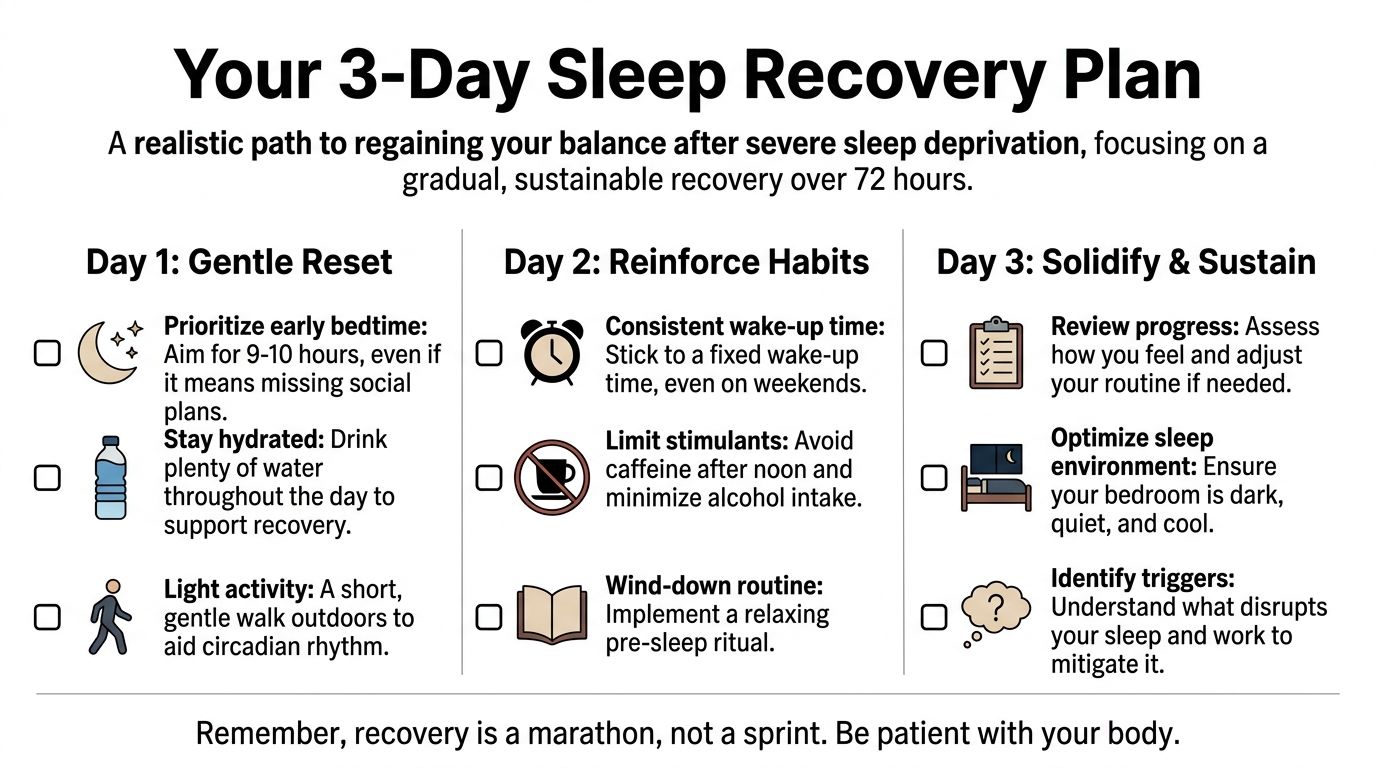
The common fantasy is “I’ll just catch up this weekend.” Real recovery tends to be steadier than that. The stronger approach is phased. According to the provided guidance, recovery from accumulated sleep debt benefits from a phased approach, with 20-minute naps on day one to avoid sleep inertia and more attention to consistent 90-minute sleep cycles rather than only chasing total hours (PS Charlotte summary on 2 hours of sleep recovery).
A realistic path to regaining your balance after severe sleep deprivation, focusing on a gradual, sustainable recovery over 72 hours.
Day 1 gentle reset
Today is for reducing strain.
Keep your wake time reasonable and avoid sleeping in so long that tonight gets disrupted. If you need rest, a brief nap can help. Keep the rest of the day simple. Hydrate, eat predictable meals, and get some gentle daylight.
Tonight, make it easy to sleep. Lower lights earlier. Stop trying to squeeze one more productive hour out of a depleted brain. If your body is tense, a step-by-step practice like https://anxietychecklist.com/progressive-muscle-relaxation-for-anxiety can make bedtime feel less like a test.
A lot of people also benefit from reviewing practical sleep tips to restore energy when fatigue has been building for a while, especially if stress and poor recovery have started to blur together.
Day 2 reinforce rhythm
The second day is often deceptive.
You may feel a little better and decide to overdo it. Try not to. Keep your wake-up time consistent. That steadiness tells your body when the day starts, which helps sleep pressure build again by evening.
If you are still dragging and your schedule allows, some people do better with a longer rest that lines up with a full sleep cycle. The point is not perfection. The point is to avoid chaotic compensation.
Try these anchors:
- Morning light: Get outside if possible.
- Stimulant boundary: Stop caffeine early enough that tonight has a chance.
- Evening routine: Repeat the same wind-down signals in the same order.
Day 3 solidify and sustain
By the third day, think less about “making up” lost sleep and more about building conditions for stability.
Look at what likely contributed to the crash. Was it overwork, doom scrolling, late caffeine, panic, travel, parenting strain, or an inconsistent schedule? You do not need perfect answers. You need useful patterns.
Also pay attention to whether this kind of exhaustion is happening often. If it is, and especially if sleep feels fragmented no matter how hard you try, it may be worth speaking with a clinician. Persistent fatigue can have more than one cause, and it is okay to rule things out.
Recovery works best when you stop trying to punish yourself into better sleep.
The kindest plan is often the most effective one. Consistency beats intensity. A few calmer days can do more for your nervous system than one dramatic attempt to fix everything overnight.
Managing Anxiety When Sleep Deprivation Hits Hard
For anxious people, 2 hours of sleep is rarely just about tiredness.
It can kick open a vicious cycle. You sleep badly, so anxiety rises. Anxiety rises, so the next night feels harder. Then you start fearing sleep itself, or fearing the day after poor sleep, and your body begins treating bedtime like a threat.
That cycle is real, but it is not unbeatable.
The provided summary notes that chronic short sleep nights can raise next-day anxiety scores by an estimated 20 to 30%, and it highlights a 28% rise in anxiety-linked insomnia queries since 2025 while pointing to the need for structured symptom tracking and cognitive strategies (Be Sophro summary on sleep and anxiety).
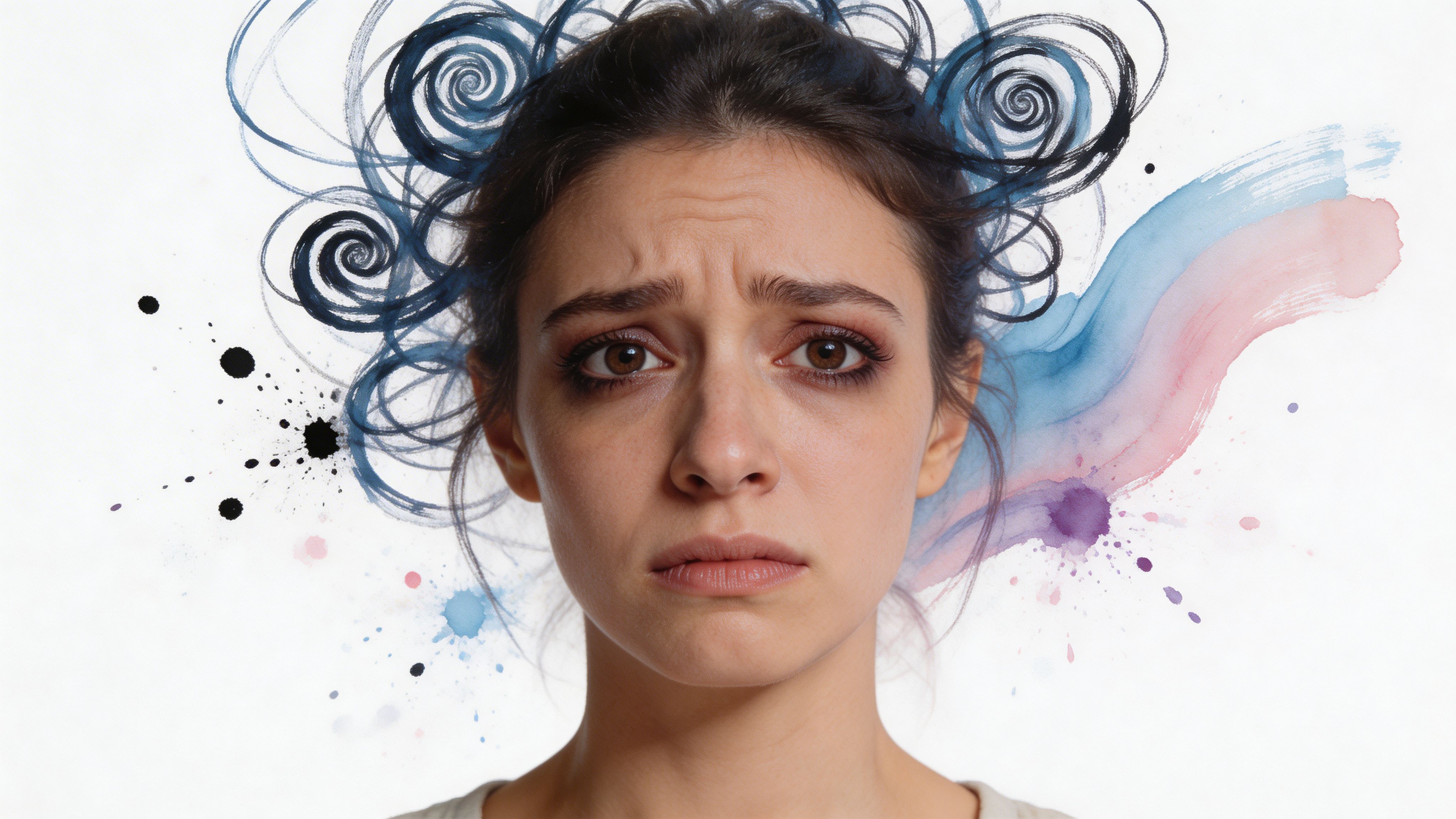
What anxiety sounds like after a bad night
Sleep-deprived anxiety often speaks in distorted sentences:
- Catastrophizing: “If I feel this bad now, I’ll panic later.”
- Fortune-telling: “Tonight will be another disaster.”
- Mind-reading: “Everyone will notice I’m off.”
- All-or-nothing thinking: “If I can’t function normally, the day is ruined.”
These thoughts feel more believable when you are depleted. That does not make them more accurate.
Use a simple anti-panic sequence
If anxiety spikes during the day, do not argue with it for an hour. Use a brief sequence.
- Orient to the room. Name where you are and what time it is.
- Ground physically. Feel your feet press into the floor or your back against a chair.
- Do 5-4-3-2-1. Notice five things you see, four you feel, three you hear, two you smell, one you taste.
- Use one balancing thought. “This is intense because I’m tired. Intense is not dangerous.”
- Shrink the next task. Do one small thing only.
This works because it moves you away from spiraling prediction and back into present-moment evidence.
Track the pattern instead of fearing it
One of the biggest mistakes anxious people make is treating every bad night like a mystery or a personal failure. Tracking changes that.
Use a simple record for:
- Sleep length
- Night waking
- Caffeine
- Stress level
- Physical symptoms
- Panic triggers
- What helped
That turns a frightening blur into information. Information gives you an advantage. If you want a structured place to do that, the anxiety checklist can help you notice triggers, challenge distorted thoughts, and respond more deliberately.
Anxiety grows in vagueness. It often shrinks when you name patterns clearly.
A hopeful truth many people miss
You do not need perfect sleep before you can heal anxiety.
That matters. Many people delay hope because they believe recovery can only start once their nights are flawless. In practice, people often recover by learning how to respond better on imperfect days. They stop adding fear to fatigue. They stop turning one bad night into a week-long alarm.
A panic-free life is not built by never sleeping badly again. It is built by knowing that when sleep deprivation hits hard, you have a plan, language for what is happening, and proof that you can still steady yourself.
From Surviving to Thriving Building Your Sleep Resilience
A night of 2 hours of sleep can shake your confidence. It does not have to define it.
You now know the most important truth. Low sleep changes how your brain processes memory, attention, and emotion. It also changes how your body performs. When you understand that, you can stop interpreting every symptom as a personal collapse.
Resilience grows from a few repeatable habits. Protecting the day after poor sleep. Recovering in phases instead of chasing a magic fix. Using grounding tools when anxiety gets loud. Tracking patterns so your fear becomes information. Those are practical skills, and skills can be learned.
Your sleep environment matters too. If your mattress, room setup, or bedtime routine keeps working against you, it can help to review a detailed mattress guide so you can make your bedroom more supportive and less stimulating.
Long-term change usually comes from steady education and repetition, not one perfect week. If you want to deepen your understanding of how anxiety works and build stronger daily systems, Anxiety University is a useful place to keep learning.
The bigger goal is not just better sleep. It is a steadier life. A life where a rough night is still unpleasant, but no longer powerful enough to convince you that you are trapped.
You can heal. You can break the sleep-anxiety cycle. You can live with more calm, more clarity, and much less fear.
If you want a practical next step, The Anxiety Checklist offers a structured way to track triggers, challenge anxious thinking, and build a personalized plan for calmer days and better nights.