


Does anxiety sometimes get treated like it's only a thought problem, as if you should be able to reason your way out of a racing heart, tight chest, or spiraling panic? That gap is where many people feel defeated. You may understand that you're safe and still feel completely overwhelmed in your body.
That's why acupuncture points for anxiety can feel so different. They give you something physical to do when your mind is noisy. Instead of arguing with every fear, you place your attention on a specific point, slow your breathing, and send your nervous system a clear signal that it's time to soften.
There is real support for this approach. A 2023 systematic review and meta-analysis found that several acupuncture points were used again and again in anxiety research, especially PC6, GV20, SP6, and HT7, and the review reported meaningful reductions on common anxiety measures such as HAMA and SAS across varied treatment methods and schedules (Frontiers in Psychology review on electroacupuncture for anxiety). That matters because it shows these aren't random wellness trends. They are points clinicians and researchers keep returning to.
This guide focuses on simple, practical self-acupressure versions of those ideas. You don't need to master traditional Chinese medicine to start. You just need curiosity, a little patience, and the willingness to treat your body like an ally instead of a problem.
If you already use other calming supports, you can layer this practice alongside them. Some people pair body-based tools with breathwork, journaling, therapy, or even tactile rituals like calming crystals for anxiety. The bigger message is hopeful. Relief often comes from combining small, repeatable actions.
These seven points won't solve every root cause on their own. But they can help you interrupt panic, lower physical tension, and build confidence that you are not helpless inside your own body.
1. HT7 (Shenmen) – Spirit Gate
HT7 is one of the most talked-about acupuncture points for anxiety for a reason. It's easy to reach, discreet to use, and strongly associated with calming the mind.
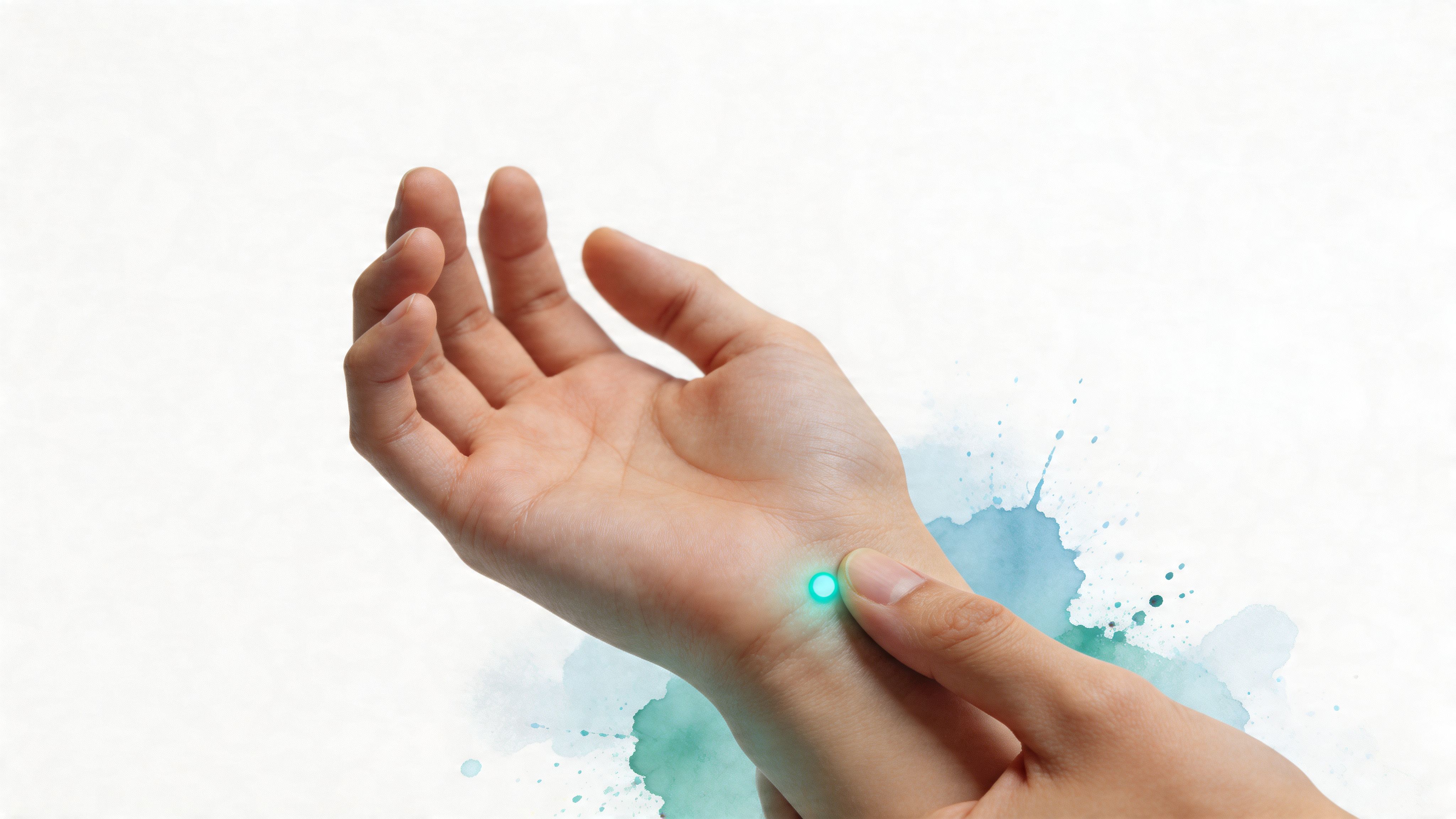
You'll find it on the pinky side of the wrist crease. Slide your finger along the crease toward the outer edge of the wrist until you reach a slight hollow. That's the spot many people use when they feel emotionally flooded, restless, or unable to settle.
Why people keep coming back to HT7
HT7 is often described in traditional practice as a point that calms the shen, or spirit. In plain language, people use it when anxiety feels mental and emotional at the same time. Think racing thoughts, overreactivity, shaky focus, or that fragile feeling where one more stressor might tip you over.
Research support for acupuncture in generalized anxiety disorder also points in this direction. In a review of 41 randomized controlled trials involving 3,209 participants, acupuncture alone reduced HAMA scores compared with medication, with a mean difference of -1.79, and HT7 was among the points commonly featured (evidence summary on acupuncture for anxiety).
That doesn't mean you need to treat HT7 like magic. It means this point has both traditional importance and modern clinical relevance.
How to use it when you're stressed
Try this when anxiety is building at work, before bed, or after a difficult conversation:
- Find the hollow: Rest your thumb on HT7 and soften your hand first so you don't jab at the area.
- Press steadily: Use gentle to moderate pressure for 2 to 3 minutes.
- Slow the breath: Inhale naturally, then make the exhale a little longer.
- Switch sides: Repeat on the other wrist.
A real-life example. Someone who's prone to panic at their desk might excuse themselves to the restroom, press HT7 for a couple of minutes, and focus only on the sensation under the thumb and the sound of the breath leaving the body. That tiny reset can stop the stress wave from gaining momentum.
Practical rule: Use HT7 early, not only when panic peaks. It's often more helpful as an interruption than a rescue.
Some therapists also like wrist points because they're private. You can use HT7 in a waiting room, on public transit, or during a hard day without anyone noticing. If you want to learn more body-based skills to pair with it, these anxiety learning resources can help you build a bigger calming toolkit.
2. PC8 (Laogong) – Palace of Labor
PC8 sits in the center of the palm, roughly where your middle finger lands when you make a loose fist. If anxiety makes you feel hot, agitated, fidgety, or socially on edge, this point can feel especially grounding.
It's a useful point for moments when your body wants to do something with nervous energy. Pressing the palm gives that energy a channel.
Best for situational anxiety
PC8 makes sense before events that trigger anticipatory stress. Presentations. Interviews. Exams. Hard conversations. First dates. Group settings where your mind starts rehearsing failure before anything has even happened.
The beauty of palm acupressure is that you can do it anywhere. A student can press PC8 under the desk before an exam starts. A manager can stimulate it while waiting for a meeting to begin. Someone with social anxiety can use it in the car before walking into a crowded room.
In practice, it often works well because the action itself is regulating. You're bringing attention out of looping thoughts and into a direct physical sensation.
A simple pre-event reset
Use your thumb to press into the center of the opposite palm for 1 to 2 minutes. Moderate pressure is enough. You want focused sensation, not pain.
Then combine it with a short grounding sequence:
- Name five things you see: This pulls attention into the room.
- Feel your feet: Notice pressure through the floor or your shoes.
- Lengthen the exhale: A 4-count inhale and 6-count exhale can help your body shift out of alarm mode.
- Repeat on the other palm: Bilateral stimulation can feel more balancing.
Pressing PC8 while naming what you can see, hear, and feel gives anxious energy a job. That often matters more than trying to force yourself to “calm down.”
This point is especially helpful for people whose anxiety shows up in the hands. Sweaty palms, clenched fingers, compulsive fidgeting, or the urge to grip something tightly all make PC8 a natural choice.
You can also use it preventively. If you know a trigger is coming, start before the wave hits. Press both palms alternately while you sit in the parking lot, wait outside a classroom, or rehearse the first sentence of what you need to say.
If you're building a repeatable self-help routine, pairing points like PC8 with structured mental health tools for anxiety can make the practice more consistent. The point isn't perfection. It's creating a reliable ritual that reminds your body, over and over, that stress doesn't get the final word.
3. LI4 (Hegu) – Large Intestine 4 / Union Valley
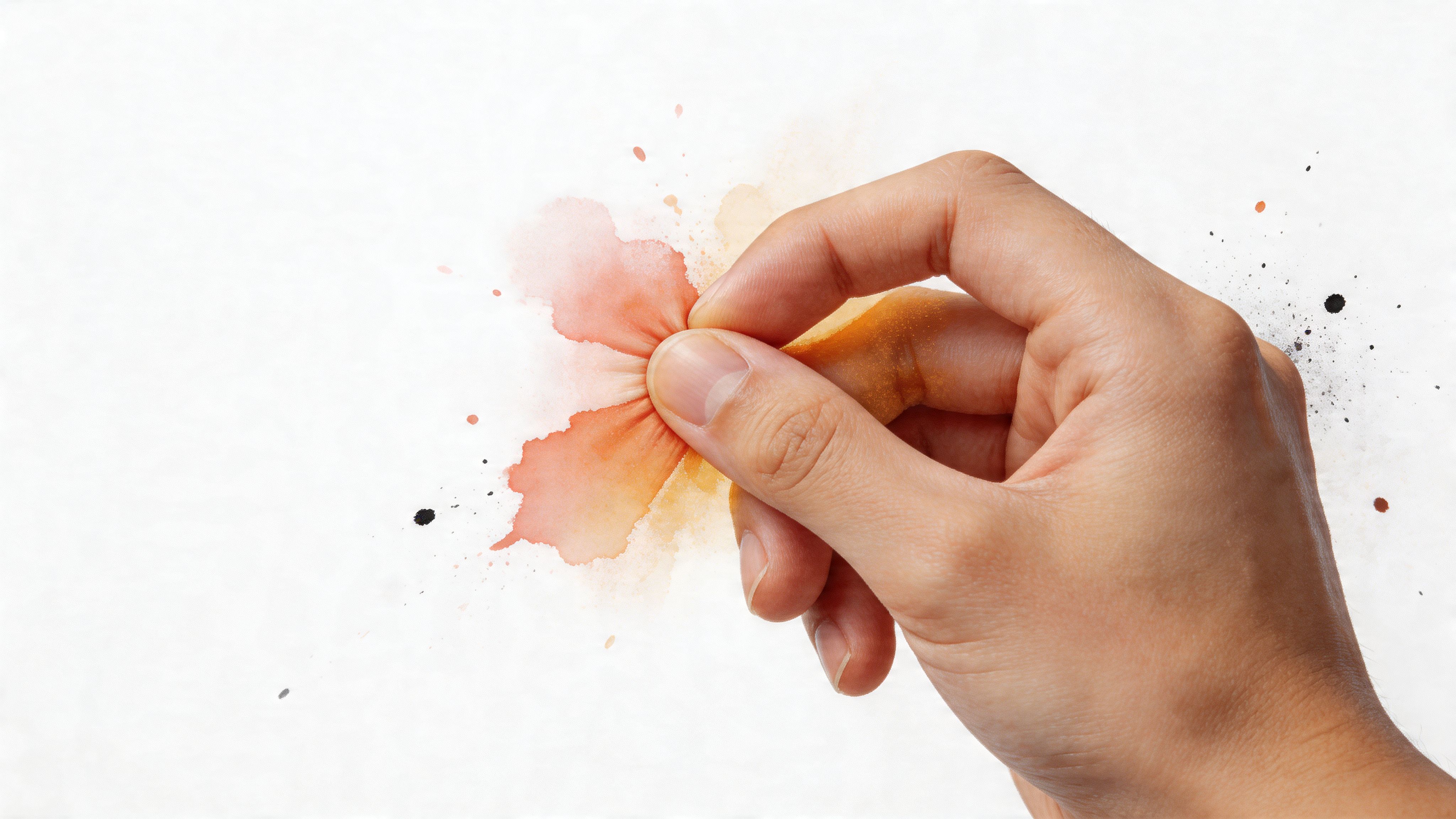
LI4 is the point many people discover first because it's so practical. It's in the webbing between the thumb and index finger. If anxiety lives in your muscles as much as your mind, this is one of the most useful places to start.
Press into the fleshy mound, not right on the bones. Many people feel a tender, achy sensation when they hit the right spot.
When LI4 shines
Some anxiety isn't loud. It's braced. It shows up as jaw tension, raised shoulders, headaches, neck tightness, shallow breathing, and hands that never fully unclench.
LI4 fits that pattern well because it gives you a direct way to work with tension while also signaling a mental reset. Busy people often like it because it doesn't require privacy or much setup. You can use it while standing in the kitchen, sitting in traffic, or taking a short break between tasks.
One important caution matters here. Some guidance warns against LI4 during pregnancy because of its traditional association with labor stimulation, and that safety gap is often missed in general wellness content (discussion of common acupoints and safety gaps).
How to make it useful in daily life
Try small circles with your thumb for 2 to 3 minutes on each hand. Firm pressure usually works better here than feather-light touch.
This point pairs well with movement. For example:
- During desk stress: Press LI4 while dropping your shoulders away from your ears.
- After a spike of tension: Use it with slow neck rolls and unclenching the jaw.
- As a morning habit: Stimulate the point while you take your first few slow breaths of the day.
A realistic scenario. Someone who notices that anxiety always becomes shoulder pain by late afternoon can use LI4 during a work break, stand up, roll the shoulders, and take a few fuller breaths before returning to the screen. That combination often feels more effective than waiting until the whole body is locked up.
Safety note: Skip LI4 during pregnancy unless a qualified clinician specifically advises otherwise.
LI4 also works well with other body-based skills. If your nervous system responds best when you can physically orient yourself, combine it with these grounding techniques for anxiety. The point gives your hand something to do. The grounding practice gives your mind somewhere safer to land.
4. GV20 (Baihui) – Hundred Convergences
What do you do when anxiety shows up less as panic and more as a crowded, noisy mind?
GV20 sits at the crown of the head, near the midpoint between the tops of the ears. Use a light touch here. The scalp is sensitive, so this point usually responds better to calm contact, a gentle hold, or professional acupuncture than to strong pressure.
GV20 often stands out when anxiety feels mental first. You may feel scattered, foggy, stuck in loops of overthinking, or oddly both overstimulated and emotionally flat. In traditional practice, this point is associated with bringing attention upward and then settling it, which helps explain why many people reach for it during mental overload.
A point for racing thoughts
Some anxiety is loud in the body. Other anxiety stays mostly in the mind.
This point can be helpful for the second pattern. If your brain keeps replaying conversations, jumping ahead to worst-case scenarios, or breaking your focus into fragments, GV20 gives you a simple physical cue that says, "come back here." That matters because anxiety often loses some of its grip when the mind has a clear place to rest.
As noted in the research cited earlier, GV20 appeared often in anxiety treatment protocols. While that does not mean it will be the best point for every person, it does show that practitioners continue to use it regularly in both traditional and modern care.
Gentle ways to work with GV20
Keep the routine very simple at first.
Place two or three fingertips on the crown of your head. Make small, slow circles for about 30 to 60 seconds. Then stop moving and just rest your fingers there while you take a few easy breaths. Many people find it helpful to focus on softening the scalp, forehead, and jaw instead of trying to force the mind to be quiet.
GV20 also works well as a bridge into other calming skills. If sitting still feels frustrating when you're activated, start with touch, then add breath, then add attention. That sequence is often easier than demanding instant calm from yourself. For that reason, meditation for anxiety often becomes more approachable when you begin with a body cue like GV20.
A common bedtime example helps. Someone caught in rumination can sit upright in bed, gently hold the crown of the head for a minute, let the shoulders drop, and follow five slow exhales before turning to a short audio practice or quiet rest. The point is not perfection. The point is giving your nervous system a clear, repeatable off-ramp.
Professional acupuncture may be especially useful with GV20 because a practitioner can combine it with other points based on whether your anxiety shows up as insomnia, tension, panic, or fatigue. At home, stay gentle. Using this point is less about force and more about practicing calm on purpose, which is one small way to build a steadier, more panic-free toolkit over time.
5. ST36 (Zusanli) – Leg Three Miles
ST36 sits below the kneecap, on the outer side of the shin. A common way to find it is to place your fingers below the kneecap and move down toward the outer edge of the tibia until you find a tender, workable area.
This point matters because anxiety is rarely just emotional. Chronic anxiety can drain energy, disrupt digestion, and leave you feeling physically depleted. ST36 is often used when the goal isn't only to calm down, but to rebuild steadiness.
Why this point is different
Some acupuncture points for anxiety are best for acute spikes. ST36 is more about resilience.
If your anxiety gets worse when you're tired, underfed, overstimulated, or dealing with gut discomfort, ST36 may become one of your most useful long-game points. It's a good fit for people who say things like, “I can handle stress until my body crashes,” or “My stomach and my anxiety seem to trigger each other.”
A 2022 review discussed common acupuncture protocols for generalized anxiety disorder that often included ST36 alongside PC6, HT7, and SP6, with sessions described as lasting 30 minutes over a multiweek treatment plan (NCCIH-focused review discussing acupuncture protocols for anxiety). That reinforces how often ST36 shows up as part of a broader, whole-body approach.
How to use ST36 in a healing routine
This point works best with consistency.
Massage it for 2 to 3 minutes on each leg. Use your thumb or knuckles and aim for firm but tolerable pressure. Many people like to use ST36 while seated in the evening, especially if anxiety has left them wiped out.
A few good pairings:
- With digestion support: Use it after a gentle walk or before sitting down to eat mindfully.
- With sleep recovery: Stimulate it earlier in the evening if stress has left you wired and tired.
- With basic self-care: Pair it with regular meals, hydration, movement, and rest. A point can't compensate for a body that's running on empty.
For a visual guide, this walkthrough can help you locate the area more confidently:
A realistic example. Someone with chronic anxiety and a sensitive stomach might use ST36 after work, then eat a simple dinner without multitasking, and follow that with a short evening wind-down. The point becomes part of a message: my body needs support, not punishment.
ST36 is not flashy. That's exactly why it can be powerful.
6. PC7 (Daling) – Great Mound
What do you do when anxiety gets louder the moment the room gets quieter?
PC7 sits at the center of the wrist crease, between the tendons. It is a practical point for those evening hours when your mind starts scanning for danger, your chest feels tight, or sleep begins to feel like another task you might fail. If HT7 often feels more emotional, PC7 often feels more grounding. It brings your attention back to one small, physical place when your thoughts are trying to pull you everywhere else.
That matters at night.
Many people hold it together all day, then fall apart once distractions fade. The body suddenly feels louder. Every heartbeat gets noticed. Every thought sounds more convincing. PC7 can help in that kind of moment because the location is simple, the hand position is easy, and you can use it without getting out of bed.
A good way to understand PC7 is to picture it as a reset button for your evening routine. Not a cure. Not a promise that anxious thoughts will vanish. A small, repeatable action that tells your nervous system, "I am here, and I can respond to this." That shift matters, especially if anxiety has trained you to feel helpless during a surge.
Especially useful when anxiety turns into bedtime vigilance
PC7 is often a strong fit for people who become watchful at night. You may notice yourself checking your body, monitoring whether you will fall asleep, or bracing for a panic attack. In those moments, acupressure gives your mind a job that is concrete and limited. Press here. Breathe here. Stay here.
That is one reason this point belongs in a larger healing toolkit. It gives somatic relief, but it also supports a cognitive shift. Instead of debating every anxious thought, you practice returning to sensation. Instead of waiting to be rescued by sleep, medication, or distraction, you use one skill you can access with your own hands.
A simple bedtime routine built around PC7
Try it in dim light and keep the pace unhurried:
- Sit or lie down in a position that lets your shoulders soften.
- Place the thumb of one hand on the center of the opposite wrist crease.
- Press gently to firmly for 1 to 2 minutes. Aim for steady pressure, not pain.
- Let your exhale run a little longer than your inhale.
- Switch sides and repeat.
If your mind keeps racing, add a short phrase on each exhale. “Loosen.” “Settle.” “Safe enough right now.” Use words that feel believable. Your nervous system responds better to honesty than to forced positivity.
Here is a realistic example. You wake at 2 a.m. with a rush of fear and the urge to check your phone, pace, or start predicting tomorrow's collapse. Pressing PC7 gives you a different first move. It interrupts the chain reaction. Even if it does not end the surge immediately, it can keep you from feeding it.
“The goal at night is not perfect peace. The goal is enough steadiness to stop adding fuel.”
PC7 works best when it becomes part of a pattern. Pair it with a written wind-down, less evening stimulation, and a consistent sleep window. The point itself is small. The message behind it is bigger. You are practicing calm as a skill, not waiting for calm to randomly appear.
7. EX-HN3 (Yintang) – Hall of Impression
What do you do in the first five seconds when anxiety hits and your thoughts start sprinting?
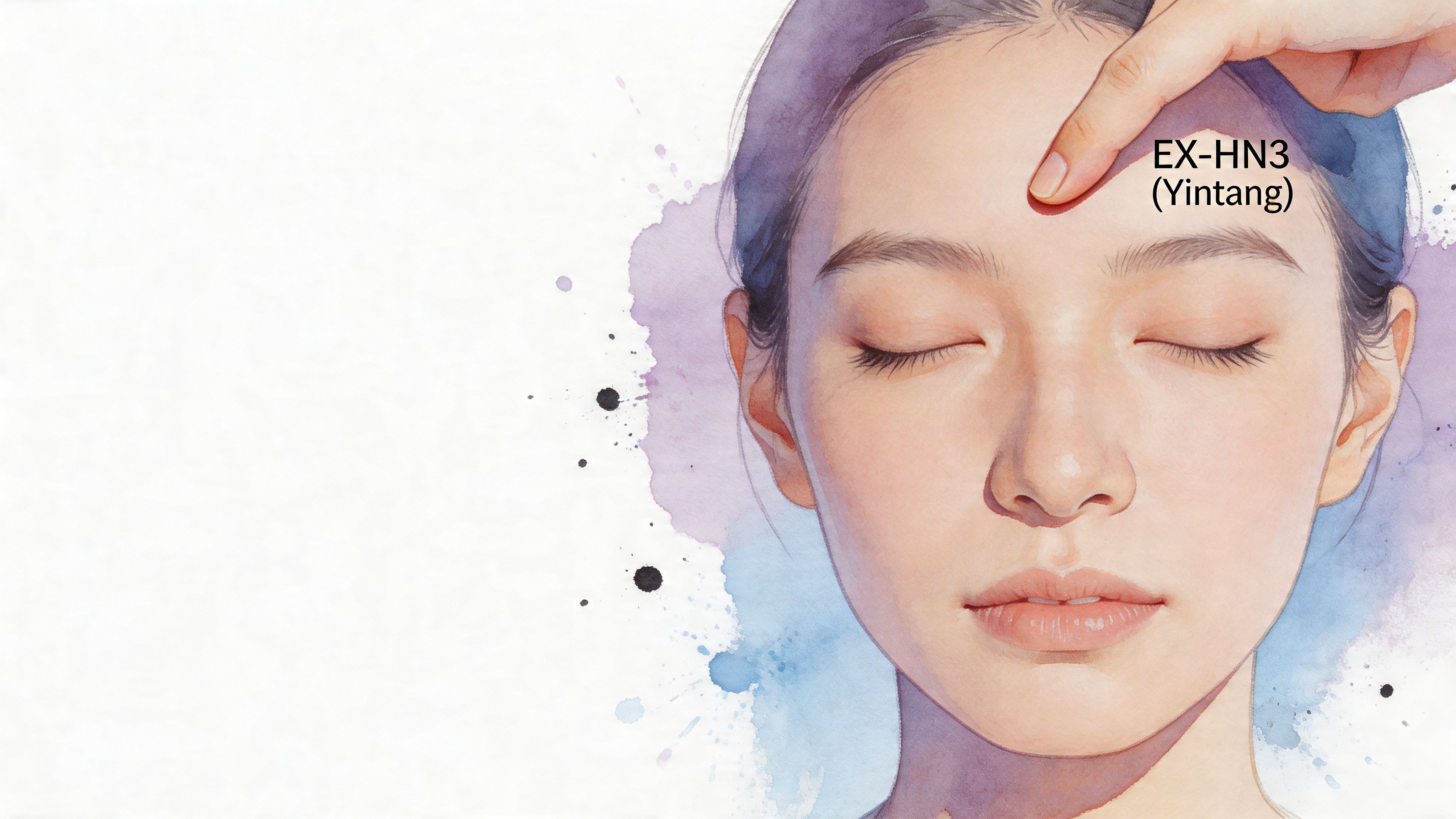
Yintang gives you a simple answer. It sits between the eyebrows, so it is easy to find even when you feel scattered. People often press this area without thinking when they are stressed, tired, or trying to focus. That instinct matters. Your body is already showing you a place that can cue slowing down.
Yintang is often used for mental agitation, forehead tension, and the strained, overfocused feeling that makes everything seem louder than it is. If HT7 and PC7 can feel a little hidden at the wrist, Yintang is right out in the open. It is the front door point. Fast to reach, hard to miss, and useful when you need a calming action before your mind starts building a bigger story.
A grounding point you can use in seconds
Yintang is less about forcing calm and more about giving your nervous system one clear signal to follow. The pressure is small. The effect can feel bigger because it interrupts spiraling at the level of sensation. You stop chasing every alarm bell in your head and return to something concrete.
Earlier research discussion in this article noted that point-based pressure methods can help reduce anxiety in high-stress moments. Yintang is often included in that kind of calming approach, especially for anticipatory stress, mental overload, and moments when your face and forehead feel braced.
How to use Yintang without making it complicated
Place a fingertip on the spot between your brows. Press gently but clearly for 1 to 3 minutes. You can hold still or make tiny circles if that feels better.
A few practical ways to use it:
- Before a difficult conversation: Press the point while letting your jaw unclench and your exhale lengthen.
- During cognitive overload: Use it when your forehead feels tight and your attention starts fragmenting.
- At the first surge of fear: Pair it with looking around the room and naming a few visible objects so your mind has somewhere real to land.
Here is where this point becomes more than a technique. It can be a reminder that you are not helpless in the face of anxiety. You have a physical skill you can use immediately, with your own hands, in ordinary life. That sense of agency matters. Relief often starts with one believable action.
A realistic example. You are in a meeting, your chest tightens, and your thoughts jump to worst-case outcomes. Rest a hand near your face, touch Yintang lightly, and slow the exhale by a second or two. The goal is not to erase the feeling on command. The goal is to reduce the noise enough to stay in the room and choose your next step.
A key safety note: skip Yintang if the skin is irritated, inflamed, or tender from a headache, rash, or recent cosmetic treatment.
If a panic attack is part of your pattern, use Yintang as one piece of a larger plan. Pair it with orienting, slower breathing, sleep support, and work on the thoughts that keep fueling danger signals. Calm becomes more reliable when your tools work together.
7-Point Comparison: Acupuncture Points for Anxiety
| Acupoint (location) | Implementation complexity 🔄 | Resource requirements ⚡ | Expected outcomes ⭐📊 | Ideal use cases 💡 | Key advantages ⭐ |
|---|---|---|---|---|---|
| HT7 (Shenmen), wrist crease | Low 🔄, easy self-acupressure; acupuncture optional | Minimal ⚡, hands only, 2–3 min per use | Rapid anxiety reduction, less palpitations, improved sleep; supported by clinical studies 📊 | Generalized anxiety, panic attacks, acute episodes, insomnia | Fast-acting, safe, clinically supported |
| PC8 (Laogong), center of palm | Low–moderate 🔄, simple but requires accurate spot-finding | Minimal ⚡, discreet, usable anywhere; 1–2 min | Immediate grounding, reduced sympathetic arousal; alters skin conductance 📊 | Situational/performance/social anxiety before events | Portable, provides clear proprioceptive feedback |
| LI4 (Hegu), web between thumb & index | Low 🔄, easy to locate; avoid strong use in pregnancy | Minimal ⚡, self-treatment; may be sensitive | Reduces muscle tension, headaches, systemic relaxation; neuroimaging support 📊 | Tension-related chronic anxiety, neck/shoulder/jaw tension | Strong mind–body tension relief; synergizes with physical therapies |
| GV20 (Baihui), crown of head | Moderate–high 🔄, best with professional needling; self-massage limited | Moderate ⚡, clinic visits for optimal effect; sessions weekly | Gradual improvement in mental clarity, mood lift; neurochemical effects reported 📊 | Chronic anxiety with rumination, depression, brain fog | Enhances cognition and baseline resilience over time |
| ST36 (Zusanli), lower leg below kneecap | Moderate 🔄, accessible for acupressure; benefits build over weeks | Moderate ⚡, consistent weekly treatment recommended | Improves digestion, energy, parasympathetic tone; supports systemic resilience 📊 | Anxiety with chronic fatigue or gut-related symptoms (IBS) | Systemic health boost; supports immunity and energy |
| PC7 (Daling), center wrist crease | Low 🔄, easy self-acupressure; pairs with HT7 | Minimal ⚡, quick nightly use (1–2 min) | Rapid calming for nighttime racing thoughts; improves sleep onset and melatonin markers 📊 | Nighttime anxiety, insomnia, pre-sleep routines | Effective sleep ritual point; gentle and safe |
| EX‑HN3 (Yintang), between eyebrows | Low 🔄, simple landmark, highly amenable to self-use | Minimal ⚡, portable and discreet; 1–3 min | Immediate relaxation and improved focus; increases alpha activity and reduces amygdala response 📊 | Concentration difficulties, forehead tension, office or study anxiety | Very portable, fast subjective calming and focus enhancement |
Your Toolkit for a Fearless Life
What if these seven points became more than a calming trick. What if they became part of how you remind yourself, again and again, that anxiety does not get the final say?
That shift is important. Chronic anxiety can make calm feel distant, almost like it belongs to someone else. Acupressure offers a different message. Your body is not only where anxiety lands. It is also one of the places where you can practice safety, steadiness, and choice.
The best way to use acupuncture points for anxiety is to treat them like tools in a well-stocked kit. You would not use a flashlight, bandage, and thermometer for the same problem. These points work in a similar way. One may help during a sudden spike. Another may fit mental fog, muscle tension, or bedtime restlessness. Used this way, acupressure becomes an act of self-support, not a test of whether you can make all anxiety disappear.
Match the point to the pattern you notice.
HT7 often fits racing thoughts and emotional shakiness. PC8 can help before a stressful conversation or event, especially if your hands feel restless and you need something concrete to do. LI4 is often a good choice when stress shows up as tight shoulders, jaw clenching, or a tension headache. GV20 may suit the heavy, overloaded feeling that comes with mental fatigue. ST36 is useful when anxiety and exhaustion travel together, especially if stress also affects your stomach. PC7 belongs in a wind-down routine when nights feel harder than days. Yintang is one of the easiest points to reach when panic starts building quickly and you need a simple anchor.
Relief often grows through repetition. Each time you notice the early signs of activation and respond with a skillful habit, you strengthen a new association. The body begins to learn, slowly and through experience, that a stress wave can rise, crest, and pass without taking over everything.
This is how people often start living with more freedom. The goal is usually not zero anxiety forever. The goal is having enough reliable tools that fear no longer runs your schedule, your decisions, or your sense of who you are.
Acupressure also works best inside a wider plan for healing. Therapy can help you question the thoughts that keep anxiety looping. Sleep, food, movement, and breathing practice give your nervous system a steadier baseline. Some people also like sensory supports such as calming crystals for anxiety, especially as a tactile reminder to pause and reset. The point is not to collect endless remedies. It is to build a small set of supports you will use.
Keep your expectations grounded and your care thoughtful. Acupressure can sit alongside therapy, medication, exercise, sleep work, and structured self-help. It should not replace medical or psychiatric care if symptoms are severe, confusing, or getting worse. If you are pregnant, have a complex medical condition, have irritation where you plan to apply pressure, or are unsure how body-based practices fit into your treatment plan, check with a qualified clinician. This caution is a form of good self-care.
Start small. Choose one or two points that match your pattern. Use them every day for a couple of weeks, even on calmer days, so your body learns the routine before the next hard moment arrives. Notice what changes. A shorter panic spiral. Better sleep. Less jaw tension. A little more space between the trigger and your reaction.
Healing from anxiety usually grows through steady acts of self-trust. One slower breath. One grounded touch. One moment where you respond with care instead of alarm.
You are not powerless. You are practicing.
If you want a practical system for turning these techniques into real daily progress, The Anxiety Checklist is a strong next step. It combines cognitive tools, habit tracking, worksheets, and panic-management strategies in one structured program, so you can build a personalized plan for calmer days, better decisions, and a life that isn't organized around fear.