

Find Your Calm: A Hopeful Guide to Mindfulness Podcasts for Anxiety
Does your mind ever feel like a browser with too many tabs open, each one playing a different worst-case scenario on a loop? When you live with anxiety, that isn't just an occasional bad day. It can feel like your normal setting. Your body stays tense, your thoughts keep scanning for danger, and even quiet moments can feel loud inside.
A good mindfulness podcast can help. Not because it magically erases anxiety, but because it gives you a place to practice returning to the present. It's like physical therapy for an overstimulated nervous system. One short listen can become a reset button, a grounding ritual, or a gentler way to meet a hard moment.
If you already use comforting tools like calming crystals for anxiety, podcasts can fit right beside them. They travel with you, they don't ask for perfect focus, and many are free.
The list below gets practical fast. These aren't just picks for the best mindfulness podcast. They're options you can match to specific anxiety patterns, from panic spikes to bedtime rumination to skeptical overthinking. Healing usually starts small. A single episode during a hard commute, a short meditation before sleep, one calmer breath than the last.
1. Ten Percent Happier with Dan Harris
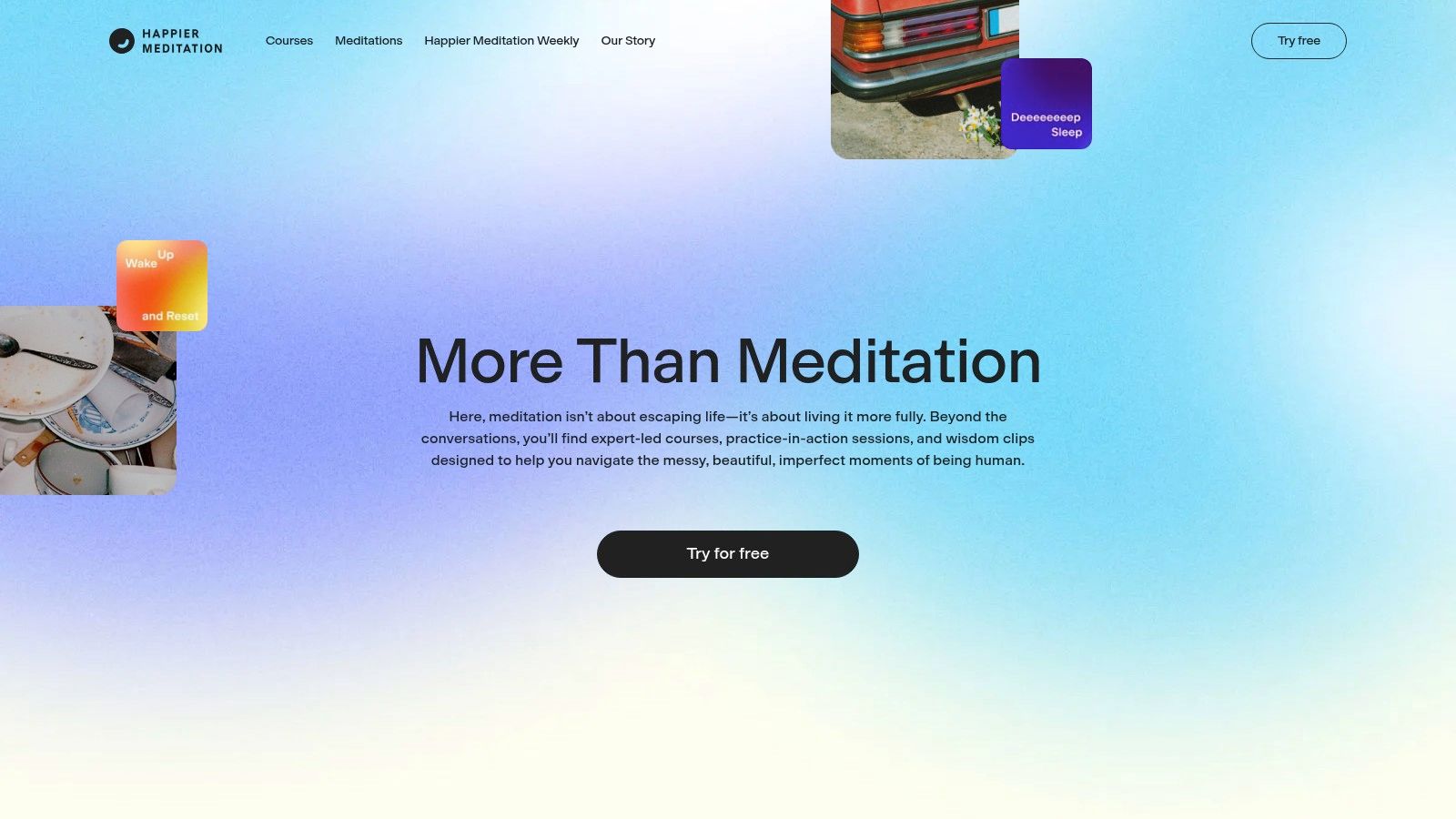
Your anxiety spikes at 7:40 a.m. You still have to answer emails, get to work, and act like your chest does not feel tight. In that kind of moment, a mindfulness podcast only helps if it speaks plain English and gives you something you can try today.
That is why Ten Percent Happier is such a strong starting point for skeptical listeners. Dan Harris built the show around a question many anxious people share: how do I use meditation in real life, not just on a retreat or in a perfect morning routine? His style is direct, curious, and grounded, which can feel reassuring if spiritual language tends to make you tune out.
This podcast works like a good teacher who translates a dense textbook into everyday speech. Instead of asking you to adopt a whole new identity, it helps you understand one skill at a time. For anxiety, that matters. Fear often grows in confusion. Clear explanations can make a racing mind feel less mysterious and more manageable.
Why it helps anxious listeners
Within The Anxiety Checklist framework, this is a good "understand the symptom, then test one response" podcast. Use it when anxiety shows up as overthinking, stress spirals, or resistance to mindfulness itself. If your brain keeps saying, "Fine, but why would this work?" this show meets that objection head-on.
Episodes are often longer, so they fit best in places where your body is busy but your mind has room to listen. A commute, a walk, or an evening reset usually works better than a rushed five-minute break. You can also pair an episode with a simple meditation for anxiety routine: listen first to learn the idea, then practice one short exercise later the same day.
- Best for skeptics: The tone stays practical and conversational.
- Best use case: Commutes, lunch breaks, or after an anxious episode when you want perspective.
- Main drawback: Some episodes focus more on interviews than guided practice.
Listening prescription: Choose this show when your anxiety feels tangled and mental. A useful episode can act like a flashlight. It does not remove the room, but it helps you see where to place your next step.
The connected app may appeal to you later if you want more structure, although much of the larger library requires a subscription.
Visit Ten Percent Happier.
2. Tara Brach Podcast

Some anxiety lives on the surface. Some of it feels older, deeper, and tied to shame, self-criticism, or emotional wounds you can't talk yourself out of. Tara Brach's podcast is one of the best mindfulness podcast options for that second kind of struggle.
Her style blends meditation with psychology. That combination helps when anxiety isn't just "I'm stressed," but "I don't feel safe with my own thoughts." She has a large free archive of talks and meditations, and her approach often centers on self-compassion rather than performance.
A strong fit for emotional healing
Brach's well-known RAIN practice can be especially helpful during anxious surges: recognize what's happening, allow it to be there, investigate gently, and nurture yourself. For many listeners, that's a much better first move than trying to force calm.
If you want to pair listening with a more structured personal routine, her talks work well alongside a simple meditation for anxiety plan. For example, you might listen to a full talk on a weekend, then replay a shorter guided meditation during the week when anxiety starts rising again.
- Best for self-criticism: Her teachings soften the harsh inner voice that often fuels anxiety.
- Best listening window: Early morning, evenings, or after an argument or emotional setback.
- Main drawback: If you prefer brisk, tactical advice, the reflective pace may feel slow.
Anxiety often grows in places where self-judgment is loud. Compassion doesn't make you weak. It makes it easier to stay present long enough to heal.
The Buddhist framework won't resonate with everyone, but the emotional wisdom often does, even if you don't connect with the spiritual language.
Visit the Tara Brach audio archive.
3. For a Quick Reset with Meditation Minis and 12 Minute Meditation
Not every anxious moment gives you an hour. Sometimes you need help in the parking lot before work, in the bathroom during a family gathering, or in bed when your chest feels tight and your mind won't slow down.
That's where short-format shows can shine. Meditation Minis and 12 Minute Meditation are useful when you need fast access and low friction.
Best for acute stress
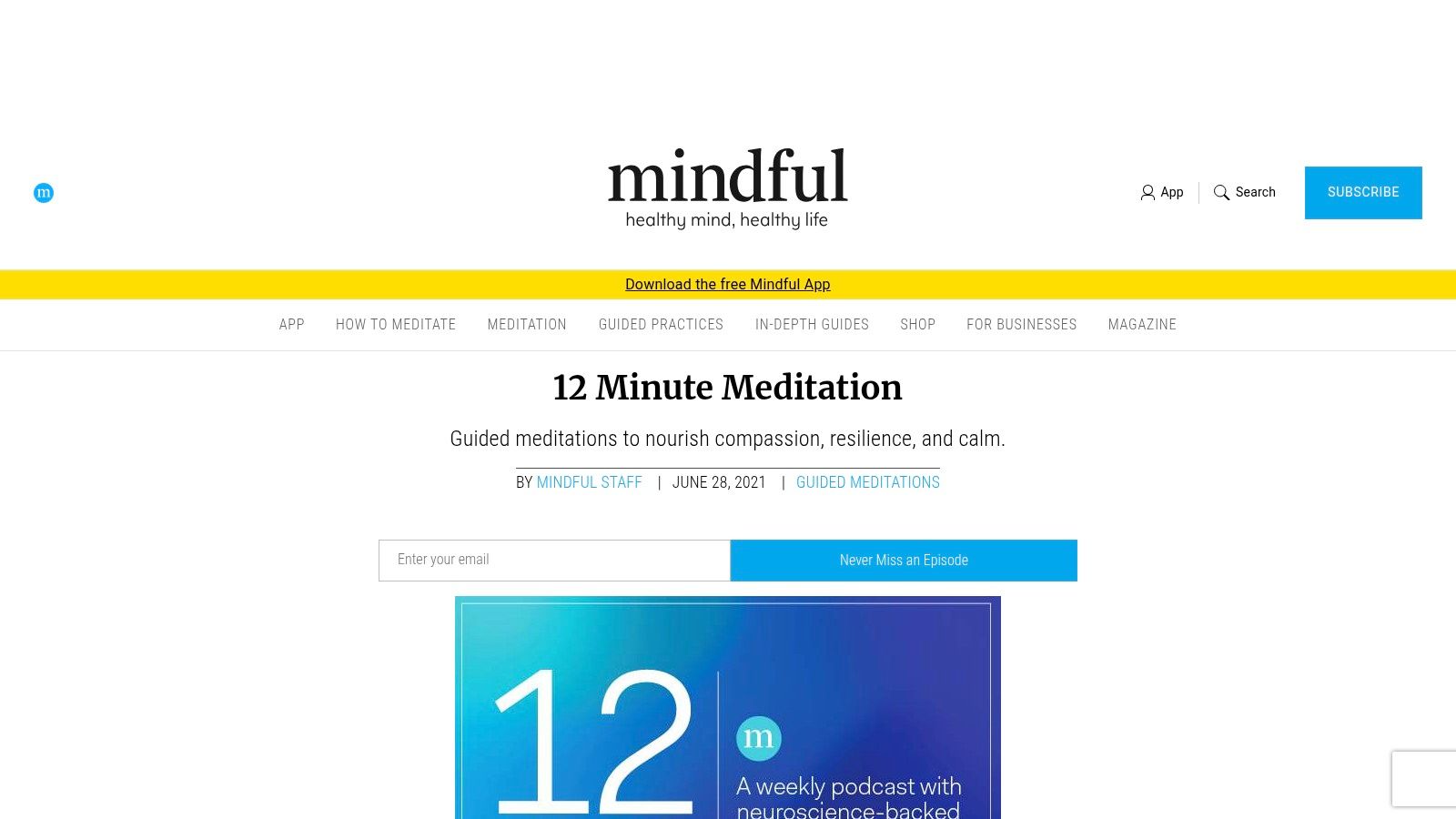
Meditation Minis tends to feel targeted and direct. It's a good pick for moments of overwhelm when you want someone to guide you step by step. 12 Minute Meditation, from Mindful.org, offers a steady stream of shorter practices from a range of respected teachers.
These shows fit neatly into a symptom-based routine. If your anxiety shows up in your body first, pair a short episode with simple breathing exercises for anxiety. If your shoulders are up around your ears and your thoughts are racing, this combination can help you interrupt the escalation early.
A simple listening prescription might look like this:
- Before work: Play one short practice before opening email.
- During a spike: Use a single episode instead of scrolling on your phone.
- At bedtime: Choose a calmer, slower session to transition out of rumination.
If you like building a calming environment around the practice, a Yoga Meditation collection can make the routine feel more inviting and easier to repeat.
The tradeoff is depth. These podcasts are built for resets, not long discussions or rich psychoeducation. But for many anxious listeners, that isn't a weakness. It's the whole point.
Visit 12 Minute Meditation.
4. The Mindful Minute with Meryl Arnett
When your nervous system feels frayed, intensity isn't helpful. You don't need a podcast that pushes. You need one that steadies.
The Mindful Minute has that quality. Meryl Arnett's voice and pacing tend to feel grounded, gentle, and safe, which matters more than people often realize. An anxious body pays attention to tone before it absorbs ideas.
A softer entry point
This is a strong choice for highly sensitive listeners, caregivers, and people who feel burned out as much as anxious. Episodes often combine reflection with guided practice, so you aren't left trying to figure out what to do with the teaching.
What stands out most is the trauma-sensitive feel. The show doesn't come across like a performance. It feels more like sitting down with a trusted teacher who knows that some people need a slower on-ramp into mindfulness.
- Best for: Burnout, emotional overload, and people who get overwhelmed by highly polished wellness content.
- Works well when: You need grounding after a hard day, not motivation.
- Main drawback: Finding older episodes can take more digging than on some bigger podcast platforms.
If your anxiety gets louder when life gets busy, this kind of weekly guided support can become an anchor. It won't yank you out of panic. It can help teach your body what a safer pace feels like.
Visit The Mindful Minute.
5. AudioDharma
Some people want a mindfulness podcast that feels like a calm companion. Others want a library they can study for years. AudioDharma is for the second group.
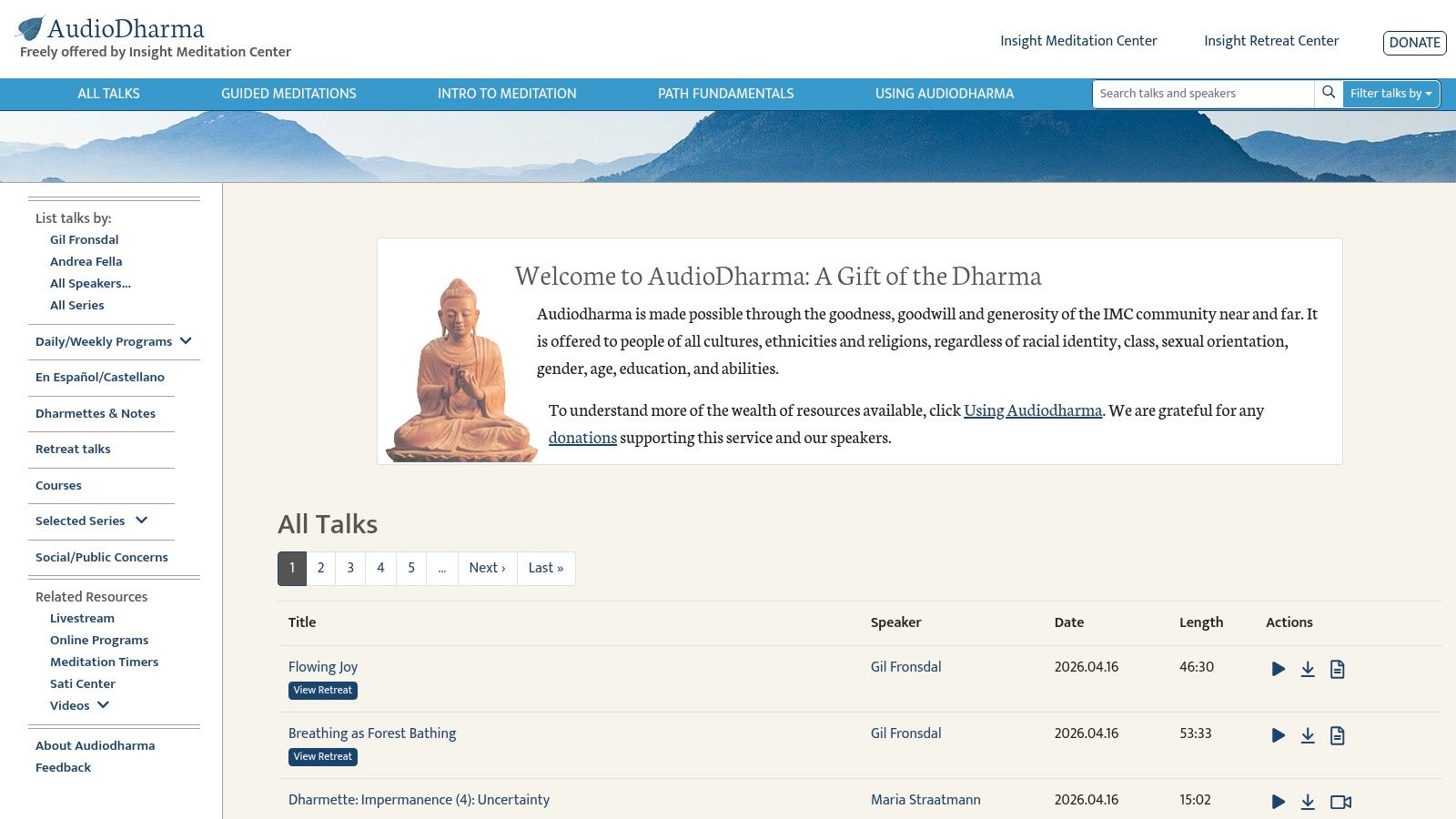
This podcast comes from the Insight Meditation Center and offers a huge archive of talks and guided meditations. It has a less commercial feel than many bigger shows, which some listeners find refreshing. If your anxiety eases when you understand the foundations of practice, this is a strong place to go deeper.
Like a free classroom for mindfulness
AudioDharma works best when you stop treating it like entertainment and start using it like coursework. Search by topic, choose one teacher, and stay with a theme for a week or two. That creates continuity, which helps anxious minds that tend to jump around.
Its strengths are also its limits. Production is simpler, the terminology can be more traditional, and beginners may need patience while they adjust to the style.
Slow, repeated practice changes more than frantic searching for the perfect fix.
A good way to use AudioDharma is during more stable periods, not just crisis moments. It helps build the baseline skills that make later anxiety spikes easier to manage, much like strengthening your legs between storms ensures you're steadier when the wind picks up.
Visit AudioDharma.
6. The Mindful Kind by Rachael Kable
If formal meditation sounds intimidating, The Mindful Kind is a friendlier doorway in. Rachael Kable focuses on small habits and everyday mindfulness instead of making the practice feel heavy or complicated.
That matters for anxiety recovery. Many people quit because they assume mindfulness only "counts" if they sit still for a long session and clear their mind. This show gently corrects that idea.
Best for everyday habit building
Episodes are approachable and practical. You can listen while folding laundry, walking, or getting ready for work, then try one idea the same day. That lowers the pressure and makes consistency more realistic.
This podcast is especially useful when anxiety shows up as low-grade tension across the whole day rather than dramatic panic. In those cases, smaller adjustments often help more than waiting for a full crisis.
- Best for beginners: The tone is easy to follow and non-intimidating.
- Best routine slot: Morning setup, midday reset, or evening reflection.
- Main drawback: If you want lots of deep guided meditations, you'll probably want to pair it with another show.
The Mindful Kind is less like attending a lecture and more like learning a healthier rhythm. For many people, that kind of repeatable simplicity is exactly what makes mindfulness stick.
Visit The Mindful Kind.
7. Meditative Story
Traditional meditation doesn't work for everyone right away. Some anxious listeners feel trapped by silence. Others get more activated the moment they try to "just sit." Meditative Story offers another route in.
Each episode blends a personal story with music and gentle reflective prompts. Instead of asking you to force stillness, it walks you into it sideways. That can be much easier for a restless or overactive mind.
A good choice for overthinkers
If you deal with overthinking and anxiety, stories can help because they give the mind something steady to follow. You're still practicing presence, but with support rails.
The cinematic style also makes this a strong fit for transitions: evening decompression, solo drives, or the period right after work when your body is home but your mind is still elsewhere.
- Best for: People who find standard guided meditation boring or frustrating.
- What stands out: The narrative format makes mindfulness feel human and less clinical.
- Main drawback: It teaches more indirectly than teacher-led meditation shows.
This isn't the show I'd choose for panic triage. It is one I'd choose for emotional regulation, reflection, and rebuilding your relationship with attention in a kinder way.
Visit Meditative Story.
8. The Science of Happiness
Some people need reassurance. Others need reasons. If your brain relaxes when it understands why a practice might help, The Science of Happiness is a strong candidate for the best mindfulness podcast in your rotation.
The show explores research-backed well-being practices and often gives you something concrete to try. It isn't only about meditation, which is part of its value. Anxiety usually responds best to a toolkit, not a single technique.
Useful for the analytical listener
This podcast works well for people building a broader self-help plan or therapists looking for accessible homework ideas. It helps connect mindfulness to related skills like attention, gratitude, social connection, and emotional balance.
If you're the type who wants to learn before you practice, pair this with anxiety learning resources. That combination gives your mind both structure and context, which can reduce the helpless feeling that often comes with chronic anxiety.
You don't need blind faith in mindfulness. Sometimes you just need enough understanding to try it consistently.
The show has a broad scope, so not every episode will match your exact anxiety symptom. Still, it's one of the best options for listeners who want credible, practical guidance without a preachy tone.
Visit The Science of Happiness.
9. Untangle by Muse
Your anxiety checklist says the same thing three days in a row: racing thoughts, tension in the chest, low motivation to practice. You know mindfulness helps, but your brain wants a reason before it agrees to sit still. Untangle fits that moment well.
The show blends mindfulness, neuroscience, and behavior change through interviews with teachers, therapists, and researchers. That variety matters for listeners who learn through explanation. Hearing the same core skill from different angles can make it click. Paying attention, noticing the mind wander, and gently returning starts to feel less mysterious and more trainable, like strengthening a muscle through repeated reps.
Where it fits in an anxiety routine
Use Untangle as a reset for motivation slumps. In The Anxiety Checklist framework, this is a good listening prescription for symptoms like doubt, resistance, and the thought, "Why bother? I can't do this right." A strong episode can restore buy-in before your next five-minute practice, which is often all you need to get back on track.
It also helps people who get anxious about anxiety. If you understand what stress is doing in the body, mindfulness can feel less like vague self-care and more like a practical skill for settling an overactive alarm system. That shift gives many listeners hope.
Untangle is less of a guided session and more of a conversation-based coach. Save it for a walk, a commute, or the part of the day when your mind wants context before action. Then follow it with a short breath practice or body scan so the insight turns into experience.
- Best for: Science-minded listeners and people who like expert interviews.
- Helpful during: Motivation slumps, habit rebuilding, and curiosity phases.
- Main drawback: It's more discussion than guided meditation, and brand mentions do appear.
Visit Untangle.
Top 9 Mindfulness Podcasts Comparison
| Podcast | Core Features ✨ | User Experience ★ | Unique Value 🏆 | Best For 👥 | Price 💰 |
|---|---|---|---|---|---|
| Ten Percent Happier with Dan Harris | Weekly interviews, short guided meditations, optional app courses ✨ | ★★★★, pragmatic, relatable; interview-led | Top-tier teachers; skeptic-friendly bridge to practice 🏆 | Busy professionals & skeptics 👥 | 💰 Free podcast; app subscription for full library |
| Tara Brach Podcast | Long-form talks, guided meditations, R.A.I.N. method ✨ | ★★★★★, deep, therapeutic, reflective | Trauma-sensitive psychotherapy + contemplative blend 🏆 | Trauma-rooted anxiety, seekers, therapists 👥 | 💰 Free (donations welcome) |
| For a Quick Reset: Meditation Minis & 12 Minute Meditation | 10–15 min targeted sessions; varied teacher roster ✨ | ★★★★, fast, actionable, habit-friendly | Emergency "rescue" scripts + daily habit building 🏆 | Busy schedules; acute anxiety spikes 👥 | 💰 Free |
| The Mindful Minute with Meryl Arnett | Weekly grounded guided practices; trauma-informed series ✨ | ★★★★, gentle, safe, steady guidance | Trauma-sensitive, therapist-friendly teacher tone 🏆 | Highly sensitive nervous systems; caregivers 👥 | 💰 Free |
| AudioDharma (Insight Meditation Center) | Daily dharma talks, huge searchable archive, lineage teaching ✨ | ★★★★★, substantive, deep (varied production) | University-style, progressive mindfulness training 🏆 | Serious practitioners & long-term students 👥 | 💰 Free (donations) |
| The Mindful Kind by Rachael Kable | Micro-lessons, practical tips, worksheets ✨ | ★★★★, friendly, bite-sized, actionable | Approachable entry point for everyday mindfulness 🏆 | Beginners intimidated by formal meditation 👥 | 💰 Free |
| Meditative Story | First-person narratives with embedded prompts; cinematic audio ✨ | ★★★★, immersive, high production, reflective | Story-driven mindfulness for non-meditators 🏆 | Those who prefer narrative to formal practice 👥 | 💰 Free |
| The Science of Happiness (Greater Good) | Research-backed exercises, "Happiness Breaks", show notes ✨ | ★★★★, credible, evidence-focused | University-backed science + practical homework 🏆 | Evidence-seekers, clinicians, curious learners 👥 | 💰 Free |
| Untangle (by Muse) | Interviews connecting mindfulness, neuroscience & behavior ✨ | ★★★★, informative, interview-heavy | Tech-informed neuroscience explanations for practice 🏆 | Science-minded listeners & tech users 👥 | 💰 Free (brand mentions) |
Your Journey to a Panic-Free Life Starts with a Single Listen
It is 7:12 a.m. Your heart is already racing, your shoulders are tight, and your mind is scanning the day for threats before your feet even hit the floor. In that moment, "listen to a mindfulness podcast" can sound almost too small to matter. But small, repeatable actions are often how an anxious nervous system learns safety again.
A good podcast gives you more than background noise. It gives you a steady voice when your thoughts are loud, a structure when your mind is scattered, and a place to practice returning to the present without having to figure it out alone. Repetition matters here. Just as anxiety trains the brain to expect danger, mindfulness trains it to pause, notice, and settle.
That is why this list works best as a user manual, not just a set of recommendations. The primary benefit comes from matching the right kind of episode to the kind of anxiety you are feeling. If your thoughts are spiraling, an interview-based episode that explains what is happening may help more than a sleep story. If shame, grief, or emotional flooding is the problem, a compassionate guided practice may be the better fit. As noted earlier, popular mindfulness podcasts are widely recognized. What many roundups miss is the practical question: what should you play when your chest is tight, your thoughts are looping, or panic is starting to build?
The Anxiety Checklist framework helps turn vague good intentions into a simple prescription you can follow:
- Morning steadiness: Use The Mindful Kind or 12 Minute Meditation before email, news, or rushing pulls your attention apart.
- Midday perspective: Use Ten Percent Happier or Untangle when you need context, language, and a calmer way to understand what your brain is doing.
- Emotional processing: Use Tara Brach or The Mindful Minute after conflict, shame, grief, overstimulation, or a hard conversation.
- Evening decompression: Use Meditative Story when your body is tired but your mind keeps replaying the day.
- Skill-building days: Use AudioDharma or The Science of Happiness when you want to strengthen attention, self-awareness, and long-term coping skills.
Keep the routine narrow at first.
Choose one podcast, one time of day, and one symptom cue. For example: "When my chest tightens before work, I will play one 10-minute guided episode." That kind of plan works like laying down a path in grass. The first few walks may feel awkward, but repetition makes the route easier to follow.
Relief does not always arrive as a dramatic breakthrough. Sometimes it shows up as one less spiral, one softer morning, or one moment when you notice that your body is alarmed but you do not have to obey the alarm. Press play. Let that be a practical first step.
If you want more than inspiration and need a practical system, The Anxiety Checklist can help you turn these podcast listens into action. It gives you a structured way to track symptoms, respond to panic episodes, challenge anxious thought patterns, and build a personal recovery routine you can follow.