


Your jaw tightens before you even notice it. A text comes in at the wrong moment. Your child asks the same question for the fourth time. Someone at work cuts you off in a meeting. You snap, then feel the wave that often comes next: shame, confusion, maybe even fear.
A lot of people think this means they’re “an angry person.” Often, it means their system is overloaded.
For many people, anger isn’t just anger. It’s stress with nowhere to go. It’s anxiety in armor. It’s a nervous system that has spent too long bracing for impact.
The Moment the Anger Takes Over
You’re already running late. You can’t find your keys. Your phone is buzzing. Someone says something small, maybe harmless, and suddenly your reaction is much bigger than the moment seems to call for. Your voice rises. Your body feels hot. Later, you replay it all and wonder, “Why did that happen again?”
That moment can feel lonely, but it isn’t rare. The average adult experiences anger about 14 times per week, about 30% of adults report trouble controlling their anger, and fewer than 15% seek professional help, according to anger statistics compiled here.

If that’s you, the first thing I want you to hear is this. Losing control doesn’t automatically mean you’re cruel, broken, or beyond help. Sometimes it means your alarm system is firing too fast. If you’ve ever felt your heart pound, your breathing shorten, or your thoughts race before an outburst, the body may be slipping into a threat response much like the one described in this guide to the fight or flight response.
Why anger can feel bigger than the situation
Anger often shows up like the visible part of a storm. Underneath it, there may be fear, pressure, overstimulation, old hurt, or chronic anxiety. Many people don’t recognize that link because anger feels powerful on the surface, while anxiety often feels vulnerable.
Anger is often the emotion that shows up when your system thinks it has to protect you fast.
That doesn’t excuse hurtful behavior. It does explain why “just calm down” rarely works. When your body believes there’s danger, logic is late to the room.
Hope starts with understanding
The good news is that anger patterns can be learned, and that means they can also be unlearned. Anger management courses exist to teach that process in a structured way. They don’t ask you to become passive or silent. They help you pause sooner, think more clearly, and respond without feeling hijacked.
For people living with anxiety, that hope matters even more. You’re not trying to become emotionless. You’re learning how to feel intense emotions without letting them run the entire show.
What an Anger Management Course Is Really Like
A common initial reaction to “anger management courses” is picturing a grim room, folding chairs, and someone being lectured. Real courses are usually much more practical than that. Think of them as physical therapy for emotional reactions.
When you go to physical therapy, nobody shames you for having pain. They assess what’s happening, identify weak spots, and teach specific exercises. Anger management works in a similar way. It helps you notice your triggers, strengthen your pause, and practice new responses until they become more natural.
What happens in a good course
A solid course is structured, not random. You usually learn how anger builds in the body, how thoughts intensify it, and how behavior either escalates or cools the situation. Many programs draw from CBT principles, which is one reason some people also benefit from a separate CBT course for anxiety when anxious thinking is part of the pattern.
A course might include:
- Trigger mapping: noticing the people, settings, and themes that set you off
- Body awareness: learning your early warning signs such as clenched muscles or fast speech
- Thought work: catching beliefs like “No one respects me” or “This always happens”
- Communication practice: saying what you need without attacking
- Calming drills: using breathing, grounding, or pauses before the reaction peaks
It’s not about suppressing anger
Many readers get stuck here. They worry a course will teach them to stuff everything down and smile through mistreatment. That isn’t the point. Healthy anger can protect boundaries and signal that something matters. The problem is uncontrolled anger that damages relationships, work, and your own peace.
A useful course teaches expression without explosion. It helps you move from reaction to response.
Practical rule: The goal isn’t to never feel angry. The goal is to stop anger from choosing your words for you.
Simple brain science, plain language
When anger spikes, the brain’s threat system can take over fast. In plain terms, the “alarm” gets loud and the “thinking coach” gets quiet. That’s why smart, caring people can say things they regret in a matter of seconds.
Courses help reverse that pattern through repetition. You learn to spot the alarm earlier, lower the body’s arousal, and give the thinking part of the mind time to come back online. With practice, that gap between trigger and reaction gets wider. In daily life, that wider gap is freedom.
Exploring the Different Types of Anger Management Courses
Not all anger management courses feel the same. Some are private and customized. Others are structured groups. Some fit a packed schedule better than others. The best option depends on your needs, comfort level, and whether anxiety is part of the picture.
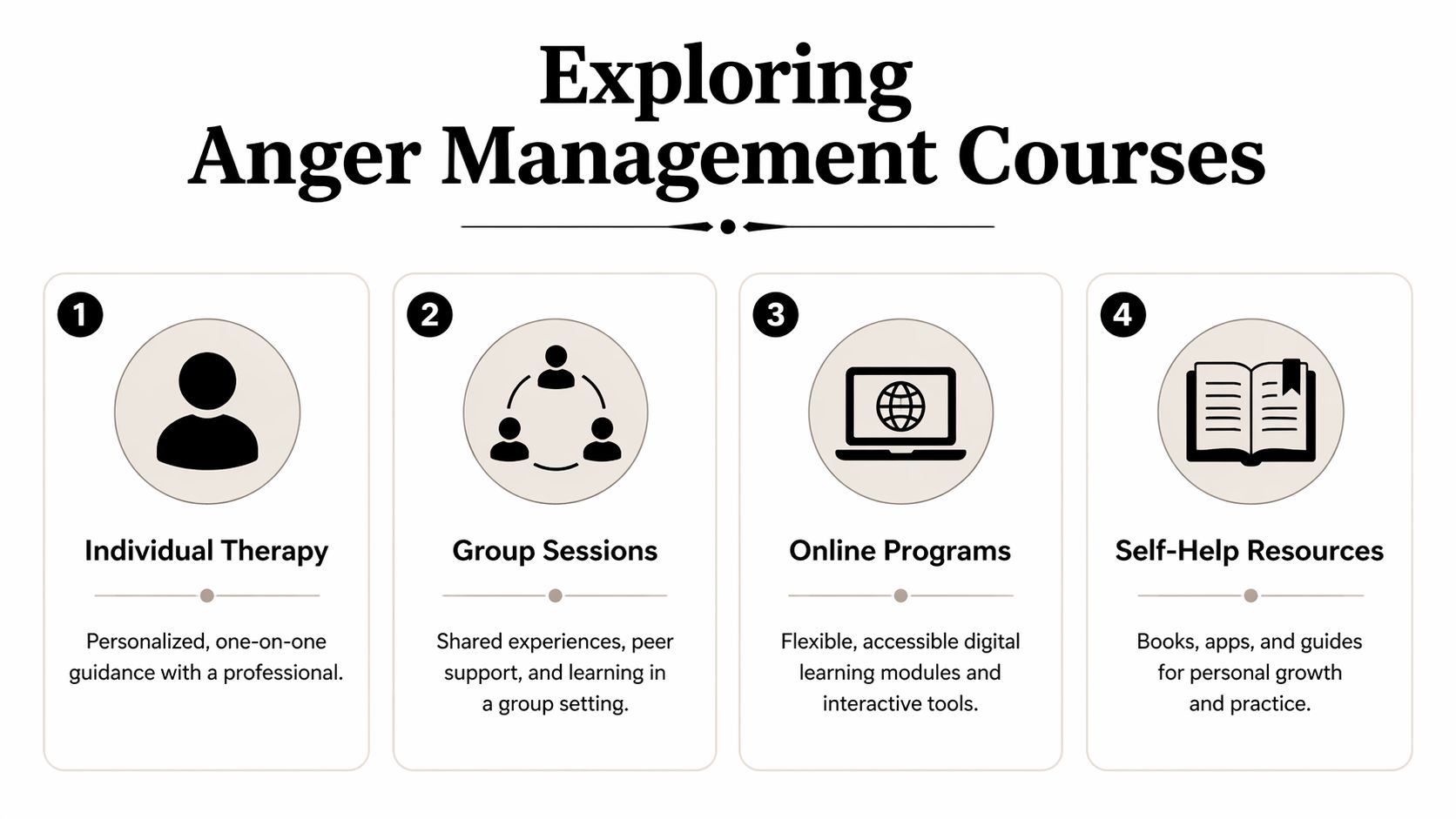
A quick comparison
| Type | What it feels like | Best for | Tradeoff |
|---|---|---|---|
| Individual therapy | One-on-one conversations and skill practice | People who want privacy or have layered issues like trauma or anxiety | Usually more expensive |
| Group sessions | Shared learning with other participants | People who learn from hearing real-life examples and want support | Less private |
| Online programs | Digital lessons, worksheets, videos, sometimes live support | Busy people who need flexibility | Motivation can be harder if the format is fully self-paced |
| Self-help resources | Books, journals, worksheets, apps | People with mild struggles or those who want extra practice between sessions | Limited feedback |
Individual therapy
This format gives you the most personalized help. If your anger shows up in a specific context, such as marriage, parenting, panic, or workplace conflict, a therapist can adapt the material to your life. That matters when your anger is really a fast reaction to fear, criticism, or overwhelm.
Individual work also gives you space to discuss things people often hide in groups, like intrusive thoughts, embarrassment after an outburst, or panic symptoms that happen just before anger surfaces.
Group courses
Groups can be surprisingly relieving. When people hear others describe the same spirals, shame often starts to loosen. You also get to watch how different people handle similar triggers, which can make the material feel more concrete.
Still, group courses aren’t for everyone. If privacy matters significantly to you, or if your anger is tied to trauma you’re not ready to discuss, a group may feel too exposed at first.
Online programs and self-paced options
These can be a good entry point. They’re flexible, accessible, and easier to fit into a complicated week. Many people start here because it feels less intimidating than walking into an office or joining a room full of strangers.
But format matters. Some online programs include live support, feedback, or therapist contact. Others are purely solo. If you know you tend to avoid hard things when nobody is checking in, fully self-paced learning may not be enough by itself.
Specialized programs
Some courses focus on specific roles or settings. You may find options built for parents, couples, professionals, or people dealing with legal requirements. The advantage is relevance. The examples sound like your real life instead of generic advice.
A good fit often matters as much as good content. People practice more when the examples match the pressure points they actually live with.
If anxiety is part of your pattern, look for a course or clinician who understands both. Otherwise, you may learn useful anger tools but still feel confused about why your body goes into panic mode first.
The Core Skills You Will Learn
The best anger management courses don’t just tell you to “calm down.” They teach specific skills you can repeat under pressure. That matters because anger usually moves fast. You need tools simple enough to use in real time.
Spotting triggers before they explode
The first skill is trigger identification. This sounds basic, but it changes everything. A trigger isn’t just “my partner” or “traffic.” It’s often more precise than that. It may be being interrupted, feeling ignored, sudden changes in plan, sensory overload, or the fear that you’re failing.
Courses often have you track patterns such as:
- Situations: meetings, bedtime chaos, long commutes, conflict-heavy family events
- People: authority figures, critical relatives, passive-aggressive coworkers
- Internal states: hunger, exhaustion, panic, shame, overstimulation
When you start seeing patterns, anger becomes less mysterious. You stop treating each blowup like a random event.
Changing the thought that adds fuel
The next skill is often called cognitive restructuring. In plain English, it means catching the mental sentence that pours gas on the fire. Common examples include “They’re doing this on purpose,” “Nobody listens to me,” or “I can’t take this.”
Many anger programs rely on ideas from Cognitive Behavioral Therapy (CBT), which teaches people to examine whether a thought is accurate, useful, or distorted by stress. That matters for anxious people especially, because fear-based thinking can make neutral events feel like attacks.
When you change the sentence in your head, you often change the intensity in your body.
Calming the body fast enough to think
Anger isn’t only mental. It’s physical. Your chest tightens, your breathing shifts, your muscles brace, and your voice changes. That’s why most quality courses teach body-based regulation, not just insight.
A course may include:
- Slow breathing to lower the body’s sense of danger. If you want a simple place to start, these breathing exercises for anxiety can also help when anger is rising.
- Grounding so your attention returns to the present instead of the threat story in your head.
- Time-out strategies that help you step away before saying something damaging.
Speaking firmly without attacking
A lot of angry people aren’t trying to be cruel. They’re trying to be heard. The problem is that intensity often drowns the message.
That’s where assertive communication comes in. You learn how to say, “I’m frustrated and I need a minute,” or “I’m willing to discuss this, but not if we keep interrupting each other.” That is very different from aggression, silence, or sarcasm.
A strong course usually teaches the difference between these three styles:
| Style | Sounds like | Result |
|---|---|---|
| Passive | “It’s fine” when it isn’t | Resentment builds |
| Aggressive | “You never listen” | Conflict escalates |
| Assertive | “I need to finish my point” | Clearer, calmer communication |
These are trainable skills. Not personality traits. That’s why change can happen even if you’ve been reacting the same way for years.
Evidence of Effectiveness Do These Courses Work?
Yes, they can work, and there’s good reason to take them seriously. This isn’t about wishful thinking or empty motivation. Anger management courses teach repeatable skills, and those skills can change behavior.

According to this review of anger management outcomes, CBT-based anger management shows a 76% success rate in reducing aggressive behaviors, communication skills training improves conflict resolution by 70%, and people often experience an overall 50-70% reduction in outbursts.
Those are meaningful results. They suggest that change is not some rare exception reserved for a lucky few. It happens when people learn better tools and apply them consistently.
Why these courses help
Anger tends to feel automatic. A course interrupts that automatic chain.
Instead of:
trigger -> tension -> explosive thought -> outburst
you start building:
trigger -> awareness -> calming skill -> clearer thought -> better response
That shift is powerful because it works on multiple levels at once. You’re learning what your body does, what your mind says, and what your mouth tends to do next. When all three improve, daily life starts to feel less chaotic.
If you want a broader overview of how these thought-and-behavior tools work, this explanation of understanding CBT for anxiety helps connect the dots between emotional reactions and learned coping patterns.
Here’s a short video overview for readers who learn better by watching than reading.
What “working” actually looks like
Success doesn’t always mean you never get angry again. Usually it means your anger becomes less destructive. You recover faster. You recognize the warning signs earlier. You stop scaring yourself with how fast things escalate.
For someone with anxiety, success may also mean fewer moments of feeling hijacked by panic energy that turns into irritation or rage. That’s a major quality-of-life change.
Taking a course isn’t admitting defeat. It’s training for a situation that has been training you for years.
How to Choose the Right Course for You
A course can be well-made and still be the wrong fit for you. Choosing carefully saves time, money, and discouragement. You’re not just looking for information. You’re looking for a setting where you can practice and stick with the work.
Start with the instructor
Credentials matter because anger work can touch relationships, trauma, fear, and impulsive behavior. One marker to look for is a Certified Anger Management Specialist, or CAMS. According to this overview of anger management certifications, a CAMS professional completes 12-18 hours of training in research-based methods such as CBT and relaxation strategies.
That credential alone doesn’t guarantee a perfect fit, but it tells you the person has formal preparation in the subject.
Ask simple questions such as:
- What training do you have in anger management?
- Do you work with clients whose anger is tied to anxiety or panic?
- Is the course educational, therapeutic, or both?
- What kind of support is available if I struggle between sessions?
Match the format to your real habits
Be honest about how you function, not how you wish you functioned. If you avoid difficult tasks unless someone expects you to show up, a live group or therapist-guided format may serve you better than a workbook you never open. If privacy is essential, one-on-one work may facilitate honesty you’d never reach in a group.
Here's a simpler perspective:
| If you need… | Look for… |
|---|---|
| Privacy | Individual counseling |
| Shared support | Group sessions |
| Schedule flexibility | Online programs with structure |
| Extra education | Self-help tools alongside a course |
Watch for red flags
Some programs sound polished but offer very little substance. Be cautious if a course promises a quick fix, shames participants, or focuses only on “controlling behavior” without discussing emotions, triggers, and communication.
Other warning signs include:
- No clear curriculum: you should know what skills are being taught
- No mention of evidence-based methods: terms like CBT, communication practice, and relaxation skills should come up
- No room for complexity: anger is rarely one-dimensional
- Pressure tactics: mental health support should invite commitment, not corner you
If you’re also working on chronic anxiety, broad educational tools can help you compare options and understand the bigger emotional picture. A resource hub like Anxiety University can make it easier to learn the language of anxiety, triggers, and recovery while you evaluate your next step.
A good choice feels challenging, not punishing
The right course won’t flatter you, but it also won’t humiliate you. It should ask for honesty, practice, and responsibility. It should leave you feeling that change is difficult but possible.
That matters. People stay with programs that build dignity while they build skill.
Beyond the Course Integrating Anxiety and Self-Help
A lot of anger advice misses a central truth. For many people, anger is not the starting point. Anxiety is.
That’s why someone can look calm for hours, then explode over something small. The nervous system has already been carrying tension, scanning for threat, and trying to hold everything together. By the time the outburst happens, anger is just the final visible layer.
A source discussing this overlap notes that 60% of anger management referrals involve underlying anxiety disorders, while many courses still treat anger in isolation, which points to a real need for integrated support in recovery planning. You can read that discussion in this article on anger classes and therapy options.
Why this matters so much
If anxiety is fueling the anger, you can learn solid de-escalation tools and still feel confused by how quickly your body revs up. That’s because anger skills help at the surface, while anxiety work often helps at the root.
Examples of anxiety-driven anger include:
- Panic disguised as irritation: your body feels flooded, so you lash out to create space
- Hypervigilance: you assume criticism, rejection, or danger before it’s there
- Control-seeking: uncertainty feels intolerable, so small disruptions trigger outsized reactions
Building a fuller recovery plan
A formal course can teach structure and accountability. Self-help can fill the gaps between sessions. Journaling, trigger logs, calming routines, sleep support, and body-based practices all matter when you’re trying to lower your baseline stress.
Some people also benefit from movement practices that build discipline and self-regulation. For example, this article on Martial Arts for Discipline offers a useful lens on how repetition, structure, and respectful training can support emotional control in everyday life.
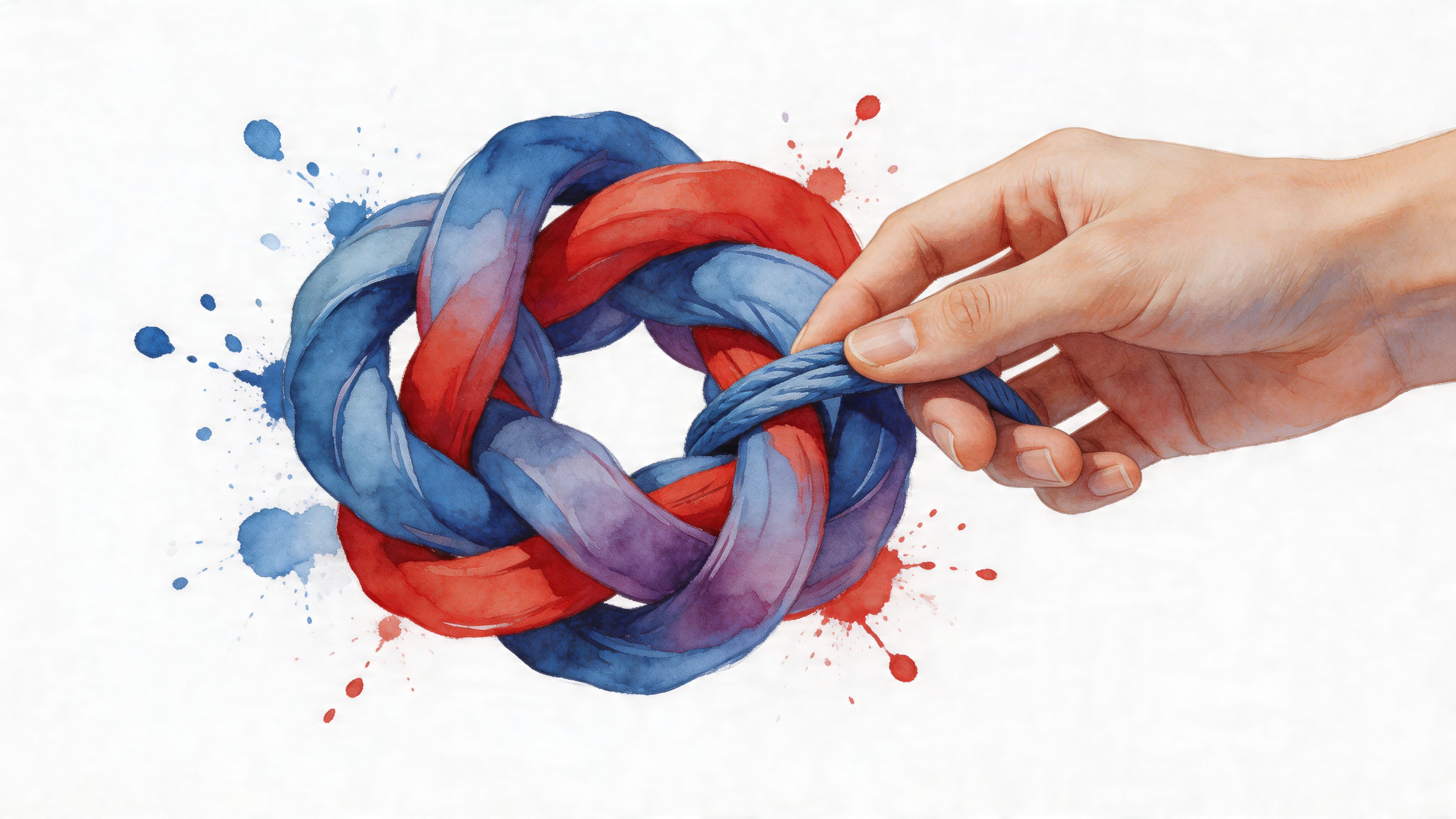
Healing often looks like untangling a knot, not flipping a switch.
If you struggle with chronic anxiety, don’t lose heart. The same nervous system that learned to overreact can learn safety, steadiness, and pause. Anger management courses can be one piece of that path. For many people, they become more effective when paired with anxiety-focused habits that help the body stop living on alert.
Frequently Asked Questions About Anger Management
Are anger management courses only for court-ordered cases
No. Some people take them because of legal or workplace requirements, but many join because they’re tired of hurting relationships, scaring themselves, or living in constant tension. A voluntary course can be a smart early step, not a last resort.
How long do they take
It varies. Some are short and educational. Others are more in-depth and skills-based. What matters most is whether the format gives you enough time to practice, reflect, and get feedback.
Is online learning as effective as in-person help
It depends on the level of accountability. According to this discussion of course effectiveness, self-paced online formats show a 25-35% success rate for sustained change, while approaches with therapist accountability reach 65%. If you choose online, guided support usually gives you a stronger chance of lasting progress.
What if my anger gets worse when I’m tired or stressed
That’s common. Poor sleep and overload lower your ability to regulate emotions. Supporting your body can help your anger work stick. If nights are part of the problem, this piece on regulating stress and anxiety may be useful.
Can I really change if I’ve been like this for years
Yes. Long-standing patterns can change with the right tools, repetition, and support. Slow progress still counts. The goal isn’t perfection. It’s more control, more peace, and fewer moments that leave you regretting who anger turned you into.
If anger and anxiety keep feeding each other in your life, The Anxiety Checklist can help you build a calmer daily system around whatever support you choose. It’s designed for people who want practical tools, clear thinking, and a path toward feeling safer in their own mind and body. If your real goal is to heal from anxiety and live panic free, that kind of structure can make the journey feel possible again.