

It’s late. Your body is tired, but your mind is fully awake.
You turn the pillow over, check the clock, and feel that sinking wave of frustration. Then the thoughts start stacking. What if I don’t sleep? What if tomorrow is a mess? What if this keeps happening? Anxiety loves that hour of the night, when the room is quiet and every worry sounds louder than it should.
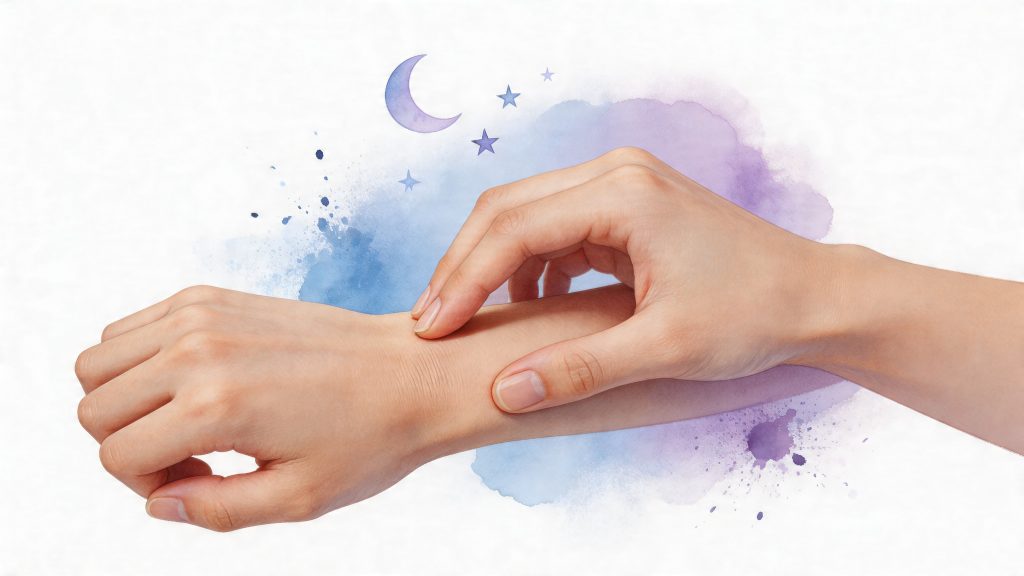
I know that spiral well. When anxiety-fueled insomnia hits, it can feel like your own body has stopped cooperating. That’s why acupressure for sleep can feel so different from passive fixes. It gives you something to do with your hands, your breath, and your attention. Instead of waiting for sleep to happen, you begin sending your body a steadier message: you are safe, you can soften, you can come down from alert mode.
This isn’t magic. It’s a simple self-soothing skill. And when panic has trained your system to stay on guard, practical tools matter.
Quieting the Anxious Mind for Restful Sleep
A lot of people don’t need another lecture about “better sleep habits.” They need help in the exact moment they’re lying awake, staring into the dark, feeling their chest tighten because sleep won’t come.
That’s where acupressure can be surprisingly comforting. You’re not trying to force unconsciousness. You’re giving your nervous system a physical cue that it can stop scanning for danger. For an anxious mind, that shift matters. Sometimes the most healing part is the sense of control. Your own hands become part of the calming process.

If your nights are chaotic, it also helps to look at your sleep setup as a whole. A thoughtful guide on how to improve sleep quality can support the environment around this practice, from lighting to bedtime rhythm.
Why this feels different when anxiety is involved
When insomnia is tied to anxiety, the problem usually isn’t just “not being sleepy enough.” It’s that your body feels stuck in vigilance. You may be exhausted and still feel wired. Your brain keeps checking for problems, replaying conversations, or predicting disasters that haven’t happened.
Acupressure gives that energy somewhere to go.
Instead of arguing with every thought, you press, breathe, and focus on a single point. That creates a small island of structure in a messy moment. Many people need that kind of grounding more than they need another abstract sleep tip.
Sometimes the first win isn’t falling asleep fast. It’s noticing that your body no longer feels like an emergency.
A gentler way to reclaim control
One reason I value this practice is that it doesn’t ask you to perform calmness. It lets you build calmness through touch, repetition, and attention. On hard nights, that’s far more realistic.
If anxiety often leaves you feeling confused about what’s happening in your mind and body, Anxiety University can help you understand those patterns more clearly. That understanding makes tools like acupressure easier to trust and use.
You don’t need perfect technique tonight. You just need a starting point. A few minutes of steady pressure, matched with slow breathing, can interrupt the feeling of helplessness that so often feeds sleeplessness.
How Acupressure Calms Your Nervous System
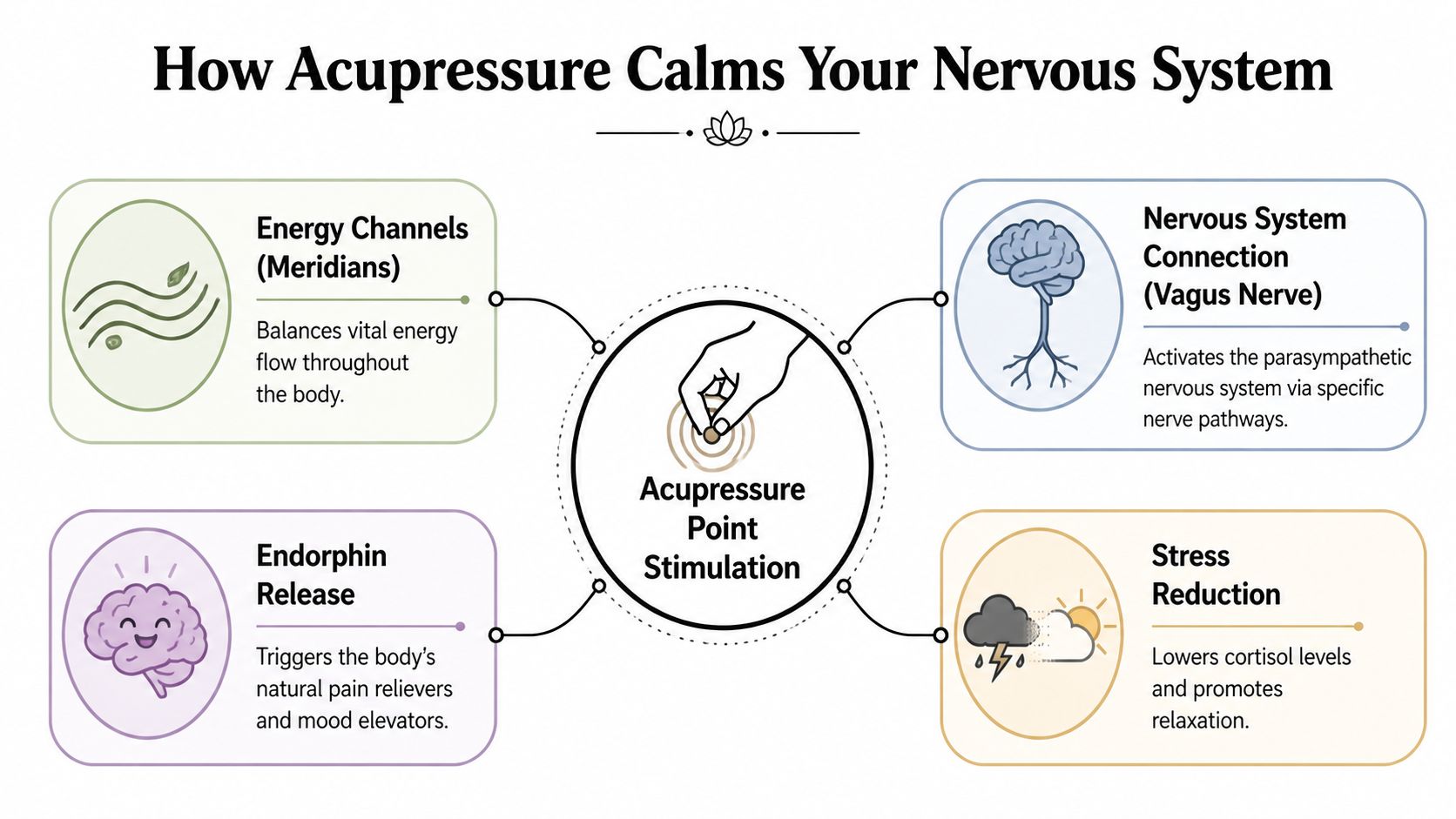
Acupressure can sound mysterious until you look at it in plain terms. You apply pressure to a specific point, stay with the sensation, and pair it with slower breathing. That combination can help your body shift away from high alert and toward a calmer state.
For anxious sleepers, that’s its main benefit. You’re not just pressing on skin. You’re using focused touch as a signal that it’s time to downshift.
What your body may be responding to
Traditional Chinese Medicine explains acupressure through meridians, or energy pathways. Modern readers may relate more to the nervous system side of the story. Either way, the practical idea is similar. Gentle, repeated stimulation can support relaxation.
Many people notice a few common effects:
- Their breathing slows down: Pressing a point gives your attention a home, which makes it easier to stop chasing every thought.
- Muscle tension eases: Jaw, shoulders, hands, and belly often begin to unclench when you stay still and use steady pressure.
- The mind becomes less scattered: A tactile practice can anchor you faster than trying to “think your way” into sleep.
This is also why acupressure pairs so well with breathing exercises for anxiety. The pressure gives you the anchor. The breath gives you the rhythm.
What the research says
A 2024 meta-analysis of 23 randomized controlled trials involving 1,689 patients found that auricular acupressure significantly improved sleep quality, with a notable reduction in Pittsburgh Sleep Quality Index scores, according to this Frontiers in Sleep review. That matters because it shows acupressure for sleep isn’t just a comforting ritual. It has meaningful clinical support.
For anxious readers, I think that does two things. First, it lowers the skepticism that often blocks us from trying something new. Second, it reframes acupressure as a valid non-drug option when sleep trouble and stress are tangled together.
Why anxious minds often need a physical tool
When you’re activated, logic alone may not help. You can know you’re safe and still feel unsafe. That gap is what makes insomnia so maddening.
Practical rule: If your thoughts are spiraling, use a body-based tool first. Calm the body, then ask the mind to settle.
That’s the strength of acupressure. It doesn’t depend on you feeling serene right away. It meets you in the messy middle, when your heart is racing, your thoughts are loud, and you need a direct route back to your body.
Your Bedtime Acupressure Routine for Deep Sleep
If you want to try acupressure for sleep tonight, keep it simple. You don’t need a dozen points or a perfect memory. A short routine done gently and consistently works better than an elaborate one you abandon after two nights.
Start by setting the scene. Dim the lights. Put your phone out of reach. Lie down or sit propped up in bed. Let your shoulders drop.
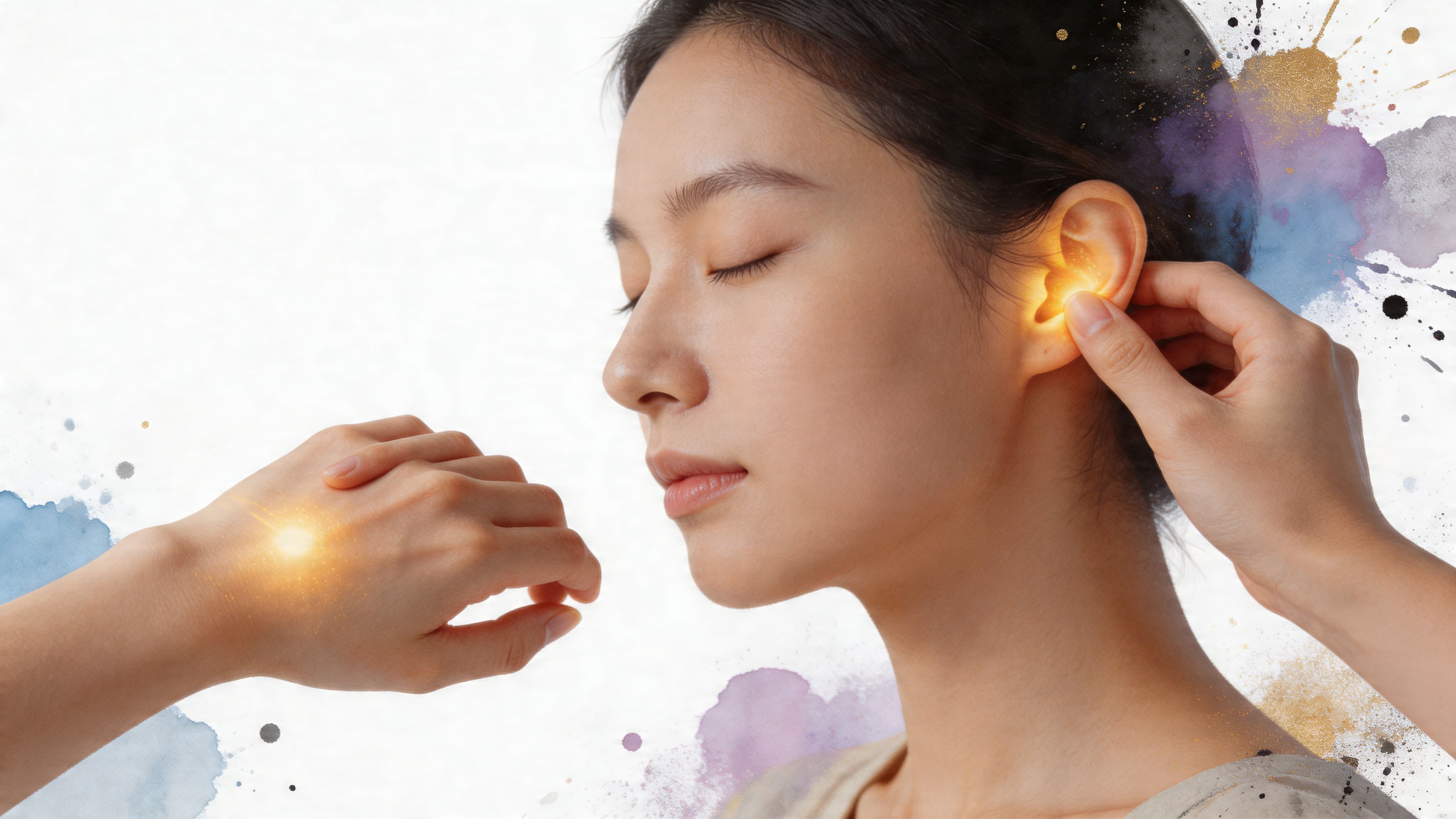
A practical routine can include key points such as Anmian and Neiguan (PC6). You can apply gentle but firm circular pressure for 2 to 3 minutes per point, and consistent nightly sessions of 10 to 15 minutes can significantly improve sleep onset and quality, as described in this Allina Health guide on acupressure points for sleep.
Before you touch any point
Use this short setup first:
- Lower the stimulation: Soft light tells your brain the day is ending.
- Choose a pace for your breath: Slow inhales and longer exhales usually feel best.
- Use comfortable pressure: Firm enough to feel, never hard enough to hurt.
- Let your jaw stay loose: Many people press points while clenching everywhere else.
If you already use progressive muscle relaxation for anxiety, this routine fits beautifully after it.
The three main points I’d start with
Anmian
Anmian is often described as a sleep point behind the ear. Look in the area behind the earlobe, near the place where the neck and jawline meet. You don’t need surgical precision. Aim for the tender hollow that feels calming under gentle touch.
Use one or two fingers and make small circles. Keep the motion slow. If one side feels more sensitive, spend a little longer there.
This point is useful when your mind feels noisy and you want your whole head and neck area to soften.
Neiguan or PC6
Neiguan sits on the inner wrist, about three finger-widths from the wrist crease. Place three fingers across the wrist crease, then look just above them in the center area between the tendons.
Press with your thumb. Hold steady or make tiny circles. Match the pressure to your breathing so the movement doesn’t become agitating.
This point can be especially comforting when anxiety shows up in the body as nausea, chest fluttering, or that restless “I can’t settle” feeling.
KD3 or Taixi
KD3 is located near the inner ankle, in the hollow between the ankle bone and the Achilles area. Press gently with your thumb and knead slowly.
I like this point because it draws attention downward. An anxious mind often lives in the head. Working with the ankle or foot can feel grounding in a very literal way.
Quick reference bedtime acupressure points
| Point Name | Location | Technique |
|---|---|---|
| Anmian | Behind the ear, near the hollow where the neck and jawline meet | Gentle circular pressure for 2 to 3 minutes on both sides |
| Neiguan (PC6) | Inner wrist, three finger-widths above the wrist crease | Firm but comfortable thumb pressure, hold or circle for 2 to 3 minutes each side |
| KD3 (Taixi) | Inner ankle, between the ankle bone and Achilles area | Slow kneading pressure for 1 to 2 minutes on both sides |
A routine you can follow without overthinking
Try this flow in bed:
- First minute: Place a hand on your chest and one on your belly. Exhale longer than you inhale.
- Next few minutes: Work on Anmian on both sides.
- Then move to the wrists: Press Neiguan on one side, then the other.
- Finish low in the body: Massage KD3 at each inner ankle.
- Close: Rest your hands and notice whether your face, throat, and belly feel softer.
Don’t chase a dramatic feeling. Look for subtle signs such as slower breathing, heavier eyelids, or less urgency in your thoughts.
If it helps to watch someone demonstrate the movements, this video can make the routine easier to follow:
What if you can’t find the exact spot
That’s one of the biggest worries people have, and it often stops them before they start. In real life, close is usually close enough. If you’re in the general area and the touch feels soothing, you’re doing useful work.
A bedtime acupressure routine isn’t a test. It’s a ritual. The point is to create repeated signals of safety, softness, and slowness. That’s what helps break the anxiety-insomnia loop.
Daytime Acupressure to Manage Anxiety and Prevent Insomnia
Better nights often begin in the afternoon.
If you spend the whole day tense, overstimulated, and rushing from one stressor to the next, bedtime can become the first moment your body has a chance to protest. That’s when all the unprocessed tension comes flooding in. Using acupressure earlier in the day can lower that background noise before it follows you into bed.

Three moments when this helps most
You don’t need to disappear into a wellness routine at work. Daytime acupressure can be small and private.
- Before a stressful meeting: Press Neiguan on your inner wrist while you wait. Keep your breathing even and let your shoulders drop.
- After a spike of irritation or bad news: Use the point behind the ear or massage your wrists and hands with intention. The goal is to interrupt the urge to carry that stress for hours.
- When your mind won’t stop rehearsing tonight’s sleep: Use a brief round of pressure in the afternoon so bedtime doesn’t become the only place you try to calm down.
Keep the pressure discreet and simple
During the day, I’d avoid turning this into a formal ritual unless that helps you. A lighter touch often works better because the purpose is regulation, not sleepiness. You want to lower the temperature of your nervous system without making yourself feel sluggish.
A few cues help:
- Keep your face relaxed: A calm hand with a clenched jaw sends mixed signals.
- Short is fine: Even a brief pause can stop anxiety from snowballing.
- Pair touch with one sentence: Try “I’m safe right now” or “I only need this moment.”
The best daytime version is the one you’ll actually use in a parking lot, at a desk, or in a bathroom stall before you walk back into life.
Build a lower-anxiety baseline
Daytime acupressure works best when it sits inside a larger pattern of care. Food, caffeine, hydration, movement, and screen habits all affect how wound up you feel by nightfall. If you want to support the whole system, these lifestyle and diet changes for anxiety can help.
One of the quiet gifts of this practice is that it teaches your body not to wait for a breakdown before it gets comfort. You can respond earlier. You can downshift sooner. You can stop treating calm like something that only matters at bedtime.
That shift changes nights. Not all at once, and not perfectly, but steadily.
Adapting Your Practice for Moments of High Anxiety
When anxiety rises fast, your goal changes. You’re no longer trying to create an ideal bedtime routine. You’re trying to interrupt a surge.
That’s where acupressure becomes an anchor. It gives you a fixed physical task when your thoughts are chaotic. You don’t need deep insight in that moment. You need one thing to do next.
Use one point as your emergency brake
Neiguan on the inner wrist is a strong choice for high-anxiety moments because it’s easy to reach and easy to remember. Find the point, press firmly but comfortably, and stop trying to solve your whole life while you do it.
Then add a breathing pattern with a clear shape. Box breathing works well because it gives your mind something structured to follow: inhale, hold, exhale, hold. If holding your breath feels uncomfortable, skip the holds and make the exhale longer.
Try this:
- Press Neiguan on one wrist
- Breathe in slowly
- Breathe out even more slowly
- Switch wrists when you notice your body unclenching even a little
If panic tends to make you feel unreal or disconnected, combine this with other grounding techniques for anxiety. Name five things you can see. Feel your feet on the floor. Let the pressure in your wrist remind you that you are here, now, in a body.
Why repetition matters when stress is high
This kind of coping works better when it isn’t brand new. Early research from 2010 on residents in long-term care facilities found that a five-week acupressure program significantly improved sleep quality, with benefits lasting up to two weeks post-treatment, as summarized in Healthline’s review of pressure points for sleep. I find that encouraging because it supports the idea that acupressure is not just a one-off trick. It can become a reliable response pattern.
That reliability matters during high anxiety. In a panicky state, the brain doesn’t want complexity. It wants familiarity.
When panic says, “You’re losing control,” a memorized physical routine quietly answers, “No, I know what to do.”
Don’t measure success by instant sleep
In moments of acute anxiety, success might mean your breathing gets less jagged. It might mean you stop pacing. It might mean you stay in bed instead of spiraling into more fear.
That still counts.
If your practice helps you reduce the intensity of the surge, you are building recovery. Over time, that teaches your body a hopeful lesson: distress can rise, and it can also come down.
Troubleshooting and Making Your Practice a Lasting Habit
Individuals don’t quit acupressure for sleep because it “doesn’t work.” They quit because they assume they’re doing it wrong.
That’s understandable. Anxiety turns every new habit into a test. If you don’t feel instantly calm, the mind jumps to failure. A better approach is to treat this like learning any body-based skill. You practice, notice, adjust, and repeat.
Common concerns that trip people up
I’m not sure I found the exact point
That’s normal. You’re aiming for the right area, not a microscopic dot. If the spot feels tender, calming, or like it helps you focus, stay there.
I don’t feel anything dramatic
You probably won’t, especially at first. Acupressure often works subtly. What you’re looking for is less activation, not fireworks.
My mind still races while I do it
That doesn’t mean the practice failed. Keep your attention on pressure plus breath. Racing thoughts can still be present while your body begins to soften.
Small adjustments that help
If the routine feels awkward, change one variable at a time:
- Shorten the session: A brief practice you repeat is more useful than a long one you dread.
- Reduce pressure: More force doesn’t mean more benefit. Gentle consistency beats aggressive pressing.
- Use the same order nightly: Repetition builds familiarity, and familiarity helps anxious bodies settle.
- Track simple signals: Notice how long it takes to feel a bit heavier, calmer, or less mentally busy.
A notebook can help here. Write down a few words each night: tense, calmer, restless, sleepy, woke at 3, fell back asleep. You’re not collecting perfect data. You’re teaching yourself to notice patterns rather than panic.
Safety and realism
There are a few important limits to keep in mind. Some points may not be appropriate during pregnancy, so it’s wise to check with a healthcare provider first. And if pressure causes pain or bruising, back off. Acupressure should feel supportive, not punishing.
Also, keep your expectations kind and realistic. This practice can be powerful, but it isn’t a moral test and it isn’t a cure-all. Persistent or severe sleep problems may need professional evaluation, especially if your insomnia feels relentless or comes with other health concerns.
Keep in mind: The win is not becoming a perfect sleeper overnight. The win is becoming someone who knows how to help their own nervous system settle.
That’s a lasting skill. It stays with you on hard nights, stressful afternoons, travel days, and those moments when panic tries to convince you that you’re helpless. You’re not helpless. You’re learning a repeatable way to respond.
If you want a practical system to track anxiety patterns, build calming routines, and turn tools like acupressure into a repeatable plan, The Anxiety Checklist offers a structured way to do that. It’s designed to help you understand your triggers, monitor progress, and create a more confident response to anxiety and panic over time.