

Does anxiety feel like a third person in your relationship, interrupting simple moments, shaping plans, and turning small misunderstandings into bigger ones? That dynamic is more common than many couples realize. Anxiety rarely stays contained inside one person. It changes tone, timing, energy, and how safe each partner feels bringing up what they need.
There is hope, and not the vague kind. Shared connection can become a steady counterweight to fear. One widely cited study of 2,500 couples tracked over two years found that couples who actively participated in games and activities together were about 67% more likely to stay together than couples who didn't. That doesn't mean every relationship problem is solved by planning more fun. It means intentional shared experiences matter, especially when stress and anxiety have made the relationship feel narrow, tense, or overly focused on symptoms.
If your nervous system has been stuck in survival mode, start by understanding nervous system dysregulation. Many couples think they're failing at communication when they're dealing with two overloaded nervous systems trying to protect themselves.
The bonding activities for couples in this guide aren't random date ideas. Each one can help reduce pressure, improve emotional safety, and make anxiety feel less isolating. Some are quiet and low stimulation. Some involve movement. Some create structure when conversations feel messy. Some help you rebuild play, which anxious couples often lose first.
You don't need to do all of them. Pick one that feels doable this week, not idealized for some future version of you. Healing usually starts there.
1. Guided Meditation and Mindfulness Sessions Together
Meditation works best for anxious couples when it lowers pressure instead of adding another standard to meet. Sitting together for five minutes on a couch, floor cushion, or bed can be more useful than forcing a perfect twenty-minute session that one of you dreads. Apps like Headspace, Calm, and Insight Timer make this easy because you don't have to lead each other.
A simple format works well. Choose one short guided practice, sit side by side, and agree in advance that nobody has to "do it right." When couples meditate together, they practice staying present without fixing each other, which is often the exact skill anxiety has disrupted.
Keep it short and predictable
Start with the least activating option. Breath counting, body scans, or the 5-4-3-2-1 grounding exercise are usually gentler than intense silence for someone who's already hyperaware of bodily sensations. If one partner has had a rough experience with meditation before, it's worth reading about understanding meditation-induced anxiety so the practice feels safer and more informed.
Try one of these setups:
- Side-by-side seating: Sit close enough to feel connection, but not so close that physical self-consciousness takes over.
- Same time each day: Morning coffee time or evening wind-down tends to work better than waiting for the "perfect" moment.
- Brief debrief: Afterward, each person answers one question: "What helped?" or "What felt hard?"
Practical rule: End the session while it still feels manageable. Consistency beats intensity.
Some couples like facing each other. I usually don't suggest that first if panic symptoms are active. Too much eye contact can feel exposing when you're trying to settle your body. Side by side often creates the same closeness with less performance pressure.
If guided meditation doesn't land, don't force it. Try a mindful stretch, a slow walk without phones, or two minutes of shared breathing with one hand on your own chest. The win isn't "becoming good at meditation." The win is teaching your bodies that calm can be practiced together.
2. Anxiety-Focused Conversation Dates
Unstructured anxiety talks often go badly. One person starts venting, the other jumps into solutions, and both leave feeling more alone. A conversation date fixes that by adding boundaries, timing, and a clear purpose.
Set aside a regular slot, maybe over tea after dinner or during a quiet weekend morning. Keep phones away. Use a timer so each person gets uninterrupted space. The listener's job is not to debate whether the fear is rational. The listener's job is to understand what the fear feels like from the inside.
Questions that actually help
Generic prompts like "How are you?" are usually too broad. More useful prompts are specific and present-focused.
Try these:
- Name the trigger: "What felt hardest for you this week?"
- Map the body: "Where did you feel anxiety first?"
- Clarify support: "When I see you getting overwhelmed, what helps most and what makes it worse?"
- Spot the pattern: "Did anything this week remind you of an older fear?"
If you need shared language for these talks, explore anxiety learning resources. Couples often improve because they stop treating anxiety like a character flaw and start treating it like a pattern they can study together.
The point isn't to make every date serious. It's to create one protected place where anxiety doesn't hijack the whole relationship because it finally has somewhere to be named. That's very different from letting every evening turn into a crisis review.
If you're the supporting partner, resist the urge to say "but you're fine." It usually lands as dismissal, even when you mean reassurance.
A useful closing ritual helps. Each partner can say one sentence of appreciation such as, "Thank you for telling me that," or "I can see how hard you've been working." That keeps the conversation from ending in exposed silence.
What doesn't work is doing this only when someone is already flooded. Anxiety-focused conversation dates are preventive care. They lower the odds that the next difficult moment turns into panic, defensiveness, or shutdown.
3. Couples Workout and Physical Activity
What happens to your relationship when both of your nervous systems are already running hot before a hard conversation even starts?
Physical activity helps because it lowers the body's threat level first. For many couples, that changes the tone faster than trying to talk through anxiety while both partners are tense, restless, or on edge. I often suggest movement as a regulation tool, not a fitness goal. That distinction matters.
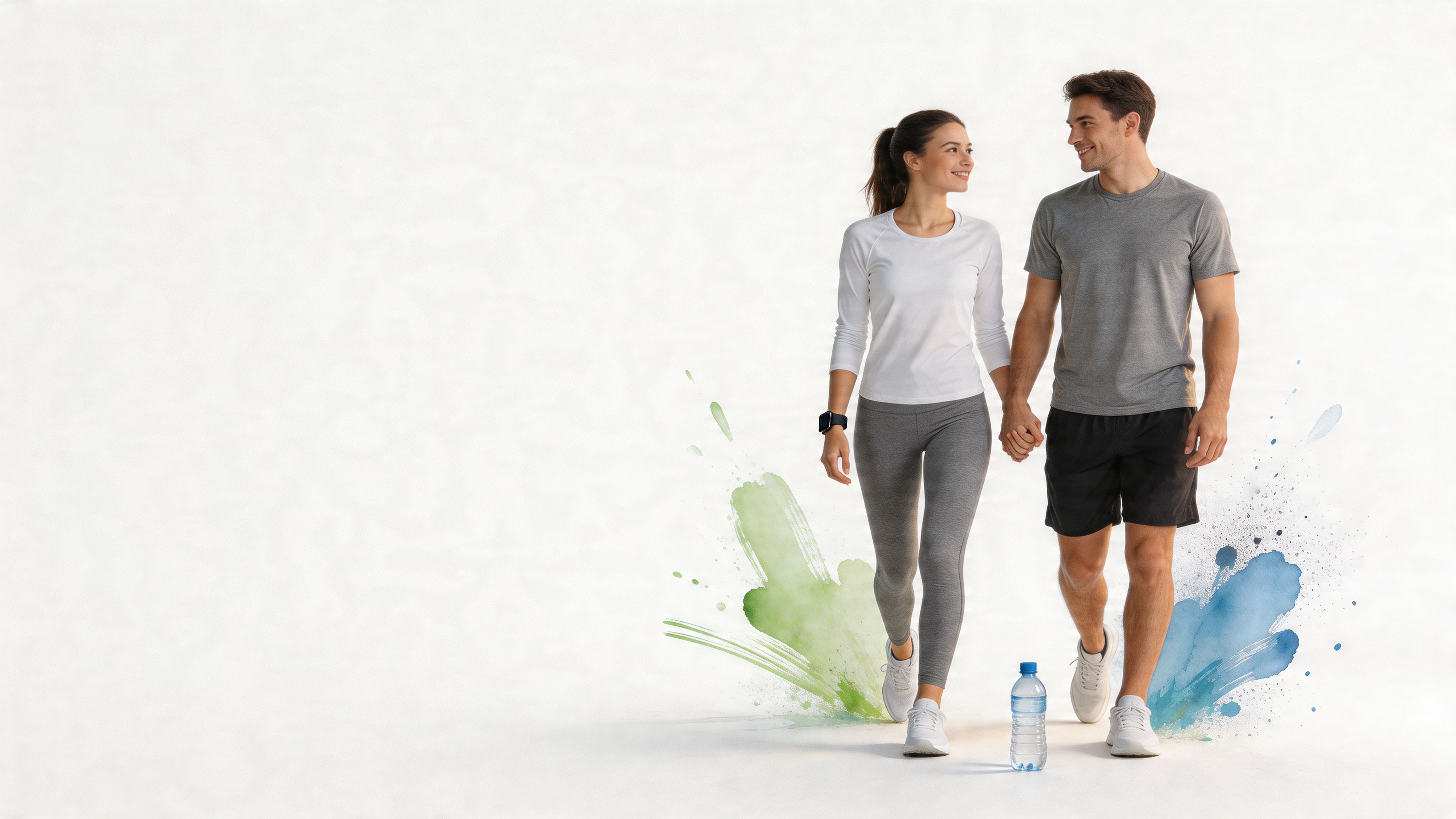
Walking is usually the best entry point. It asks very little of you, leaves room for silence, and gives anxious energy somewhere to go. A walk around the block, ten minutes of stretching, or a beginner yoga session in the living room can shift a rough evening without turning it into a big production.
A simple visual can help motivate the habit:
Choose regulation over intensity
The best couple workouts for anxiety are the ones you can repeat. High-intensity exercise can be great for some people, but it can also mimic panic symptoms such as a racing heart, shortness of breath, dizziness, or chest tightness. If either partner is panic-prone, choose forms of movement that feel steady and predictable on difficult days.
Good options include:
- Walking dates: Easy to adjust in real time. If one partner starts feeling flooded, slow down, shorten the route, or head home.
- Beginner yoga: Builds breath awareness and helps couples notice tension before it turns into irritability or shutdown.
- Dance classes at home: Adds play, eye contact, and laughter without the pressure of a public setting.
- Light hiking: Works best with familiar trails, cell service, water, and a clear turnaround point.
A few anxiety-sensitive adaptations make these activities work better. Agree before you start that either person can pause without having to justify it. Keep the first few sessions short enough that success feels realistic. If one partner gets exercise-triggered anxiety, skip performance tracking and avoid language about pushing harder.
Use a simple check-in before and after. Ask, "What does your body need today, calming or energy?" Then ask, "Do you feel more settled, the same, or more activated?" Those answers help couples choose the right kind of movement instead of repeating workouts that insidiously make anxiety worse.
If you want a guided option, try a short couples yoga or mobility session like this one:
The last five minutes matter as much as the workout itself. Sit on a bench, stretch on the floor, or drink water together in silence. That recovery window teaches the body a useful sequence: activation, settling, safety, connection. Over time, couples start to trust that anxious energy can rise without taking over the whole evening.
4. Creative Projects and Artistic Collaboration
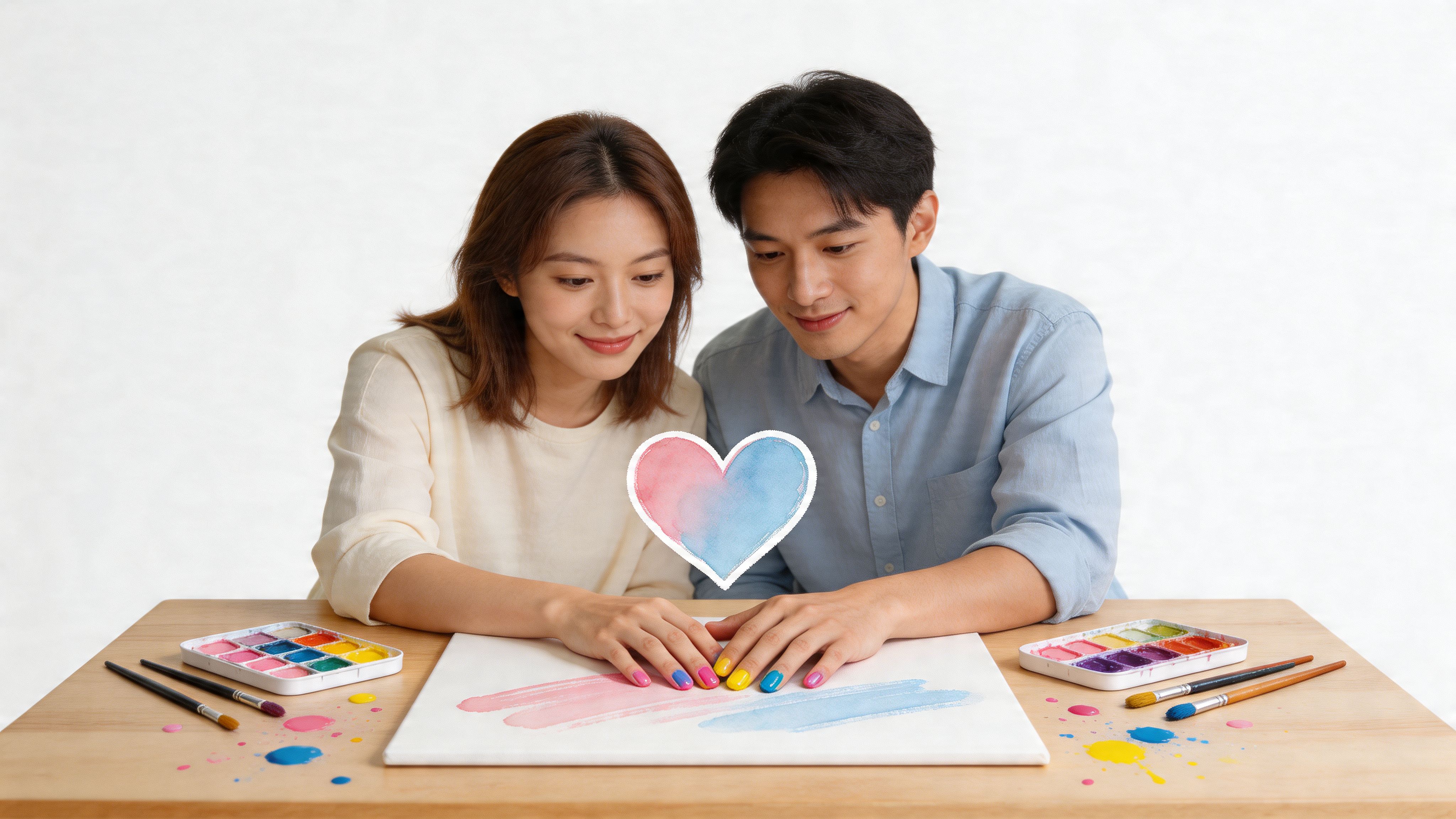
Creativity gives anxious couples a different route into connection. Instead of talking directly about fear, you make something together and let the process surface what it surfaces. That's often easier, especially for couples who freeze up in intense conversations.
Painting, cooking, writing, building a vision board, decorating a room corner, or making a playlist all work. The best creative projects have a small enough scope that they can be completed or meaningfully advanced in one sitting. Finishing something together builds confidence. Anxiety often steals that feeling first.
Process matters more than talent
Perfectionism can ruin creative bonding fast. If one partner starts treating the activity like a performance review, the anxious partner may shut down or become overly self-critical. Pick projects where "messy but shared" still feels successful.
A few good fits:
- Joint journaling: Write on the same prompt, then share only what feels safe.
- Cook a new recipe together: One person preps, one person stirs, both taste and adjust.
- Paint with a tutorial video: Following a guide reduces blank-page stress.
- Build a calming corner at home: Choose lighting, blankets, scents, and objects that help both of you regulate.
Creative collaboration also reveals patterns gently. You learn who rushes, who hesitates, who needs reassurance, and who gets controlling under stress. Those are useful relationship insights, but they arise during a task rather than a confrontation.
Some couples talk best when their hands are busy. If face-to-face conversation feels too intense, create side by side.
One of my favorite prompts for anxious couples is simple: "Make something that represents what safety feels like." It could be a collage, a meal, a playlist, or a page in a notebook. The answer doesn't have to be deep or polished. It just has to be real.
5. Quality Time and Presence Rituals
Not every bonding activity needs to be novel. In fact, anxious couples often need repetition more than excitement. A reliable ritual can calm relationship uncertainty because both partners know, "We reconnect here."
This might be morning coffee without phones, ten minutes on the couch after work, a walk after dinner, or a weekly check-in on Sunday evenings. Rituals work because they turn connection into a habit instead of a rescue plan.
Rituals reduce guesswork
Anxiety feeds on ambiguity. If one partner is always wondering when they'll get your attention, reassurance, or emotional availability, tension builds before any real problem appears. A small ritual gives the relationship a dependable anchor.
Strong rituals usually include:
- A fixed cue: Same mug, same chair, same time of day.
- A short timeframe: Fifteen minutes is enough if it's protected.
- A clear rule: No multitasking, no doomscrolling, no TV in the background.
- A simple prompt: "What was heavy today?" or "What felt good today?"
For couples who want more play in these moments, card games and low-pressure prompts can help. This guide from Very Special Games on couple games shows how simple game-based connection can keep quality time from becoming stiff or repetitive.
The trap to avoid is turning ritual time into relationship management every single day. Sometimes your ritual should just be tea, silence, and shared presence. Anxiety improves when the relationship contains spaces where nothing needs fixing.
If one partner says, "This feels forced," that's useful information, not failure. Shorten it. Make it less formal. Sit on the porch instead of at the table. Rituals should feel steady, not scripted.
6. Nature-Based Bonding and Outdoor Exploration
Nature can help anxious couples because it widens attention. Indoors, stress tends to narrow everything to symptoms, schedules, and unresolved conversations. Outside, the body usually gets more sensory input and less social pressure.
The best version isn't always a big hike. For many couples, a local park, beach walk, botanical garden, or familiar trail is better than an ambitious outdoor plan that creates more stress than relief.

Keep the stimulation matched to the anxiety
Many "fun couple activities" lists often fall short. If someone deals with panic, off-grid camping, long drives with no easy exit, or high-effort excursions may feel threatening rather than bonding. Familiar and low-stakes often works better.
Useful outdoor options include:
- A short park loop: Good for grounding and easy conversation.
- Beach or lakeside walk: Rhythmic movement and a predictable environment help.
- Backyard reset time: Especially useful if leaving home feels too hard that day.
- Easy scenic drives with planned stops: Better than open-ended wandering for some couples.
Pack for regulation, not just fun. Bring water, layers, snacks, medication if relevant, and a clear backup plan. Anxiety gets quieter when both partners know there's an exit path.
Leave before exhaustion. Ending while both of you still feel okay makes it easier to go again.
During the walk, try a shared sensory prompt: each person names one thing they see, hear, smell, and feel physically. It's simple, but it shifts attention away from catastrophic thinking and back into the present environment. Among bonding activities for couples, this one is especially good for pairs who need closeness without too much direct intensity.
7. Shared Learning and Skill-Building Courses
Could a class give you something anxiety has been stealing from the relationship. A sense of progress you can share?
Shared learning works well for couples who need connection with a clear structure. You are not trying to force a big emotional moment. You are giving yourselves a small, repeatable challenge with a beginning, middle, and end. That predictability matters when panic, avoidance, or anticipatory anxiety has started shrinking your world.
The best courses are simple enough that neither partner feels exposed. Cooking, beginner dance, photography, language learning, and practical mental health education all fit. Keep the goal modest. If the class is too advanced, one partner can slip into self-criticism while the other becomes a coach, and that dynamic rarely feels good.
Build competence without turning it into a performance
I often suggest treating the course like practice, not a test. Anxiety already makes people scan for signs of failure. A class should lower pressure, not add another scorecard.
A useful setup looks like this:
- Choose one reason for doing it: Better teamwork, more confidence, a weekly routine, or less avoidance.
- Stay at beginner level: Early wins help both partners keep showing up.
- Set a short practice window: Ten to fifteen minutes is easier to repeat than an hour-long session.
- Use check-ins instead of critique: Ask, "What felt easier today?" before asking, "What did we get wrong?"
- Plan an exit option: If one partner gets overwhelmed, agree on a pause signal and a low-drama way to stop.
If anxiety is part of the topic, shared education can be especially useful. Working through online CBT training to manage anxiety gives couples concrete language for thought spirals, avoidance, reassurance loops, and exposure. That shifts the conversation from "Why are you reacting like this?" to "Which skill would help right now?"
A few prompts can keep the learning collaborative:
- What part of this feels interesting, and what part feels activating?
- Do you want encouragement, problem-solving, or just company while you try this?
- What would make next time feel 10 percent easier?
Travel planning can count as shared learning too, especially for couples rebuilding confidence after panic or burnout. Researching routes, reading about logistics, and choosing low-pressure activities can make a future trip feel safer and more mutual. Looking through best Lake Bled adventures can work well if dreaming about a calm, beautiful destination helps you reconnect without committing to anything intense yet.
The point is not mastery. The point is practicing how to learn, adjust, and recover together. That is a relationship skill, and anxious couples benefit from it far beyond the class itself.
8. Couples Therapy or Workshops
What if the bonding activity that helps most is one with a trained guide in the room?
For couples dealing with anxiety, therapy or a focused workshop can interrupt patterns that love alone does not fix. I often see the same cycle. One partner asks for reassurance, the other tries to calm things down, both get exhausted, and neither feels understood. A skilled therapist helps the couple slow that cycle, name it, and practice a different response while it is happening.
This option tends to help most when panic is shaping the relationship itself, not just one person's internal experience. Common signs include repeated reassurance loops, conflict that spikes fast, avoidance of plans because one partner may get overwhelmed, or a caretaker dynamic that has started replacing mutual support. Workshops can be a better starting point for couples who want structure and psychoeducation but are not ready to commit to weekly sessions.
Why guided support helps anxious couples differently
Self-help is useful, but it has limits. In the moment, anxious couples often need pacing, translation, and containment. Therapy provides all three.
A good clinician can pause an argument before it turns into a threat response. They can help the anxious partner say, "I'm scared and seeking certainty," instead of protesting or shutting down. They can help the other partner respond with care without slipping into over-functioning or resentment. That is what makes therapy a bonding activity rather than just a problem-solving appointment.
Look for practical signs that the support fits your situation:
- The therapist understands anxiety patterns: panic, avoidance, health anxiety, reassurance-seeking, and sensory overwhelm can all show up differently in couples work.
- They stay balanced with both partners: each person needs to feel safe enough to be honest.
- They give specific exercises between sessions: change usually happens in daily life, not only in the office.
- They can turn blame into a shared formulation: "us versus the cycle" works better than "who started it."
If you're sorting through formats and providers, this overview of psychotherapy options for anxiety can help you choose support that matches the level of distress and the kind of symptoms involved.
Workshops and therapy also give couples a place to rehearse hard conversations before a real trigger hits. That matters for anxiety management. Partners can practice what to say during the first signs of panic, how to ask before giving advice, when to step in, and when to give space. Those details reduce guesswork, which usually reduces conflict.
A few prompts can make sessions more useful between appointments:
- What does anxiety ask each of us to do in this relationship?
- What response helps you feel safer without feeding the spiral?
- How will we tell the difference between support and over-accommodation?
- What is our plan if one of us gets flooded during a hard conversation?
Digital tools can support that work between sessions. Research on the Paired app, published in PMC, found that users with more than three months of consistent use reported relationship quality scores 35.5% higher than new users, and the study's interview data suggested the app prompted more meaningful conversations in daily life. An app does not replace treatment, but it can help couples keep practicing short, structured connection.
Some couples also use guided prompts at home to reinforce what they are learning in therapy, especially if anxiety makes appreciation harder to express in the moment. Tools that help couples overcome anxiety with affirmations can work well as a low-pressure bridge between sessions.
Go in with a shared question: what happens to us when anxiety takes over, and how do we want to respond next time? That frame keeps the work collaborative, which is usually where healing starts.
9. Gratitude and Affirmation Practices
Anxiety trains attention toward threat. In relationships, that often means both partners start noticing what's missing, what's off, what's delayed, or what might go wrong. Gratitude and affirmation practices help rebalance attention without pretending hard things aren't real.
This isn't about forced positivity. It only works when the appreciation is specific, believable, and grounded in what happened. "You're amazing" is nice. "I appreciated that you stayed with me when I was spiraling instead of trying to rush me" lands much deeper.
Make appreciation concrete
The easiest way to build this habit is to attach it to an existing routine. Morning coffee, bedtime, getting into the car, or sitting down to dinner all work. Keep it brief enough that you'll repeat it.
A few formats that tend to stick:
- One appreciation at bedtime: Each partner names one thing the other did that mattered.
- A shared note or jar: Write short thank-yous and read them later together.
- Midday text check-ins: Not constant messaging. Just one meaningful sentence.
- Mirror encouragement before a stressful event: Especially helpful before social plans, appointments, or travel.
If you want extra structure, guided tools can support the habit. Some couples benefit from prompts that help them overcome anxiety with affirmations instead of defaulting to criticism or silence.
This practice is especially important when one partner's anxiety has become the main topic in the relationship. The anxious partner needs to be seen as more than a struggle. The supporting partner needs appreciation too. Otherwise resentment builds.
What doesn't work is using affirmations to bypass pain. If your partner says they're terrified and you answer only with a positive phrase, it can feel dismissive. Validation first, affirmation second works better. "I know today is hard. I also see how brave you're being."
10. Couples Volunteering and Service Activities
Could doing something for someone else help both of you feel safer together?
For many couples, yes. Service can interrupt the tight inward focus that anxiety creates. Instead of spending the whole day tracking symptoms, scanning for danger, or arguing about reassurance, you share a task that has a clear purpose and a defined end point. That structure matters. It gives anxious nervous systems something concrete to do, while giving the relationship a role beyond crisis management.
The best fit is usually modest, predictable, and easy to leave. Food banks, library events, community gardens, donation sorting, neighborhood cleanups, and animal shelters tend to work better than high-intensity crisis roles, especially early on. I usually suggest starting with a single shift under two hours, with your own transportation and a plan to step out if either partner gets overwhelmed.
Service gives couples a different kind of evidence
You are not just "spending time together." You are watching how your partner handles stress, responds to other people, and follows through on something that matters. That kind of evidence can rebuild trust after a stretch where anxiety has taken over the relationship.
It also helps couples practice resilience in a lower-pressure setting. One partner might notice early signs of activation and ask for a five-minute break. The other can respond with support instead of panic. That is a useful rehearsal for real life.
A few common trade-offs matter here:
- Highly structured roles: Packing boxes, sorting supplies, or setting up tables often feel steadier for anxious partners who do better with clear instructions.
- Social roles: Greeting guests or helping at events can build confidence, but may be too activating during a high-anxiety week.
- Animal-focused service: Often calming, especially for couples who regulate well through movement and nonverbal connection.
- Cause-based work tied to trauma or mental health: Meaningful, but sometimes emotionally expensive. Choose it carefully.
Make the activity anxiety-sensitive on purpose. Go at an off-peak time if crowds are hard. Agree on a private signal that means "I need a break" or "please take the lead." Keep expectations realistic. A successful volunteer date is not the longest shift or the hardest assignment. It is a shared experience that leaves both partners feeling useful, connected, and within their window of tolerance.
A short debrief helps this activity do more than fill time. Try asking: What felt grounding today? What started to spike your anxiety? When did you feel supported by me? What should we repeat, and what should we change next time?
Service will not stop panic on its own. It can, however, help couples remember something anxiety makes easy to forget. Your relationship is still capable of generosity, teamwork, and meaning. That reminder can be stabilizing in a way that generic date ideas often are not.
10-Point Comparison: Couples Bonding Activities
| Activity | Implementation Complexity 🔄 | Resource Requirements ⚡ | Expected Outcomes 📊⭐ | Ideal Use Cases 💡 | Key Advantages ⭐ |
|---|---|---|---|---|---|
| Guided Meditation and Mindfulness Sessions Together | 🔄 Low–moderate: short routines, consistent scheduling | ⚡ Low: apps or videos, quiet space, 5–30 min | 📊 Better nervous-system regulation and acute anxiety reduction; ⭐️⭐️⭐️ | 💡 Couples wanting shared calming practice or panic tools | ⭐ Strengthens empathy, low cost, synchronized relaxation |
| Anxiety-Focused Conversation Dates | 🔄 Moderate: structured prompts and facilitation | ⚡ Low: prompts, timer, quiet setting | 📊 Increased understanding, trust, and trigger clarity; ⭐️⭐️⭐️ | 💡 Couples needing improved communication around anxiety | ⭐ Builds intimacy, reduces shame, clarifies support needs |
| Couples Workout and Physical Activity | 🔄 Moderate: planning and regular commitment | ⚡ Low–moderate: gear or gym access, time | 📊 Reduced anxiety frequency, improved mood and fitness; ⭐️⭐️⭐️ | 💡 Active couples seeking mood boost + accountability | ⭐ Evidence-backed anxiety reduction via exercise and endorphins |
| Creative Projects and Artistic Collaboration | 🔄 Low–moderate: flexible process, potential vulnerability | ⚡ Low: basic materials or apps | 📊 Lowers rumination and cortisol; fosters emotional expression; ⭐️⭐️ | 💡 Couples wanting expressive outlets and flow states | ⭐ Encourages flow, creates shared keepsakes, affordable |
| Quality Time and Presence Rituals | 🔄 Low: simple to implement but requires discipline | ⚡ Minimal: time and phone-free agreement | 📊 Increased attachment security and reduced relationship anxiety; ⭐️⭐️⭐️ | 💡 Couples needing predictable emotional safety and routine | ⭐ Easy to customize, strengthens everyday connection |
| Nature-Based Bonding and Outdoor Exploration | 🔄 Moderate: planning, accessibility and safety checks | ⚡ Low–moderate: access to outdoor spaces, basic gear | 📊 Strong cortisol reduction, grounding, and mood benefits; ⭐️⭐️⭐️ | 💡 Couples who benefit from sensory grounding and adventure | ⭐ Combines nature exposure + activity for high-impact relief |
| Shared Learning and Skill-Building Courses | 🔄 Moderate–high: structured curriculum and scheduling | ⚡ Moderate: course fees, time commitment, possible travel | 📊 Builds competence, shared identity, and structured progress; ⭐️⭐️ | 💡 Couples seeking growth, shared goals, or new hobbies | ⭐ Fosters mastery, conversation topics, and collaborative goals |
| Couples Therapy or Workshops (Professional Support) | 🔄 High: professional process and potential long-term work | ⚡ High: fees, scheduling, therapist selection | 📊 Deep, targeted improvements in relationship and anxiety; ⭐️⭐️⭐️⭐️ | 💡 Couples with persistent or complex anxiety-related issues | ⭐ Evidence-based, personalized, third-party mediation and accountability |
| Gratitude and Affirmation Practices | 🔄 Low: simple rituals that require authenticity | ⚡ Minimal: time, optional notes or apps | 📊 Counters negative thought patterns and boosts reassurance; ⭐️⭐️ | 💡 Couples wanting daily positivity and cognitive reframing | ⭐ Free, easy to implement, strengthens positive feedback loops |
| Couples Volunteering and Service Activities | 🔄 Moderate: coordination and ongoing commitment | ⚡ Low–moderate: time, travel depending on role | 📊 Increases purpose, reduces self-focus and isolation; ⭐️⭐️ | 💡 Couples seeking meaning, shared values, and community ties | ⭐ Shifts attention outward, builds shared purpose and belonging |
Your Path to a Panic-Free Partnership
A calmer relationship usually isn't built through one dramatic breakthrough. It's built through repeated moments that teach both people, "We're safe enough to turn toward each other again." That's why bonding activities for couples matter so much when anxiety has been taking up too much space. They restore patterns that fear tends to erase: play, presence, teamwork, curiosity, shared purpose, and small experiences of success.
If you're feeling discouraged, start smaller than your mind says you should. A five-minute meditation. A ten-minute walk. One honest check-in without fixing. One evening with phones away. One gratitude statement before bed. These don't look impressive from the outside, but they're often exactly how healing starts. Anxiety wants you to believe that unless you're doing something major, nothing is changing. That's rarely true.
I've seen, and personally understand, how anxiety can make love feel harder to access even when the love is still there. It can turn simple plans into negotiations. It can make reassurance feel temporarily helpful but never quite enough. It can leave the supporting partner tired and the anxious partner ashamed. None of that means the relationship is doomed. It means the relationship needs tools that work with the nervous system you have, not the one you wish you had.
That's also why the right activity depends on the day. On one day, movement helps most. On another, stillness helps. Some couples need more fun because anxiety has made everything too serious. Others need more structure because every hard conversation spills everywhere. Some need professional guidance because the cycle is too established to unwind alone. The goal isn't to become the kind of couple who does every healthy thing perfectly. The goal is to become the kind of couple who notices what helps and returns to it consistently.
The hopeful part is this. Connection is trainable. So is calm. So is honest communication. So is repair. A relationship can become a place where panic loses some of its power, not because life becomes stress-free, but because you stop facing stress as two isolated people trapped in the same room. You start facing it as partners.
Choose one activity from this list and make it concrete. Put it on the calendar. Lower the expectations. Decide how long it will last. Decide what would make it feel safe enough to repeat. Then do it again before you evaluate whether it's "working." Repetition matters more than intensity.
If you want a fuller framework for that process, The Anxiety Checklist can help. Used well, it gives individuals and couples a practical way to understand patterns, build routines, and respond to anxiety with more clarity and less chaos. That kind of structure can make the difference between hoping things improve and creating conditions where they do.
If you want practical support beyond ideas and inspiration, The Anxiety Checklist offers a structured way to turn anxiety insight into action. It brings together tools for identifying triggers, tracking symptoms, building healthier routines, and responding to panic with a clearer plan, which can help both you and your partner move toward a steadier, more connected, and more fearless life.