

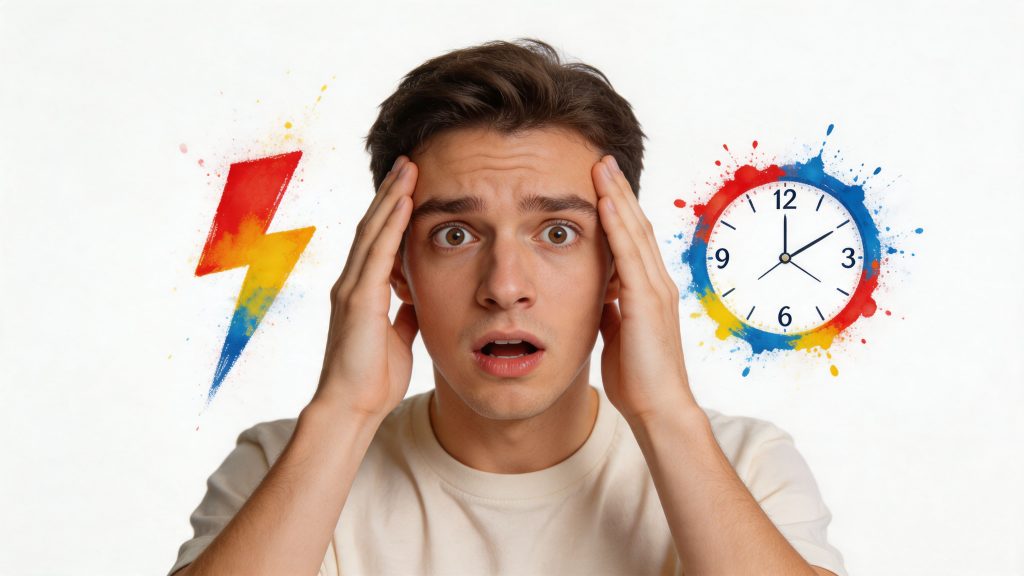
Acute stress is your body's immediate, short-term alarm response to a perceived challenge or threat. It's normal, often helpful, and usually passes once the stressful moment ends.
If you're reading this with a tight chest, shaky hands, or that awful sense that your body is doing something dramatic without your permission, you're not broken. A lot of anxious people mistake acute stress for danger itself, when it's often the body trying, a bit clumsily, to protect them.
That can happen after slamming on the brakes, getting an unexpected phone call from your boss, hearing a loud noise at night, or realizing you sent an email to the wrong person. Your system hits the alarm. Heart races. Breathing changes. Muscles brace. Thoughts speed up.
The hopeful part is this. Once you understand the acute stress definition in plain language, the experience gets less mysterious and less frightening. And when something feels less mysterious, it's usually easier to manage.
Your Body's Alarm System An Introduction to Acute Stress
You slam on the brakes, your coffee spills, and for a few seconds your whole body feels louder than usual. Your heart races. Your hands tighten on the wheel. After the danger passes, you may still feel shaky, wired, or unsettled.
That reaction is acute stress. Your nervous system works like an alarm system in a house. It reacts fast, gets your attention, and prepares you to respond before your thinking brain has fully caught up.
Acute stress is a normal human response to pressure, surprise, or threat. It can feel intense, especially if you already live with anxiety, but intensity alone does not mean something is going terribly wrong. In many cases, your body is doing exactly what it was built to do. It is trying to protect you quickly.
The confusing part is how similar a protective stress response can feel to danger itself. A pounding heart, tight chest, fast breathing, and a rush of thoughts can make people wonder if they are losing control or facing a serious medical problem. I know that fear can arrive fast. Once you understand that your body is sounding an alarm, not sending a prophecy, the experience often becomes less frightening.
That shift matters.
When you can name what is happening, you have a better chance of responding with skill instead of adding a second layer of panic on top of the first one. This article is built to help you do that. You will learn how to tell apart a common short-term stress reaction from problems that need more attention, and you will get simple tools you can use in the moment.
If you want more plain-English support along the way, the free anxiety education hub offers practical guidance you can return to at your own pace.
What Exactly Is Acute Stress
Think of acute stress as your body’s turbo boost. It’s built for short bursts, not for running all day.

The simple acute stress definition
The clearest acute stress definition is this: a short-term survival response that switches on when your brain senses a threat or demand. That threat can be physical, social, emotional, or situational.
Sometimes the trigger is obvious, like a near accident. Sometimes it’s less dramatic, like public speaking, a tense conversation, or opening an email you’ve been dreading. The body doesn’t always distinguish between “I might be physically unsafe” and “I feel intensely pressured.”
Why your body does this
Your nervous system isn’t trying to sabotage you. It’s trying to prepare you.
In a brief stress moment, your body redirects energy toward action. That can make you feel more alert, faster, stronger, and more focused for a short time. In everyday life, that might help you react quickly, meet a deadline, or get through a difficult conversation.
A useful way to understand this is:
- Like a smoke alarm: It’s meant to alert you fast.
- Like turbo mode: Helpful for a burst, exhausting if it stays on.
- Like a guard dog: Protective, but sometimes too sensitive.
Helpful reframe: Acute stress isn't proof that you're weak. It's proof that your body knows how to mobilize.
The key feature is that it’s temporary. Acute stress rises in response to something happening now, then settles when the situation passes and your system gets the message that you’re safe enough again.
Common Triggers and Symptoms of Acute Stress
Acute stress can show up in very ordinary moments. One person feels it before a presentation. Another feels it during an argument. Someone else feels it on a first date, in heavy traffic, or while waiting for medical test results.
The trigger doesn’t have to be “bad” in a moral sense. It just has to feel demanding, unpredictable, or threatening to your system in that moment.
What can trigger it
Some common examples include:
- Sudden conflict: an argument with a partner, friend, coworker, or family member
- Time pressure: running late, a looming deadline, or too many tasks at once
- Social exposure: interviews, presentations, networking, dating, or being called on unexpectedly
- Near misses: almost falling, nearly getting into a car accident, hearing a crash nearby
- High-stakes news: a phone call from school, work, or a doctor’s office
- Exciting events: roller coasters, competitions, performances, even happy milestones
If you often react strongly to certain situations, it can help to learn your personal pattern. This guide to factors triggering anxiety can help you spot themes.
What acute stress usually feels like
Physical symptoms often come first:
- Racing heart
- Shallow breathing
- Tight jaw or tense shoulders
- Sweaty palms
- Butterflies or an upset stomach
- Feeling shaky, restless, or keyed up
Mental and emotional symptoms can follow right behind:
- Irritability
- A sudden wave of fear
- Difficulty concentrating
- Feeling on edge
- A strong urge to escape or fix the problem immediately
One person may notice mostly body symptoms. Another may notice thought spirals first. Neither response is “wrong.” It’s how your system expresses stress.
How Acute Stress Differs from Panic and Chronic Conditions
A racing heart after a near miss in traffic is not the same experience as waking up every day already tense, and it is not the same as a sudden wave of terror that makes you feel as if something terrible is happening inside your body. The labels can blur together when you are in the middle of it. Still, separating them helps because each one calls for a different kind of response.
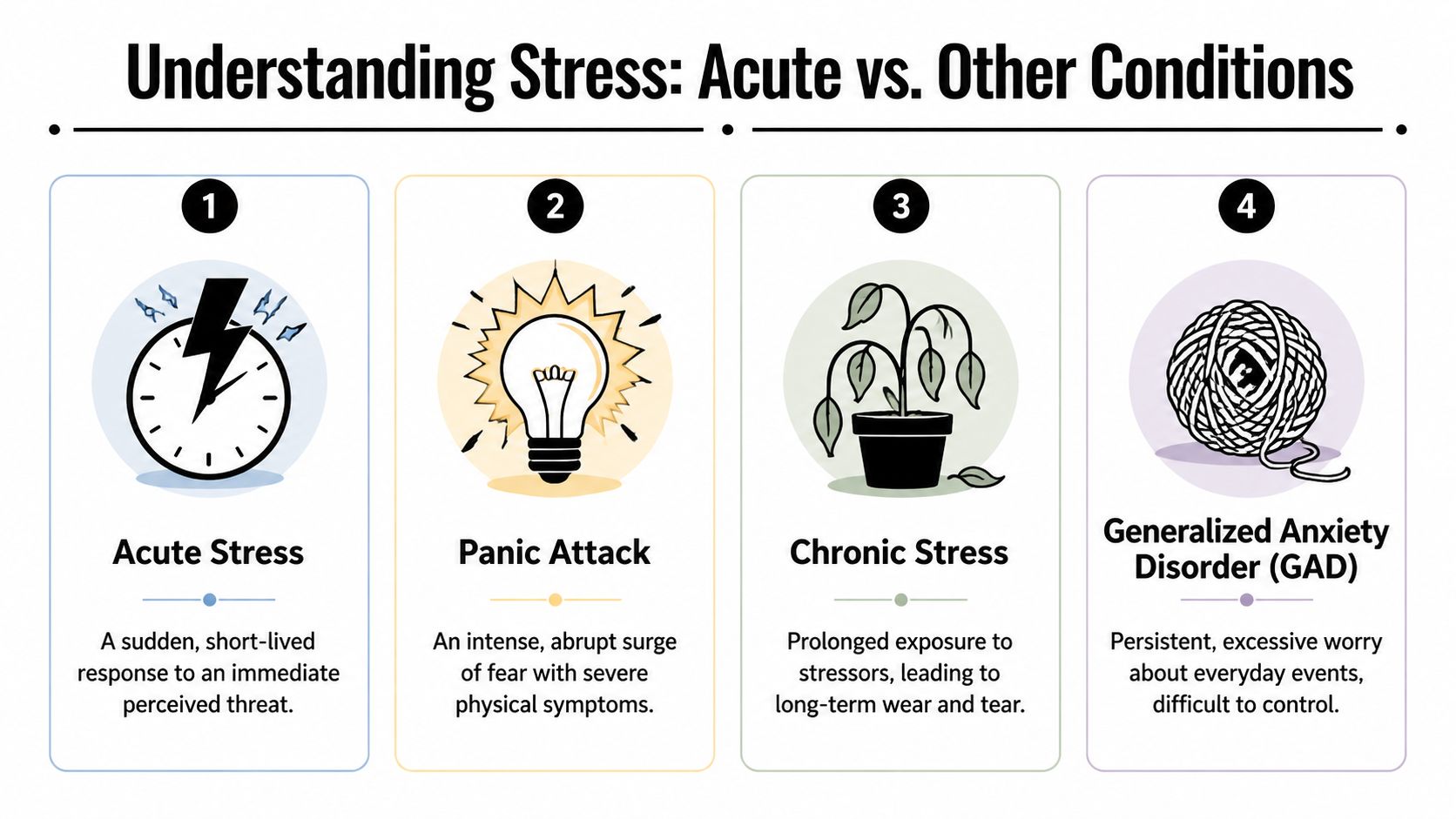
A side by side view
| Condition | Duration | Trigger | Primary Feeling |
|---|---|---|---|
| Acute stress | Short-term | Immediate challenge or threat | Alarm and activation |
| Panic attack | Sudden surge, often intense | Can be obvious or seem to come out of nowhere | Terror and loss of control |
| Chronic stress | Ongoing | Repeated or persistent pressures | Wear and tear |
| Acute Stress Disorder | 3 days to 1 month after trauma | A traumatic event | Distress that disrupts daily life |
Acute stress versus panic attacks
Acute stress usually has a clear storyline. A stressful event happens, your body sounds the alarm, and then the response gradually settles once the situation passes or you regain a sense of safety.
Panic can feel less tied to the moment. The body sensations may be similar, such as chest tightness, dizziness, shaking, and fast breathing, but the emotional tone is often more extreme. Many people describe panic as a sudden conviction that they are dying, fainting, going crazy, or losing control right now. If you are trying to sort out that difference, Anxiety Checklist's panic attack page can help you compare symptoms more clearly.
A simple way to tell them apart is to ask, "Is my body reacting to a problem in front of me, or am I also becoming terrified of the sensations themselves?" That question does not diagnose anything, but it can reduce confusion.
Acute stress versus chronic stress
Chronic stress has a different rhythm. Acute stress is a spike. Chronic stress is a strain that keeps pulling on your system day after day.
That long pull can come from money problems, caregiving, job pressure, conflict at home, or poor sleep that never quite lets your body reset. Acute stress says, "Something is happening." Chronic stress says, "I never fully get to stand down."
This distinction matters because a short-term stress response is often a normal body event. Chronic stress is more like keeping your car engine revving in the driveway for hours. Even if nothing dramatic happens in one moment, the ongoing load can wear you down.
Acute stress versus Acute Stress Disorder
These two terms sound similar, which is why people mix them up all the time. Acute stress is a common human response to pressure or danger. Acute Stress Disorder, or ASD, is a trauma-related mental health condition that can develop after a traumatic event.
ASD is not about having a strong reaction to a hard day. It is tied to trauma and includes symptoms serious enough to disrupt daily life, such as intrusive memories, dissociation, avoidance, or feeling emotionally numb. An explanation from the Mental Health Center notes that ASD affects a notable share of people after trauma, and rates can be higher after violent events.
If your body reacts strongly to a stressful moment, that does not automatically mean you have a disorder.
The most helpful question is often the simplest one. Did your system flare up in response to a stressful moment and then begin to settle, or are symptoms persisting after trauma and interfering with daily functioning? That is the line to pay attention to, and it is also the line that can guide you toward the right kind of support.
A Look Inside Your Brain and Body During Stress
When acute stress hits, the sensations can feel random. They aren’t. Your body is running a very old survival program.
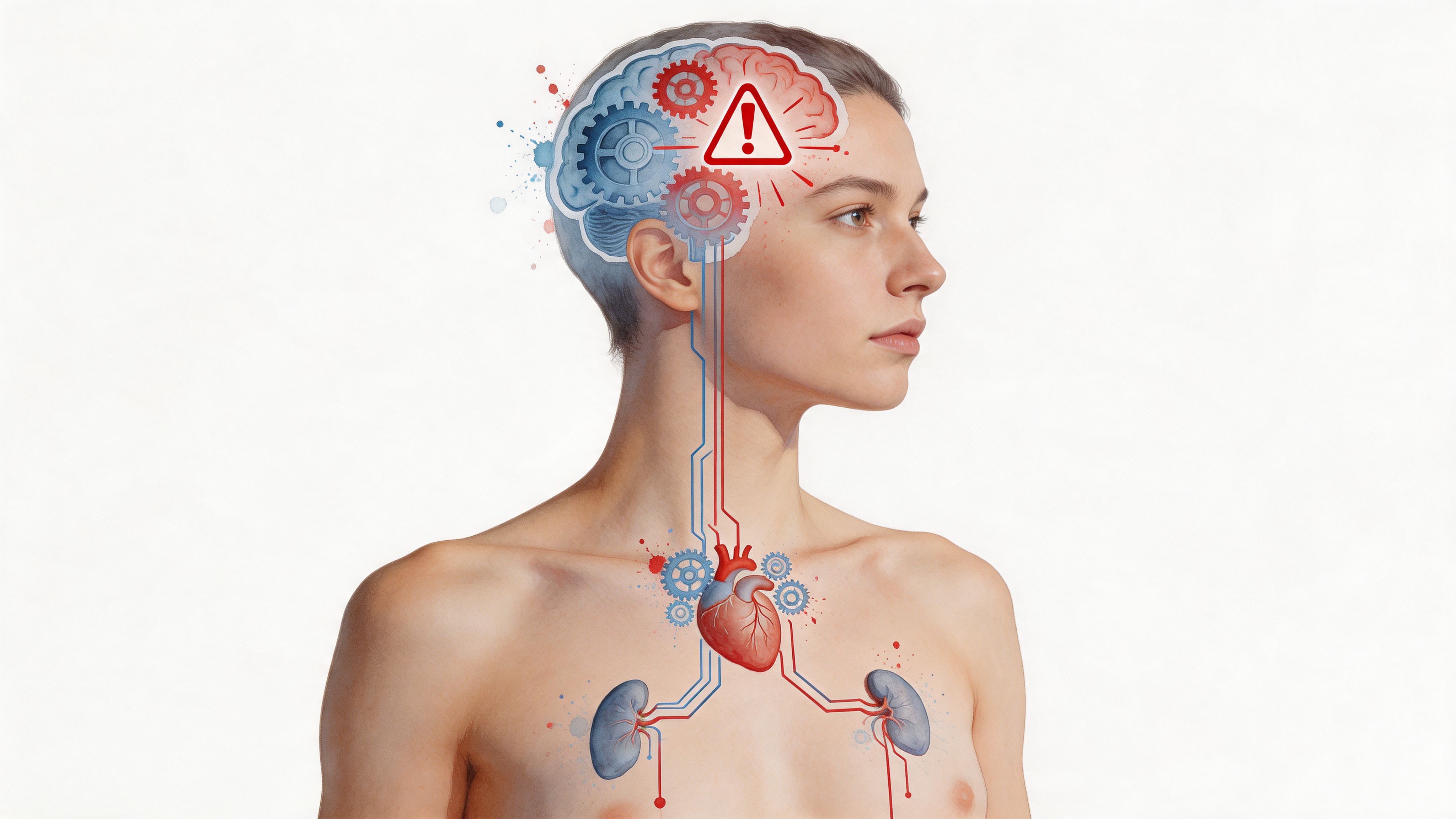
Your internal smoke detector
A simple way to picture it is this:
- Amygdala: your brain’s smoke detector
- Hypothalamus: the dispatcher sending the alert
- Adrenal glands: the emergency responders releasing stress hormones
This chain is often called the fight-or-flight response. In the first minutes after a stressor, your body can change fast. Heart rate can increase by 20% to 50%, and hormones like cortisol and epinephrine help raise blood glucose so your muscles have fuel, according to StatPearls on the physiology of stress.
Why the symptoms feel so physical
That’s why acute stress often feels like a body event, not just a thought event. Your chest pounds because your system wants blood moving. Your breathing gets quicker because your body wants more oxygen available. Your muscles tighten because your brain is preparing for action.
For anxious people, the danger isn't only the stress response. It's becoming scared of the response itself.
A grounding fact: A pounding heart during acute stress is often a sign of activation, not a sign that your body is failing.
If understanding the biology helps you calm down, these Anxiety Checklist resources offer more support around the fight-or-flight response in plain language.
Practical Tools to Manage Acute Stress in the Moment
You don't have to wait helplessly for acute stress to pass. You can give your body signals of safety and steadiness while the alarm is active.

Start with your breath
Breathing is one of the fastest ways to interrupt a stress spiral because it gives your nervous system a different rhythm to follow.
4-7-8 breathing is simple:
- Inhale through your nose for 4
- Hold for 7
- Exhale slowly for 8
- Repeat for a few rounds
This type of diaphragmatic breathing can make a measurable difference. The 4-7-8 technique can reduce heart rate by as much as 10 to 15 beats per minute in one minute, based on the stress physiology data discussed earlier from StatPearls.
If you prefer a gentler pace, the 6 breaths per minute technique offers another structured way to slow your body down without forcing a huge inhale.
Use your senses to return to the room
When your mind starts racing, grounding can pull attention out of fear and back into the present.
Try the 5-4-3-2-1 method:
- 5 things you can see
- 4 things you can feel
- 3 things you can hear
- 2 things you can smell
- 1 thing you can taste
This works because acute stress narrows attention. Grounding widens it again.
Release the physical bracing
A lot of stress lives in the jaw, shoulders, hands, chest, and stomach. Progressive muscle relaxation helps by teaching your body the difference between tension and release.
Try this short version:
- Clench your fists for a few seconds, then let go
- Lift your shoulders toward your ears, then drop them
- Tighten your legs gently, then soften them
- Unclench your jaw and let your tongue rest
Here’s a guided option if you want help settling into practice:
Talk to your thoughts like a coach, not a critic
Acute stress often brings dramatic thoughts. “I can’t handle this.” “Something is wrong.” “I’m going to fall apart.”
Instead of arguing with yourself harshly, try one short question:
What's happening in my body right now, and what's the most likely explanation?
That question creates space. It shifts you from fear to observation.
A few replacement thoughts that can help:
- “My body is activated, but I am safe enough to slow down.”
- “This feeling is intense, and it can pass.”
- “I don't need to solve everything in this minute.”
Small tools matter. Used repeatedly, they teach your nervous system that stress is survivable, manageable, and not the boss of you.
When to Seek Professional Help for Stress
Sometimes stress is just stress. Sometimes it’s a sign that you need more support, and getting that support is wise, not dramatic.
A good rule is to look at context, duration, and impairment. If your symptoms came after a traumatic event and they aren’t fading, that’s different from feeling rattled after a hard day.
Signs it may be more than a normal stress response
Consider professional help if:
- Symptoms began after trauma: such as an assault, serious accident, disaster, or other traumatic event
- They last beyond the immediate aftermath: especially if they continue for more than a few days
- Daily life is getting harder: work, sleep, relationships, or basic tasks are suffering
- You feel stuck in replay mode: intrusive memories, avoidance, numbness, or feeling constantly on guard
- You’re frightened by your symptoms: and reassurance, grounding, or rest aren’t helping enough
When Acute Stress Disorder may be relevant
If symptoms following a trauma persist for more than three days and include nine or more symptoms across intrusion, negative mood, dissociation, avoidance, and arousal, it may be Acute Stress Disorder, according to Cleveland Clinic's overview of ASD. That same source notes that about 50% of untreated ASD cases can progress to PTSD.
Getting help early can reduce suffering. It doesn't mean your coping failed. It means you're responding well to what your mind and body need.
If you're unsure, start with a primary care doctor or licensed mental health professional. You don't need perfect words. “Something happened, and I haven't felt like myself since” is enough to begin.
You Can Live a Calmer Panic-Free Life
Acute stress is a normal body response, not a personal flaw. When you can recognize it, name it, and respond to it with practical tools, the experience often becomes less scary and less controlling.
You don't need to eliminate every stress response to heal. You need to understand what your body is doing, know when it’s within the normal range, and know when to reach for extra support. That’s how people start moving toward a steadier, more confident, panic-free life. If you want structured self-help support, the Anxiety Checklist app is one place to continue that work.
If you want a practical system for understanding symptoms, calming panic, and building daily habits that reduce anxiety over time, The Anxiety Checklist offers a clear, action-focused next step. It’s designed to help you turn insight into routines you can apply when stress shows up.