


In short
Anticipatory anxiety is worry, dread or fear about a future event, often involving physical tension, repeated “what if” thoughts, poor concentration, avoidance or reassurance-seeking. It can be driven by uncertainty, past stressful or traumatic experiences, perfectionism and the brain’s response to unpredictable threats. Grounding, slow breathing and reframing can help immediately, while gradual exposure, CBT, journalling and supportive daily habits may help over time.
Key takeaways
- Anticipatory anxiety is a symptom across several anxiety conditions, not a standalone diagnosis.
- The waiting often feels worse than the event itself.
- Most worries do not happen, and people often cope better than expected.
- The 3-3-3 method uses three sights, three sounds and three body movements.
- Medication may help some people, but decisions should involve a doctor or psychiatrist.
Quick Summary
- Anticipatory anxiety is the dread and worry you experience while waiting for a future event, such as a flight, an exam result, or a tough conversation. Because your mind naturally jumps to worst-case scenarios, the period leading up to a feared moment often feels significantly worse than the event itself.
- However, what we fear mostly never comes true.
- This guide explains what anticipatory anxiety is, why this happens, and how to calm it. You’ll also see why the waiting so often feels worse than the moment you’re dreading.
What Is Anticipatory Anxiety?
Anticipatory anxiety is the worry or fear you feel about an anticipated event or situation. You’re not reacting to something that’s happening in the moment. Some people call it "future tripping" because your thoughts keep jumping ahead to a moment that hasn’t arrived yet.
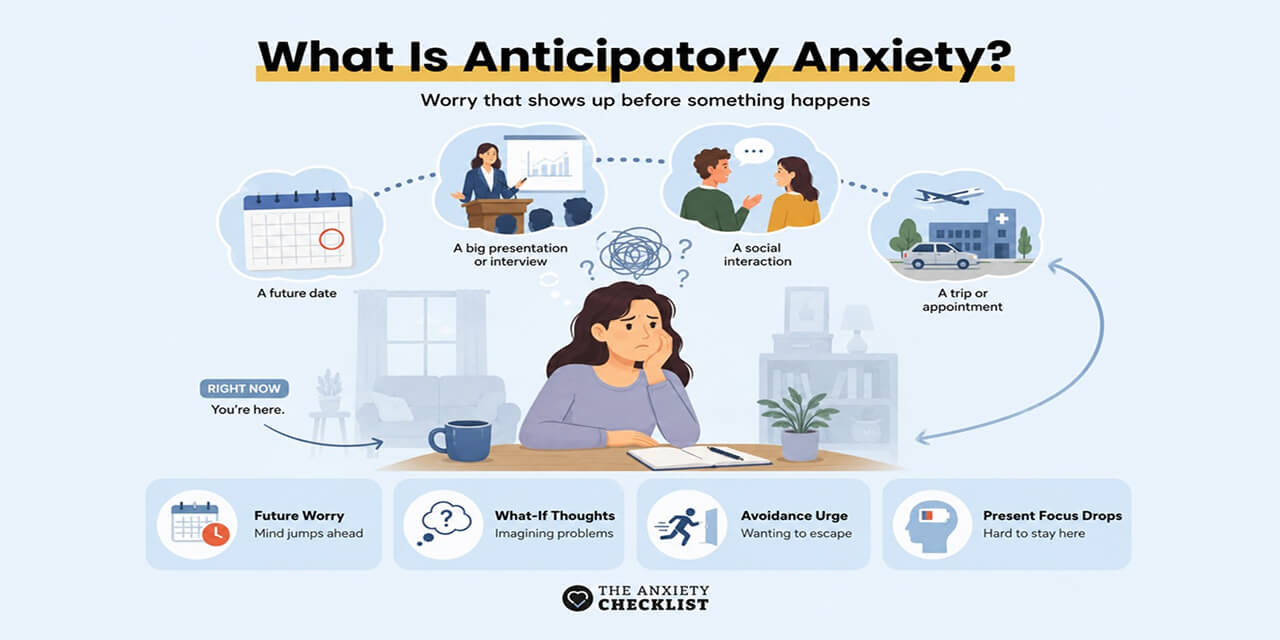
Anticipatory anxiety can also linger for days, weeks, or even months before the event. Like many forms of anxiety, this can drain your energy and steal your focus from the present moment.
Mental-health experts describe it as the expectation of distress paired with a strong urge to avoid. The ADAA notes that this "what if" worry causes avoidance. It’s also a core feature of generalized anxiety.
Often, the anticipation is the hardest part. Many people note that the worry feels worse than the event itself, which usually passes faster and more smoothly than they feared.
Is Anticipatory Anxiety a Disorder?
No. Anticipatory anxiety isn’t a standalone diagnosis. Instead, it’s a common symptom among many anxiety disorders, such as generalized anxiety disorder, social anxiety disorder, panic disorder, specific phobias, and obsessive-compulsive disorder.
For example, someone with a fear of flying may feel it for weeks before a trip. Someone who fears panic attacks may keep anticipating the next one.
That distinction matters. You don’t need a specific label to take your worry seriously or to start feeling better.
Anticipatory Anxiety vs. Everyday Worry
Is an upcoming event making you feel excited, or is it leaving you stuck in a cycle of overthinking? It's normal to feel nervous before something important. Anticipatory anxiety goes beyond that. Here's how it differs in terms of triggers, intensity, duration, and how it affects your daily life.
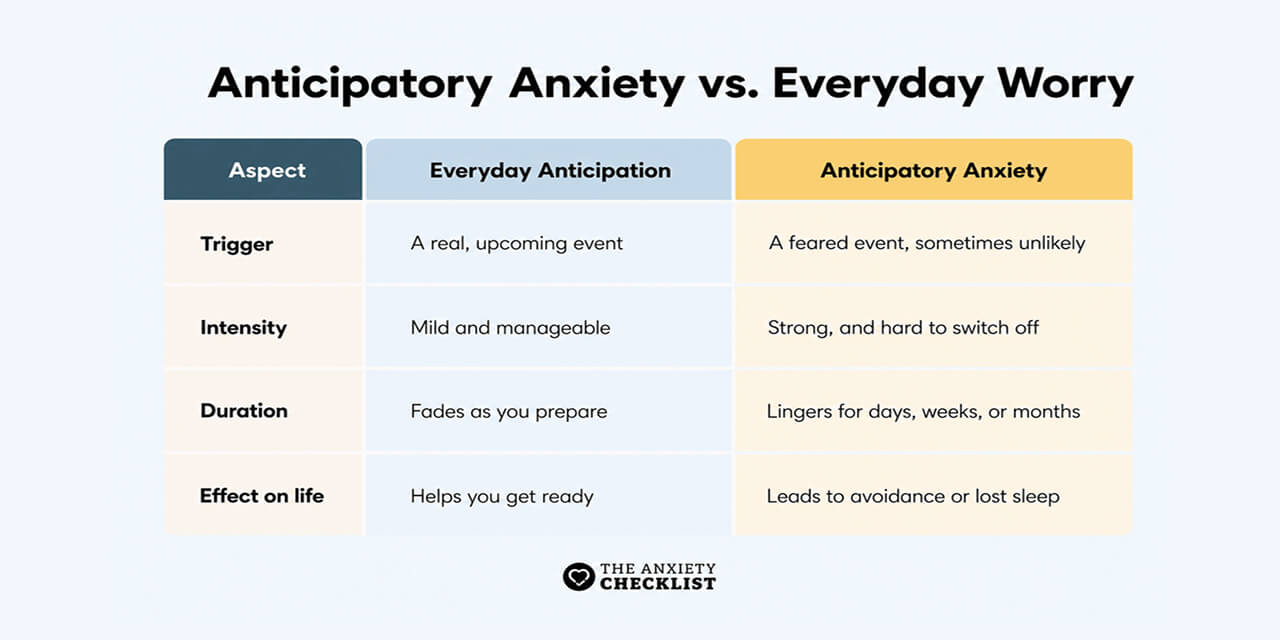
What is Anticipatory Anxiety?
It’s the intense fear or dread of a future event. While not a disorder, it’s a common symptom across many anxiety conditions that makes waiting worse than reality.
What Anticipatory Anxiety Feels Like: Common Symptoms
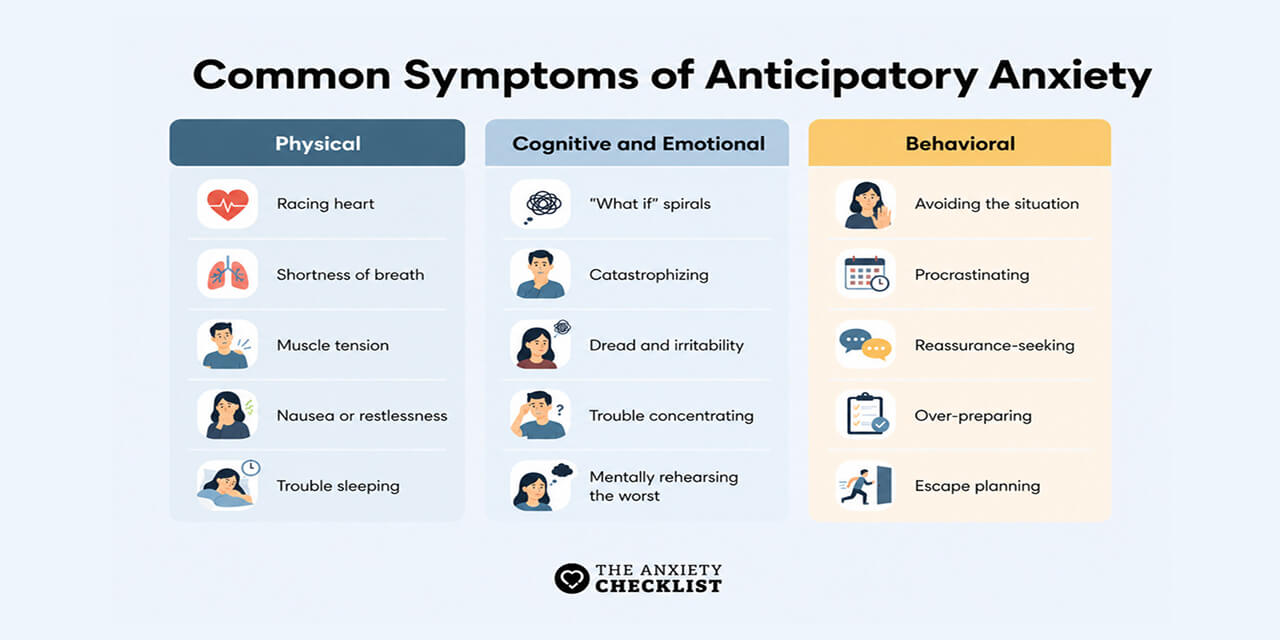
Anticipatory anxiety can affect your body, mind, and behavior, especially through avoidance. Symptoms vary from person to person, and the list below is not exhaustive. Still, most people recognize a few of these.
Physical Symptoms
Your body reacts as if the feared event were already here. According to the Cleveland Clinic, anxiety can cause a rapid heartbeat, shortness of breath, and muscle tension.
You might also experience nausea, restlessness, sweaty hands, a churning stomach, or trouble sleeping as the event gets closer. These sensations are your body's alarm system firing early, long before there’s anything real to react to.
Cognitive and Emotional Symptoms
For many people, anticipatory anxiety begins with your thoughts. It starts with a single worry, then another, until your mind won't let the situation go. You could fall into a habit of overthinking.
This anxiety makes you keep asking yourself "what if?" or picture negative outcomes again and again. When those anxious thoughts keep circling, it's easy to feel on edge, lose your patience, or struggle to concentrate.
Behavioral Symptoms
Anticipatory anxiety can also change how you act. One of the biggest signs is avoidance. You might cancel plans, put things off, or avoid situations that make you anxious.
Another common pattern is reassurance-seeking. You may keep asking other people if everything will be okay or look for constant reassurance that nothing bad will happen. These habits may help you feel better for a while, but they often make the fear stronger the next time. Recognizing these patterns is an important first step toward anxiety recovery.
How Does Anticipatory Anxiety Show Up in Daily Life?
It shows up as an early physical reaction, a loop of "what-if" thoughts, and behaviors like avoiding the event or constantly checking for reassurance.
What Causes Anticipatory Anxiety?
There’s no single cause of anticipatory anxiety. Common causes of anxiety include how your brain is wired, your past experiences, and your current stress. Understanding the roots can make the feeling less confusing.
Intolerance of Uncertainty and the "What If" Spiral
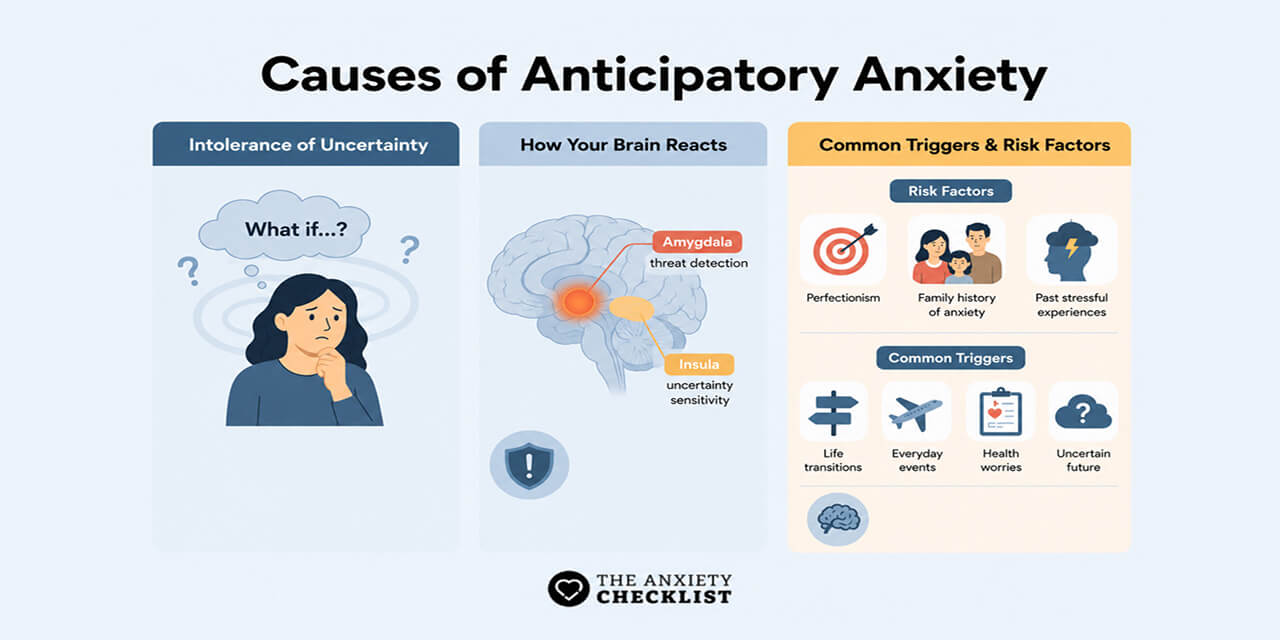
One thing many people with anticipatory anxiety have in common is that they struggle with uncertainty. Not knowing what will happen can feel uncomfortable, so the mind tries to fill in the blanks. This drives anxiety, and the "what if" questions start.
Before you know it, your mind is running through one bad scenario after another. Even small uncertainties can start to feel much bigger than they really are. This pattern is known as intolerance of uncertainty, and it's closely linked to anxiety.
How Your Brain Amplifies an Anticipated Threat
Your brain is built to scan for danger. Perceived threats trigger a stronger brain response than known ones do. Regions like the amygdala and insula react more when a threat is unpredictable.
In plain terms, "I don’t know what will happen" can feel more alarming than "something bad will happen." This isn’t a flaw in you. It’s an old survival system doing its job a little too well, even when it’s no longer necessary.
Common Triggers and Risk Factors
Some people are more prone to anticipatory anxiety than others. This is due to:
Common triggers of anticipatory anxiety include major life transitions, everyday events, and health worries.
Whatever the trigger, the underlying pattern is the same. Your mind treats an uncertain future as a certain threat.
What are the Causes of Anticipatory Anxiety?
Anticipatory anxiety stems from brain wiring that fears the unknown, driving "what-if" spirals. Triggers like perfectionism, past trauma, and major life changes cause your mind to treat uncertainty as a threat.
Why Your Worries Usually Don't Come True
Here’s something worth holding onto when anticipatory anxiety hits you: most worries never happen. Worrying makes the odds feel far worse than they are.
Of the few worries that do come true, you’ll often find that you can cope better than expected.
The reason is a mental habit called catastrophizing. In anticipatory anxiety, your mind treats the worst outcome as the most likely one. It then underestimates how well you would handle it. Uncertainty makes this worse because a blank future is easy to fill with fear.
When anxiety takes over, it's easy to believe the worst might happen. A simple way to keep that in check is to keep a simple journal of your specific worries, then look back once the situation has passed. Seeing what really happened can help you put those fears into perspective.
How to Calm Anticipatory Anxiety Right Now
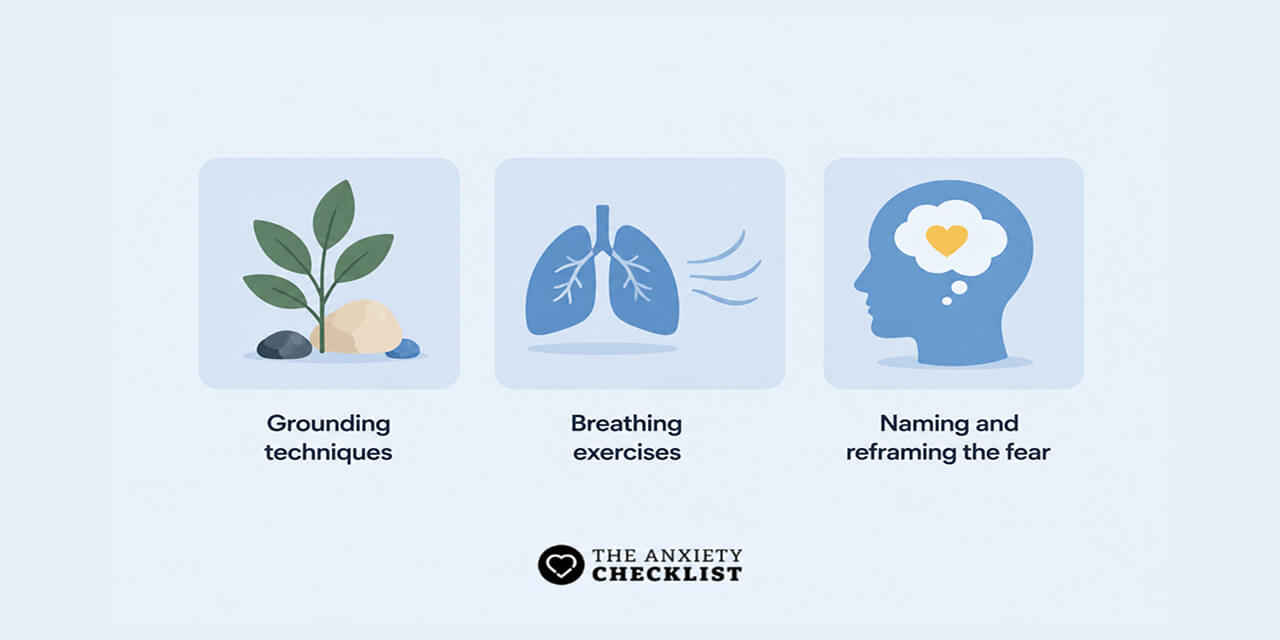
When symptoms of anticipatory anxiety show up, it helps to have a few coping strategies to manage them. Grounding exercises, slow breathing, and naming what you're afraid of can help you feel steady within minutes.
They won't make the worry disappear, but they can help you feel calmer and think more clearly. Remember that these techniques work best alongside professional support, not as a replacement for it.
Ground Yourself in the Present
When anticipatory anxiety takes over, you tend to focus on everything that could go wrong. A grounding exercise brings you back to the present. Try the 3-3-3 method. Look around and name three things you can see. Listen for three sounds. Then, move three parts of your body.
You can keep more grounding techniques on hand for hard moments. Here are some common ones for mental grounding.
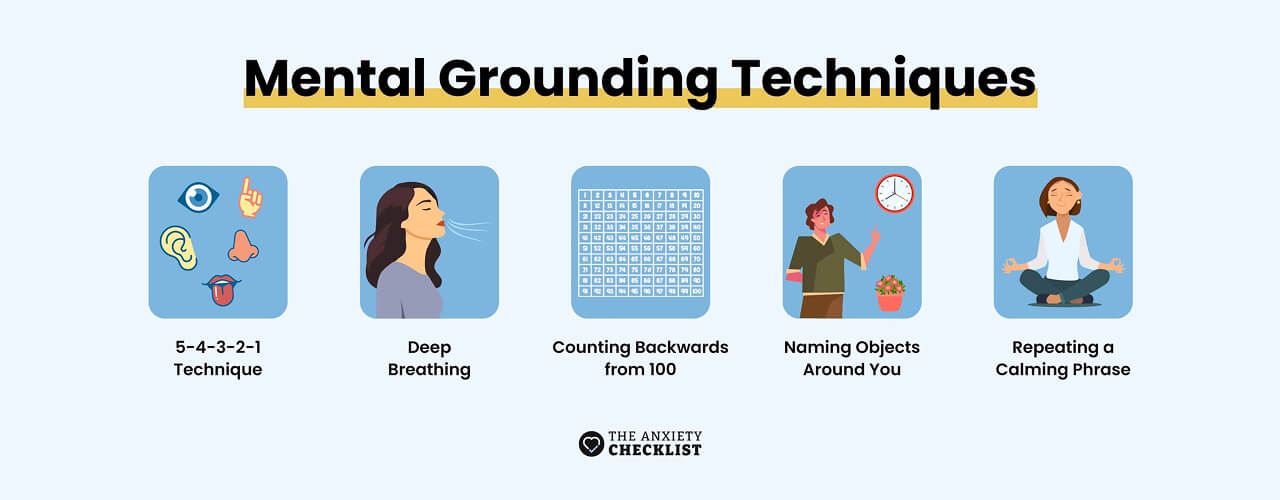
The free grounding tool in the Anxiety Checklist app also walks you through them when you need one fast.
Slow Your Breathing
Slow, steady breathing tells your nervous system that you’re safe. Breathe in for a count of four, hold gently, then exhale for a count of six. The longer exhale is the part that calms you, so repeat it for a minute or two. Breathing exercises like this work anywhere to calm anticipatory anxiety, from a waiting room to your bed.
Name and Reframe the Fear
Saying your fear out loud can make it feel less overwhelming. Try saying, "I'm having the thought that this will go badly." This simple exercise reminds you that it's only a thought, not a prediction of what's going to happen. Then, bring your focus back to what you’re currently doing.
Meditation gets easier with practice, so don't worry about doing it for long. Even a minute is a good place to start.
How Can You Calm Anticipatory Anxiety in the Moment?
You can steady your nervous system within minutes by using the 3-3-3 grounding technique. You can also extend your exhales with slow breathing and reframe anxious thoughts as just thoughts, not predictions.
How to Overcome Anticipatory Anxiety Over Time
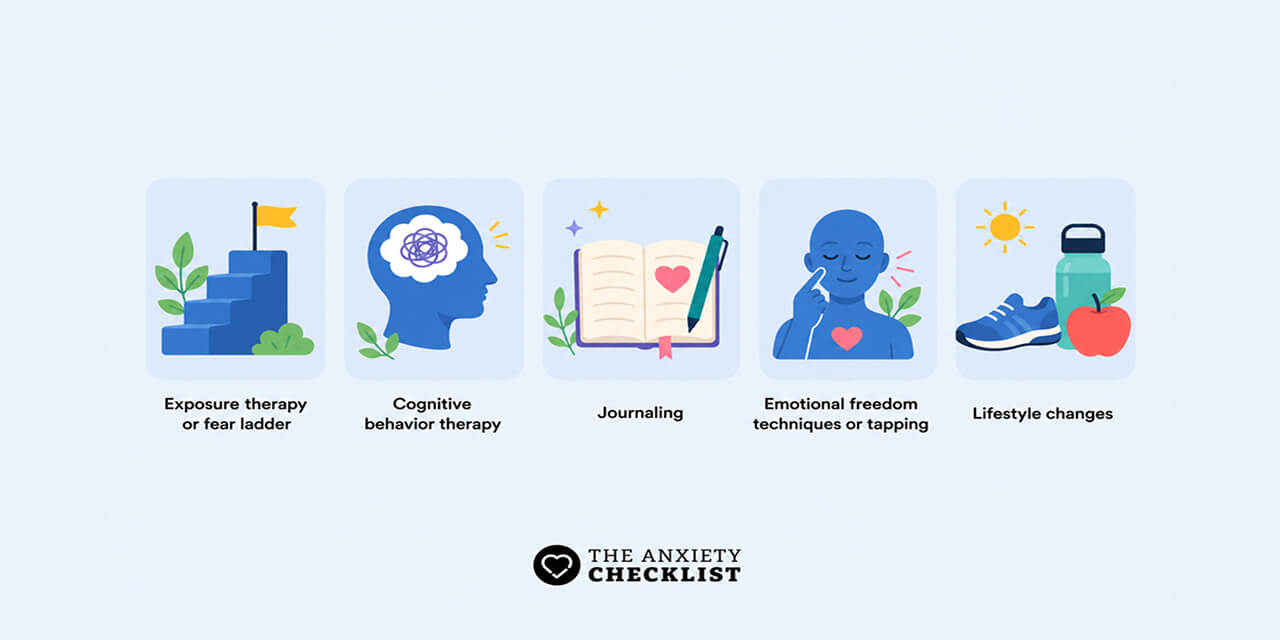
To ease anticipatory anxiety at its root, you need methods that retrain how your mind and body respond to uncertainty. Facing fears gradually, reframing anxious thoughts, and steady daily habits can help.
Face It Gradually With Exposure and a Fear Ladder
Avoidance feels safe, but it conditions your brain that the thing you fear truly is dangerous. Exposure therapy reverses this by helping you approach the fear in small, planned steps.
A fear ladder breaks a big fear into rungs, from mildly uncomfortable to very hard. This allows you to build confidence one step at a time. Each rung you climb gives your brain newfound evidence that you can handle more than you thought.
Challenge Catastrophic Thinking (CBT)
Cognitive behavioral therapy helps you notice and question the thoughts that fuel your worries. When you spot a cognitive distortion like catastrophizing, you can ask, "What is the evidence? What is most likely? Could I cope even if it went wrong?"
Practicing CBT for anxiety gives you a repeatable way to right-size a worry. Over time, this practice weakens the automatic link between an uncertain future and a feeling of danger.
Keep a Worry Journal
Write down what you're worried about, then come back later and write what actually happened. After a few weeks of journaling, you may start to notice a pattern. Many of the things you expected never happened.
Looking back at your own notes can sometimes be more reassuring than hearing someone else tell you everything will be okay.
Try Tapping (EFT)
Some people find Emotional Freedom Techniques (EFT), or "tapping," calming. It combines gentle exposure with tapping on acupressure points.
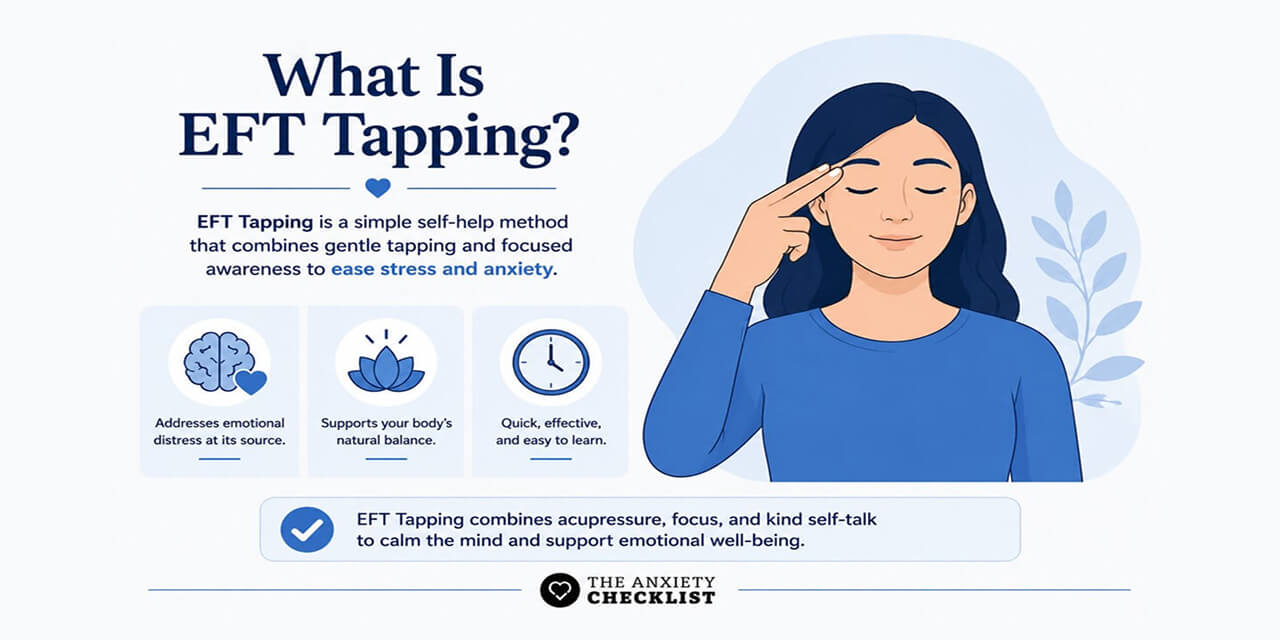
The evidence is promising but still preliminary. Much of the research comes from EFT-affiliated groups, and few studies compare it head-to-head with established treatments like CBT. Think of tapping as one option to explore, not a replacement for proven therapy for anxiety.
Support Your Nervous System Daily
Small daily habits make anxiety easier to manage. Prioritize sleep, move your body regularly, and go easy on caffeine. It also helps to limit reassurance-seeking and doomscrolling, which feed the "what if" loop.
Gentle lifestyle changes build resilience over time. Small, steady routines add up, and they make every other tool on this list work better.
How Do You Overcome Anticipatory Anxiety Long-Term?
Retrain your brain through gradual exposure, CBT, and journaling. Pairing these strategies with supportive daily habits like quality sleep and reduced caffeine addresses the anxiety at its root.
What are the Professional Treatments for Anticipatory Anxiety?
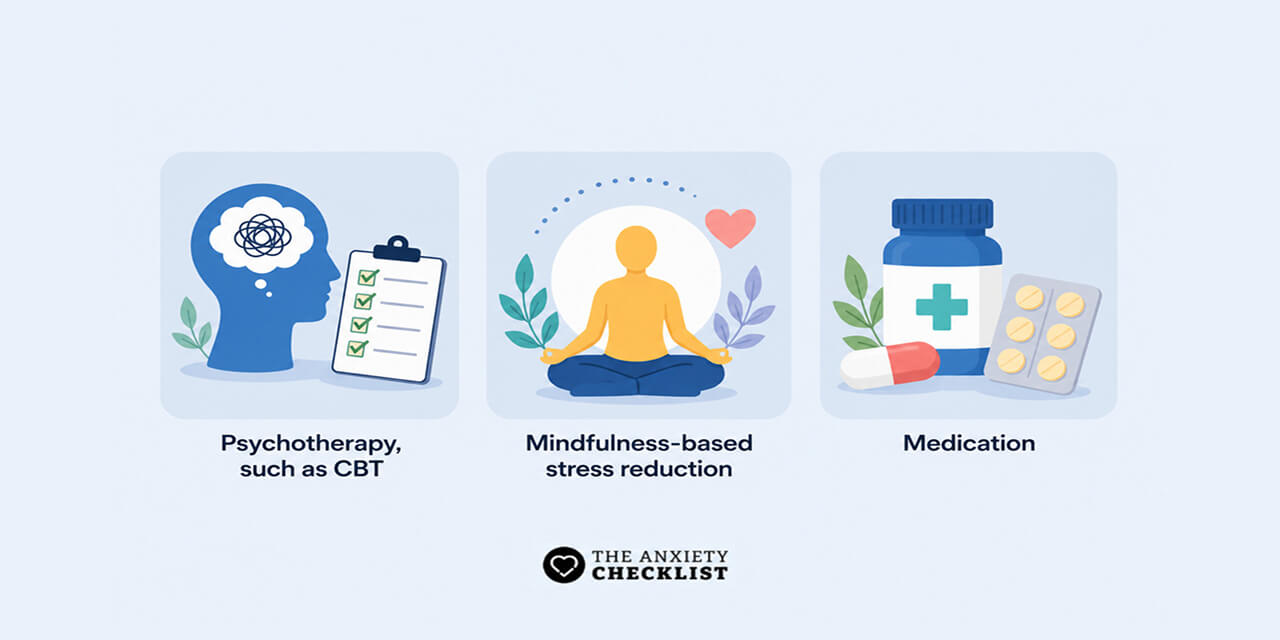
CBT, often with exposure, is a first-line, evidence-based option and works well alongside self-help. While self-help is powerful, support from a professional is sometimes the right next step.
The good news is that anxiety is highly treatable, and reaching out early often makes recovery easier.
The Cleveland Clinic describes CBT as the most common and effective psychotherapy for anxiety disorders. In sessions, a therapist helps you spot the thoughts that fuel dread and practice facing feared situations at a manageable pace. You can tailor psychotherapy to your specific triggers, whether that’s flying, health worries, or social events.
Other approaches help as well. For example, mindfulness-based stress reduction worked about as well as a standard anxiety medication.
Medication can be part of a plan for some people, but it may not be right for everyone. You should have this conversation with a doctor or psychiatrist who knows your history. Don’t make this decision based on an article.
Seeing a professional clinical psychologist doesn’t replace the tools in this guide. The two work best side by side, with daily self-help between sessions and expert guidance to steer it.
When to Seek Professional Help
Reach out if your anticipatory anxiety symptoms are persistent, out of proportion, or starting to shrink your life. Future-focused worry is common, but it’s also very manageable with the right support.
If avoidance is quietly shrinking your world, that’s a signal as well. If your anticipatory anxiety feels out of control, that’s simply a reason to reach out. Don’t interpret it as a personal failure.
Should you talk to a professional? Consider booking an appointment if you notice any of these:
- Dread most days for six months or more
- Avoiding people, places, or tasks you used to handle easily
- Panic attacks, or fear of the next one
- Trouble sleeping, eating, or focusing because of worry
- Any thoughts of harming yourself
Getting started can be simpler than it feels. You might talk to your primary care doctor, ask for a referral to a therapist, or contact a mental-health provider directly.
A quick, private anxiety test can help you see where you stand and help you better understand and describe the symptoms you’re experiencing.
Reaching out for help is a sign of strength, not weakness. Support is available, and it works. Take the steps because you deserve to feel better and live a fuller life.
When Should You Seek Professional Treatment for Anticipatory Anxiety?
Seek help if dread or avoidance lasts for months or disrupts daily life. Evidence-based therapies like CBT, mindfulness, or medical guidance offer long-term support alongside self-help strategies.
FAQ
The Future Feels Lighter With the Right Tools
If you are in a crisis or any other person may be in danger, don't use this site. These resources can provide you with immediate help. In the U.S., you can also call or text 988 to reach the Suicide & Crisis Lifeline.
Medical Disclaimer
The information provided on Anxiety Checklist, including all related materials such as guides, book, our masterclass, checklists, and other resources, is for informational and educational purposes only. It is not a substitute for professional medical advice, diagnosis, or treatment. Always consult a qualified mental health professional regarding any medical or psychological concerns. Never disregard professional advice or delay seeking help because of something you have read on this website. The app and its content do not constitute therapy, and using them does not establish a therapist-patient or doctor-patient relationship with any contributor.
Written by: Anxiety Checklist Editorial Team
Medically reviewed by: Dr. Dialis Burke Wheeler, LMHC
Anxiety University
Explore the Anxiety University
Free guides to help you understand anxiety, one topic at a time.
- Getting StartedThe basics of anxiety and how it works
- Self-Assessments & Anxiety TestsCheck in on your symptoms with free tests
- Cognitive Traps & Thought PatternsSpot the thinking habits that fuel anxiety
- Stress ReductionPractical ways to calm your body and mind
- Common Anxiety PhobiasUnderstand specific fears and how they are treated
- Inspiring StoriesReal stories and words that remind you you are not alone