

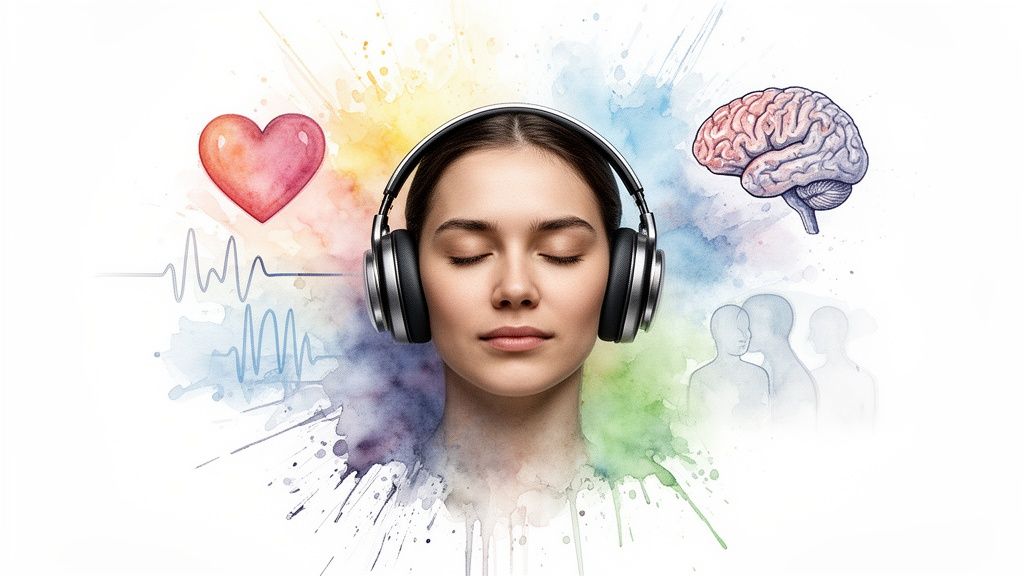
When you’re caught in the grip of anxiety, it can feel like you’re lost at sea, searching for a lifeline. The good news? A path to shore exists, and one of the most powerful tools to guide you is something you already have: music. Hope for a life free from panic isn't just a dream; it's a reality you can build, one song at a time.
The benefits of listening to music go way beyond simple entertainment. It’s a real, science-backed way to manage panic, quiet your mind, and begin your journey toward a life that isn’t dictated by worry. Healing is possible, and this guide will show you how music can be a trusted companion on your path.
Your Path to a Panic-Free Life Begins With a Song
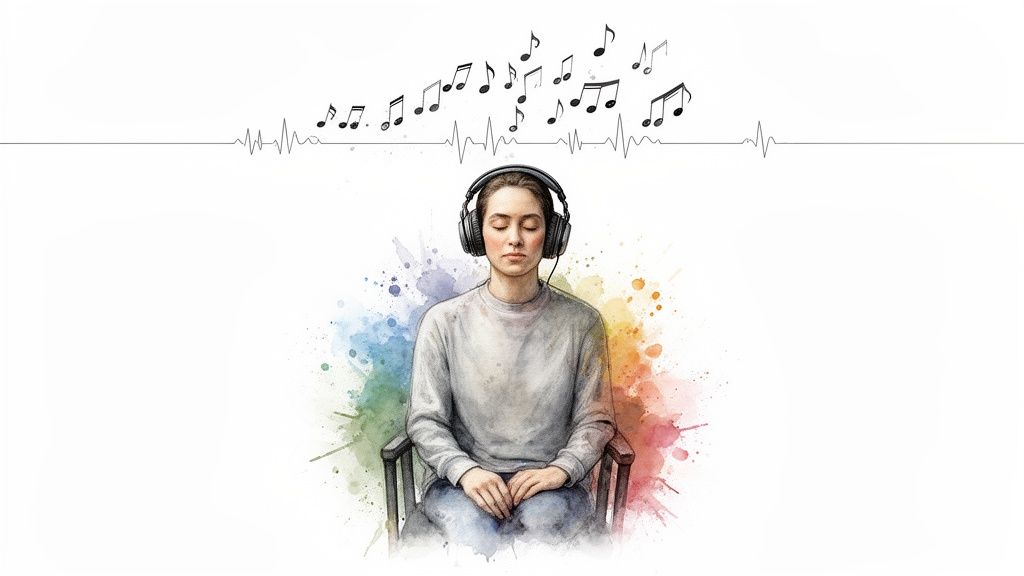
Living with anxiety often feels like navigating a world that’s overwhelming and unpredictable. The constant cycle of racing thoughts, worry, and physical symptoms can leave you feeling drained and hopeless. But what if the first step toward a more fearless life wasn't some complicated system, but something as simple as pressing "play"?
This guide is built on one clear promise: a life free from the grip of anxiety is achievable. We’re going to show you how music can become your trusted ally on this path—not just as background noise, but as a genuine tool for healing. It has the power to physically calm your nervous system, pull your focus away from a spiral of negative thoughts, and even help you process difficult emotions.
Before we dive deep, here’s a quick overview of how music can provide immediate relief and a glimmer of hope when you feel anxiety creeping in.
How Music Immediately Impacts Your Anxiety
| Area of Impact | How Music Helps You | What You Will Experience |
|---|---|---|
| Emotional Regulation | Music can act as an emotional anchor, helping you shift from a state of high alert to one of calm. | A sense of emotional release and a feeling of being understood and soothed. |
| Physiological Calming | Slow-tempo music can directly influence your body’s stress response, slowing your heart rate and breathing. | Your shoulders might drop, your breathing may deepen, and that "on edge" feeling starts to fade. |
| Cognitive Focus | An engaging melody gives your brain something else to focus on, interrupting the loop of worry. | Your racing thoughts slow down as your attention is captured by the music instead of your anxiety. |
| Social Connection | Shared musical experiences can foster a sense of belonging and reduce feelings of isolation. | A feeling of being connected to others, which can be a powerful antidote to the loneliness of anxiety. |
This table is just the starting point. Let’s get into the specifics of how you can make this work for you.
Hope Isn’t Just a Feeling—It’s a Strategy
When you’re in the middle of a panic attack, feeling hopeful can seem impossible. That’s why this guide focuses on tangible actions you can take right now. Hope isn't just an abstract emotion; it's the result of having a clear plan and the right tools. Music offers an immediate, practical strategy you can use anytime, anywhere, giving you a powerful sense that you can heal.
The benefits we’ll cover are designed to give you that plan. You’ll learn how music can:
- Soothe your body’s stress response: We’ll show you how specific tempos and harmonies can slow your heart rate and lower cortisol levels, bringing you back to a state of physical balance.
- Interrupt cycles of worry: See how a compelling song can act as a "pattern interrupt" for your brain, breaking the loop of anxious thoughts before they take over.
- Provide a sense of control: By building your own anti-anxiety playlists, you create a personalized toolkit that empowers you to manage your state of mind. You’re no longer just a passenger to your anxiety.
This journey is about building a structured wellness plan that fits your life. By integrating simple practices like music listening into a framework like an anxiety checklist, you turn sporadic relief into a sustainable habit for long-term recovery.
Throughout this guide, we'll give you actionable steps and real-world examples to show you how a simple song can become your first step toward managing panic and worry. You’re not broken, and you’re not alone. Your path toward a calmer, more fulfilling life starts now—with the simple, beautiful power of music.
The Science of How Music Calms Your Nervous System
Ever feel your shoulders creep up toward your ears, your heart start to race, and your thoughts begin to spiral? That’s your body’s “fight-or-flight” response kicking into high gear. When you live with anxiety, it can feel like this internal alarm system is permanently stuck in the “on” position, revving your engine with no brake in sight.
This is where music comes in. Think of it as a master mechanic for your nervous system. Music has a direct, physical power to downshift that engine, gently moving you out of a high-alert state and into a calmer, more peaceful "rest-and-digest" mode. This isn't just a feeling—it’s a real, measurable physiological response.
Understanding this science is a cornerstone of living a more fearless life. It’s proof that the relief you feel from a favorite song isn’t in your head; it’s your biology responding in a powerful, tangible way. This gives you an accessible tool, right at your fingertips, to actively guide your body back to a state of calm and reinforce the hope that you can heal.
Taming the Fight-or-Flight Response
When you feel anxious, your body is flooded with stress hormones like cortisol and adrenaline. Your heart rate speeds up, your breathing becomes shallow, and your muscles tighten, all in preparation for a threat that might not even be there. Music, especially songs with a slow and steady rhythm, can directly counteract these effects.
This process is called auditory-motor entrainment. It’s a fancy term for a simple idea: your internal rhythms—like your heartbeat and breathing rate—naturally start to sync up with the external rhythm of the music.
- Slowing Your Heart Rate: Listening to a song with a tempo around 60-80 beats per minute (BPM) encourages your heart rate to slow down and match it. This sends a powerful "all-clear" signal to your brain.
- Deepening Your Breath: As your heart slows, your breathing naturally follows suit, becoming deeper and more regular. This boosts oxygen flow and further settles your nervous system.
The link between music and your body's rhythms is so profound that listening to a calming track can be as effective as a guided breathing exercise. It's a passive way to achieve active relaxation, offering a sliver of hope that you can find relief even when you feel too overwhelmed to try.
The Brain Chemistry of Calm
Beyond just syncing your body's rhythms, music has a direct line to your brain's emotional and pleasure centers. When you listen to a piece of music you genuinely enjoy, your brain releases a cascade of "feel-good" neurochemicals.
One of the most important is dopamine, a neurotransmitter tied to pleasure, reward, and motivation. That little shiver of delight you get when a song hits just right? That’s a dopamine rush. This chemical release can powerfully shift your mood, pulling you out of a worry loop and making you feel more positive.
This effect is so reliable it's become a major focus of scientific study. For those feeling swamped by stress or anxiety, it offers a concrete path to relief. A recent meta-analysis of 21 different studies confirmed that listening to music for as little as 30 minutes can produce a large and significant reduction in anxiety. You can dive deeper into these findings on how music impacts anxiety levels.
A Practical Path to Healing
Understanding the science behind this demystifies the healing process. It shows that managing anxiety isn’t some insurmountable challenge, but a series of small, manageable steps you can take. By learning to use music intentionally, you're equipping yourself with a powerful skill for self-regulation. This kind of practical, science-backed knowledge is a key part of what we teach in our Anxiety University program.
It’s proof that you have the power to influence your own mental and physical state. A life free from the constant hum of anxiety isn't a distant dream—it's a reality you can build, one song at a time.
The Four Pillars of Music's Healing Power for Anxiety
Trying to understand how music helps anxiety is like finding a hidden map to your own nervous system. It’s not just one thing; it’s a handful of powerful forces working in concert to soothe your mind and body. This process stands on four main pillars, each offering a path back to feeling grounded and giving you real hope that a life without panic is possible.
When anxiety digs its heels in, it can feel like you're fighting on every front. Your emotions are in chaos, your body is wound tight, your thoughts are racing, and you feel completely alone. Music meets you right where you are, on each of those battlefields. When you understand these four pillars, you can turn passive listening into a powerful act of self-care.
Pillar One: Emotional Regulation
Anxiety often feels like it traps your emotions inside, building up pressure until it’s almost unbearable. Music gives those feelings a safe outlet. Emotional regulation isn't about ignoring what you feel; it's about acknowledging and moving through your emotions without letting them take over.
Think of a song as a container for your feelings. A sad, slow melody might let you touch your grief without drowning in it. A powerful, soaring track can help you tap into a strength you forgot you had. This is a huge step in healing—it teaches you that you can feel difficult emotions without being destroyed by them, which slowly restores your sense of control.
"When I’m listening to music… life seems to go on without effort, when I am filled with music." – George Eliot
This perfectly captures how music can lift the heavy weight of anxiety. It helps you find your flow again, proving that even in the darkest moments, there’s a way forward.
Pillar Two: Physiological Calming
This is where the magic becomes science you can actually measure. Anxiety isn't just in your head; it’s a full-body event. Your heart pounds, your breath gets shallow, and your muscles clench up. Music can step in and directly act like a tuning fork for your nervous system.
As we touched on earlier, slow-tempo music works by physically calming your body down. This happens through a process where your own internal rhythms, like your heartbeat, start to sync up with the external rhythm of the song. It's why a track with around 60 BPM can feel so incredibly soothing—it’s gently guiding your body back to its natural, resting state. The impact is very real:
- Lowered Heart Rate: Your heart begins to beat more slowly and steadily.
- Reduced Blood Pressure: Your circulatory system relaxes, easing the physical strain.
- Decreased Muscle Tension: Your shoulders drop, your jaw unclenches, and a wave of physical release washes over you.
This pillar offers solid proof that you can actively manage your body’s stress response. It's an empowering feeling to have a real tool to grab when you feel panic starting to build.
This simple infographic shows just how music can help guide your brain from an anxious state to a calm one.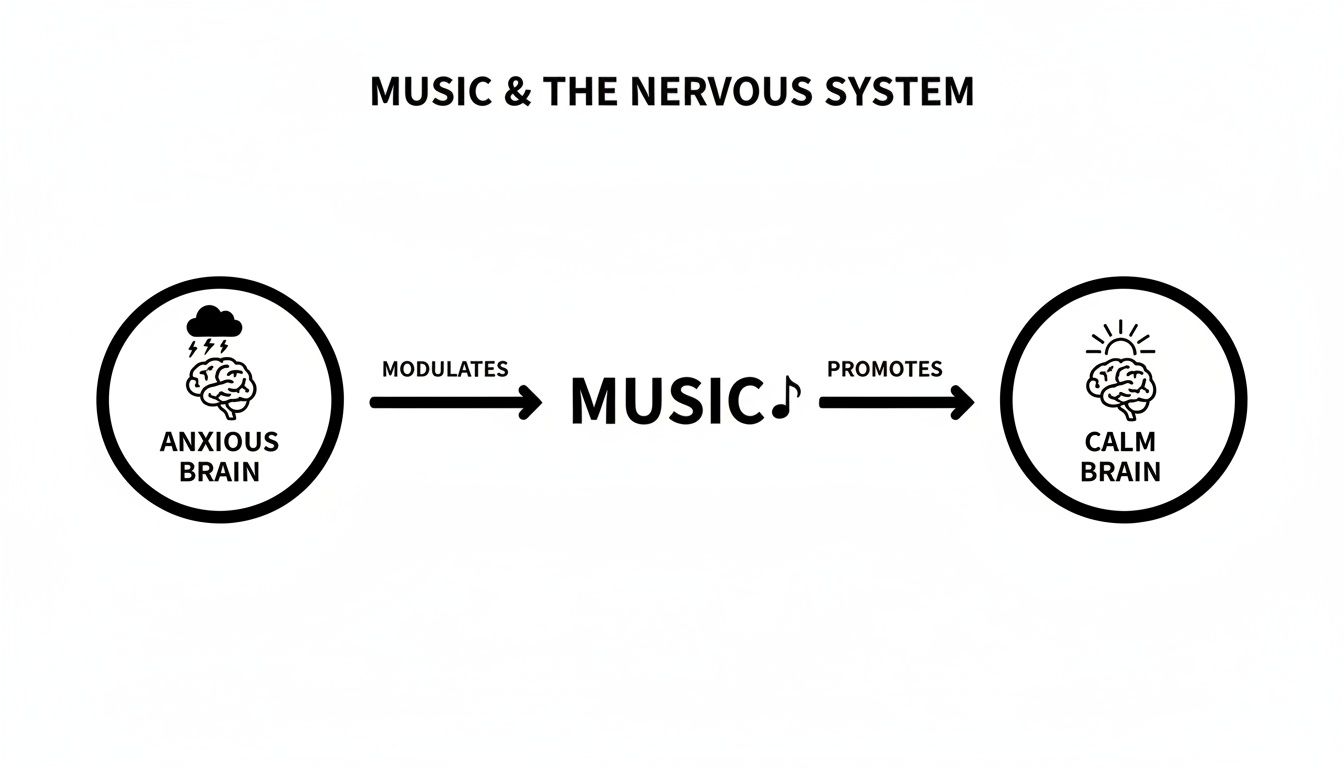
You can see the clear shift from an anxious brain to a relaxed one, with music serving as the bridge between the two.
Pillar Three: Cognitive Refocusing
Anxiety loves to ruminate—that endless loop of "what if" scenarios and negative chatter that feels impossible to escape. Cognitive refocusing is about giving your brain a better, more interesting place to put its attention. And nothing grabs our attention quite like a good song.
Music works as a powerful "pattern interrupt." When you deliberately listen to a song, especially one with complex layers or an interesting melody, you engage the parts of your brain that control attention. This essentially starves the anxiety loop of the mental fuel it needs to keep going.
This is much more than a simple distraction; it's a strategic rerouting of your brainpower. If you're really struggling with intrusive thoughts, you might want to explore how specific sound patterns can quiet your mind, like we cover in our guide on binaural beats for anxiety relief. This pillar is all about taking back your mental space, one note at a time. It’s a powerful reminder that you aren't helpless against your own thoughts.
Pillar Four: Social Connection
One of the cruelest parts of anxiety is how isolating it feels. It tricks you into believing you're the only person in the world who feels this way. Music can completely shatter that illusion by reminding you that you’re part of something bigger.
Sharing music—whether you're at a concert, sending a friend a playlist, or just listening with someone you love—builds bridges. It creates a shared emotional experience that reminds you that you belong. Seeing artists on stage who've been open about their own mental health struggles can be especially powerful, proving that strength and creativity can absolutely grow from pain.
While this article is mostly about listening to music, actually making it can be just as healing. For instance, there are profound benefits of learning to play an instrument, which can boost your brain, lift your mood, and open up new ways to connect with others. Each of these four pillars—emotional, physiological, cognitive, and social—shows another way music can guide you toward a life with less panic.
How to Build Your Personal Anti-Anxiety Music Toolkit
Knowing that music can dial down anxiety is one thing. Actually turning that knowledge into a reliable tool you can grab in a moment of panic? That's where the real relief begins and where hope turns into action. This is how you move from just reading about it to doing it, building a personal first-aid kit for your mind.
This isn't about chasing one magical song that solves everything. It's about becoming the curator of your own emotional state, building a library of playlists designed for different moments and moods. The process itself is empowering. You’re taking an active role in your own healing, creating a first line of defense that is yours and yours alone.
Choosing Your Tracks The Right Way
Building an effective anti-anxiety toolkit starts with the music you choose. While your gut feeling is always the most important guide, a little bit of science can help you make choices that consistently get results. The goal is to find sounds that reliably guide your nervous system back to a place of calm.
- Tempo Is Everything: Look for music with a tempo between 60 and 80 beats per minute (BPM). This range is a close match for a resting heart rate, gently encouraging your own body to slow down and sync up with the rhythm.
- Lyrics or No Lyrics? Instrumental music usually wins for anxiety relief. Lyrics can fire up the analytical part of your brain or accidentally trigger memories and thoughts you’d rather avoid. Instrumental tracks let your mind float without getting snagged on words.
- Lean into the Familiar: Don't underestimate the power of songs you already know and love. Familiar tunes tied to happy memories can offer an instant feeling of safety and comfort—something that’s priceless when stress is peaking.
Create Playlists for Specific Needs
Instead of dumping everything into one giant "calm" playlist, think smaller and more specific. This lets you match the right sound to the right situation, making your toolkit much more powerful. Think of it like a medicine cabinet: you have different remedies for a headache than you do for a stomachache.
Here are a few playlist ideas to get you started:
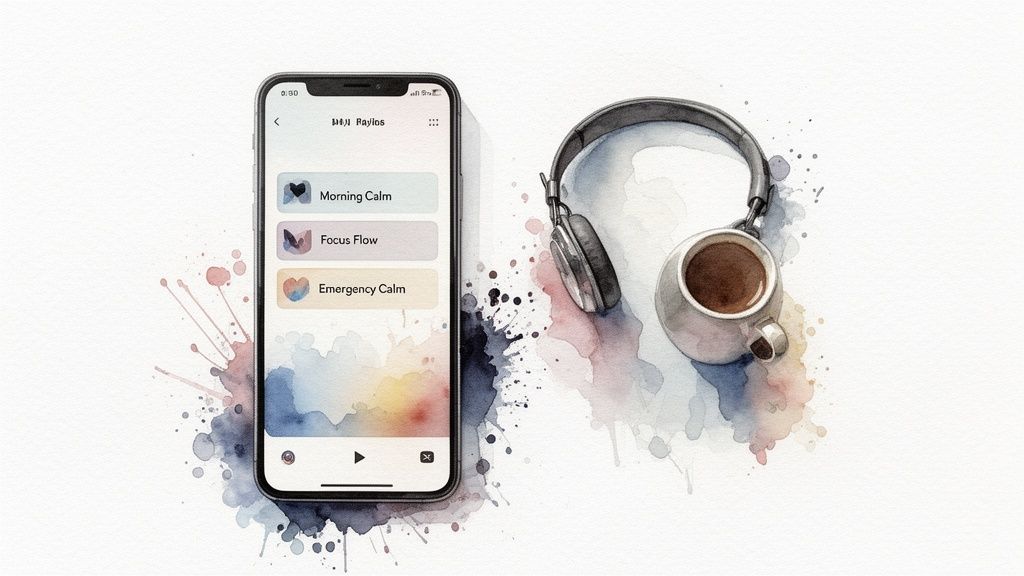
- Morning Calm Playlist: Start your day with intention, not a rush of anxiety. This playlist should feel gentle and uplifting, helping you set a peaceful tone before the world’s demands kick in. Think soft acoustic guitar, ambient soundscapes, or light classical music.
- Focus Flow Playlist: For those times when anxiety is scattering your thoughts but you still need to get things done. This music should be engaging enough to keep you on track but not so interesting it becomes a distraction. Lo-fi beats, minimalist electronic music, or instrumental film scores work great here.
- Emergency De-escalation Playlist: This is your panic button. Keep it short and potent with just 3-5 songs you know, without a doubt, can pull you back from the edge. These are your go-to tracks for the moment you feel panic rising, designed to bring you back down—fast.
The real power here lies in making it your own. One person’s serene classical piece is another person’s source of irritation. Above all, trust how your body responds. If a song makes you feel more grounded and safe, it belongs in your toolkit.
The Science of Self-Selection
This focus on personal choice isn't just a feel-good tip; it’s backed by solid research. A 2021 meta-analysis involving 1,924 participants found that music therapy delivered a significant drop in anxiety after an average of just 7.5 sessions. More importantly, the study showed the greatest benefits came when people used their own self-selected music.
For anyone fighting daily anxiety, this is huge. It means a simple, personalized playlist can be a powerful first-line defense—helping you reclaim a sense of calm without needing a prescription.
And if you want to go even deeper, certain sound frequencies can add another layer to your toolkit. Our guide on using solfeggio frequencies for anxiety healing is a great place to explore that next.
By building these playlists, you're doing more than just sorting songs. You're constructing a sanctuary of sound—a reliable refuge you can turn to anytime the storm of anxiety starts to gather. This is a practical, powerful step toward a life where you feel more in control. It's a profound message of hope: healing is possible, and it can start with a song you choose.
Integrating Music into Your Daily Anxiety Management Routine
Real, lasting relief from anxiety doesn't come from a single magic bullet. It’s built by weaving small, sustainable habits of calm into the very fabric of your day. This is how you shift music from an occasional band-aid to a core wellness practice—creating a life where feeling centered is your default, not the exception. The benefits of listening to music are most profound when they become a reliable part of your routine.
Let's walk through a day in the life of someone learning to manage their anxiety, showing how music can offer both structure and hope. Imagine waking up with that familiar, heavy knot of dread in your stomach. Instead of letting it dictate the tone for your entire day, you reach for your phone—but not to doomscroll. You open your "Morning Calm" playlist.
For 10 minutes, you just sit quietly, letting gentle instrumental music wash over you. This isn't just background noise. It’s a deliberate act to set a calm, centered tone before the day’s chaos can take hold. This small ritual sends a powerful signal to your nervous system: "I am in control. I am safe."
Turning Midday Slumps into Moments of Calm
Fast forward to 3 p.m. The afternoon slump hits, but for you, it often brings a spike of anxiety along with it. Your focus shatters, thoughts start to race, and the pressure feels like it's closing in. In the past, this might have sent you into a full-blown spiral. Today, you have a plan.
You pop in your headphones and start a 30-minute ambient music session. This isn't about distraction; it's about giving your mind a gentle reset. The layered, neutral soundscapes give your overactive brain something pleasant to anchor to, pulling your attention away from that looping track of worry. Think of it as a mental reset button that helps you return to your work with a clearer head.
This very practice is backed by solid research. A groundbreaking 2026 meta-analysis found that music therapy was incredibly effective at reducing anxiety symptoms in university students, showing a massive standardized mean difference of -1.54. For anyone using The Anxiety Checklist, this translates into a practical strategy: build a 30-minute playlist to use during breaks, mirroring the structured approach of a 93-point toolkit for habit tracking. It’s a proven way to stop spiraling thoughts and regain emotional control.
Unlocking Restorative Sleep with Sound
The day is winding down, but for many people with anxiety, nighttime brings its own challenges. The quiet can make anxious thoughts feel deafening. This is where a dedicated wind-down routine becomes your greatest ally. An hour before bed, you dim the lights and press play on your "Restful Sleep" playlist.
This collection of slow, ethereal music is a powerful signal to your body and mind that it's time to prepare for rest. It’s a non-negotiable part of your evening. As you listen, you might do some gentle stretches or a few deep breathing exercises. The music helps slow your heart rate and quiet your racing thoughts, making it far easier to drift off into deep, restorative sleep. Pairing this with other sensory experiences, like exploring natural methods such as Aromatherapy for Stress Relief, can create an even more powerful, multi-sensory calming ritual.
By creating these small, consistent musical touchpoints throughout your day, you are actively rewiring your response to stress. You are proving to yourself, moment by moment, that you have the tools to manage your anxiety.
Logging Your Progress for Lasting Change
The final, and most crucial, step is to make this practice measurable. In your habit tracker, a key part of The Anxiety Checklist system, you add an entry: "Music Therapy." Each time you complete one of your sessions—whether it's morning, afternoon, or evening—you check it off.
This simple act of tracking accomplishes two powerful things:
- It provides accountability: It transforms a vague intention ("I should listen to more calming music") into a concrete, daily goal.
- It builds momentum: Seeing those checkmarks stack up gives you tangible proof of your commitment and progress, which is incredibly motivating on tough days.
This is how you build a life where you feel empowered, not overwhelmed by anxiety. By integrating the benefits of listening to music into a structured routine, you aren't just hoping for a calmer life—you are actively building it, one song at a time. To make this practice even more effective, check out our guide on combining music with breathing exercises for anxiety.
Your First Step Toward a More Fearless Life
The journey toward healing doesn’t start with a giant leap. It starts with one small, simple action. We’ve gone through the incredible benefits of listening to music, but the real takeaway is this: you have the power to heal from anxiety and live a life that isn’t defined by fear. Think of music as an accessible, effective, and even joyful tool to help you get there.
Living with anxiety can feel like you’re lost at sea, but now you have a compass. You’ve learned how to build your own music toolkit and, more importantly, how to weave it into a routine. That combination is what makes the idea of a panic-free life feel less like a dream and more like a plan. The hope you’re feeling isn't just a fleeting emotion—it’s what happens when you know what to do next.
From Hope to Action
We've covered the science and the strategies, but it all boils down to what you do in this moment. You don’t need to have it all figured out. You just need to start.
- You've learned how music can physically settle your nervous system, slowing your heart rate and melting away tension.
- You've discovered how it can interrupt that relentless loop of worry, giving your mind a quiet place to land.
- You've seen how creating your own playlists gives you a real, tangible sense of control when you feel panic rising.
A life free from the grip of panic isn’t some abstract idea. It’s built on the small, intentional choices you make every day. Music offers a gentle but powerful way to make those choices, turning moments of fear into opportunities for healing.
Your Invitation to a Calmer Life
This guide isn’t a finish line—it’s an invitation to begin. The path to a less fearful life doesn't require anything you don't already have. It doesn’t demand perfection. It just asks that you show up for yourself.
So, what’s your next brave step? It’s the simplest one of all.
Pick one song. Just one. Choose a piece of music that has ever brought you a sliver of peace, a moment of joy, or a quiet sense of strength. Put on your headphones, close your eyes if that feels right, and just press play. In that moment, you’re not just listening to a song—you’re taking your life back.
Frequently Asked Questions About Using Music for Anxiety
As you start to explore music as a tool for calm, it’s only natural for questions to pop up. Think of this section as your quick-start guide, filled with straightforward answers to help you feel more confident on your journey.
What Type of Music Is Best for Anxiety?
While the most calming music is always the music you find calming, research does give us some helpful clues. Songs with a slow, steady tempo of around 60-80 BPM—roughly the same as a resting heart rate—tend to work best. Think simple melodies and minimal lyrics.
Genres like ambient, classical, or instrumental acoustic often fit the bill. The real goal is to find sounds that soothe your nervous system without making you think too hard. Experiment a little and pay attention to how your body responds. The right music for you is a personal discovery.
How Long Should I Listen to Music to Feel a Difference?
Good news: you don’t need to set aside a huge chunk of your day. Studies show that even 15-30 minutes of intentional listening can make a real dent in your stress and anxiety levels. And in the middle of rising panic, a single five-minute song can be enough to hit the brakes on your body’s stress response.
Consistency is far more powerful than duration. Weaving short, regular music breaks into your day is one of the best ways to build long-term resilience against anxiety.
Can Some Music Actually Make My Anxiety Worse?
Yes, absolutely. Music that is fast-paced, chaotic, or aggressive can easily ramp up your heart rate and agitation. In the same way, songs you tie to sad memories or that have distressing lyrics can pull you into an emotional state you’d rather avoid.
This is exactly why building your own “safe” and “calming” playlists is so important. If a song ever makes you feel more anxious, trust that signal. Stop listening right away and switch to something you know brings you a sense of comfort and stability.
By turning these insights into daily habits, you are actively building a life where you are in control. The Anxiety Checklist provides a complete, structured system to help you integrate practices like music therapy into a comprehensive plan for lasting relief. Discover how to build your personalized toolkit and finally break free from anxiety's grip by visiting https://anxietychecklist.com.