

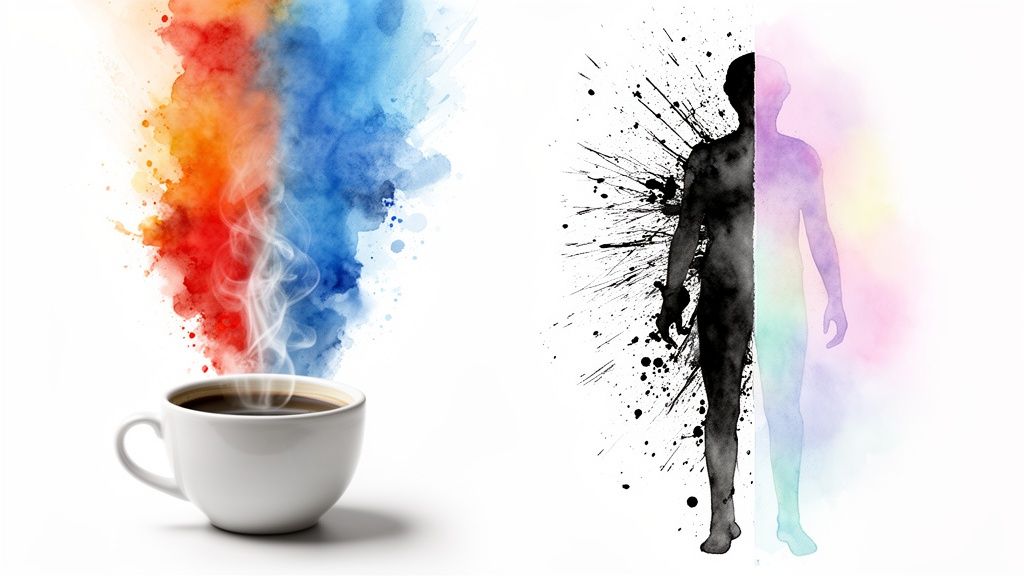
Yes, your daily coffee habit could be making your anxiety worse. This powerful stimulant can kick your body's 'fight or flight' response into high gear, creating physical symptoms like a racing heart and shakiness that feel almost identical to an anxiety attack. But identifying this connection is a massive step forward, opening the door to healing and a life free from panic.
The Hidden Link Between Your Morning Brew and Anxiety
If you're reading this, you've probably felt it—that uncomfortable buzz when your morning coffee or afternoon pick-me-up crosses a line. What started as a helpful boost suddenly becomes a wave of jitters and unease. You aren’t imagining it. The connection between caffeine and anxiety is very real, and understanding it is one of the most empowering first steps toward reclaiming your calm.
This isn't about feeling guilty or having to give up everything you enjoy. Think of it as a hopeful discovery on your path to wellness. When you recognize how caffeine affects your nervous system, you gain the power to make choices that lead to a more peaceful, centered life. This is your opportunity to build awareness and prove to yourself that you can heal.
Why Your Body Reacts This Way
Caffeine is a potent stimulant that talks directly to your central nervous system. Its main job is to make you feel more alert, but for some of us—especially those already prone to anxiety—that stimulation can easily spill over into overdrive.
Here's a breakdown of what’s happening under the surface:
- Mimicking Anxiety: Caffeine can trigger a racing heart, restlessness, and jitters—sensations that your brain can easily mistake for the physical symptoms of anxiety.
- Triggering Adrenaline: It signals your body to release adrenaline, the "fight or flight" hormone. This puts your system on high alert, making you feel like you're facing a threat even when everything is perfectly fine.
- Disrupting Sleep: Even a morning cup can mess with your sleep quality later that night. Poor sleep leaves you feeling depleted and far more vulnerable to anxious feelings the next day.
The most important thing to remember is that healing from anxiety and living panic-free is absolutely possible. Identifying a trigger like caffeine isn’t a setback—it’s a powerful step toward regaining control of your well-being.
This isn't just a hunch; research backs it up. A major review of several studies found a clear link between caffeine and a higher risk of anxiety. The connection was particularly strong for people consuming over 400 mg per day, showing that for many, the more you drink, the worse it can get.
Let's quickly recap how that cup of coffee can stir up more than just your energy levels.
Quick Guide How Caffeine Can Influence Anxiety Symptoms
The table below breaks down the key ways caffeine messes with your body's natural balance, turning a simple stimulant into a potential anxiety trigger.
| Mechanism | Impact on Your Body and Mind | What It Feels Like |
|---|---|---|
| Blocks Adenosine | Interferes with the brain chemical that promotes relaxation and sleepiness, making you feel "wired." | Restlessness, inability to wind down, racing thoughts. |
| Increases Adrenaline | Activates the "fight or flight" response, putting your body on high alert for danger. | A sudden surge of panic, a pounding heart, shakiness. |
| Mimics Anxiety Symptoms | Creates physical sensations (like heart palpitations) that are identical to those of a panic attack. | Feeling jittery, short of breath, dizzy, or on edge. |
| Disrupts Sleep | Reduces deep sleep and can make it harder to fall asleep, even hours after consumption. | Waking up feeling unrefreshed, groggy, and more prone to worry the next day. |
Understanding these connections is the first step. It helps you see that you're not "just being sensitive"—your body is having a very real, physiological reaction. This knowledge is your first tool on the road to healing.
Uncovering Hidden Caffeine Sources
Getting a handle on your intake starts with knowing where caffeine is hiding. While coffee is the obvious culprit, it’s also in sodas, energy drinks, chocolate, and even some over-the-counter pain relievers. Learning the typical caffeine content in teas and other products is a great place to start.
Once you know where to look, you can start tracking your daily total and make more mindful choices. If you’re ready to take a more structured approach to overcoming anxiety, our Anxiety University program gives you the tools and expert-led strategies you need to build a more resilient and peaceful mind.
How Caffeine Can Hijack Your Nervous System
To really get why your morning coffee might be turning on you, it helps to see caffeine for what it is: a powerful substance that directly messes with your brain chemistry. Yes, it delivers a quick burst of energy, but for those of us with sensitive systems, that boost can come with a heavy price.
Think of it like taking a high-interest loan from an energy loan shark. You get the cash you need right away, but the payback can be vicious.
That buzzing, “wired” feeling isn’t a freebie. Caffeine creates it by essentially hotwiring your body's natural cycle of alertness and rest. This is the main reason it can so easily mimic—or even flat-out trigger—feelings of anxiety and panic. But understanding this mechanism is incredibly hopeful—it shows you there's a clear, biological reason for what you're feeling, and it's something you can change.
Your Brain on Caffeine
Imagine your brain has a built-in braking system. This system is run by a chemical called adenosine, which slowly builds up all day to let you know when it’s time to wind down. It's what makes you feel sleepy, calm, and ready for rest.
Caffeine is a master of disguise. It's shaped just enough like adenosine to sneak in and block its parking spots, or receptors, in your brain. With your natural brakes suddenly offline, all of your brain's "go" signals start firing without any checks and balances. This is why you feel so alert—your body's chill-out mechanism has been temporarily disabled.
But here’s where it gets tricky. While the brakes are off, caffeine also slams its foot on the gas pedal. It triggers a flood of adrenaline, the main hormone behind the body's fight-or-flight response guide. This is the exact moment an innocent cup of coffee can flip the switch and become a source of intense anxiety.
This sudden adrenaline dump puts your entire body on high alert. Your heart starts pounding, your muscles get tense, and your thoughts begin to race as your mind desperately searches for a threat that isn't there. Your body is physically gearing up for a fight, even if you’re just sitting at your desk trying to answer emails.
This isn't just "in your head." It's a direct, physical reaction to a substance that sends your nervous system into overdrive. Realizing this can be a relief—it's not a personal failing, it's chemistry. And you have the power to change that chemistry.
The Adrenaline Aftermath
When your system is swimming in adrenaline, the feeling is almost identical to a panic attack. If you don't realize what's causing it, the symptoms can be seriously frightening.
You might experience:
- A racing or pounding heart, which can make you worry that something is medically wrong.
- Shakiness or trembling hands, a classic sign that you're running on pure adrenaline.
- A sense of impending doom or intense dread, as your brain struggles to make sense of the sudden stress signals.
- Dizziness or shortness of breath as your body's stress response messes with your normal breathing patterns.
Realizing these sensations are a direct side effect of caffeine can be incredibly empowering. It helps you reframe the entire experience: you’re not losing your mind, you’re just over-caffeinated. Understanding the "why" behind the physical feelings is the first real step toward taking back control and finding your calm. This knowledge is a cornerstone of healing.
Finding Your Personal Caffeine Threshold
You’ve probably heard the standard advice: up to 400mg of caffeine a day is perfectly safe. But if you’re struggling with anxiety, that number can feel invalidating. The truth is, your body’s reaction to caffeine is deeply personal. It’s not about being weak or overly sensitive; it’s about your unique biology.
Your genetics, your metabolism, and even your baseline anxiety levels all come together to decide how you handle that morning cup. Recognizing this isn't a sign of defeat—it's the first real step toward getting your power back from panic. Once you stop blaming yourself for feeling anxious, you can start taking real, practical steps to figure out how this common trigger affects you. This is a hopeful path toward living panic-free.
Become a Detective of Your Own Body
To get a clear picture of what’s going on, it’s time to do a simple caffeine audit. The goal here isn't to judge yourself, but to gather clues. For the next few days, keep a running list of every single source of caffeine you consume. You might be surprised where it’s hiding.
- Beverages: Coffee, black tea, green tea, soda, and energy drinks are the obvious ones.
- Foods: Don't forget dark chocolate, certain protein bars, and even some ice creams.
- Medications: Many over-the-counter pain relievers include caffeine to make them work faster.
Understanding your true intake is liberating. It validates your experience and proves that caffeine-fueled anxiety isn't just in your head—it’s a measurable reality you can finally do something about. This knowledge is your roadmap to feeling better.
This isn’t just a hunch; it’s a well-documented pattern. Study after study has found a clear link between how much caffeine people drink and how anxious they feel. Research on teenagers, for example, showed that the more high-caffeine drinks they had, the higher their anxiety levels soared.
Considering that over 80% of adults in the United States drink caffeine every single day, it’s easy to see how widespread this problem is. But this also means you are not alone, and there is a clear, well-trodden path to feeling better.
This whole process helps you figure out what "too much" means for your body, not some generic guideline. If you'd like a structured way to get a snapshot of your symptoms before you start, taking a self-assessment like the GAD-7 anxiety test can give you a clear baseline for your healing journey.
Distinguishing Jitters From Genuine Panic
You’ve had one too many cups of coffee, and now your heart is pounding. Your hands are shaky. Is this just the caffeine talking, or is it the start of a full-blown panic attack? Being able to tell the difference is a game-changer. It transforms a terrifying moment into a manageable one and gives you back a sense of control.
The physical signs of being over-caffeinated—what we often call "the jitters"—can feel identical to the first wave of panic. Both can trigger a racing heart, restlessness, and a touch of dizziness. This overlap is exactly why the caffeine and anxiety connection can be so frightening. Your body gets a rush of adrenaline, and your brain immediately starts to sound the alarm: "DANGER!"
But here’s the crucial difference: while the physical sensations are similar, the cognitive and emotional experiences are worlds apart. Grasping this distinction is a powerful step toward taking the power back from fear and realizing you are safe.
This isn't a small problem, either. Research shows that about 15.6% of people drink excessive amounts of caffeine every day. Within this group, the numbers for mental health struggles are striking: 40.8% report anxiety, and 23.2% deal with depression. These statistics show how common your experience is and that solutions are available.
Caffeine Jitters vs Panic Attack Symptoms
Let's draw a clear line between the two. Think of caffeine jitters as physical static from a stimulant. A panic attack, on the other hand, is a complete mental and emotional storm that takes over.
This table breaks down the key differences to help you spot what you're really experiencing.
| Symptom Area | Typical Caffeine Overload ('The Jitters') | Signs of a Panic Attack |
|---|---|---|
| Primary Sensation | Physical restlessness, shakiness, fast heartbeat. | An overwhelming, intense wave of terror or dread. |
| Cognitive State | Thoughts are usually clear. You can often trace the feeling back to the caffeine. | A sense of impending doom, feeling like you’re losing control, going crazy, or dying. |
| Sense of Reality | Grounded in reality. You know who and where you are. | May include derealization (feeling like your surroundings aren’t real) or depersonalization (feeling detached from yourself). |
| Trigger | Directly linked to consuming a stimulant (caffeine, etc.). | Can be triggered by a specific fear or appear to come out of nowhere. |
| Duration | Lasts as long as the caffeine is in your system, gradually fading. | Typically peaks within 10 minutes and subsides, though the emotional after-effects can linger. |
Knowing the difference allows you to short-circuit the fear cycle. Instead of letting the physical sensations escalate into a full-blown attack, you can ground yourself with a simple thought: "This is just the coffee. I am safe." This simple act of recognition is a powerful tool on your journey to becoming panic-free.
For a more detailed look at the symptoms of panic, our guide on what a panic attack feels like is a great resource.
Your Game Plan: How to Reduce Caffeine and Anxiety
Figuring out that caffeine is a piece of your anxiety puzzle is a huge win. Seriously. It means you’ve found a tangible trigger you can actually do something about, putting you back in control of how you feel. This section is your game plan for cutting back without feeling deprived, and it's a major step toward healing.
Forget the idea of quitting "cold turkey." That all-or-nothing pressure often backfires, spiking anxiety and leading to nasty withdrawal symptoms. Instead, we’re going to focus on small, sustainable changes that empower you. This is all about progress, not perfection, and celebrating every step toward a calmer you.
This flowchart shows the simple but powerful sequence of how caffeine can escalate into panic for some of us.
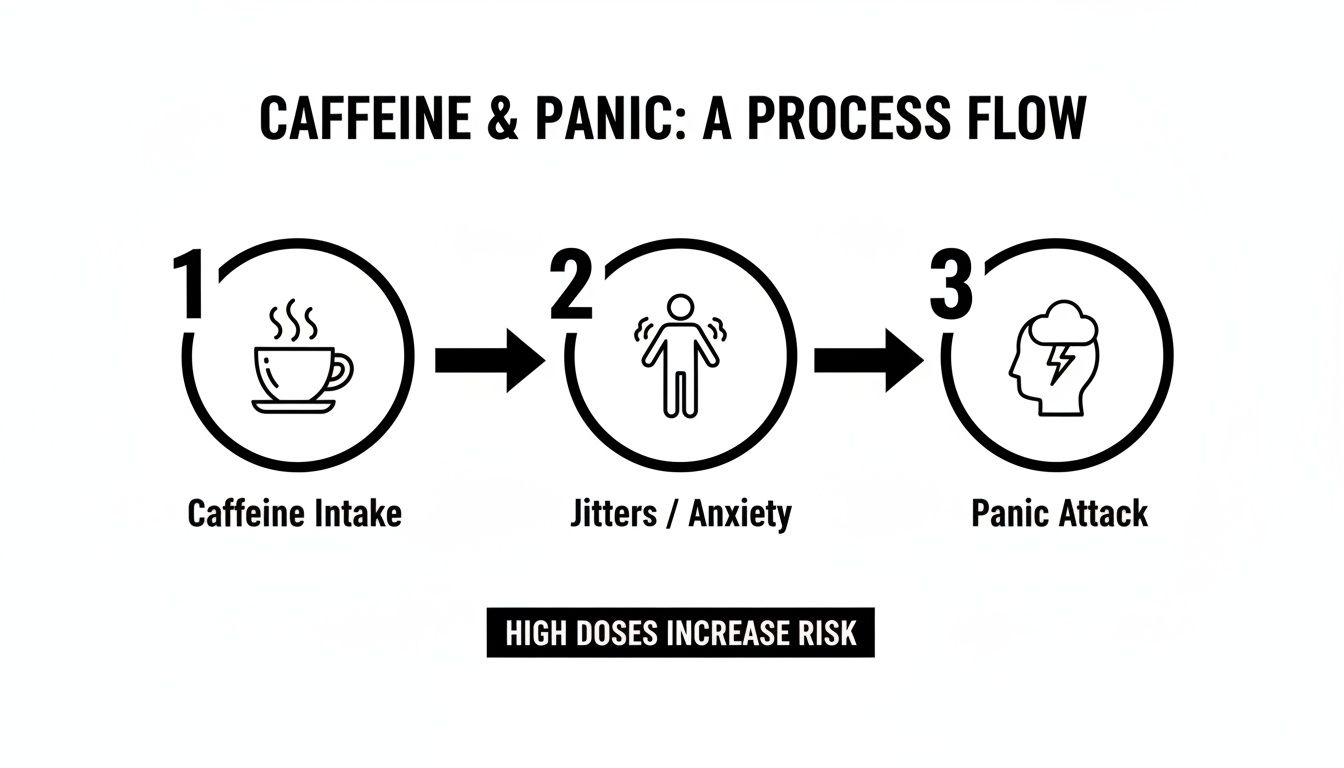
As you can see, that morning cup of coffee can kickstart a chain reaction. It starts with physical jitters, which your anxious mind might misinterpret as a sign of danger, triggering a full-blown panic response. The hopeful news? By dialing back the initial intake, you can stop this entire process before it even begins.
The Tapering Method: A Gentle Wean
The kindest and most effective way to loosen caffeine’s grip is to taper off slowly. This approach helps you sidestep the shock of sudden withdrawal—like brutal headaches or overwhelming fatigue—which can feel just as stressful as the anxiety you're trying to solve.
You are in the driver's seat here. The goal is to make tiny, manageable shifts that feel empowering, not punishing. Healing from anxiety is a journey of self-compassion, and this is a perfect place to start.
Here’s a simple way to do it:
- Reduce by 25% each week. If you normally drink four cups of coffee, cut back to three for a week. The next week, drop to two. This slow-and-steady pace gives your body plenty of time to adapt.
- Mix in some decaf. Try a "half-caff" approach by blending half regular and half decaf beans or grounds. Over time, you can shift the ratio until you're drinking mostly, or even entirely, decaf.
- Shorten your brew time. If you’re a tea drinker, steeping your tea for a shorter period can significantly lower its caffeine content without sacrificing the ritual.
This gradual method is one of the best ways to break the cycle of caffeine causing anxiety, ensuring you feel better, not worse, as you make these changes.
Smart Swaps and Timing Tweaks
Beyond just cutting down, changing what and when you drink can make a world of difference. These strategies work great on their own or paired with the tapering method.
The Timing Method
One of the most powerful adjustments you can make is to set a caffeine curfew. Since caffeine can linger in your system for hours, that 3:00 PM coffee can easily sabotage your sleep and leave you feeling more anxious the next day.
- Try a "Noon Rule": Make a commitment to have no caffeinated drinks after 12:00 PM. This gives your body more than enough time to process the stimulant before you head to bed.
- Listen to your body: Pay close attention to how that afternoon latte affects your sleep quality and your anxiety levels the next morning. Your body will give you the clues you need to heal.
The Substitution Method
Finding a satisfying replacement is crucial so you don't feel deprived. Think of it as an opportunity to discover a new world of delicious, calming beverages that soothe your nervous system instead of revving it up.
- Herbal Teas: Chamomile, peppermint, and ginger teas are naturally caffeine-free and are known for their calming properties.
- Chicory Root "Coffee": If you love a dark, roasted flavor, chicory root is a fantastic caffeine-free alternative that really hits the spot.
- Warm Golden Milk: A comforting blend of turmeric, ginger, cinnamon, and non-dairy milk can become a wonderful, soothing evening ritual.
These practical strategies are just one part of a bigger picture. For more ideas on how your daily habits can support your mental well-being, take a look at our guide on lifestyle and diet changes for anxiety management. Remember, every small step you take is a real win on your path to a panic-free life.
Building a Resilient Life Beyond Caffeine
True freedom from anxiety isn’t just about cutting out one trigger. It’s about building a solid foundation of calm from the ground up. Letting go of your reliance on caffeine for energy is a huge step forward. But it's also an invitation to discover just how incredibly resilient your body can be when you give it what it actually needs.
Think of it as creating a "resilience toolkit." Instead of automatically reaching for a stimulant, you’ll have a collection of powerful, natural habits that boost your energy and soothe your nervous system. This whole process can transform your relationship with anxiety, proving that you can feel energized, centered, and panic-free on your own terms.
Create Your Resilience Toolkit
Building a life that's less prone to anxiety comes down to weaving simple, consistent habits into your day. These practices work together to support your mind and body, making you far less vulnerable to stress triggers.
Start with these foundational pillars:
- Consistent Sleep: Aim for a regular sleep schedule. This is non-negotiable for restoring your nervous system. A well-rested mind is naturally more resistant to anxious thoughts.
- Morning Sunlight: Just 10-15 minutes of sunlight shortly after waking can do wonders. It helps regulate your internal clock, boosting your mood and natural energy levels.
- Smart Hydration: Dehydration is a sneaky stressor that can mimic anxiety symptoms. Sipping water throughout the day keeps your body and brain working the way they should.
- Blood-Sugar Balancing Meals: Make sure your meals have a good mix of protein, fiber, and healthy fats. This prevents those dreaded energy crashes that can leave you feeling shaky and on edge.
Viewing caffeine reduction as one powerful step in a larger, empowering journey is key. You are not just eliminating something; you are actively building a lifestyle that generates its own calm and energy, putting you back in control.
Beyond simply cutting back on caffeine, creating a resilient life involves adopting a whole range of natural approaches to your mental well-being. For a comprehensive guide, check out these 10 effective natural ways to manage anxiety. Each new habit you build is another tool that empowers you to live a life defined by peace, not panic.
Frequently Asked Questions
Changing your relationship with caffeine naturally brings up a lot of questions. If you're wondering what comes next or what to expect, you're not alone. Getting clear, honest answers can make the journey feel a lot less intimidating and much more hopeful.
Think of this process as an experiment in self-awareness. You’re gathering data on what your body and mind truly need to feel their best. Let's tackle some of the most common concerns to help you move forward with confidence.
How Long Do Caffeine Withdrawal Symptoms Last?
Let’s be honest—the thought of withdrawal can be a major roadblock. But the good news is, it’s a temporary hurdle on the path to feeling much better. Most people find that symptoms like headaches, brain fog, and irritability kick in within 24 hours of cutting back.
The rough patch typically lasts anywhere from two to nine days. The intensity really depends on your starting point—how much caffeine you were used to drinking. The best way to sidestep the worst of it is to taper down slowly. This is a short-term challenge with a huge long-term reward: a calmer nervous system.
Will I Ever Be Able To Enjoy Coffee Again?
Yes, absolutely. This isn't about banishing coffee from your life forever (unless you want to). The real goal is to find a new, healthier balance that doesn't hijack your nervous system. A life free from anxiety doesn't mean a life free from joy.
After a reset period, many people discover they can reintroduce an occasional cup without triggering anxiety. You might find your sensitivity has changed, turning coffee back into a mindful treat instead of a non-negotiable part of your daily routine. You'll be in control, not the caffeine.
This journey is about empowerment, not deprivation. You are learning to listen to your body and make choices that support your well-being, which is the ultimate form of control over anxiety. A panic-free life is within your reach.
What Are the Best Caffeine-Free Energy Boosters?
Breaking the habit of reaching for caffeine when you feel a slump is tough. The trick is to have some solid, non-jittery alternatives ready to go. Luckily, there are plenty of great options that energize your body without sending it into fight-or-flight mode.
- A Brisk Walk: Even just 10-15 minutes of quick movement gets your blood flowing and releases endorphins, giving you a clean, natural lift.
- Cold Water: A splash of cold water on your face or a big glass to drink can be surprisingly effective. It’s a mini-shock to the system that wakes you up instantly.
- Peppermint Tea: The smell and taste of peppermint are natural stimulants. It can sharpen your focus without any of the anxiety-inducing side effects.
These simple swaps prove you don't need to rely on caffeine causing anxiety to feel alert and productive. You have the power to create your own energy, naturally.
If you’re ready to take back control from anxiety with a structured, step-by-step plan, The Anxiety Checklist provides the practical tools and cognitive strategies you need. Our Fearless Living system guides you toward building a more resilient and peaceful life, one manageable action at a time. Learn more about our approach.