

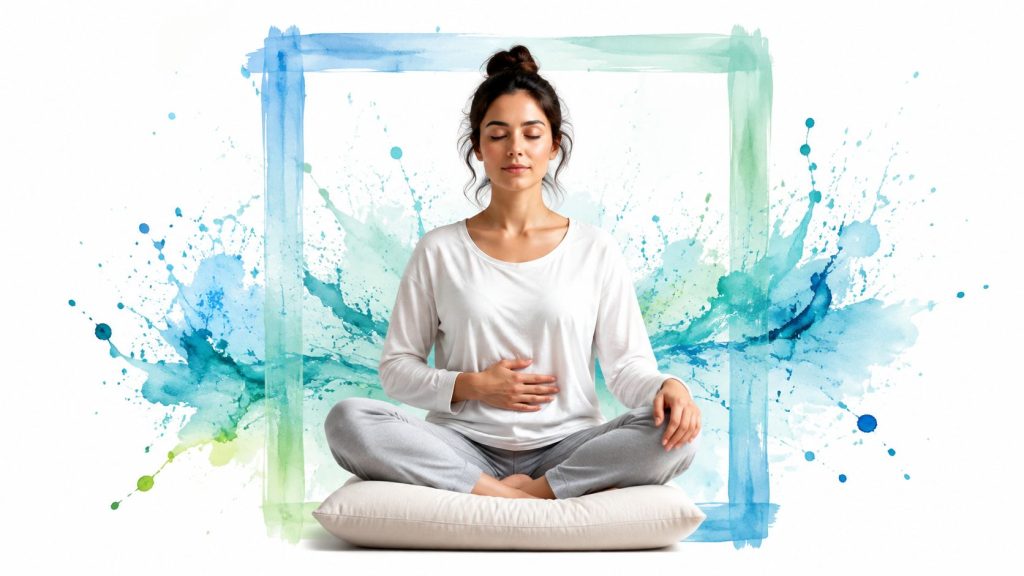
You're standing at the kitchen counter in the middle of the night, gripping the edge because your chest feels tight and your thoughts keep searching for proof that something is seriously wrong. You've tried taking a deep breath, but the breath feels forced, your body feels farther from calm, and the next wave of fear is already rising.
The box breathing technique gives that moment a simple structure. It won't erase anxiety or promise a panic-free life after one exercise, but it can create a small pause between the alarm and your reaction. With repeated practice, that pause can become one part of a broader path toward healing, steadier responses, and more confidence in your ability to get through a difficult surge.
Table of Contents
- Why a Simple Breathing Pattern Can Interrupt a Panic Spiral
- How to Do the 4-4-4-4 Box Breathing Technique
- What the Research Says About Box Breathing and Anxiety
- Variations Worth Trying When the Classic Pattern Feels Off
- Using the Anxiety Checklist SOS Mode During a Panic Attack
- Building a Daily Practice That Actually Sticks
- When Box Breathing Is Not Enough and How to Get Real Help
Why a Simple Breathing Pattern Can Interrupt a Panic Spiral
Panic can shrink attention until every heartbeat, throat sensation, and fearful thought demands an answer. In that state, telling yourself to take a deep breath may backfire. You might pull in too much air, speed up the breathing, or watch each sensation so closely that your alarm grows louder.
A paced pattern offers one small task: follow the next count. Inhale, pause, exhale, pause. The sequence works like a handrail on a steep staircase. It gives attention something steady to hold while the body has time to move out of its frantic rhythm. The goal is not forced calm. It is fewer decisions when fear is already making everything feel urgent.

A reset, not a cure
Box breathing is a reset button, not a cure-all. It may create enough space to ground yourself, change rooms, contact someone you trust, or follow an existing treatment plan. These tips for anxiety and panic can support that wider toolkit, but breathing practice does not replace professional care.
A randomized study of 5-minute daily breathwork found a mean daily state-anxiety reduction of −3.75 ± 2.83 with box breathing, compared with −3.95 ± 4.16 with mindfulness meditation. The study reported statistically significant improvements across the breathwork conditions, with p < 0.0001 (study details). Those findings support a measured expectation: regular practice may reduce anxiety over time, rather than erase it during one frightening moment.
Box breathing is also not the right default for everyone. If holding your breath creates air hunger, shorten the counts or stop. If focusing on breathing makes panic sensations more intense, shift attention to your feet, nearby objects, or another grounding task. The technique should feel like support, not another test to pass.
After an initial reset, The Anxiety Checklist's panic guide can provide grounding and decision support through its SOS workflow. Use the breathing count first if it helps, then follow the app's next prompt. You are giving your nervous system a safer next action, not arguing with panic.
How to Do the 4-4-4-4 Box Breathing Technique
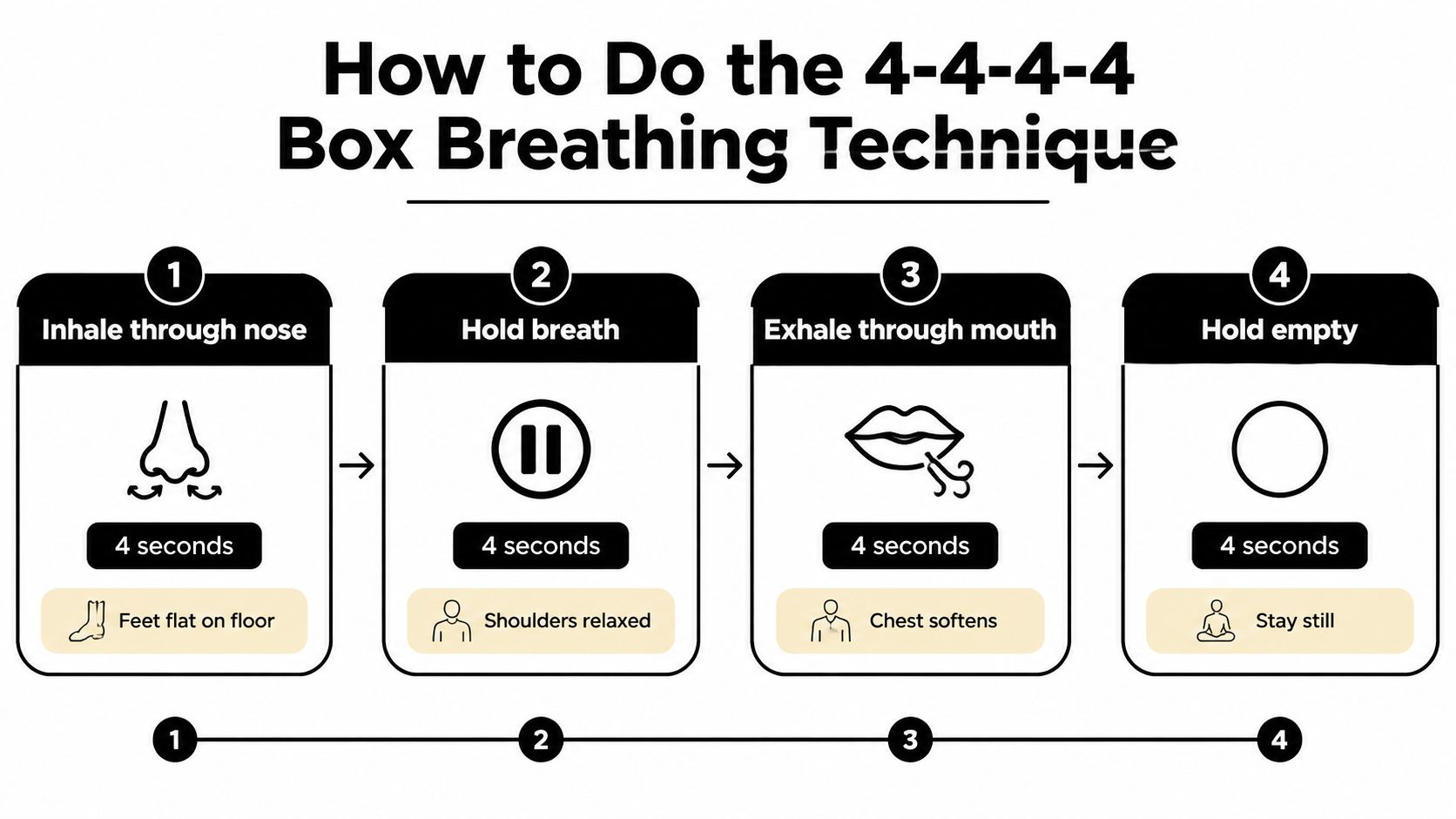
The classic pattern has four equal phases:
- Inhale through your nose for 4 seconds. Let the breath arrive smoothly rather than pulling in the biggest breath possible.
- Hold for 4 seconds. Keep the throat, face, and shoulders soft. This is a gentle pause, not a muscular effort.
- Exhale through your mouth for 4 seconds. Allow your chest and belly to settle without pushing all the air out.
- Hold empty for 4 seconds. Stay still, then begin the next inhale without a gasp.
Set up your body first
Sit with your feet flat on the floor. Drop your shoulders, unclench your jaw, and let your hands rest with palms up on your knees. If that feels too exposed or restless, place one hand over your belly so you can notice the rise and fall without trying to control every movement.
Keep your eyes softly focused on one object, or close them if that feels comfortable. Count with a calm mental beat. You're aiming for roughly four seconds, not a race through four numbers and not a perfect stopwatch performance.
Practical rule: A smaller, quieter breath is often easier to sustain than a large breath that creates pressure in your chest.
Use the right dose
For an urgent reset, try about 60 seconds. Complete the sequence at a pace that feels steady, then look around and name one object in the room. For deliberate practice, continue for 3 to 5 minutes, stopping sooner if the holds make you uncomfortable.
A short video can provide visual pacing while you learn the rhythm:
Common beginner errors include forcing the inhale, clenching during the holds, breathing too rapidly, and making every breath unusually large. If you feel air hunger, dizziness, or escalating fear, return to ordinary breathing and use a simpler rhythm. You can also explore how box breathing differs from more activating approaches in this Wim Hof method overview, but don't assume an intense method suits an anxious body.
Before you begin, rate your tension in a way that makes sense to you, such as low, medium, or high. After one cycle, check again. The exercise isn't a test you pass by feeling perfectly calm. You're looking for any shift, even a little more space in your shoulders or a clearer sense of what to do next. The Anxiety Checklist's breathwork resource can give you additional patterns to practice when the classic count doesn't fit.
What the Research Says About Box Breathing and Anxiety
Research on structured breathing is encouraging, with an important limit: box breathing is one coping tool, not a universal treatment. It may reduce anxiety or stress for some people when the instructions are clear and the practice is repeated. It does not replace therapy, medical assessment, or medication when those forms of care are appropriate.
A systematic review examined 309 studies, with 19 meeting the review criteria. Within those studies, 12 reported significant anxiety improvement and 9 reported significant stress improvement. No adverse events were reported. Another review of implementation guidance found 54 of 72 breathing interventions effective, which points to a practical lesson: the protocol, amount of practice, and ability to follow it all matter. “Take deep breaths” gives little direction. A repeatable pattern gives you something specific to try and observe.
| Study / Source | Protocol Used | Outcome Measured | Result |
|---|---|---|---|
| Randomized daily breathwork study | 5-minute daily practice, including box breathing | Daily state anxiety | Box breathing mean change of −3.75 ± 2.83. Mindfulness meditation mean change of −3.95 ± 4.16. Breathwork conditions showed significant improvements, p < 0.0001. |
| Review of breathing interventions (systematic review) | Multiple structured protocols | Anxiety, stress, safety | 12 of 19 included studies reported significant anxiety improvement, 9 of 19 reported significant stress improvement, and no adverse events were reported. |
| Daily-life pilot study (pilot study) | Box breathing and cyclic sighing | State anxiety in everyday settings | Both breathing practices produced greater reductions in state anxiety than a control condition. |
A separate full study compared daily breathwork with mindfulness meditation and found improvement in the breathwork conditions. That result supports trying a structured routine, while still leaving room for individual differences. Some people feel steadier when attention follows the count. Others become more alarmed by air hunger or by focusing closely on each breath. If breathing itself becomes the source of fear, ordinary breathing and another grounding strategy may be a better first choice.
The value of box breathing may also come from giving scattered attention a simple sequence. People who want to observe physiological patterns with professional guidance can explore biofeedback for mental health.
The Anxiety Checklist's evidence-based anxiety resources can place box breathing within a broader toolkit. Use its SOS workflow to choose a brief breathing exercise, check whether your body is settling, and switch tools if the breath increases panic. Breathing can create a little space, while cognitive skills, exposure work, sleep support, and human connection address the wider pattern.
Variations Worth Trying When the Classic Pattern Feels Off
Equal holds are easy to remember, but easy to remember doesn't mean comfortable for every nervous system. Some people settle with the square rhythm. Others notice air hunger during the pauses or become more frightened because all their attention is fixed on breathing.
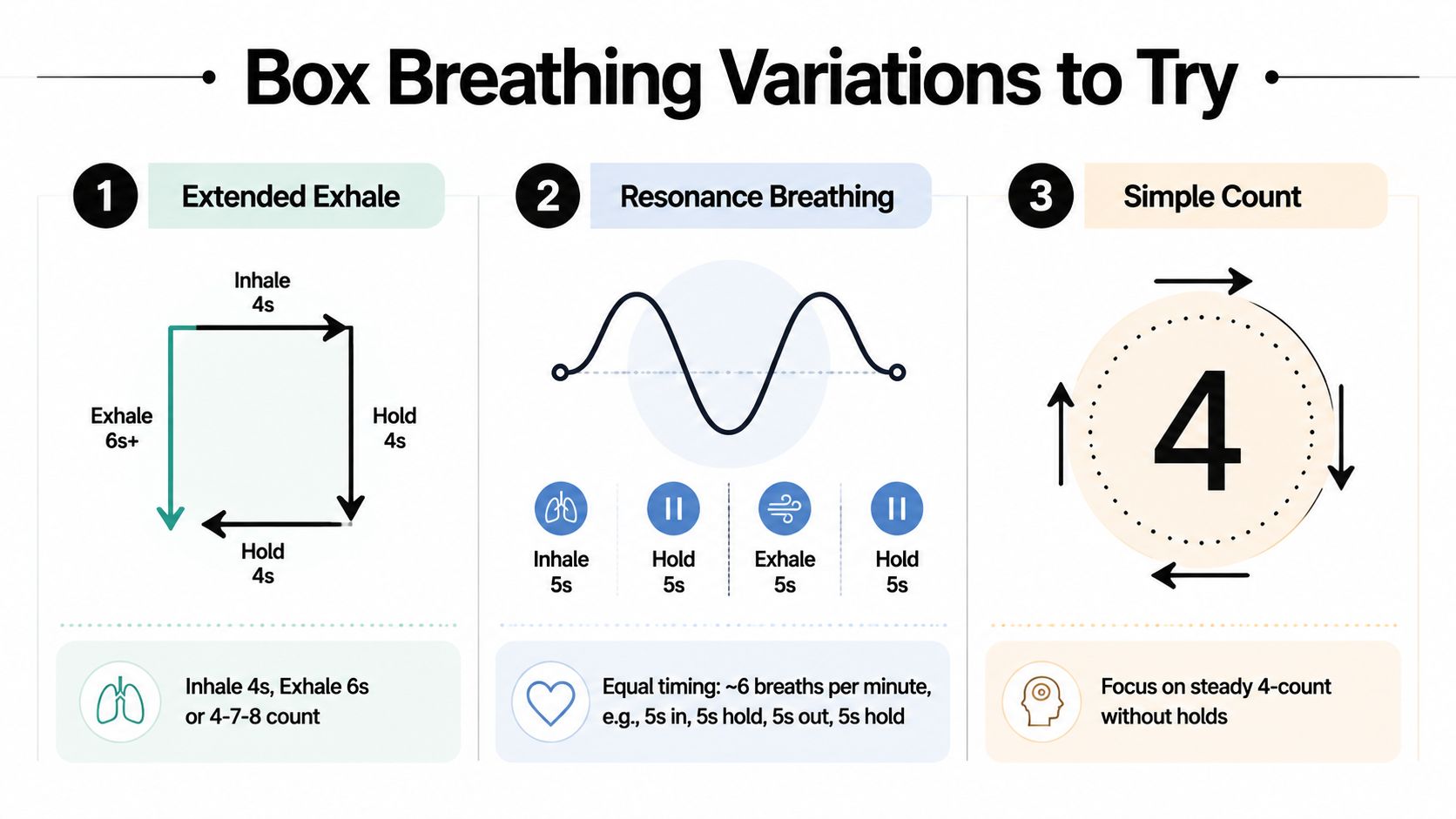
Extended exhale
Try a comfortable inhale followed by a somewhat longer exhale, such as 4 in and 6 out, or a 4-7-8 pattern if the holds feel natural. The longer release can feel soothing during a pre-sleep wind-down or after a stressful conversation. It may feel less suitable during active panic if the longer count makes you feel you're running out of air.
Keep the breath gentle. A longer exhale shouldn't become a forceful emptying of the lungs.
Slower paced breathing
Slower breathing at roughly 6 breaths per minute may be a useful alternative when equal box breathing feels effortful. A 2025 review and pilot study reported that this pace was more effective and less stressful than 4-4-4-4 box breathing for post-exercise recovery (review and pilot study). The same source described a comparison in which the 6-breaths-per-minute condition raised heart-rate variability more than box breathing, while mood and blood pressure didn't change.
Use a comfortable rhythm rather than chasing a target. You might try equal, unforced phases without insisting on a hold, or allow the inhale and exhale to move slowly.
Physiological sigh
This pattern uses a double inhale through the nose followed by a long exhale through the mouth. It can be useful when you need a quick interruption and don't want to count four separate phases. Some people find it easier during active panic because it doesn't require an empty hold. Others may dislike the stronger sensation of the double inhale.
The best pattern is the one you can perform without adding another layer of fear.
Try each option briefly when you're calm and compare two qualities: which one seems to lower your heart rate fastest, and which one feels least effortful. Your answer may change by situation. Box breathing may suit a high-stakes performance moment because the sequence is memorable, while a slower or exhale-focused pattern may feel more natural before sleep or during breath-focused panic.
Using the Anxiety Checklist SOS Mode During a Panic Attack
When anxiety spikes, decision-making becomes harder. A layered SOS routine helps because each step has a specific job. Breathing interrupts the loop, grounding reorients attention, and logging creates useful feedback.
Start with the SOS button on the home screen. The one-tap launch takes you into the routine without requiring you to search through menus or remember what to do next. The feature is available offline, which means the exercise can remain accessible when you're in a place with poor connection or don't want to wait for a page to load.
Follow the sequence
The first screen offers a body scan checklist. Rather than asking you to explain everything, it helps localize tension. You might notice a tight jaw, raised shoulders, a clenched stomach, or restless hands. Naming the body area can turn a vague emergency into a specific sensation you can observe.
The second screen launches a guided box-breathing exercise. A visible four-sided animation expands and changes with the inhale, hold, exhale, and empty hold. Follow the shape instead of trying to remember the timing while your thoughts are racing.
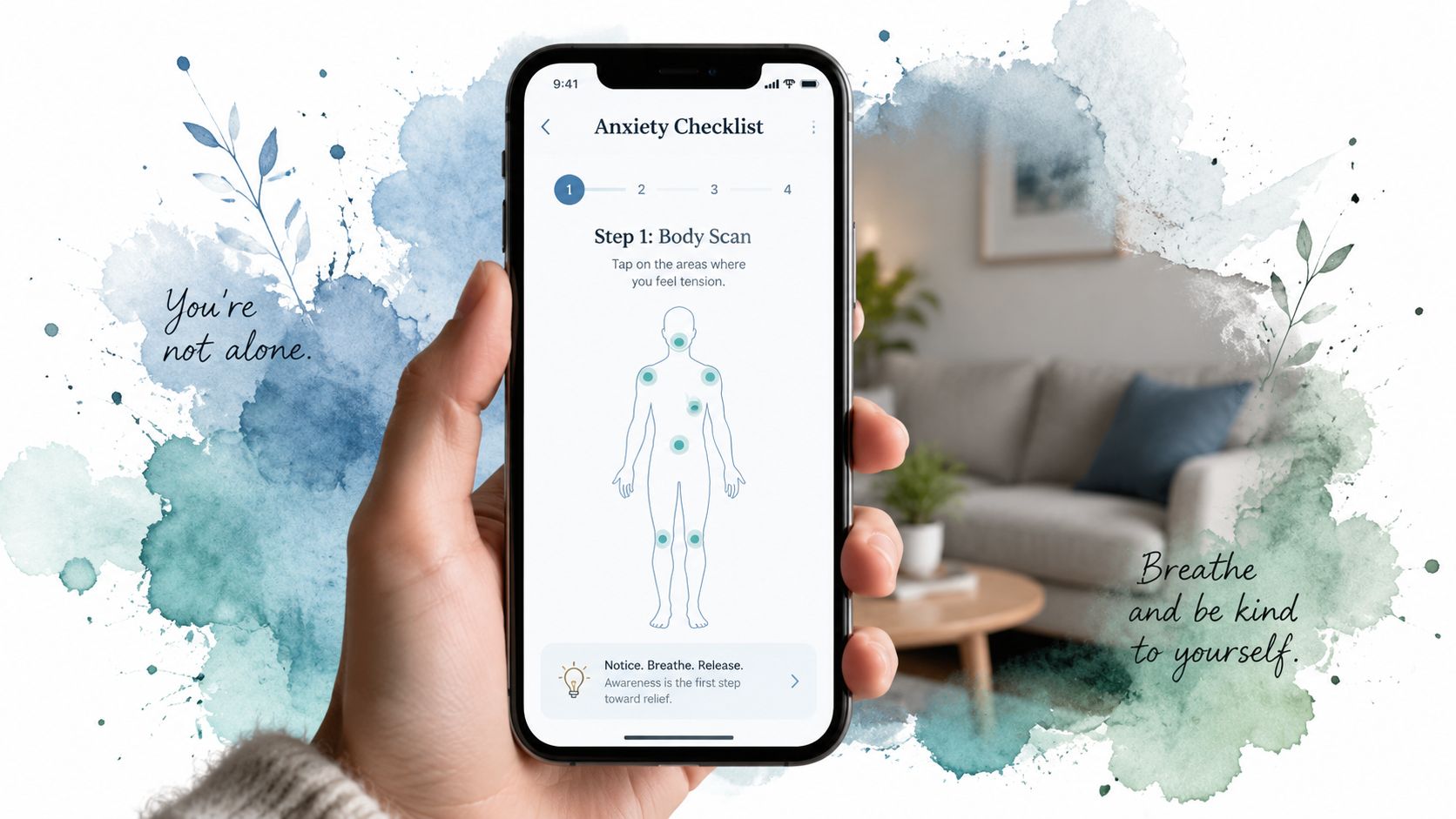
Add grounding and reflection
The third screen moves into 5-4-3-2-1 grounding through checklist prompts. You shift attention from internal alarm signals to the room by noticing what you can see, feel, hear, smell, and taste. If the breath has made you more body-focused, this change of direction is especially important.
The fourth screen asks you to log intensity before and after the routine. Over time, those entries can help you notice patterns in context, body sensations, and which tools are tolerable. If you later work with a therapist or doctor, clear observations can make it easier to describe what happens between appointments.
You can access the Anxiety Checklist app as one option for keeping this routine in reach. It doesn't replace emergency care or individualized treatment, but it can provide structure when panic makes ordinary instructions difficult to recall.
Building a Daily Practice That Actually Sticks
A breathing habit works better when it attaches to something already happening. Willpower is unreliable when you're tired, busy, or anxious. A familiar cue does the remembering for you.
You could practice for two minutes after your morning coffee brews. Before lunch, try a four-cycle session while sitting at your desk. In bed, use a quiet wind-down round if the holds feel comfortable and don't make you monitor your breathing too closely.
Use small anchors
Choose one anchor first rather than creating an elaborate schedule.
- Morning cue: When the coffee is ready, place both feet on the floor and complete a short practice before opening messages.
- Midday pause: Before lunch, lower your shoulders and follow four cycles, then ask what your body needs for the afternoon.
- Evening transition: Once you're in bed, try a gentle round. If you tend to fall asleep halfway through, that isn't a problem. If you need to stay alert while learning, practice seated instead.
Consistency matters more than duration. Even a single four-count round can reinforce the movement from automatic alarm toward intentional action. On difficult days, reducing the practice rather than abandoning it protects the habit.
Work with the obstacles
Forgetting is common, so set a recurring reminder in the app or attach the exercise to brushing your teeth, making tea, or sitting in the car after parking. Boredom can also weaken a routine. Rotate between box breathing, extended exhale breathing, and slower paced breathing so you learn what fits different states without treating one method as mandatory.
A simple daily template can track completed sessions, intensity ratings, and notes about context. Write down whether you practiced before a meeting, after an argument, or during a quiet morning. You're not collecting data to judge yourself. You're learning the conditions under which your body responds most easily.
The long-term aim is automaticity. When stress arrives, the pattern becomes something your body remembers reaching for, not the last idea your mind manages to retrieve.
When Box Breathing Is Not Enough and How to Get Real Help
Breathing exercises aren't always the right next step. If counting makes you feel air hungry, your attention may lock more tightly onto the chest and throat. If panic already has you scanning each breath, a structured hold can intensify the loop instead of interrupting it.
Trauma responses can create another difficulty. Controlling the breath may feel unsafe or too intimate for some people, especially when stillness and internal focus trigger distress. In those moments, keep your eyes open, orient toward the room, walk slowly, or use an external grounding task instead. You can also skip the holds and let your breathing return to its ordinary rhythm.
Know when self-management isn't enough
Seek immediate professional care for chest pain that mimics a heart attack, suicidal thoughts, or severe dissociation. Don't assume a breathing exercise can identify the cause of chest symptoms. If you're in immediate danger, contact local emergency services or a crisis hotline in your area.
Panic attacks occurring multiple times per week deserve a proper assessment, particularly when they affect sleep, work, relationships, or your willingness to leave home. A primary care doctor can evaluate physical contributors and discuss treatment options. A therapist can teach cognitive and exposure-based skills, while a psychiatrist can assess medication and complex mental health needs. A crisis service is for urgent safety concerns, not a replacement for ongoing care.
For guidance on when to seek help for unwelcome thoughts, start with the question of safety and impact. Reaching out isn't a failure of self-management. It's a skill, and many people use breathing tools more effectively when professional support helps them understand what their anxiety is protecting them from.
The Anxiety Checklist offers an always-free SOS mode with guided breathing, grounding prompts, and intensity check-ins, alongside daily tools and CBT self-therapy resources for longer-term progress. Visit The Anxiety Checklist to keep a practical panic routine available while you build the support that helps you heal and live with greater freedom from anxiety.