


Passing out from a panic attack alone is uncommon because panic usually raises heart rate and blood pressure. True fainting during a stress response usually involves a separate vasovagal mechanism, not panic itself.
So why can a person in the middle of intense panic feel certain that the floor is about to disappear? Someone may grip a kitchen chair, notice narrowing vision, hear ringing in their ears, and ask, “Am I going to pass out?” The sensation feels like a warning, but the sensation and the medical event aren't the same thing.
The useful question isn't only can you pass out from panic attacks. It's also, “Am I experiencing panic-related dizziness, presyncope, or true syncope?” That distinction helps you stay safer, recognize when medical evaluation matters, and stop treating every alarming body sensation as proof that collapse is coming.
Table of Contents
- The Moment You Wonder If You're Going to Collapse
- What Panic Does Inside Your Body
- Panic Surge vs Vasovagal Faint
- When Fainting During Panic-Like Episodes Does Happen
- Warning Signs Worth Watching For
- What to Do When Someone Feels Like They Might Pass Out
- A Clear Path to Becoming Panic-Free
- Why the Fear of Fainting Usually Fades as You Heal
The Moment You Wonder If You're Going to Collapse
A panic attack can make your body feel unfamiliar within moments. Your heart pounds, your legs feel unreliable, your vision seems distant, and your attention locks onto the possibility of falling. The fear then feeds the symptoms, because scanning for collapse keeps your threat system switched on.
The reassuring fact is that panic alone rarely causes loss of consciousness. During panic, the body generally moves into an activated state. Heart rate and blood pressure usually rise, while fainting most often requires reduced blood flow to the brain.
Feeling faint is not the same as fainting
Dizziness, lightheadedness, tunnel vision, tingling, and a sensation that your legs might give out are recognized panic symptoms. They can be intense enough to make you sit down immediately, even while you remain conscious, alert, and able to speak.
That experience is sometimes called presyncope, or feeling as though you may faint. Syncope, by contrast, means an actual temporary loss of consciousness caused by reduced cerebral blood flow. The distinction matters because the treatment question changes when someone collapses.
Practical rule: If you feel faint, protect yourself from a fall first. If you actually lose consciousness, treat that as a medical event that deserves assessment.
Fear of the symptoms can become the central problem. A person may start avoiding shops, public transport, exercise, or being alone because they fear embarrassment or danger. That pattern can resemble the cycle described in https://anxietychecklist.com/phobophobia-fear-of-fear, where fear of fear itself keeps the nervous system on alert.
This article is meant to lower the mystery around that moment. You'll learn what panic does, how vasovagal fainting differs, which warning signs matter, what to do safely, and why recovery can lead to a life that feels panic free, not merely managed.
What Panic Does Inside Your Body
Why can panic feel like you are about to collapse? Panic is a rapid alarm sequence. A thought, sensation, memory, or situation can start it, and the body responds as though immediate danger is present.
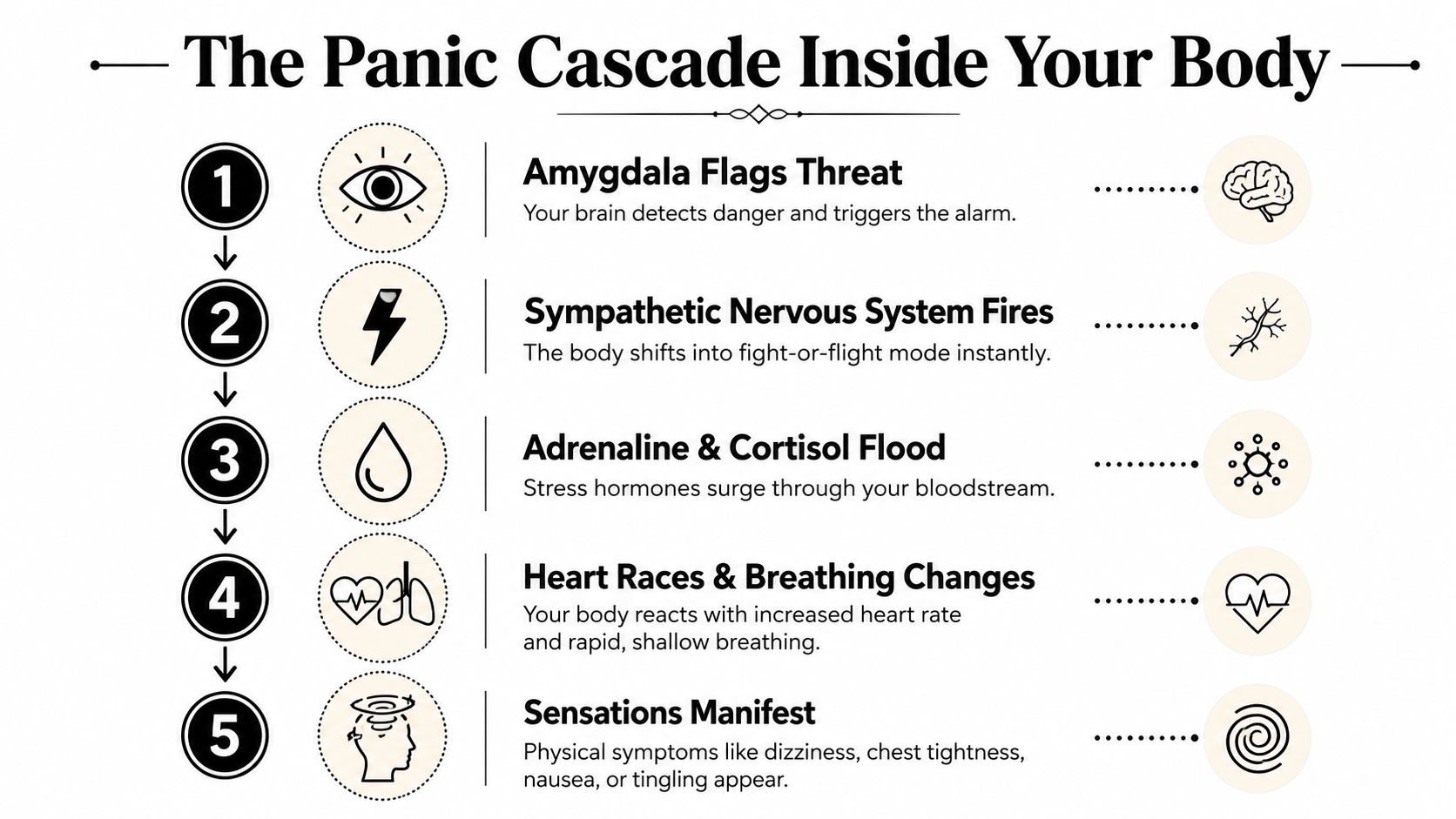
The panic cascade
The amygdala flags a threat. This brain region helps detect danger. During panic, it may treat an internal sensation or fearful prediction like an external emergency.
The sympathetic nervous system fires. The fight-or-flight response prepares your body to move, escape, defend itself, or react quickly.
Adrenaline and cortisol enter the bloodstream. These stress hormones increase alertness and physical readiness. Muscles tighten, attention narrows, and ordinary sensations become unusually noticeable.
Your heart races and breathing changes. The heart beats faster and harder, while breathing may become rapid or shallow. This pattern generally drives circulation and arousal upward, rather than producing the blood-pressure drop linked with fainting.
The sensations become frightening. Dizziness, breathlessness, shaking, heat, chills, detachment, or unreality can feel dangerous. The brain may read them as proof of catastrophe, sending another alarm through the same system.
Why breathing can make you feel unsteady
Hyperventilation is a common reason panic feels like impending collapse. Breathing faster than your body needs lowers carbon dioxide levels. That change affects blood-vessel tone in the brain and can cause lightheadedness, tingling, blurred vision, and a floating or unreal feeling.
The dizziness is real. The frightened conclusion, “I'm definitely about to faint,” may still be medically inaccurate. Monitoring every breath or visual change can make each sensation seem more threatening, which keeps the alarm active.
A slower exhale can help interrupt this loop. Avoid forcing huge breaths, since overbreathing can intensify the feeling. Keep the inhale gentle and let the exhale last longer, as described in find the fight or flight guide at. As the alarm settles, breathing and bodily sensations can gradually return toward their usual pattern.
Panic Surge vs Vasovagal Faint
Panic and vasovagal syncope can occur around fear, pain, emotional distress, or overwhelming situations, but they involve different physiological patterns. Panic is generally an activated surge. Vasovagal syncope is a reflex that can slow the heart and widen blood vessels, reducing cerebral perfusion enough to cause brief loss of consciousness.
| Feature | Panic Surge | Vasovagal Faint |
|---|---|---|
| Typical trigger | Perceived danger, bodily sensations, catastrophic thoughts, or an anxiety-provoking situation | Stress, fear, pain, emotional distress, heat, crowding, or prolonged standing |
| Nervous system pattern | Sympathetic activation, the fight-or-flight response | Autonomic reflex with reduced circulation to the brain |
| Heart rate direction | Usually faster and stronger | May slow as the faint develops |
| Blood pressure direction | Usually rises during the surge | Can fall enough to reduce brain perfusion |
| Breathing pattern | Often rapid or over-breathed | May change as weakness and faintness develop |
| Skin signs | Sweating, warmth, trembling, or chills | Pallor, clamminess, and sudden weakness can occur |
| Consciousness | Usually preserved, despite intense fear and dizziness | Transient loss of consciousness may occur |
| Recovery | Panic symptoms gradually settle as the alarm decreases | Consciousness commonly returns quickly after lying down, often within seconds to under a minute |
The two responses can overlap in one episode. For example, fear may trigger panic symptoms, while heat, dehydration, standing, or a vasovagal reflex creates the conditions for fainting. That doesn't mean panic itself caused the loss of consciousness.
This distinction can be especially useful for adolescents who fear public embarrassment or social scrutiny. Families looking for practical context may also benefit from this resource on social anxiety help for teenagers.
For symptom tracking, The Anxiety Checklist for panic can help you record what you felt, what happened before it, and whether consciousness was lost. A record won't diagnose the cause, but it can make a clinical conversation clearer.
When Fainting During Panic-Like Episodes Does Happen
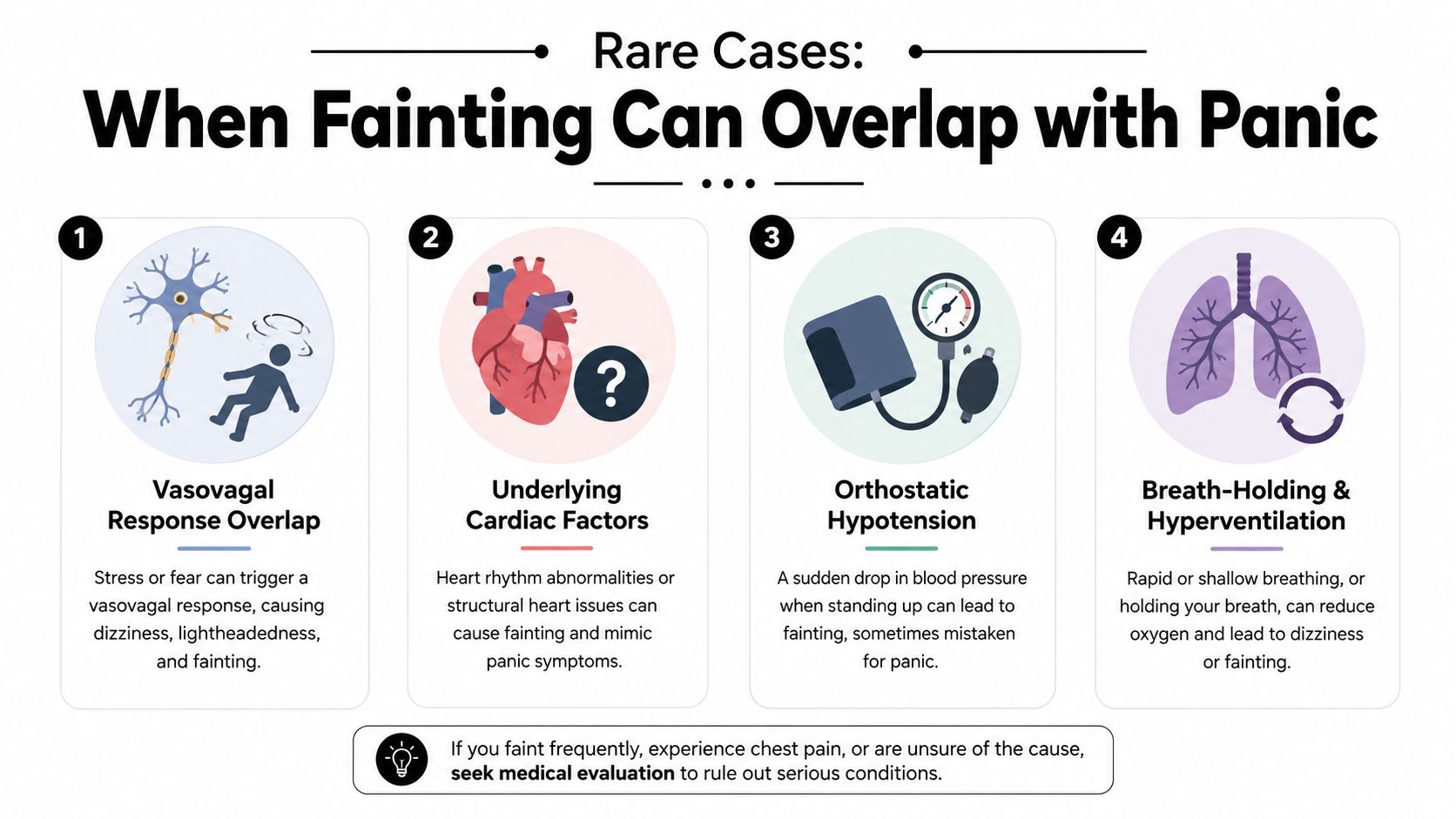
Actual fainting during an episode that feels like panic is uncommon, but it can happen when another mechanism joins the anxiety response. The important point is not to treat the exception as proof that panic routinely causes collapse. It's to identify what else may have affected circulation or breathing.
Hyperventilation can lower carbon dioxide and contribute to cerebral blood-vessel constriction, producing marked lightheadedness and presyncope. In unusual circumstances, that may combine with other vulnerabilities. Dehydration, skipped meals, heat, prolonged standing, illness, or medication effects can make a person less able to maintain blood pressure.
Common overlapping pathways
Vasovagal syncope: Fear, pain, emotional distress, needles, blood, or a crowded and hot environment can trigger an autonomic reflex. The heart may slow and blood vessels may widen, reducing blood flow to the brain temporarily.
Situational syncope: Some fainting episodes occur in a recognizable context, such as a medical procedure or intense emotional event. The context may also provoke panic, making the two experiences difficult to separate.
Blood-injury-injection phobia: A person may panic around blood or needles and also have a reflex faint. The fear response and the fainting mechanism are related by the trigger, but they aren't identical body processes.
Orthostatic intolerance: Symptoms that appear after standing, especially with weakness or lightheadedness, may point toward difficulty regulating circulation with posture rather than panic alone.
The broader fainting literature reports a lifetime syncope incidence ranging from 3% to 35%, and vasovagal syncope accounts for roughly 85% of fainting episodes in people under 40 in this review of syncope. Those figures concern fainting generally, not panic attacks specifically.
The practical benefit of finding a layered cause is prevention. A clinician can consider hydration, meals, posture, medication, heart rhythm, neurological symptoms, and seizure mimics instead of assuming every episode is anxiety. You can also use structured panic attack recovery steps after the immediate danger has passed.
Warning Signs Worth Watching For
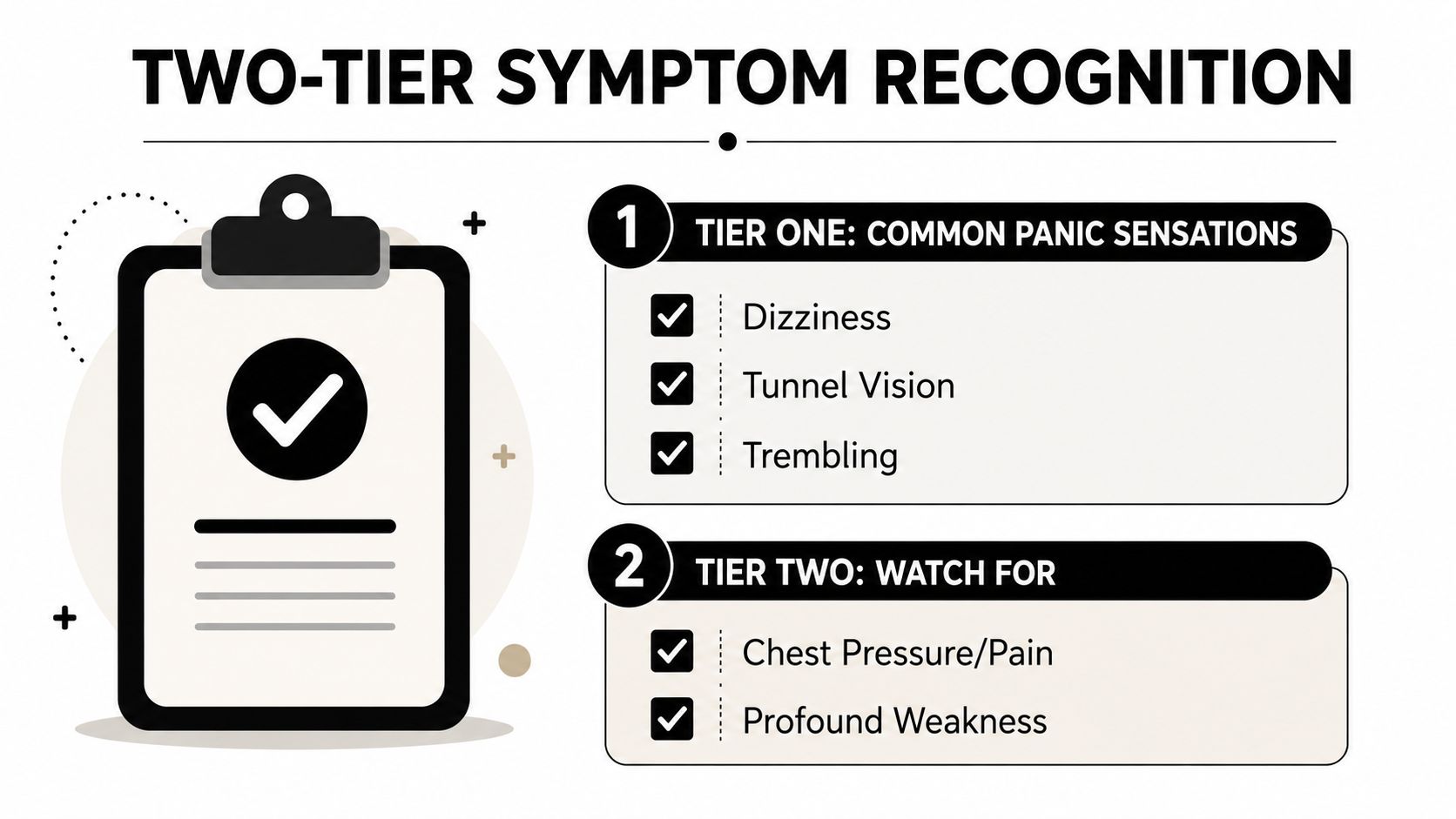
The fear of fainting during panic attacks often keeps individuals conscious. They may experience dizziness, narrowing or tunnel-like vision, ringing in the ears, trembling, sweating, or a sensation that their knees are about to buckle. These sensations warrant attention and a safe position, but they frequently stem from disorientation and hyperventilation rather than an actual collapse.
Tier one sensations
Notice the pattern without arguing with it. Say, “My body is alarmed, and I feel unsteady,” rather than, “This proves I'm going to lose consciousness.” That wording acknowledges the sensation without turning it into a prediction.
Tier two warning signs
Actual loss of consciousness changes the situation. Prompt medical evaluation is particularly important when fainting occurs with chest pain and shortness of breath, one-sided weakness, slurred speech, seizure-like activity, a head injury, exertion, or repeated episodes without a clear trigger.
These symptoms don't prove a dangerous cause, but they aren't appropriate for reassurance alone. Panic-like symptoms can also appear with psychogenic nonepileptic seizures, epilepsy, and syncope, and symptom patterns alone cannot reliably diagnose the cause. A comparative study found a composite panic-symptom score distinguished psychogenic nonepileptic seizures from epilepsy and syncope with about 71.1% sensitivity and 71.2% specificity, but it didn't distinguish epilepsy from syncope well in the indexed study.
If you want accessible education for recognizing patterns and preparing questions, you can learn about anxiety and panic attacks. Education supports triage, but it doesn't replace an examination after true fainting.
What to Do When Someone Feels Like They Might Pass Out
Start with fall prevention, not analysis. Help the person move away from stairs, traffic, sharp furniture, or other hazards. If they're driving, they should pull over safely and stop.
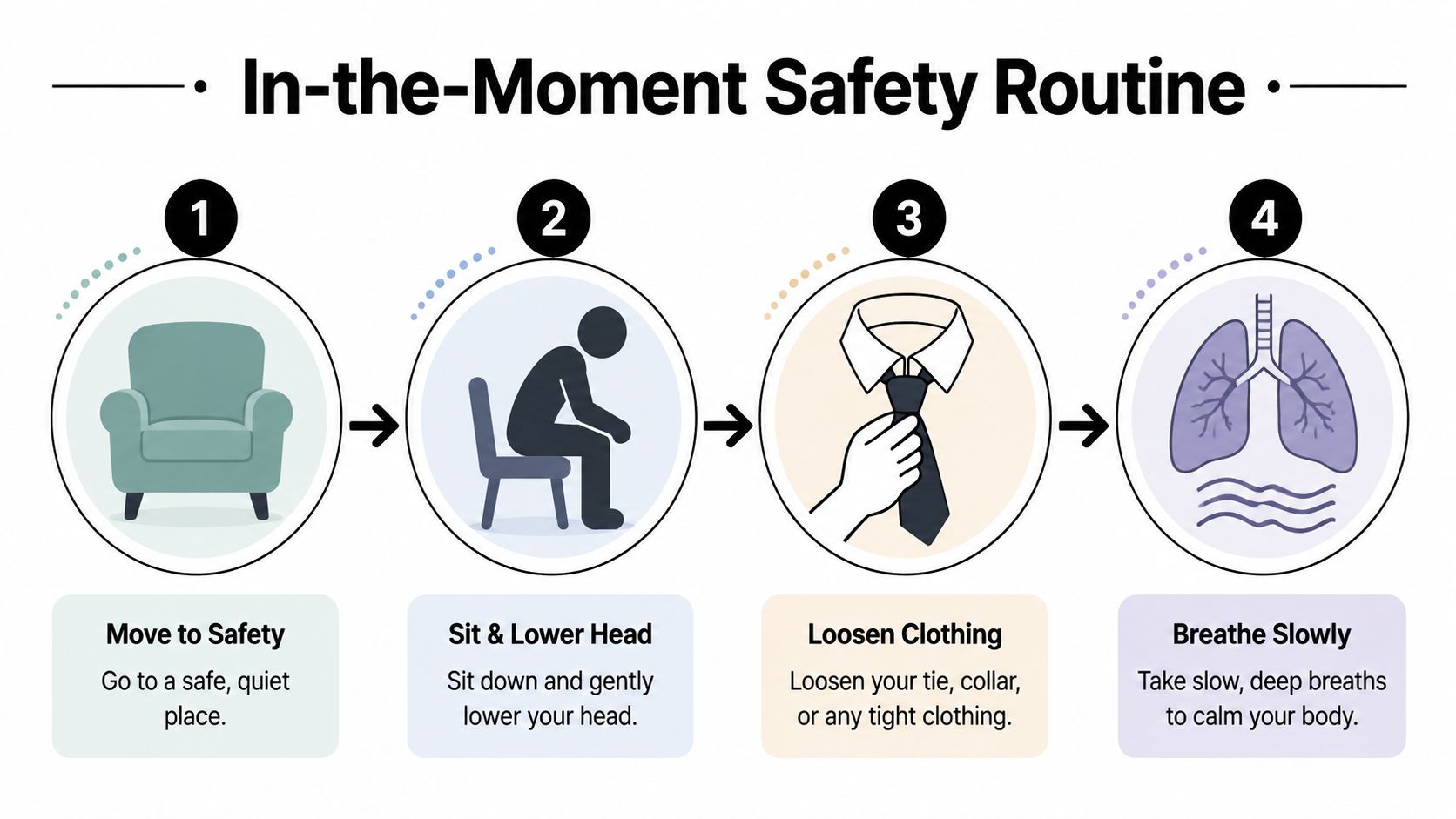
Have them sit with their head lowered between their knees, or lie down with their legs raised about twelve inches. Lying down reduces the risk of injury and can support blood return to the brain. Don't encourage them to walk around to “shake it off.”
A simple safety routine
Get low and stay still. Sit or lie down as soon as faintness begins.
Loosen restrictive clothing. Open a tight collar or waistband and move to a comfortable, ventilated space.
Slow the exhale. Let the inhale be easy, then breathe out for about twice as long. The aim is to reduce overbreathing, not to take dramatic deep breaths.
Orient to the room. Name five visible objects, notice the floor beneath you, and describe one sound you can hear. These tasks pull attention away from catastrophic body scanning.
Check basic needs afterward. If dehydration seems plausible, sip water. If the person skipped food and can safely eat, a small snack may help. Don't assume food or fluids explain a true faint, especially when episodes recur.
A calm bystander can say, “You're safe, and we're going to keep you seated,” or, “You don't have to fight the feeling. I'm staying with you.” Avoid shouting commands or repeatedly asking whether the person is dying. Someone supporting a family member may find this guide to helping a loved one through panic useful.
The following video can provide another calm reference for in-the-moment support:
Call emergency services if consciousness is lost, a fall causes injury, or symptoms last longer than twenty minutes. Seek urgent help as well when severe chest pain, major breathing difficulty, new neurological symptoms, or seizure-like activity is present.
A Clear Path to Becoming Panic-Free
In-the-moment coping protects you, but lasting recovery usually requires changing the fear cycle itself. Cognitive behavioral therapy, or CBT, helps you identify catastrophic interpretations such as “dizziness means I'll collapse,” test those predictions, and respond to bodily sensations with less alarm.
CBT for panic disorder commonly includes psychoeducation, relaxation training, exposure to feared physical sensations, and exposure to feared situations. A review from the Anxiety and Depression Association of America reports that these behavioral treatments eliminate panic attacks in most clients, and that most patients remain panic-free two years after CBT as summarized in this treatment review.
How the sequence works
First, you learn the panic cycle. Anticipatory anxiety increases monitoring, monitoring magnifies sensations, and frightening interpretations intensify the alarm. Then therapy helps you examine those interpretations rather than automatically obeying them.
Next comes gradual exposure. A therapist may help you safely experience sensations such as a racing heart or altered breathing, allowing your brain to learn that discomfort isn't the same as danger. The work is planned and collaborative, not a dare to overwhelm yourself.
CBT is a first-line treatment and typically involves about 12 to 15 sessions, during which patients learn to challenge the cycle of anticipatory anxiety, panic, and avoidance according to this PubMed-indexed review. Progress may look ordinary at first. You still notice dizziness, but you stop fleeing. Episodes become less dominant, recovery becomes easier, and collapsing remains a feared prediction rather than an event.
Medication can support some people while therapy skills develop. Antidepressants are effective for panic disorder, with an estimated number needed to treat of 10 for remission after two to six months, and one review recommends continuing them for at least six to 12 months to reduce relapse risk in this clinical review. Discuss medication choices and duration with a qualified prescriber; an evidence-based anxiety medication overview can help you prepare for that conversation.
Why the Fear of Fainting Usually Fades as You Heal
The fear of fainting often loses power when your brain collects repeated evidence that the sensation passes and consciousness remains intact. At first, you may scan your vision, pulse, legs, and breathing every time you enter a shop or stand in a queue. Later, you notice the same sensations and keep talking, walking, or finishing the task.
That shift isn't a dismissal of what you felt. The dizziness was real, the terror was real, and your interpretation made sense in the moment because the body sensations resembled danger. Recovery teaches a more accurate distinction: feeling faint is not automatically fainting, and a panic surge isn't the same as a vasovagal shutdown.
Remission is a realistic goal
The NICE guidance for adults with panic disorder says treatment should aim for complete relief of symptoms, or remission, because remission is associated with better functioning and a lower chance of relapse in the cited NICE guidance. That goal matters. You don't have to settle for organizing your entire life around avoiding sensations.
Panic disorder also became a distinct formal diagnosis only in 1980, when DSM-III separated panic from broader anxiety conditions. A 1998 review reported lifetime prevalence of DSM-III panic disorder at 2.7% and repeated panic attacks at 7.1% in the general population, with women almost twice as likely as men to have panic disorder and about seven times as likely to have repeated panic attacks in the historical review. These figures describe how commonly the problem occurs, not your individual prognosis.
A healed life may look surprisingly unremarkable. You recognize a racing heart without treating it as an emergency, move through a crowded room without checking the exits, and remember that the old fear of collapsing once felt urgent even though it no longer directs your choices. With appropriate assessment and treatment, becoming panic free is a grounded possibility, not an empty promise.
The Anxiety Checklist offers an always-free SOS mode with grounding prompts, affirmations, and quick support for moments when panic makes it hard to think, along with CBT self-therapy tools and educational resources for longer-term recovery. Visit The Anxiety Checklist to explore practical help for the fear of fainting and the wider panic cycle, with no login required to get started.