



Thinking about life after sertraline is a huge step, one filled with possibility. If you're here, it means you're feeling a mix of hope and maybe a little apprehension about what comes next. Let's be clear from the start: a vibrant, panic-free life isn't just a distant dream—it's an achievable reality that you have the power to create.
Your Path to a Life Beyond Sertraline

Just considering tapering off sertraline is a testament to how far you've come. It shows incredible courage and signals that you’ve reached a point where you're ready to imagine a future where you feel confident and in control, perhaps without relying on daily medication.
This isn't about running away from something. It's about stepping toward a new chapter of self-reliance and emotional freedom. This guide is here to help you shift your focus from the fear of withdrawal to the empowering process of rediscovering your own strength. Think of this as your personal roadmap, written with both clinical insight and a deep belief in your ability to heal.
A Journey of Rediscovery
Coming off sertraline is about so much more than just stopping a pill. It’s a chance to build a new and deeper relationship with yourself. This is where you can start putting powerful, non-pharmacological tools into practice that will serve you for the rest of your life. For so many people, this transition becomes a time of incredible personal growth and healing.
You'll get better at listening to your body, understanding its signals, and responding with supportive strategies instead of fear. This whole process is about building a foundation of wellness that goes far beyond a prescription, creating a future where you feel truly resilient.
Your goal isn't just to stop taking sertraline. The true goal is to build a stable, balanced, and joyful life where anxiety no longer calls the shots. This is your chance to prove to yourself how strong you truly are.
What You Can Expect from This Guide
This guide lays out a structured but flexible plan to help you navigate your tapering journey safely and with confidence. We’ll walk through practical, actionable steps that empower you to work with your healthcare provider as an informed partner in your own care.
Here’s what you'll find as you read on:
- Real-World Strategies: Clear, practical steps for preparing, tapering, and managing any bumps in the road.
- Symptom Management: Down-to-earth tips for handling common discontinuation symptoms without panicking.
- A Focus on the Goal: Constant reminders and encouragement to keep your eyes on the prize—a fulfilling, panic-free life.
This journey is deeply personal. Having a structured approach, like an anxiety checklist, can be a powerful ally to keep you grounded. When used alongside professional medical advice, the information here gives you the support you need to move forward with a renewed sense of hope.
Thinking about coming off sertraline is a huge milestone. It’s a sign that all the hard work you've put in—the therapy, the lifestyle changes, the self-reflection—is paying off. You’re starting to see a future where you feel confident managing your mental health on your own terms.
This isn't about rushing to a finish line. It's about recognizing that you’ve built a new, stronger foundation for yourself.
So, how do you know if the time is right? The final decision is always one you make with your doctor, but the conversation often starts with you. The biggest clue is a sustained sense of well-being. We’re not talking about a few good weeks here. Most clinicians look for a solid 6 to 12 months of emotional stability, where your mood feels steady and anxiety is something you can manage, not something that manages you.
This period of stability is your launchpad. It shows that the reasons you started sertraline in the first place have been under control for a good while, giving you a solid footing to consider tapering.
From Surviving to Thriving
One of the clearest signs you might be ready is a shift in how you handle life. When you first started sertraline, you might have felt like you needed it just to get through the day. Now, you probably notice you’re actively using the coping skills you’ve learned to navigate challenges without falling back into old patterns of panic or despair.
Think about it. Do any of these scenarios sound familiar?
- You handle a tough week at work or a disagreement with a friend using perspective and tools like journaling, instead of feeling completely overwhelmed.
- Your daily wellness habits—like a morning walk, a consistent sleep schedule, or a few minutes of mindfulness—feel like a source of strength, not a chore you have to force.
- When you face a trigger that used to send you spiraling, you can now pause, breathe through the discomfort, and choose how to respond instead of just reacting.
These aren't small victories. They're proof that you're equipped to handle life's ups and downs. You're no longer just surviving; you're building a life that feels genuinely good.
Common Motivations for Tapering
The reasons for wanting to come off sertraline are deeply personal, and they are all valid. For many, it's not just about feeling better, but about improving their overall quality of life. Often, it’s the lingering side effects that get you thinking.
Maybe you’re tired of the emotional blunting, that SSRI-induced feeling where both the highs and the lows feel muted. You might miss feeling the full spectrum of your emotions. Other persistent side effects, like low libido, weight changes, or constant drowsiness, can also be a major reason for wanting to explore a change.
The decision to taper is often rooted in a desire for a different kind of wellness—one where you feel fully present, connected, and empowered by your own coping abilities. It's about moving from a state of being "managed" by medication to a state of being "managed" by you.
Ultimately, readiness is a mix of feeling stable, feeling capable, and having a clear "why." It's the confidence that you've developed the skills to live a full and vibrant life and the curiosity to see what that life looks like with less or no medication. When you combine that self-awareness with your doctor’s clinical guidance, coming off sertraline transforms from a scary idea into a hopeful and empowering next step.
Creating Your Safe Tapering Plan with Your Doctor
Deciding to come off sertraline is a huge step, and the most important partner you'll have in this process is your prescribing doctor. This isn't just about getting a prescription; it's about forming a team where you are the key player.
When you approach this conversation prepared, you empower yourself to advocate for a plan that truly respects your body’s needs. Your goal is to work together to create a tapering schedule that’s gradual, personalized, and designed to keep discomfort to a minimum. This isn't a race to the finish line—it's about moving forward safely and confidently.
But to make that conversation truly productive, you need to walk in with more than just the desire to stop. You need to bring your own data. A little bit of tracking beforehand can turn vague feelings into concrete information your doctor can use to build the best plan for you.
Preparing for Your Doctor's Visit
In the weeks before you talk to your doctor, start keeping a simple log. This doesn’t have to be some elaborate journal—a small notebook or a notes app on your phone is perfect. Consistency is what matters most.
Try jotting down a few key things each day:
- Your Mood and Anxiety Levels: Use a simple 1-10 scale. This gives a quick, clear snapshot of your emotional stability day-to-day.
- Existing Side Effects: Make a note of any lingering side effects from the medication, like emotional blunting, low libido, or fatigue. This helps create a baseline before you start reducing.
- Coping Strategies You're Using: Did you use a breathing exercise when stress popped up? Go for a walk to clear your head? Documenting these wins builds your confidence and shows you're ready.
- Your "Why": Write down what you hope to gain by coming off sertraline. Is it feeling your emotions more fully? Getting your energy back? Having a clear purpose is a powerful anchor.
This simple infographic breaks down the core readiness steps you'll be taking.
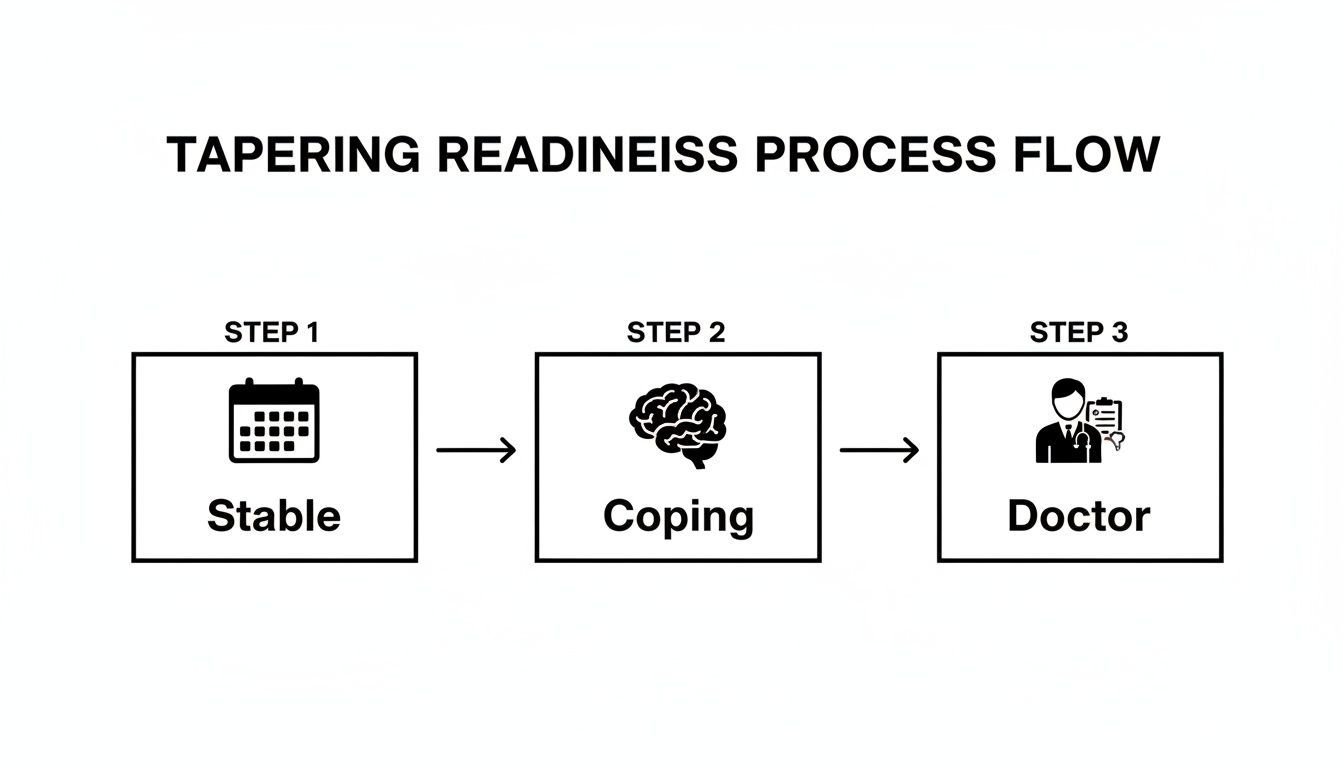
These three elements—feeling stable, having solid coping skills, and partnering with your doctor—are the bedrock of a safe and successful taper.
Understanding Different Tapering Approaches
The single most important part of your plan is the tapering method itself. Quitting "cold turkey" or dropping your dose too quickly is a recipe for severe discontinuation symptoms. The only safe way forward is a slow, gradual process that gives your brain and nervous system time to adjust.
The gold standard for safely tapering off SSRIs like sertraline is known as hyperbolic tapering. This method is based on the science of how these drugs actually work in the brain. At lower doses, even a tiny drop in milligrams causes a much larger drop in the drug's effect on serotonin receptors.
Hyperbolic tapering accounts for this by using progressively smaller dose reductions as you get closer to zero. Instead of cutting your dose by the same amount each time (like 25 mg), you reduce by a small percentage (like 10%) of your current dose.
This approach is so much kinder to your nervous system. It minimizes the shock of each reduction, which significantly lowers your risk of intense withdrawal symptoms and gives you the best shot at a smooth taper.
Here’s a look at what a conservative, hyperbolic tapering schedule might look like. Remember, this is just an illustration—your personal plan must be created with your prescriber.
Example Slow Tapering Schedule for Sertraline (Illustrative Only)
| Tapering Stage | Current Daily Dose | Suggested Reduction | New Daily Dose | Hold Time Before Next Reduction |
|---|---|---|---|---|
| Stage 1 | 100 mg | 10% (10 mg) | 90 mg | 2-4 weeks |
| Stage 2 | 90 mg | 10% (9 mg) | 81 mg | 2-4 weeks |
| Stage 3 | 81 mg | 10% (8.1 mg) | 72.9 mg | 2-4 weeks |
| …and so on | … | … | … | … |
This illustrates a conservative, hyperbolic tapering schedule. This is a hypothetical example and your personal plan must be created with your doctor.
As you can see, the size of the reduction gets smaller as the overall dose decreases. This gradual approach helps prevent the abrupt neurochemical changes that trigger difficult withdrawal symptoms.
Advocating for a Conservative Schedule
Armed with your symptom log and an understanding of hyperbolic tapering, you're ready for a genuinely collaborative talk with your doctor. You can explain your desire to taper slowly and express your preference for this kind of conservative, percentage-based plan. If you're worried about finding a provider who gets it, you can learn more about how to find a psychiatrist for anxiety who understands these nuances.
Here’s how you could start that conversation:
"I've been feeling stable for a while now and have been working hard on my coping skills. I'd like to talk about a plan for coming off sertraline. I've been reading about hyperbolic tapering, and I'd feel most comfortable with a very slow, conservative schedule that uses small, percentage-based reductions to minimize any withdrawal effects."
This shows you're an informed and active partner in your own care.
Remember, you are the expert on your own body. If at any point during the taper you feel a reduction was too big or too fast, speak up. Pausing the taper or even going back to the previous dose isn't a failure—it's a smart, compassionate decision that honors your well-being. This whole process is a hopeful step toward a life where you are back in the driver's seat of your own mental health.
How to Manage Sertraline Withdrawal Symptoms

Let’s be honest: the biggest fear for most people thinking about stopping sertraline is withdrawal. It’s a completely valid concern, and if you’re feeling worried, you are definitely not alone.
This experience, which clinicians call "antidepressant discontinuation syndrome," is simply your body and nervous system recalibrating as the medication leaves your system.
Think of it as a period of adjustment, not a sign of failure or a relapse. The physical and emotional sensations are very real, but they are also temporary. And most importantly, they are manageable. Understanding why these symptoms pop up is the first step to facing them with confidence instead of fear.
With a slow, careful taper and a solid toolkit of self-care strategies, you can absolutely support your body through this transition. The goal isn't to avoid every bump in the road, but to meet each one with compassion and a practical response. This is how you prove to yourself that you can get through this.
Demystifying Common Withdrawal Symptoms
When your brain gets used to the serotonin support from sertraline, it needs time to adjust to its absence. This adjustment period is what can trigger a range of symptoms. You’ve probably heard people talk about "brain zaps," that strange but surprisingly common sensation that feels like a tiny electrical jolt in your head. Others report dizziness, fatigue, nausea, or just feeling more irritable than usual.
Knowing what to expect can make a world of difference. While the list of potential symptoms might seem a bit daunting, remember that most people only experience a few of them, and usually in a mild form—especially if you taper slowly.
- Neurological Sensations: This includes those infamous "brain zaps," as well as dizziness, vertigo, and sometimes a ringing in your ears (tinnitus).
- Digestive Upset: Nausea, diarrhea, and stomach cramps are common as your gut-brain connection adjusts.
- Flu-Like Feelings: Many people report feeling tired, achy, and chilled out, almost like they’re coming down with something (but without an actual fever).
- Sleep Disturbances: You might find it hard to fall asleep, have unusually vivid dreams, or feel drowsy during the day.
- Mood Shifts: Heightened anxiety, irritability, mood swings, and crying more easily can all be part of the process as your emotional thermostat recalibrates.
It's natural to wonder just how common these effects are. For years, the numbers were all over the place. A major meta-analysis helped bring some clarity. While about one in three people report some kind of symptom after stopping an antidepressant, only around 15% (that's one in six to seven people) experience symptoms that are confirmed to be caused by the medication itself.
Even more reassuring? Only about 3% (or one in 35) experience severe, medication-caused symptoms. These more balanced statistics from researchers at the University of British Columbia give a much clearer picture of the actual risk.
Your Practical Toolkit for Symptom Management
The most powerful tool you have is your own response. Instead of panicking when a symptom appears, you can learn to meet it with a targeted, supportive action. This is where you put your hope into practice and show yourself that you've got this.
For Brain Zaps and Dizziness
These neurological flickers can be unsettling, for sure, but they are harmless. They're just signals that your brain is adjusting.
- Stabilize Your Blood Sugar: Big dips in blood sugar can make brain zaps and dizziness feel worse. Try eating small, frequent meals with a good mix of protein, healthy fats, and complex carbs to keep your energy steady.
- Stay Hydrated: Dehydration is a huge trigger for dizziness and headaches. Keep a water bottle with you and sip on it throughout the day. Seriously, don't underestimate this one.
- Move Slowly and Mindfully: When you feel dizzy, avoid sudden movements. Get up from a chair or bed slowly. When you’re walking, try focusing your gaze on a fixed point in the distance to help your brain get its bearings.
For Nausea and Digestive Issues
Your gut is packed with serotonin receptors, so it's no surprise that it feels the effects of tapering. Thankfully, some simple kitchen remedies can bring a lot of relief.
- Ginger and Peppermint: These are your best friends when it comes to nausea. Sip on some ginger or peppermint tea, or even chew on a piece of candied ginger.
- Eat Bland, Simple Foods: When your stomach feels off, stick to the basics: crackers, toast, rice, bananas. Now is not the time for that spicy, greasy takeout you love.
- Probiotics: Supporting your gut health with probiotic-rich foods like yogurt or kefir can sometimes help ease digestive symptoms during the transition.
Nausea can be especially tough if you have a fear of vomiting, but these gentle strategies can help you feel more in control of the situation.
For Mood Swings and Anxiety
It’s so important to distinguish between a temporary mood shift from withdrawal and a true relapse of your original condition. Withdrawal anxiety often feels more physical and tends to pop up suddenly after you drop your dose.
Remember this critical distinction: Withdrawal symptoms are your body adjusting. A relapse is your mind returning to old patterns. These feelings are temporary feedback, not a life sentence.
- Mindful Breathing: When a wave of anxiety or irritability washes over you, anchor yourself with your breath. A simple box breathing exercise (inhale for 4, hold for 4, exhale for 4, hold for 4) can calm your nervous system in just a few minutes.
- Gentle Movement: A slow walk outside, some gentle stretching, or a restorative yoga class can do wonders for releasing tension and boosting your mood. Don't push yourself into an intense workout; the goal here is soothing, not straining.
- Limit Stimulants: Caffeine and sugar can turn up the volume on anxiety and irritability. Try swapping your morning coffee for green tea, which contains L-theanine, an amino acid known for promoting a sense of calm.
By equipping yourself with these practical, non-medical strategies, you become the driver of your wellness journey, not just a passenger. Each time you successfully soothe a symptom, you reinforce a powerful message of hope: you are capable, you are resilient, and you are on the right path.
Building Your Toolkit for a Panic-Free Life

Successfully coming off sertraline isn't just about what you stop doing—it’s about what you start doing. This is your chance to build a life where you feel resilient and in control, armed with powerful tools that support your mental well-being for the long haul.
The goal isn't to get back to who you were before medication. It’s to become a version of yourself who understands your own mind and body and knows exactly how to support them. Let’s build that foundation together, one piece at a time.
Fueling Your Brain for Stability
Your brain's health is deeply connected to what you eat. Creating a diet that supports mental wellness is one of the most effective ways to maintain stability as you taper and keep anxiety from creeping back in.
Think of food as sending direct messages to your brain. By giving it the right signals, you can promote a calm, steady state, making you far less vulnerable to mood swings and anxious spirals. Consistency and nourishment are everything here.
Here are a few core principles to focus on:
- Balance Your Blood Sugar: Sharp spikes and crashes in blood sugar are notorious for mimicking—and triggering—anxiety. Try to build your meals around protein, healthy fats, and high-fiber carbs like vegetables and whole grains, and steer clear of sugary snacks and refined carbs that cause that rollercoaster effect.
- Support Your Gut: Your gut and brain are in constant communication. You can nurture your gut microbiome with fermented foods (like yogurt, kefir, or kimchi) and a wide variety of plant fibers, which can have a direct, positive impact on your mood.
- Prioritize Omega-3s: These healthy fats are crucial building blocks for your brain cells. Found in fatty fish like salmon, as well as walnuts and flaxseeds, research suggests they play a significant role in reducing inflammation and supporting emotional regulation.
Rewiring Your Thoughts with CBT Techniques
As you taper and find your footing afterward, it’s completely normal for old, anxious thought patterns to try and resurface. The key is to be ready for them with proven cognitive tools that put you back in the driver's seat.
One of the most effective approaches is Cognitive Behavioral Therapy (CBT), which gives you a practical framework for identifying, challenging, and reframing the thoughts that fuel anxiety. This is a skill you can build for life.
For instance, an anxious thought during withdrawal might sound like this: "I feel a little dizzy. This is getting worse and I won't be able to handle it."
With a simple CBT-inspired technique, you can catch that thought and reframe it on the spot:
"I notice I'm feeling dizzy, and I remember this is a common withdrawal symptom. I've handled it before. I'm going to drink some water, sit down for a minute, and do my breathing exercises. This feeling is temporary and it will pass."
This small shift is incredibly powerful. It stops the panic spiral before it starts and reinforces a crucial truth: you are capable of managing these sensations. It's a mental muscle that gets stronger every single time you use it.
The Power of Movement and Rest
The link between exercise, sleep, and anxiety is undeniable. These aren't just "nice-to-have" habits; they are fundamental pillars of a panic-free life. They help regulate your nervous system and build the resilience you need to thrive without medication.
Consistent Exercise: You don't need to run a marathon. Just 20-30 minutes of moderate activity most days of the week—like a brisk walk, a bike ride, or a yoga class—can significantly lower anxiety levels. Exercise helps burn off excess cortisol (the stress hormone) and releases endorphins, which are your body's natural mood-boosters.
Restorative Sleep: Sleep is when your brain does its most important repair work. A lack of quality sleep leaves you far more vulnerable to anxiety. To improve your rest, create a relaxing wind-down routine, stick to a consistent sleep schedule (even on weekends), and turn your bedroom into a sanctuary for sleep.
Mastering Your Breath
Finally, never underestimate the power of your own breath. When anxiety spikes, your breathing often becomes shallow and rapid, which signals danger to your nervous system. By consciously slowing your breath down, you send a powerful message of safety right back to your brain.
Learning just a few simple breathing techniques can become your secret weapon in moments of overwhelm. For a great place to start, you can explore our guide on breathing exercises for anxiety and find a practice that feels right for you.
This journey off sertraline is an opportunity to build a life founded on self-awareness and intentional wellness. Every healthy meal, every reframed thought, and every mindful breath is an act of hope—a concrete step toward a future where you aren’t just surviving, but truly living.
Common Questions About Coming Off Sertraline
It’s completely normal for questions to pop up as you move through your tapering journey. Having clear, straightforward answers can offer some much-needed reassurance and keep you grounded in your goal: a life where you feel in control.
Let's dive into some of the most common concerns.
How Long Does Sertraline Withdrawal Actually Last?
This is the million-dollar question, and the honest answer is: it really depends. For many people who follow a slow, doctor-guided taper, withdrawal symptoms might feel mild and only last for 1-3 weeks after they lower their dose.
For others, though—especially those who were on a higher dose for a long time or tapered too quickly—the body’s adjustment period can last for several months.
The best thing you can do is reframe this period. It isn’t a permanent state. It’s a temporary process as your body recalibrates. A slow, hyperbolic taper gives you the best shot at keeping this timeline as short and comfortable as possible. Patience and self-compassion are your biggest allies here.
Is This Withdrawal or Is My Anxiety Coming Back?
This is a critical distinction, and one that can cause a lot of worry. Here’s a simple way to start telling the difference.
Withdrawal symptoms often feel distinctly physical and tend to show up shortly after you lower your dose. Think of those classic signs like brain zaps, dizziness, digestive issues, or flu-like feelings that weren’t part of your original anxiety.
A relapse, on the other hand, usually feels like a more gradual return of the specific thought patterns and emotional states you had before starting sertraline. It feels familiar. Keeping a simple symptom log can be incredibly helpful here—it gives you and your doctor a clear way to spot patterns and respond with confidence.
Can I Use Supplements to Make Withdrawal Easier?
While some people find supplements like magnesium (for relaxation) or omega-3s (for brain health) helpful, you must speak with your doctor before adding anything to your routine. Supplements aren't regulated like medications and can have their own side effects or even interact with other drugs.
Your doctor is the only person who can advise on what, if anything, is safe and potentially helpful for you. Just remember, the most proven and reliable strategies are a slow taper, consistent lifestyle support (diet, exercise, and sleep), and using cognitive tools to manage your mindset.
What if I Feel Worse and Need to Go Back On It?
Let's be perfectly clear: pausing your taper, going back up to a previous dose, or even deciding to stay on sertraline is not a failure. It's a courageous act of self-care. It's a sign that you are listening to your body and prioritizing your well-being, which is the only real goal here.
This whole journey is about finding what you need to live your healthiest, most stable life. If withdrawal becomes unmanageable or your original symptoms come back in a way that hurts your ability to function, working with your doctor to adjust the plan is the wisest move you can make. There's immense power in choosing the path that brings you peace, whatever that looks like.
This guide is built on the belief that a life free from the grip of panic is possible. As you continue your journey, having a structured system to rely on can make all the difference. At The Anxiety Checklist, we've built a comprehensive program called Anxiety University to provide exactly that. It's designed to give you the scince-backed tools and strategies you need to build lasting resilience, empowering you to become the expert on your own mental wellness.