


You're sitting in a meeting, waiting room, or quiet bedroom when your heart suddenly seems too loud. Your chest tightens, your thoughts accelerate, and each breath feels like evidence that something is wrong. You may understand intellectually that anxiety can pass, yet your body hasn't received that message.
Diaphragmatic breathing gives you a practical way to work with that body alarm. It won't erase every trigger or replace professional care, but it can become a repeatable skill for interrupting panic, building confidence, and moving toward a life that isn't organized around fear.
Table of Contents
- What Diaphragmatic Breathing Feels Like in a Real Panic Moment
- Why Belly Breathing Changes Your Nervous System
- The Core Diaphragmatic Breathing Technique
- Box Breathing, 4-7-8, and Other Paced Variations Worth Trying
- Mistakes That Quietly Block Real Progress
- A Four-Week Practice Plan for Lasting Change
- Building Toward a Panic-Free Life Beyond the Breath
What Diaphragmatic Breathing Feels Like in a Real Panic Moment
The first sign may be subtle. Your shoulders rise, your breath becomes quick, and your attention narrows around sensations in your chest or throat. Then the mind joins in: What if I faint? What if I lose control? What if this keeps getting worse?
During that surge, people often try to take a huge breath. The effort can make the chest feel tighter, especially when the inhale is forceful or repeated without enough time for a comfortable exhale. The body is already operating in a threat pattern, and the breath can keep reinforcing that pattern.

You don't need to win an argument with your anxious thoughts in the middle of panic. Start with one physical action you can influence: make the next breath quieter, lower, and less rushed. The diaphragm is the broad muscle beneath the lungs. When it contributes more to breathing, the abdomen can move gently while the upper chest and shoulders soften.
That change isn't a magic switch. It's a signal you practice sending repeatedly. As the exhale lengthens and the breathing pace settles, you can create enough space to notice the room, place your feet on the floor, and choose what to do next. For a plain-language overview, understanding panic attacks can help you distinguish a panic surge from the danger your alarm system predicts.
A panic moment is a body event, not a personal failure. Your task isn't to perform perfectly. It's to give your nervous system a calmer pattern to follow.
Breathing skills can sit alongside therapy, medication, medical evaluation, and practical support. If anxiety is disrupting daily life, affecting sleep, or making you avoid important activities, Still Water Wellness Group anxiety care offers a useful starting point for considering professional treatment. Recovery is possible, and many people build panic-free periods by combining immediate coping skills with longer-term work.
Why Belly Breathing Changes Your Nervous System
The diaphragm sits below the lungs and separates the chest from the abdomen. On a comfortable inhale, it contracts and moves downward, allowing the lungs to expand. The abdomen moves outward because the diaphragm is creating room, not because you're deliberately pushing your stomach out.
Chest-led breathing relies more visibly on the upper ribs, neck, and shoulders. That pattern can appear during fear because the body is preparing for action. Diaphragmatic breathing asks the body to distribute the movement more efficiently and to slow the overall rhythm.
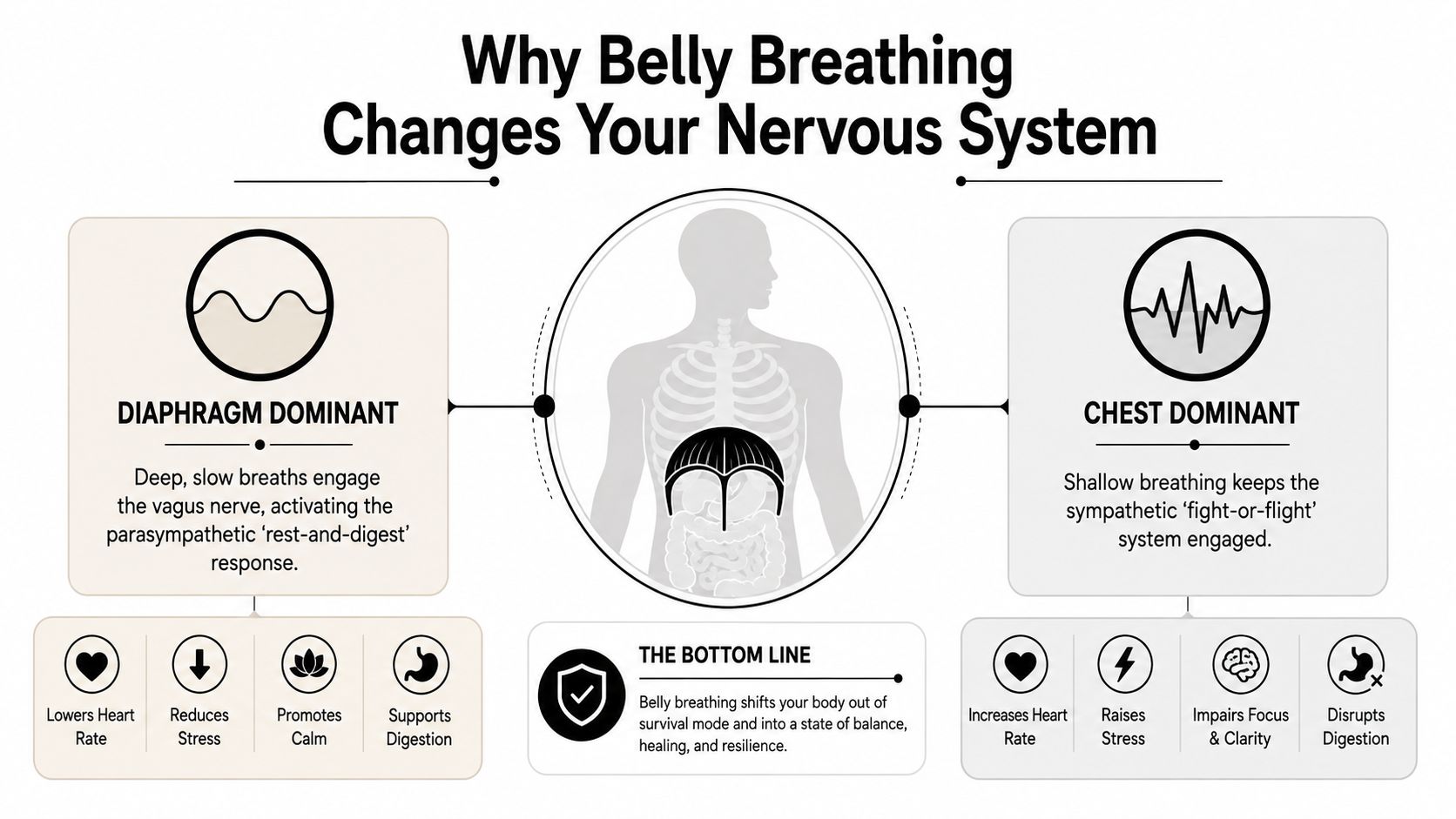
A clinical physiology paper used observable movement as a coaching benchmark: successful practice involved more abdominal excursion and less upper rib-cage motion. In that analysis, average breathing rate fell from 22 breaths per minute at rest to 12 breaths per minute during diaphragmatic breathing. The figures aren't a requirement to force yourself toward. They illustrate the direction of change, slower and quieter rather than bigger and harder. This guide to the stress response system provides additional context for why breathing can affect the experience of threat.
The safety signal is gradual
Slow breathing can support the parasympathetic, or rest-and-digest, side of the nervous system. The important point is that the body responds to the pattern, not to a dramatic effort. A soft inhale, relaxed pause, and unhurried exhale are usually more useful than filling the lungs to their maximum.
Your abdomen may barely move at first. Years of bracing, habitual chest breathing, tight clothing, pain, or self-consciousness can make the motion unfamiliar. Treat the movement as coordination practice, not a test of whether you're calm enough.
What to observe
Place one hand on the upper chest and another over the area below the ribs. During a gentle inhale, aim for the lower hand to move first or more noticeably, while the upper hand stays relatively quiet. If your shoulders lift, reduce the size of the breath and let the next exhale take more time.
The Core Diaphragmatic Breathing Technique
Choose a position that doesn't demand effort. Sit with your feet supported, or lie down with your knees comfortably bent. Let your jaw loosen, lower your shoulders, and keep your spine easy rather than rigid. Put one hand on your upper chest and the other on your abdomen, just below the ribs.
Breathe in gently through your nose if that feels comfortable. Let the lower hand rise as the abdomen expands, while the hand on your chest remains mostly still. You're not trying to force air deep into your stomach, and you don't need a visibly large belly movement. Think quiet, low, and easy.
Allow a brief pause after the inhale only if it feels natural. Then exhale slowly, through your nose or through lightly parted lips, and let the abdomen fall without pulling it inward. Make the exhale a little longer than the inhale, but stop well before you feel strained.
The right breath feels almost boring. If it feels like a performance, make it smaller.
Continue this pattern for about a quiet minute. A single round includes the gentle inhale, optional effortless pause, and slower exhale. A repetition counts when you notice the lower body expand and release without shoulder lifting, gasping, gripping, or rushing into the next inhale.
If you become lightheaded, tingly, or more frightened, return to normal breathing and open your eyes. The goal isn't to breathe as much as possible. Over-breathing can make uncomfortable sensations stronger, so comfort is the measure of success.
As you finish, don't stop abruptly and spring back into activity. Take one ordinary breath, notice the support beneath you, and look around the room. You can explore how breath and pelvic movement relate through this guide for women's pelvic floor therapy, especially if you hold tension in your abdomen or pelvic floor. For another plain-language walkthrough, see The Anxiety Checklist breathing guide.
Box Breathing, 4-7-8, and Other Paced Variations Worth Trying
One breathing pattern won't suit every state. A person who feels overstimulated may need a longer exhale, while someone preparing for a difficult conversation may prefer a simple rhythm that gives attention a clear task. Variations are useful when they change the experience without turning practice into a contest.
Box breathing for steadiness
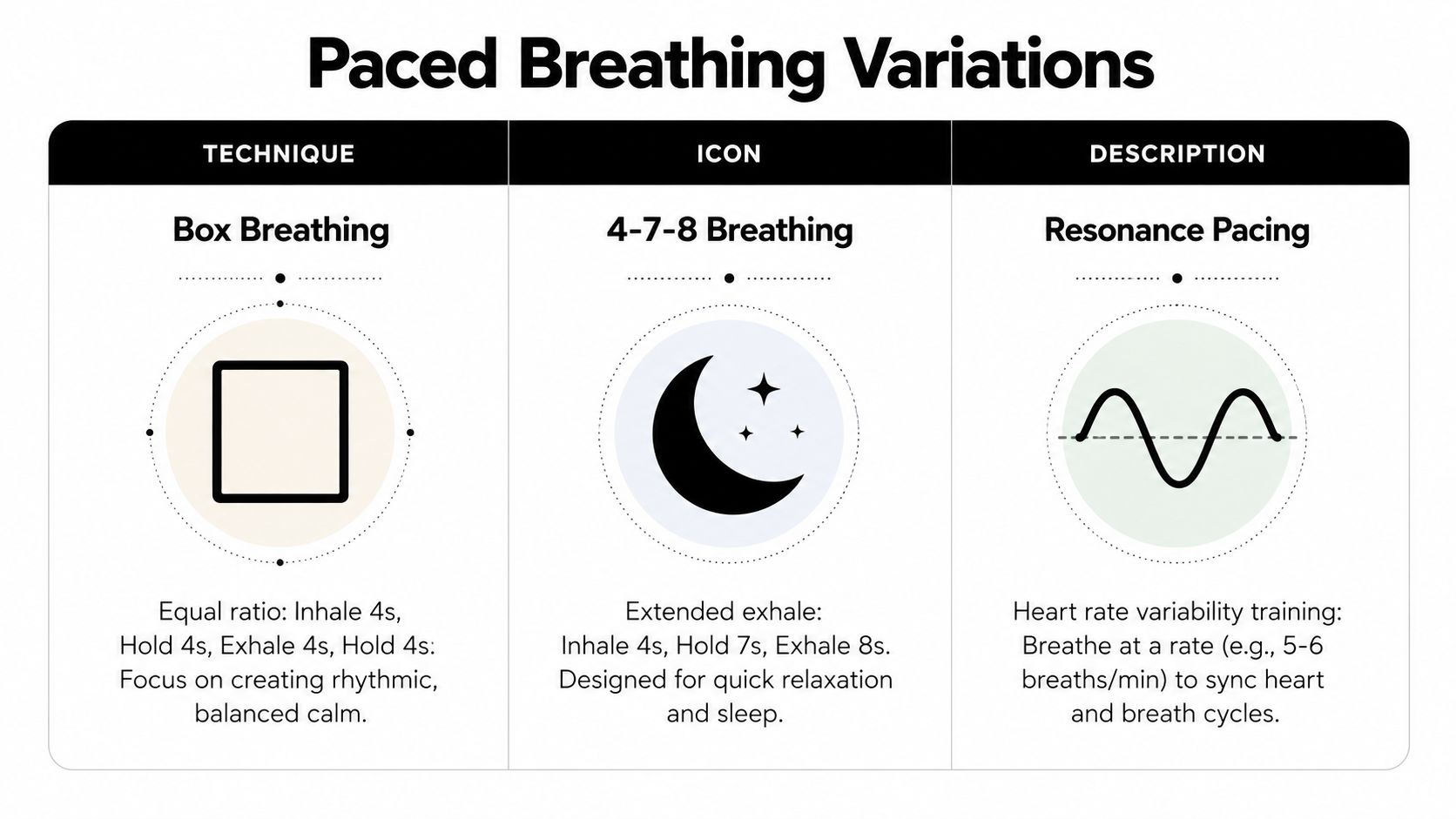
Box breathing uses an equal rhythm: inhale for 4 seconds, hold for 4 seconds, exhale for 4 seconds, and hold for 4 seconds. The balanced ratio can give racing attention a predictable sequence to follow.
Use it before a presentation, appointment, commute, or conversation when you're tense but still able to breathe comfortably. The holds should remain relaxed. If any pause creates a sense of air hunger, shorten or remove it and return to the core technique.
4-7-8 breathing for an extended release
The 4-7-8 pattern uses an inhale of 4 seconds, a hold of 7 seconds, and an exhale of 8 seconds. Its emphasis is the long exhale, which can feel settling when your body is activated or when you're trying to transition toward sleep.
This pattern isn't automatically better because it has longer counts. Some people find the hold uncomfortable during panic, respiratory symptoms, pregnancy, or medical conditions that affect breathing. Use it only when the pause feels easy, and never force the timing.
Resonance-style pacing for regular practice
Resonance pacing links a slow breathing rhythm with awareness of the heart and body. The infographic describes a rate of 5 to 6 breaths per minute, but the most useful pace is the one you can maintain smoothly without strain. This approach may fit a scheduled practice session more than an emergency panic response.
It can help to treat these options as a decision menu:
- Choose box breathing when you need structure and balanced attention.
- Choose 4-7-8 breathing when a comfortable extended exhale feels calming.
- Choose resonance pacing when you want a regular, measured practice.
- Choose the basic technique when counting itself makes you more anxious.
The 2019 quantitative systematic review found stress reductions across all three included studies, but it also highlighted small samples and highly variable intervention doses, ranging from a single 20-minute session to nine months. Those findings support a measured approach, not a promise that one pattern will work immediately for everyone. The full review is useful context for keeping expectations realistic.
Try the variation when you're relatively stable first. Familiarity matters because a technique you've rehearsed in calm moments is easier to access when panic narrows your attention.
Mistakes That Quietly Block Real Progress
A common assumption is that deeper breathing must be better breathing. It isn't. Large, rapid inhales can leave you dizzy or tense, while a smaller breath with a patient exhale may create a more useful shift.
Watch the mechanics, not the appearance
A rounded abdomen doesn't prove that the diaphragm is doing most of the work. Some people push their stomach outward while continuing to breathe high in the chest. Keep one hand on the chest and one below the ribs, then reduce the inhale until the lower movement becomes gentle and the shoulders stay down.
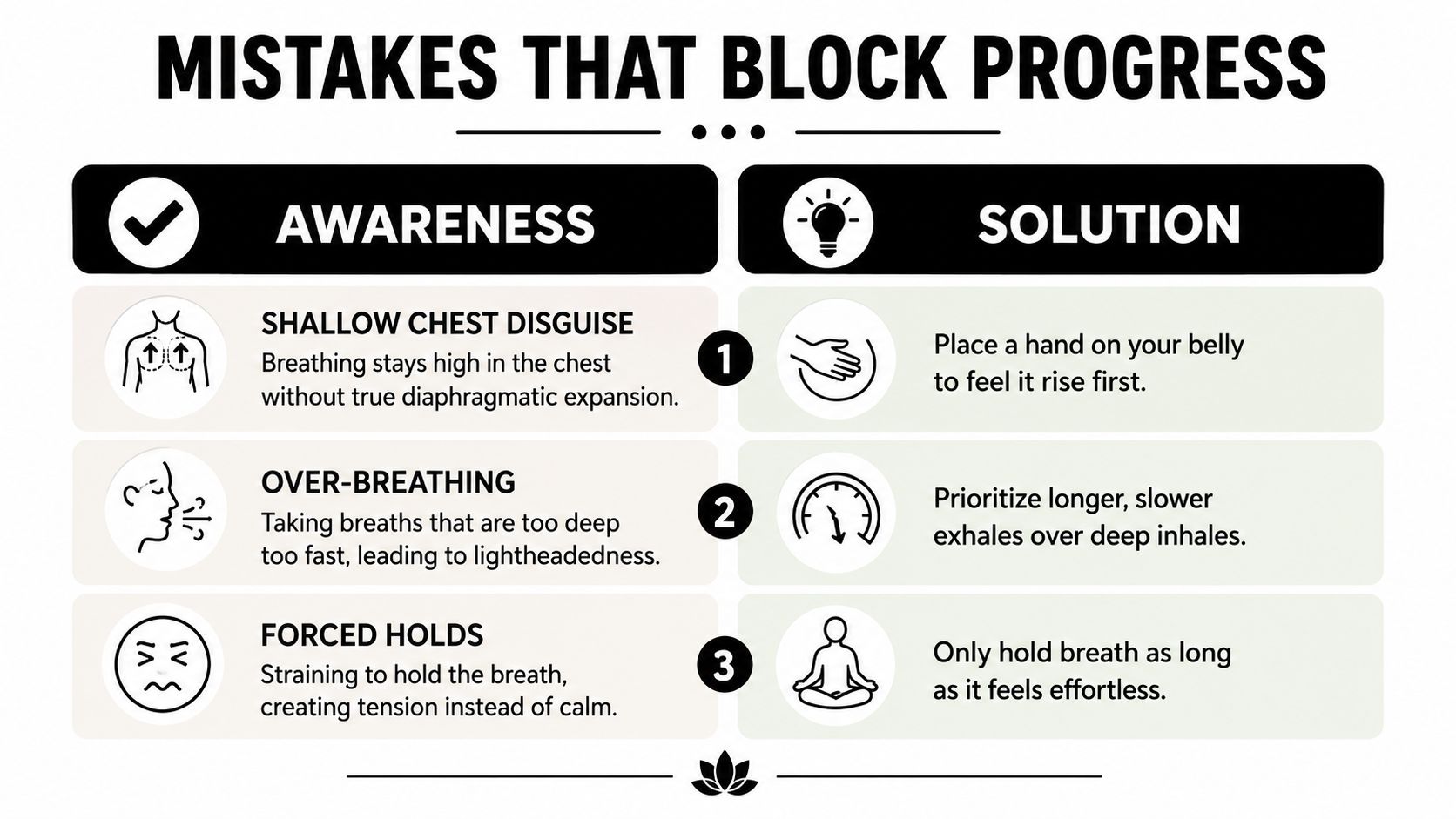
Over-breathing is another quiet obstacle. If you take breaths that are too deep or too fast, lightheadedness, tingling, and a sense of unreality can appear. Those sensations can resemble the very panic symptoms you're trying to calm.
- Shallow chest disguise: Place a hand on your belly and feel for it to rise first, while reducing shoulder movement.
- Over-breathing: Prioritize a longer, slower exhale instead of making the inhale deeper.
- Forced holds: Hold your breath only for as long as it feels effortless.
- All-or-nothing practice: Stop judging a session by whether anxiety disappeared. Track whether you noticed tension sooner or recovered more deliberately.
Let practice be ordinary
Many people use breathing only once panic has reached its peak. That can work sometimes, but it also asks an unfamiliar skill to perform under maximum pressure. Short, regular practice gives you a chance to learn the coordination before you need it urgently.
Anxiety can also make you monitor every sensation. If counting increases self-surveillance, drop the count and follow the physical feeling of a soft inhale followed by an unhurried exhale. Resources on coping with overthinking and anxiety can complement the breathing practice when mental loops keep pulling your attention back toward danger.
Troubleshooting isn't failure. It's how you learn which version of the exercise your nervous system can tolerate today.
A Four-Week Practice Plan for Lasting Change
A plan works best when it builds familiarity before intensity. Use the schedule below as a flexible progression, not a demand to push through symptoms.
| Week | Daily Time | Primary Technique | Goal |
|---|---|---|---|
| Week 1 | A few quiet minutes spread through the day | Basic diaphragmatic breathing | Learn lower-rib and abdominal movement without strain |
| Week 2 | A short scheduled practice | Basic breathing plus a comfortable paced variation | Discover which rhythm feels steady |
| Week 3 | Brief regular practice and an SOS rehearsal | Basic breathing during early panic signs | Use the skill before panic reaches its highest point |
| Week 4 | Practice paired with planned therapeutic work | Breathing during CBT-style exposure | Stay present while allowing anxiety to rise and fall naturally |
During week one, practice when you're calm enough to notice movement. Lie down or sit, use the hand positions described earlier, and focus on coordination rather than relaxation. Your checkpoint is simple: can you complete a few gentle cycles without lifting your shoulders or forcing the inhale?
In week two, add one paced variation that feels comfortable. Box breathing may offer structure, while an exhale-led pattern may feel better if counting holds creates tension. Keep the practice easy enough that you finish feeling more grounded, not depleted.
Week three introduces an SOS protocol. At the first signs of escalation, plant both feet, look at one stable object, and take several small diaphragmatic breaths with a slightly longer exhale. If symptoms intensify, stop the exercise and return to ordinary breathing. Seek urgent medical help for new, severe, or medically concerning symptoms rather than assuming anxiety explains everything.
By week four, pair breathing with CBT-style exposure only if you understand the exercise and can do it safely. The purpose isn't to use breathing to escape every anxious sensation. It's to remain present while learning that discomfort can change without avoidance. A clinician can help you modify the plan if breath-focused attention increases panic, if you have a respiratory or cardiovascular condition, or if prolonged holds are uncomfortable.
For continued education, browse these free anxiety help articles. Professional support matters when panic is frequent, avoidance is expanding, or self-guided practice isn't enough.
Building Toward a Panic-Free Life Beyond the Breath
A steady breath becomes more useful when it supports the rest of recovery. Research also suggests staying modest about what breathing can accomplish alone. A 2013 systematic review found only 3 eligible randomized controlled trials involving 254 participants, with moderate evidence for improved quality of life, but the studies were too different for a meta-analysis (systematic review).
A 2026 meta-analysis found moderate-to-large effects for anxiety, depression, and stress. The strongest subgroup findings involved slow diaphragmatic or paced breathing practiced regularly and combined with psychotherapy (2026 meta-analysis). In practical terms, breathing may lower arousal enough to help you take part in CBT, exposure, grounding, sleep support, and ordinary activities. It is one tool within a recovery process, not a promise of instant relief.
People looking for structured anxiety support for young adults may also need guidance suited to their stage of life. The Anxiety Checklist provides an always-free SOS mode, CBT self-therapy exercises, thought journaling, belief experiments, exposure practice, Anxiety University, and the PanicFree Masterclass. Progress often comes through repeated, manageable practice.
Use The Anxiety Checklist alongside diaphragmatic breathing for grounding prompts and practical tools during panic and recovery. Professional support deserves priority when panic is frequent, avoidance is expanding, or self-guided work is not enough.