

Your heart is racing before the meeting starts. Your chest feels tight, your breathing has become shallow, and every thought seems to point toward danger. You reach for the fastest thing you know, perhaps a glass of water, a breathing video, or a search for how to reset the vagus nerve before the sensations become overwhelming.
That search makes sense, but “reset” can be misleading. You can often help your body settle within minutes, yet lasting recovery from anxiety usually comes from repeated practice, a clearer understanding of panic, and appropriate support. A calming exercise can lower the intensity of a difficult moment. It can't, by itself, resolve every fear, avoidance pattern, or medical issue behind recurring anxiety.
The encouraging part is that panic recovery is realistic. Structured treatment has helped many people become panic-free, and the evidence for cognitive behavioral therapy is considerably stronger than the evidence for any single do-it-yourself vagus nerve technique. This guide separates immediate regulation from longer-term healing, so you can use both without confusing temporary relief with deep change.
Table of Contents
- When Panic Hits and You Just Need Your Body to Settle
- What the Vagus Nerve Does
- Breathing and Vagal Maneuvers for Fast Calm
- Body-Based Resets You Can Stack Into Your Day
- Training Your Vagus Nerve Over Weeks and Months
- A Simple Weekly Routine You Can Actually Follow
- Safety, Limits, and When to Bring in a Professional
When Panic Hits and You Just Need Your Body to Settle
A panic episode often begins with a body sensation rather than a thought. Your pulse jumps, your jaw tightens, your stomach turns, and then your mind rushes to explain what's happening. “Something is wrong” can arrive before you've had time to notice that your nervous system has moved into a threat response.
That experience can create a second fear, fear of the sensations themselves. Some people start scanning their heartbeat, avoiding shops or public transport, or arranging their day around escape routes. This pattern is sometimes described as the phobophobia and panic attack cycle, where fear of fear keeps the alarm system sensitive.
What a reset can and can't do
The vagus nerve is one pathway involved in the body's shift toward rest and recovery. A slow exhale, a steady voice, or a change in posture may provide a useful safety signal, helping you move from alarm toward greater steadiness. That doesn't mean you've “flipped a switch” or removed the cause of anxiety.
Try this first: place both feet on the floor, let your shoulders drop, and breathe out gently for longer than you breathe in. Don't force a huge breath. A strained breath can make you feel more air hungry, while a quiet rhythm gives your attention something predictable to follow.
Some readers also investigate supplements and complementary options while building a broader plan. If you're considering cannabidiol for panic symptoms, use a cautious, evidence-aware resource such as this CBD for panic attacks practical guide from HempWell USA, and discuss products with a qualified healthcare professional, especially if you take medication or have a health condition.
The practical path is straightforward. First, understand what the vagus nerve does. Then use low-risk tools for the next few minutes, build repeated habits over weeks, and recognize when anxiety deserves professional care. You don't need to feel perfectly calm to begin. You only need a small enough step to interrupt the spiral.
What the Vagus Nerve Does
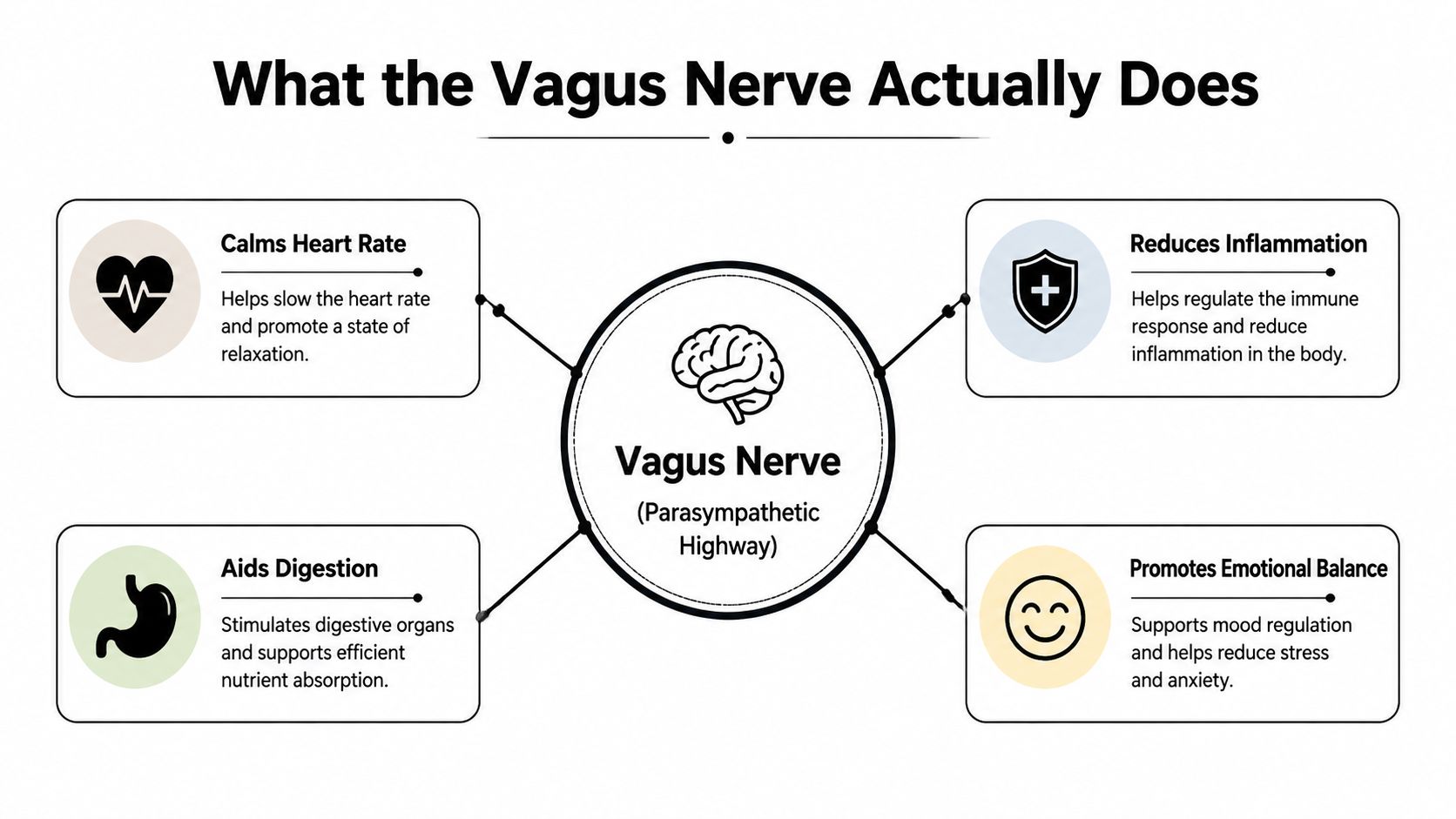
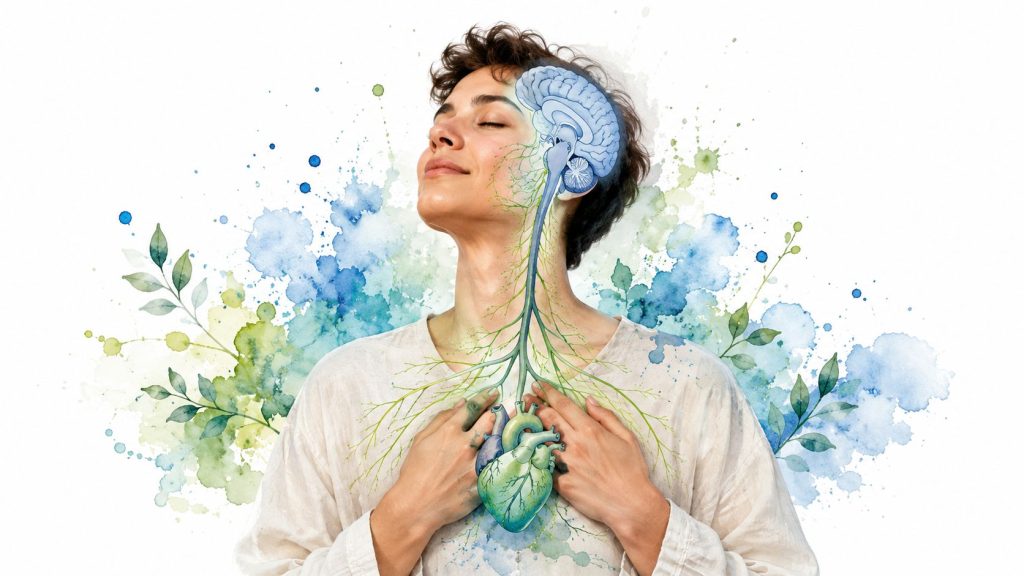
If anxiety leaves your heart racing after the trigger has passed, the vagus nerve is one part of the system involved in returning your body toward steadiness. It runs from the brainstem through the neck to areas including the heart, lungs, and digestive system. It also forms a major part of the parasympathetic nervous system, which supports rest, digestion, and recovery after stress.
The nerve works like a two-way communication route. The brain sends signals toward the body, while information from the body travels back toward the brain. Together, these signals help the nervous system judge whether to stay alert or reduce its defensive response. This process can support managing fight or flight with Anxiety Checklist.
Vagal tone in plain language
Vagal tone describes how responsive and flexible this calming influence is. It is not a health score, and a single heart-rate measurement cannot diagnose anxiety. A more useful comparison is adaptability: how readily your system can shift down after a stressful event, like a car slowing after the driver releases the accelerator.
During anxiety, that flexibility may feel out of reach. Your heart can race, breathing can become shallow, and muscles may stay braced after the original trigger has ended. Those sensations do not show that the vagus nerve is damaged. They indicate that the wider threat-and-recovery system is still activated and may benefit from support.
Poor sleep can involve similar difficulty settling. Calming body signals may be relevant to nervous system regulation for insomnia, although sleep problems have many possible causes and should not automatically be assigned to vagal function.
Useful distinction: Supporting vagal regulation means practicing signals and behaviors that may help the body recover from activation. It does not repair a broken nerve.
The practical framework has three parts: behavior, breath, and repetition. Breath may shift your state within minutes, while movement, voice, and posture offer additional safety cues. Repeated practice over weeks can build flexibility, so fast relief becomes one tool rather than the whole plan.
Breathing and Vagal Maneuvers for Fast Calm
The most practical place to begin is slow, comfortable breathing. A controlled study of 47 adults found that one session of deep, slow breathing increased high-frequency heart-rate variability and reduced state anxiety in both younger and older adults. The increase in high-frequency heart-rate variability was larger in older adults, while RMSSD did not rise, a difference the researchers connected to the unequal inhale and exhale pattern. Read the controlled breathing study for the physiological details.
A five-minute breathing script
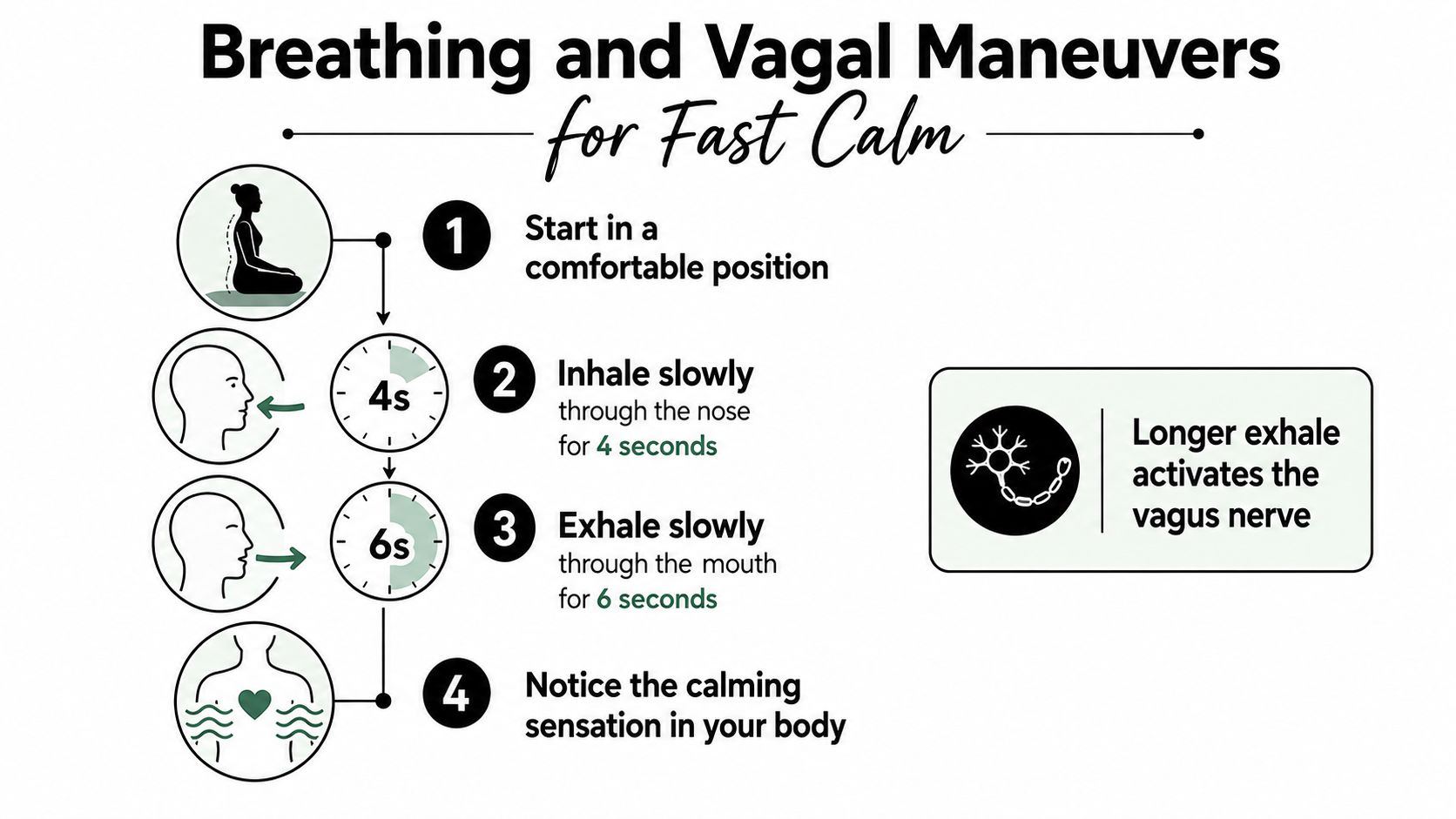
Aim for roughly 5 to 6 breaths per minute, with a longer exhale than inhale. You can use a gentle 4-second inhale and 6-second exhale, but shorten the counts if they make you strain.
- Sit with your back supported and let your hands rest loosely.
- Inhale softly through your nose for about 4 seconds.
- Exhale through relaxed lips for about 6 seconds.
- Repeat for several minutes, allowing the breath to remain quiet.
- If you feel dizzy, return to normal breathing and stop the exercise.
The longer exhale is the important feature, not the size of the breath. Fast, forceful breathing can increase light-headedness and may resemble hyperventilation. The aim is a steady rhythm that your body can tolerate.
For more options, use these breathing exercises for panic relief, especially if counting alone becomes difficult during an episode.
Other maneuvers require more care
The Valsalva maneuver involves briefly bearing down against a closed airway. Gentle throat activity, such as swallowing or a mild gag-reflex response, is also sometimes discussed as a way to influence autonomic activity. These aren't necessary for many individuals, and they shouldn't involve force, prolonged straining, or deliberate distress.
Don't use vagal maneuvers to treat unexplained chest pain, fainting, severe shortness of breath, or a suspected heart rhythm problem. Stop immediately if you feel pain, faintness, or worsening symptoms. Breathing is the more accessible first choice for acute anxiety because it doesn't require deliberately increasing pressure in the chest.
Use the following video only as a calm demonstration, not as a substitute for medical advice:
Body-Based Resets You Can Stack Into Your Day
Not every reset needs to look like a formal exercise. A small physical change can interrupt the posture and muscle tension that accompany an anxious state. The most useful method is usually the one you'll repeat without turning it into another performance test.
Use temperature gently
Cold water on the face can feel like a clear sensory interruption when your thoughts are racing. Before a stressful meeting, you might splash cool water on your face, dry off slowly, and take a few ordinary breaths. You don't need an ice bath, an extreme cold plunge, or a dramatic challenge.
Cold exposure isn't suitable for everyone. If you have a heart condition, uncontrolled blood pressure, Raynaud's phenomenon, are pregnant, or have another relevant medical concern, ask a clinician before experimenting. Stop if the cold makes you gasp, feel faint, or intensifies panic.

Let your voice and muscles send a different signal
Humming creates vibration in the throat and face, areas connected with functions influenced by the vagus nerve. Hum softly while washing dishes, driving, or preparing for a difficult call. Keep it comfortable. The point isn't volume or perfect pitch, but a steady sound paired with an unforced exhale.
Try these small shifts throughout the day:
- Soften the jaw: Let your teeth separate and allow the tongue to rest comfortably instead of pressing it upward.
- Change position: After a difficult email, stand up, lower your shoulders, and look around the room rather than staying folded over the screen.
- Walk briefly: Take a short walk after lunch or move around the room after a tense conversation.
- Add safe connection: Speak with someone whose presence helps you feel grounded, or use a warm, natural tone when talking to yourself.
These actions don't prove that you've “reset” a nerve. They create repeated opportunities to notice tension, alter your breathing and posture, and practice returning to the present. Choose one that feels ordinary enough to use on a busy day.
Training Your Vagus Nerve Over Weeks and Months
A breathing exercise can help you settle now. It won't automatically change how you interpret every future body sensation. Durable recovery requires practice at the level of attention, beliefs, behavior, and exposure to situations you've started avoiding.
Heart-rate-variability biofeedback can make part of this process visible. In a session, a sensor tracks signals related to your heartbeat while an app or clinician guides you through a slow breathing rhythm. You watch the pattern respond as you adjust your pace, then learn to notice the physical difference between forcing calm and allowing steadiness to develop.
Build a wider recovery skill set
Mindfulness trains you to notice thoughts and sensations without immediately treating them as threats. Guided meditation can provide structure when sitting still feels too difficult. Gentle yoga and walking add movement, rhythm, and attention to the body without making intensity the objective.
Use a simple progression:
- Practice a comfortable breathing rhythm when you're already relatively settled.
- Repeat it during mild stress, such as before opening work email.
- Use the skill during stronger activation while allowing sensations to rise and fall.
- Gradually return to activities anxiety has made you avoid.
This resembles going to the gym, but the target is flexibility rather than strength. Small sessions create familiarity, and familiarity reduces the pressure to find a perfect emergency solution.
For structured learning about panic, thoughts, and behavioral change, explore these anxiety self-help guides. They can complement, but not replace, individualized care when symptoms are persistent or severe.
A Simple Weekly Routine You Can Actually Follow
A useful routine should survive a busy Tuesday, not just look impressive on paper. Treat the practices as small appointments with your nervous system, then attach them to events that already happen.
| Time of Day | Practice | Duration | Purpose |
|---|---|---|---|
| Before work | Exhale-focused breathing | 2 minutes | Begin the day with a steady rhythm |
| After lunch | Gentle humming | A short break | Release jaw and throat tension |
| After a difficult email | Stand and walk | A brief movement break | Interrupt a fixed, braced posture |
| Evening | Slow walk | A comfortable session | Pair movement with attention and recovery |
| Sunday | Guided meditation or biofeedback | A longer practice | Review what helped and rehearse calm |
The table isn't a prescription. If humming feels awkward, replace it with quiet breathing. If a slow walk feels better than meditation, use the walk. Consistency matters more than collecting techniques.
Make the routine easier to remember
Place the practice beside an existing cue. Sit down at your desk, then breathe before opening your inbox. Finish lunch, then hum while clearing the dishes. Put your shoes near the door if an evening walk is your chosen longer practice.
Expecting instant results creates another source of discouragement. A practice may reduce intensity one day and feel neutral the next. Record what happened in simple language, such as “I noticed my jaw sooner” or “I stayed with the meeting despite discomfort.” Those observations show learning even when calm doesn't arrive immediately.
If you forget, restart at the next cue instead of waiting for a new week. If you feel silly, close your office door or practice with a longer exhale. If a method consistently increases fear, remove it. A flexible routine supports recovery better than a rigid one that makes you feel you've failed.
Safety, Limits, and When to Bring in a Professional
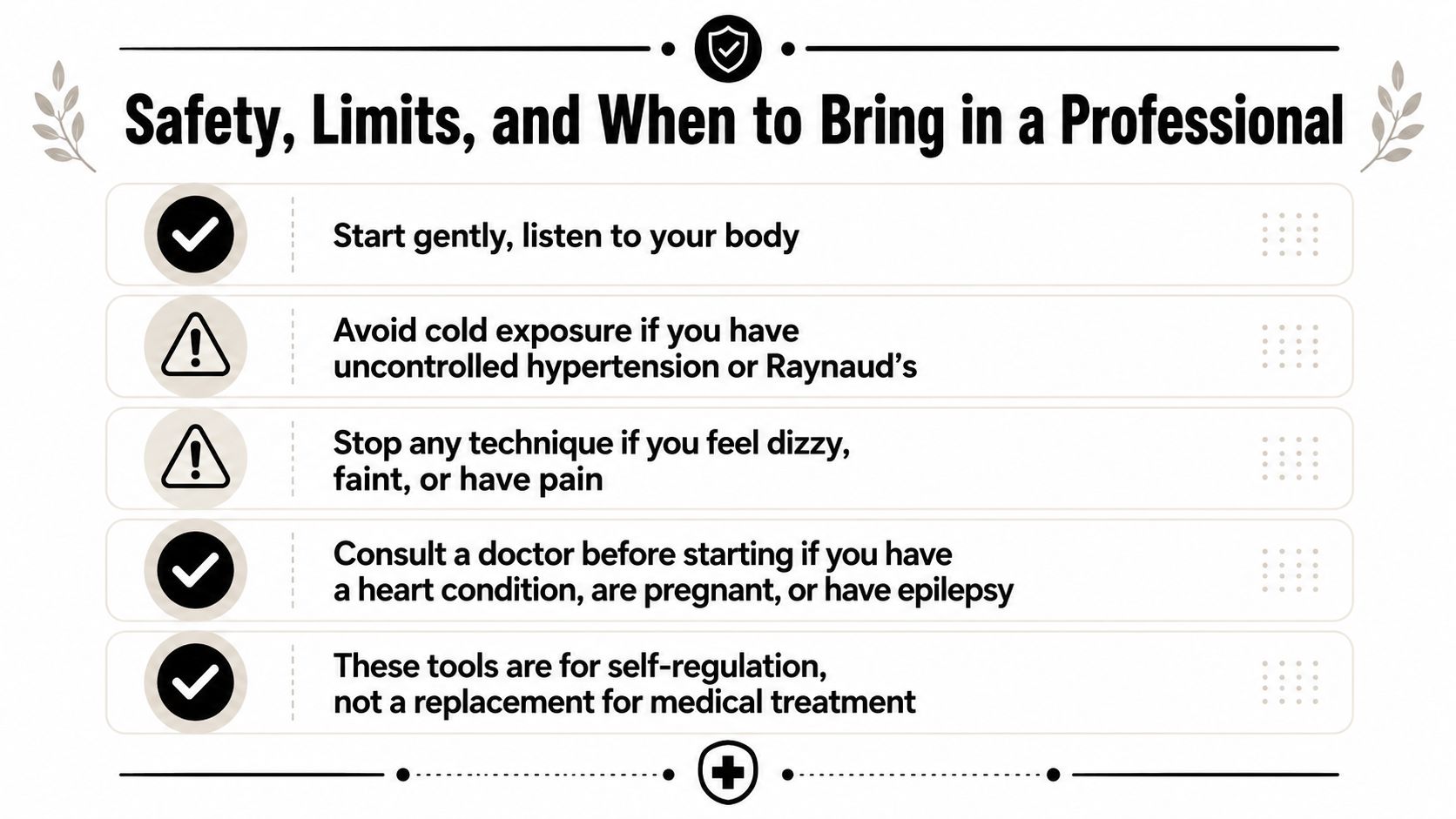
The common assumption is that anything described as a “vagus nerve reset” is automatically safe and medically established. That isn't true. Slow breathing and gentle movement are generally accessible, but cold exposure, forceful Valsalva maneuvers, throat stimulation, and electrical devices can create risks for some people.
The safety infographic below summarizes the boundaries that matter most.
Know which category you're using
Breathing, humming, posture changes, and gentle walking are self-regulation practices. A vagus nerve stimulation device is different. Transcutaneous auricular vagus nerve stimulation uses electrical stimulation near the ear and belongs closer to medical neuromodulation than to a calming breathing exercise.
A 2024 double-blind randomized controlled trial in university students found that active transcutaneous auricular vagus nerve stimulation significantly reduced masseter muscle activity and anxiety scores, with benefits still present at a 2-week follow-up. The study measured changes in both muscle tension and anxiety, but it doesn't establish a universal home “reset” protocol. Review the 2024 TAVNS trial.
Clinical evidence remains limited. An early pilot study found that 3 of 7 patients with OCD were acute responders, while anxiety ratings improved significantly at 14 of 18 quarterly follow-ups during long-term monitoring. More recent inpatient data reported mean GAD-7 reductions of 5.90 to 6.87 points and a mean BAI reduction of 9.40 ± 10.52 points after transcutaneous stimulation. These findings are promising, but small samples and differing protocols don't identify one best method. See the clinical evidence summary.
When self-help isn't enough
Talk with a clinician before using electrical stimulation or aggressive cold exposure if you have a heart condition, are pregnant, have epilepsy, have uncontrolled hypertension, or have Raynaud's. Stop any technique that causes dizziness, faintness, pain, unusual shortness of breath, or a clear increase in distress.
Seek professional support if panic attacks are becoming more frequent, avoidance is shrinking your life, sleep loss is affecting daily functioning, or you feel unsafe. For support with distressing thoughts, use this guide to getting help for intrusive thoughts.
Vagus-targeted approaches may help some people, but they aren't a replacement for first-line anxiety care. CBT has a strong recovery record. One focused CBT study reported a 73% recovery rate, compared with 35% for treatment as usual, and the same evidence line noted that properly delivered panic treatment can reach 70% to 90% success rates. Read the focused CBT trial.
A meta-analysis of CBT for adult anxiety disorders found a mean remission rate of 51.0%. Follow-up data for panic disorder, with or without agoraphobia, showed relapse rates from 0% to 14% over 3 to 12 months. Explore the CBT meta-analysis. In primary care, CBT combined with medication produced 29% remission at 12 months, compared with 16% with usual care, while response rates were 63% versus 38%. Read the primary-care trial. Another clinical review reported that about 75% of patients became panic-free at follow-up, while about half became both panic-free and free of excess anxiety, and a guideline summary reported 64% remission after group CBT at posttreatment. Review the clinical summary.
The arc is simple: understand the nerve, use a gentle fast tool, train your recovery system over time, and bring in help when anxiety keeps taking more of your life. The goal isn't to remain permanently calm. It's to learn, gently and repeatedly, how to come back down.
For the next five minutes, sit with both feet supported, breathe in softly, breathe out a little longer, and let your shoulders loosen without forcing them.
The Anxiety Checklist offers an always-free SOS mode with grounding prompts, breathing guidance, affirmations, and other real-time support, alongside guided meditations, sleep audios, walking sessions, and CBT self-therapy tools for longer-term practice. Visit The Anxiety Checklist to start with one small calming exercise today and build a steadier recovery routine at your own pace.