


In short
Driving anxiety after a car accident often improves when you first confirm that driving is medically safe, then rebuild confidence through short, repeatable steps rather than one difficult trip. Start below your panic threshold, practice with full attention on the road, and seek trauma-informed help if symptoms are severe, persistent, or impair safe driving.
Key takeaways
- Fear, intrusive memories, physical tension, and avoiding cars can be normal post-trauma reactions, but symptoms alone do not confirm PTSD.
- Do not begin on-road practice while concussion symptoms, medication effects, injuries, or intense panic could interfere with attention and reaction time.
- A driving fear ladder starts with a manageable task and changes only one or two difficulty factors at a time.
- Regulation exercises belong before driving or after parking; attention must stay on the road while the vehicle is moving.
- PTSD criteria include symptoms lasting longer than one month and disrupting daily life, but severe or unsafe symptoms justify seeking help sooner. (nimh.nih.gov)
Table of contents
- Is this a normal response, or a sign of trauma?
- Am I ready to start driving again?
- How do I use a fear ladder without pushing too hard?
- What should I do before, during, and after practice?
- When should I get professional help?
- What else do people ask about driving anxiety after an accident?
- What is the next step?
Is this a normal response, or a sign of trauma?
Feeling nervous in a car after an accident is a common response to danger, not a sign of weakness. The reaction may ease naturally, but repeated avoidance, intrusive memories, or constant alertness can signal that additional support is needed.
The National Institute of Mental Health's PTSD guide explains that fear is part of the body's threat response and that many people recover from trauma reactions over time. It also names vehicle avoidance after a serious accident as one possible avoidance symptom. (nimh.nih.gov)
The VA National Center for PTSD describes pounding heart, rapid breathing, shakiness, intrusive thoughts, anger, sleep problems, and feeling constantly on guard as possible reactions after trauma. A person can experience some of these reactions without having PTSD. (ptsd.va.gov)
What keeps the alarm loop going?
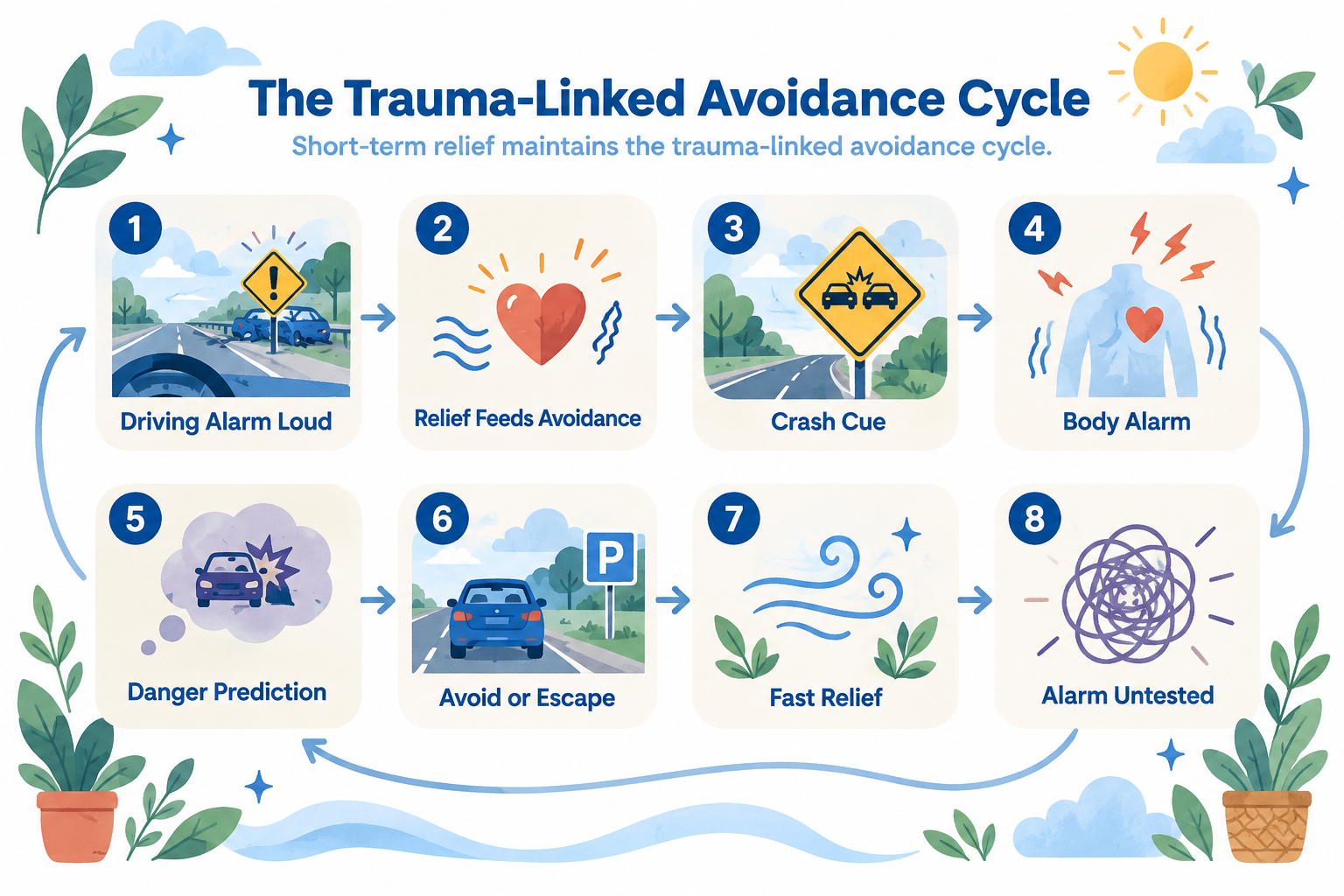
A crash can teach the nervous system to connect driving cues with danger. A brake light, intersection, horn, passenger seat, or route resembling the crash location may then trigger a body alarm before the driver has consciously evaluated the situation.
Avoiding every reminder can bring immediate relief. That relief may unintentionally teach the brain that avoidance prevented another disaster, leaving no opportunity to learn that a carefully chosen drive can end safely.
This post-accident pattern is related to, but not always identical to, a broader fear of driving. The relevant question is not which label sounds right. It is how the fear affects attention, safety, sleep, work, relationships, and the ability to travel.
Possible signs of a trauma-linked reaction include:
- Reliving the collision through unwanted images, nightmares, or flashback-like moments
- Avoiding the driver's seat, passenger travel, a road type, or the crash location
- Scanning constantly for vehicles that might hit you
- Feeling startled by horns, braking, lane changes, or vehicles approaching from behind
- Experiencing a racing heart, shaking, nausea, sweating, or breathlessness in the car
- Feeling guilty, angry, detached, or unable to remember parts of the collision
- Sleeping poorly or struggling to concentrate during the day
- Driving much slower, checking excessively, or making abrupt decisions to escape anxiety
A PTSD diagnosis requires more than being scared to drive. A qualified clinician considers the symptom pattern, duration, functional effect, medical conditions, medication or substance effects, and whether another diagnosis better explains the experience.
Driving anxiety after a collision is a learned danger response, not proof that every drive is unsafe or that recovery is impossible.
Am I ready to start driving again?
Emotional willingness is only one part of readiness; the driver must also be medically, cognitively, and physically able to operate the vehicle. A temporary pause is appropriate when an injury, medication, severe fatigue, or trauma symptom could impair safe driving.
This guide is an educational self-help framework. It does not provide medical clearance, assess driving competence, or replace advice from a healthcare or mental health professional.
Use this safety gate before any practice
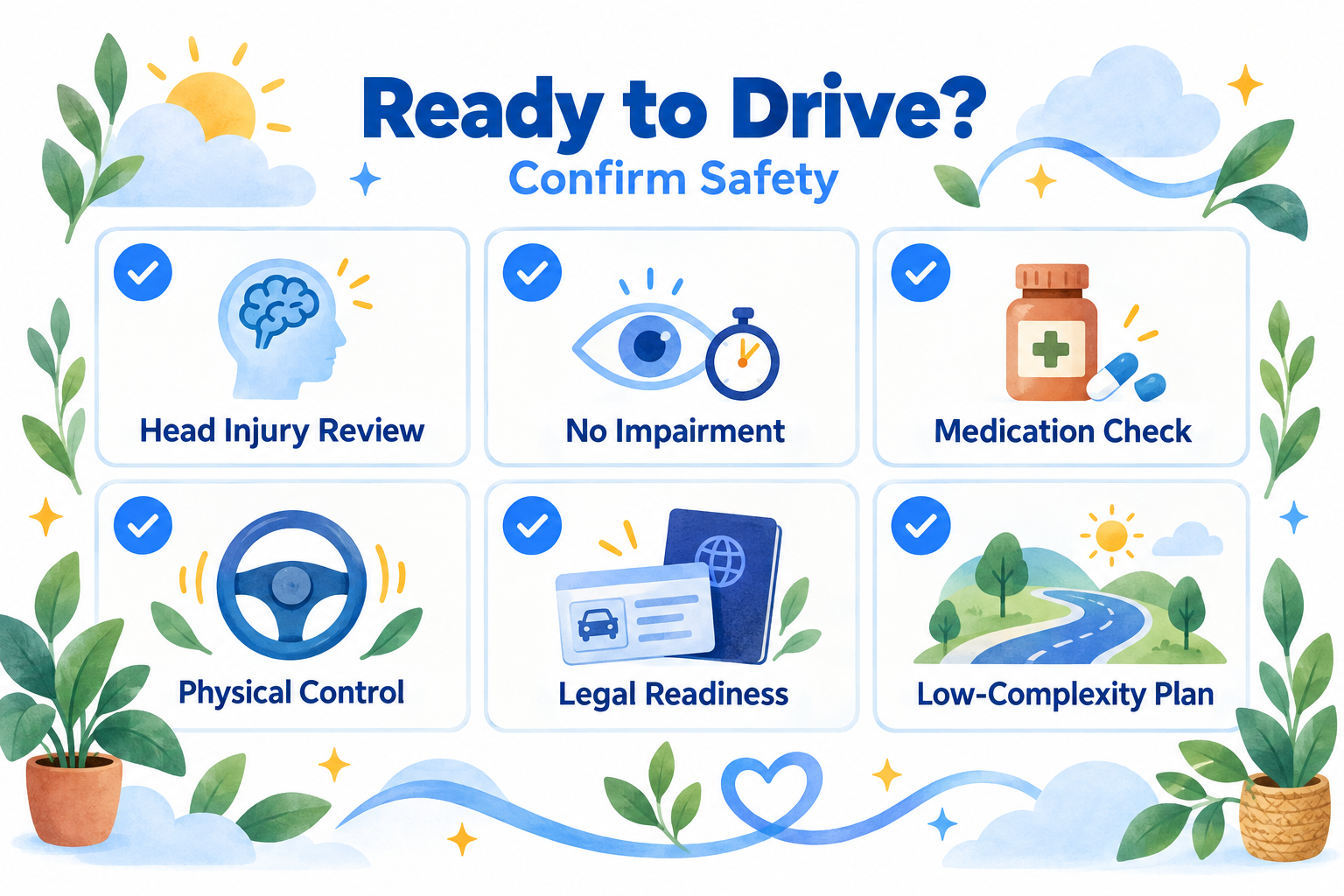
Confirm each of the following before beginning an on-road exercise:
- Any head injury has been assessed. The CDC's 2025 concussion guidance advises asking a healthcare provider when it is safe to return to driving. Dizziness, vision problems, slowed thinking, poor concentration, and altered reaction time can make driving unsafe. (cdc.gov)
- Physical injuries do not limit control. Pain, weakness, restricted neck movement, or difficulty pressing pedals can affect observation and vehicle handling.
- Medication effects are known. FDA medication-and-driving guidance warns that prescription and nonprescription drugs may cause sleepiness, blurred vision, dizziness, slowed movement, nausea, or reduced attention. Do not test a new medication's effects behind the wheel. (fda.gov)
- There is no alcohol, cannabis, or other impairing substance involved. A coping strategy that reduces distress but impairs judgment is not a safe driving aid.
- The vehicle and documents are in order. Use a roadworthy vehicle and meet the licensing, insurance, and supervision rules where the practice occurs.
- The first setting is genuinely low complexity. Choose daylight, suitable weather, familiar roads, lighter traffic, and a legal practice area.
A calm support person can help with early steps if that person understands the plan, avoids criticism, and can drive home if necessary. Set the route and roles before leaving. The passenger should not create a stream of instructions that competes for attention.
Do not start self-guided on-road exposure if flashbacks, dissociation, faintness, uncontrolled movements, or panic regularly make it difficult to see, think, steer, or follow traffic rules. Those symptoms call for professional assessment and a more closely supervised plan.
Start on-road practice only when the driver, the vehicle, and the conditions are safe enough for full attention.
How do I use a fear ladder without pushing too hard?
A fear ladder divides the return to driving into steps that are uncomfortable but still safe and manageable. The aim is repeated learning, not forcing the hardest drive, eliminating all anxiety, or proving courage in a single attempt.
In exposure therapy, avoided situations are approached gradually and deliberately. The VA explanation of prolonged exposure describes creating a list of avoided situations and working through it step by step, but trauma-focused exposure therapy itself is clinician-delivered treatment rather than a self-help driving exercise. (ptsd.va.gov)
A sample five-step ladder
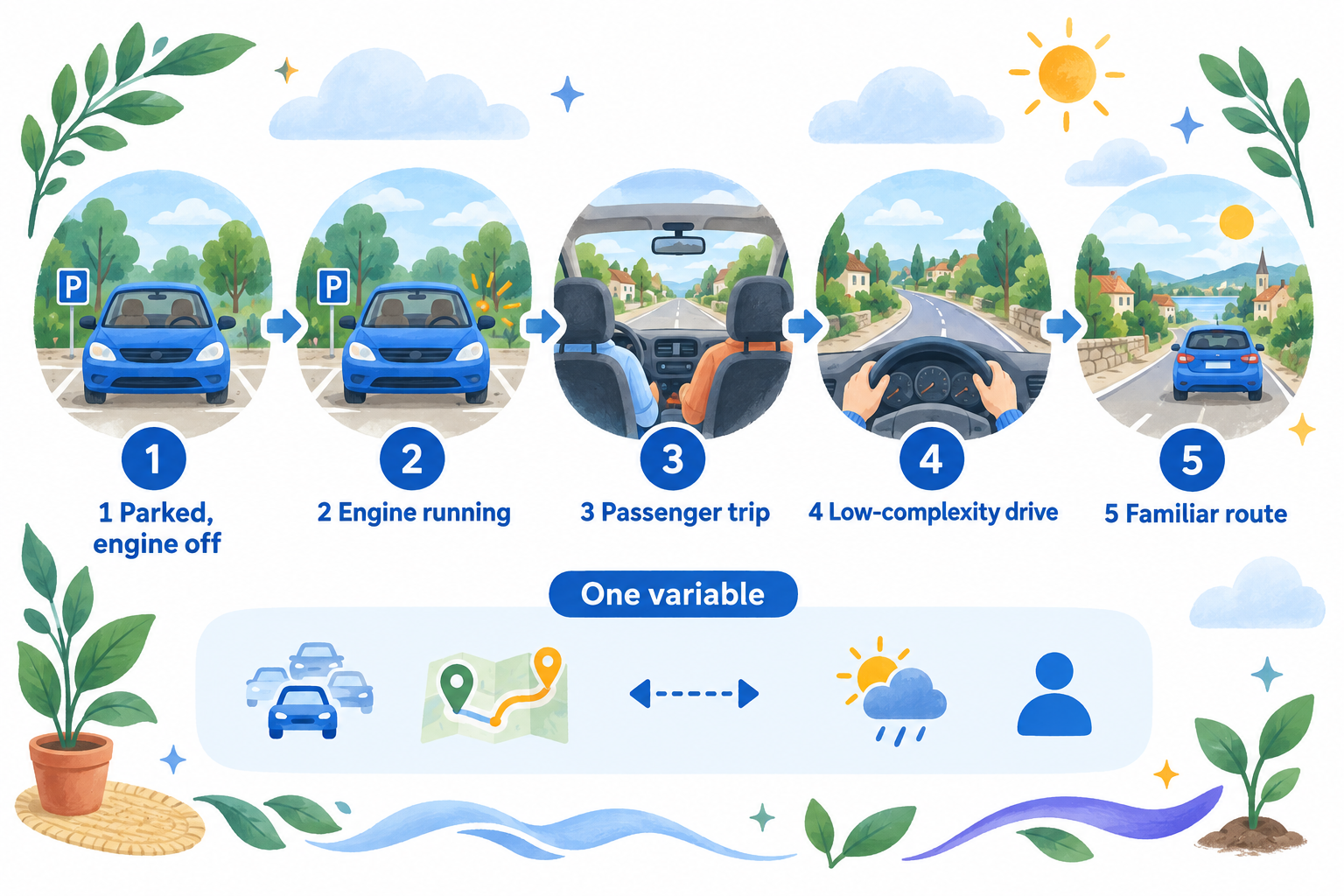
The following ladder is an example, not a universal prescription. Begin only after passing the safety gate, and reorder the steps to match the actual triggers.
- Sit in the parked car with the engine off. Choose a safe, legal location. Notice the controls, mirrors, seat, and surroundings without preparing to drive.
- Sit with the engine running. Do this outdoors, never in an enclosed garage. Adjust the mirrors and controls, then turn the engine off when the planned practice is complete.
- Take a short passenger trip. Use a familiar route with a calm driver. Stay present rather than repeatedly checking for danger or asking for constant reassurance.
- Drive in a legal, low-complexity practice area. Use an open area where driving is permitted or a very quiet familiar street, with a suitable support person if needed.
- Complete a short familiar route. Choose an easier time of day, define the endpoint in advance, and stop after the planned route rather than adding an unplanned challenge.
Later rungs might include intersections, driving alone, moderate traffic, the crash area, highways, darkness, or poor weather. Add these separately. Combining a new route, rush hour, rain, and solo driving makes it impossible to identify which change caused the difficulty.
Rate anticipated distress from 0 to 10 before each practice and record the peak and ending ratings after parking. The number is a personal planning tool, not a diagnostic score and not a competition.
Use these progression rules:
- Repeat the current rung until the task feels more predictable and attention can remain on safe driving.
- Move up because the current step has become manageable, not because the calendar says it is time.
- Step down when anxiety repeatedly disrupts observation, judgment, or vehicle control.
- Stop and seek guidance if practice produces flashbacks, disorientation, unsafe maneuvers, or worsening symptoms between sessions.
- Measure success by completing the planned safe behavior and learning from it, not by reaching zero anxiety.
For a structured place to list, rate, and reorder steps, the fear ladder tool in the Anxiety Checklist app is designed to organize self-guided exposure tasks from easier to harder. The tool supports planning but does not provide medical clearance or trauma therapy. (anxietychecklist.com)
A useful fear ladder asks for manageable repetition, not a dramatic test of courage.
What should I do before, during, and after practice?
A repeatable routine reduces unnecessary decisions and makes each practice easier to evaluate. Prepare and regulate while parked, give driving your full attention while moving, then review the experience only after the vehicle is safely stopped.
Use this before, during, and after practice
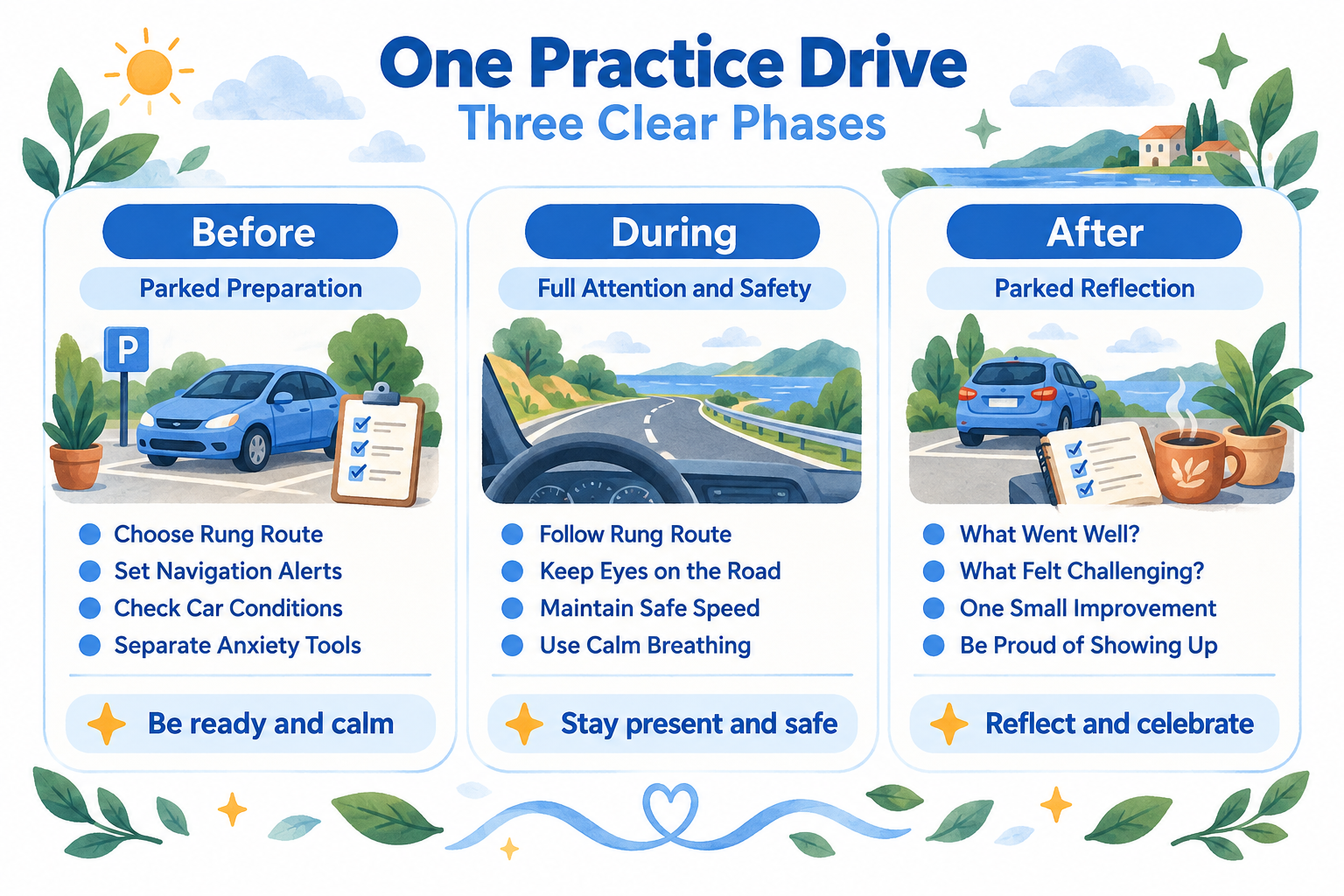
Before driving:
- Choose one ladder rung, route, start point, and endpoint.
- Define success as completing the planned safe behavior, not feeling completely calm.
- Check weather, traffic, fuel or charge, mirrors, seat position, and navigation.
- Set the phone to avoid interruptions and enter the route before moving.
- Use several slow, comfortable breaths or a brief sensory grounding exercise while parked.
- Tell the support person when advice is helpful and when quiet is preferable.
While driving:
Keep eyes, hands, and attention on driving. Anxiety can remain in the background without becoming another task that must be solved immediately.
Do not read an app, close your eyes, perform a detailed sensory count, change a playlist, write down a rating, or have an emotional debrief while the vehicle is moving. NHTSA defines any activity that diverts attention from driving as a potential distraction. (nhtsa.gov)
If anxiety rises but attention and vehicle control remain intact, avoid making an abrupt maneuver simply to escape the feeling. Continue following traffic laws and proceed toward the planned endpoint or an appropriate stopping place.
If vision, concentration, orientation, judgment, or control begins to deteriorate, signal and move to a safe, legal place to park as conditions permit. Do not stop in a travel lane unless a genuine emergency leaves no safer option. Once parked, place the vehicle in park, use grounding, contact support if needed, and decide whether someone else should drive.
After parking:
Record facts rather than judging the drive as good or bad:
- What rung was attempted?
- What was the feared prediction?
- What actually happened?
- What was the peak distress rating?
- Did attention or control become impaired?
- What should be repeated or adjusted next time?
A difficult practice is not automatically a failed practice. It can reveal that the step was too large, the conditions were too demanding, the support plan was unclear, or professional guidance is needed.
Prepare while parked, focus only on driving while moving, and review the lesson after the car is stopped.
When should I get professional help?
Professional help is appropriate whenever post-accident symptoms interfere with safe driving or daily life, and it is not necessary to wait for symptoms to become extreme. A clinician can distinguish a driving-specific fear from PTSD, panic disorder, depression, concussion effects, medication problems, pain, or overlapping conditions.
Arrange an assessment if:
- Symptoms continue for more than a month or are getting worse
- Driving or riding in a vehicle is becoming increasingly restricted
- Flashbacks, dissociation, or intrusive images occur in traffic
- Panic leads to abrupt braking, freezing, unsafe stopping, or difficulty following road rules
- Nightmares, irritability, guilt, numbness, or constant alertness affect daily life
- Anxiety makes it difficult to work, sleep, attend appointments, or care for family
- Alcohol, sedatives, or other substances are being used to make driving possible
- Physical, visual, balance, attention, or reaction-time problems remain after the collision
The 2025 American Psychological Association PTSD guideline bases treatment recommendations on a systematic review and emphasizes evidence-based care selected with the patient. The VA National Center for PTSD identifies trauma-focused psychotherapy as a leading treatment approach for PTSD. (apa.org)
Trauma treatment may address memories, guilt, beliefs about danger, avoidance, sleep, and reactions to physical sensations. That work is broader than completing a driving ladder and should be conducted by a properly qualified professional when PTSD or severe post-traumatic symptoms are suspected.
If there is immediate danger or a medical emergency, contact local emergency services. In the United States, anyone in a mental health or suicide-related crisis can call or text the 988 Suicide & Crisis Lifeline for immediate support. (988lifeline.org)
Professional help is the right next step when trauma symptoms, injury, or panic interfere with safe driving or daily life.
What else do people ask about driving anxiety after an accident?
Post-accident driving anxiety does not follow one schedule or require the same plan for every driver. These answers explain what usually helps and when a personalized assessment becomes more appropriate than self-guided practice.
How to get rid of driving anxiety after an accident?
Driving anxiety after an accident usually improves through gradual, repeated contact with safe driving situations, not through one forced trip. First confirm medical safety, then use a fear ladder, practice short routes, and review what actually happened. Severe panic, flashbacks, or persistent avoidance are reasons to involve a licensed trauma-informed clinician.
What are the signs of emotional trauma after an accident?
Signs can include intrusive memories or dreams, avoiding cars or the crash location, feeling constantly on guard, being easily startled, poor sleep, irritability, guilt, numbness, or physical distress around reminders. These reactions can occur after trauma without automatically meaning PTSD; a qualified clinician can assess their duration, severity, and impact.
Does driving anxiety go away?
Driving anxiety can lessen, and many people recover from post-trauma reactions over time. Recovery is not guaranteed on a fixed schedule, and repeated avoidance may make driving feel harder. Gradual practice and evidence-based therapy can help; get assessed when symptoms persist, worsen, or interfere with work, relationships, or safe travel. (nimh.nih.gov)
How long does anxiety last after a car accident?
There is no single deadline for anxiety after a car accident. The National Institute of Mental Health notes that many trauma reactions improve over time, while PTSD symptoms can last six months, a year, or longer. Seek help sooner than one month if symptoms are intense, and seek assessment if they persist or disrupt daily functioning. (nimh.nih.gov)
Post-accident driving anxiety has no universal deadline, but persistent or unsafe symptoms deserve assessment.
What is the next step?
Choose one safe, manageable rung and schedule a brief practice rather than waiting to feel completely fearless. If help organizing the process would be useful, the Anxiety Checklist mobile app brings grounding, CBT journaling, and fear-ladder tools together for educational self-help. (anxietychecklist.com)
The next useful step is not a harder drive; it is a safer, repeatable first rung.