

What if the problem isn't that your child is “too anxious,” but that no one has given them a body-based way to feel safe again? When a child's nervous system is on high alert, reasoning usually comes too late. You need something that reaches the alarm system first, and that's where grounding techniques for kids can change the whole feel of a hard moment.
If your child has meltdowns before school, panic at bedtime, or spirals after a rough day, you're not failing, and they're not broken. Anxiety is a protective response that's doing too much, too often. The good news is that the body can learn a different pattern, and these tools can help your child build that skill over time. A simple, consistent grounding practice can give them real hope, because calm is something they can practice, not just wait for.
A few families also like pairing these routines with other soothing supports, such as sugar free relaxation gummies, but the power comes from the coping skill itself. Start small, keep it concrete, and make the first win easy to repeat.
Table of Contents
- 2. Deep Belly Breathing
- 2. Deep Belly Breathing
- 3. Progressive Muscle Relaxation
- 4. Grounding Through Movement
- 5. The Worry Box and Worry Time Technique
- 7. Mindfulness and Present-Moment Awareness Practice
- 7. Mindfulness and Present-Moment Awareness Practice
- 8. Creative Expression and Art-Based Grounding
- Comparison of 8 Grounding Techniques for Kids
- Your Family's Roadmap to Lasting Calm
2. Deep Belly Breathing
What if the fastest way to help a worried child is to slow the breath first? Deep belly breathing gives children a simple way to move out of shallow panic breathing and into slower, fuller breaths that support calm. The belly should rise a little on the inhale, almost like a balloon filling up, instead of the chest lifting toward the ears. That small shift matters because anxious breathing tends to stay high and quick, while steady belly breathing gives the body a clearer signal to settle. It is also one of the simplest tools to practice through breathing exercises for anxiety.
The same technique can look different depending on age. A toddler may do better with a stuffed animal resting on the belly and a parent saying, “Lift it up, let it down.” A young child may enjoy 4-count breathing, inhaling for 4 and exhaling for 4 to steady racing thoughts before a sports competition or bedtime. A teen may prefer a quieter version, such as a longer exhale, or 4-7-8 breathing, if counting helps more than coaching. The goal is the same in every case, helping the body notice a rhythm that feels safer than fear.
Keep the breath playful and concrete
Young children usually do not need an explanation of the nervous system. They need something they can see or feel. A flower-and-candle image, a hand resting over the navel, or a stuffed animal rising and falling on the stomach often works better than talking about lungs and stress. These small cues also fit well with play-based emotional regulation ideas, especially when you want the breathing practice to feel like part of play instead of a lesson.
If the child is older, keep the instructions brief and specific. “Breathe in through your nose and make your belly soft on the way out” is usually easier to follow than a long script.
Signs it is helping, and signs it is not
You may see the shoulders drop, the voice soften, or the child become more able to listen. Some children get quieter before they get calmer, which can be a good sign if their body looks less tense. If the child becomes dizzy, more upset, or starts fighting the exercise, slow down, shorten the practice, or switch to a different grounding tool. Breathing should feel steady and manageable, not forced.
A simple way to use SOS mode
If your family uses Anxiety Checklist, breathing can fit naturally into SOS mode as the first calming step. Keep the prompt short, guide two or three slow rounds, and then check whether the child needs another grounding tool or a break. That works well at home, in the car, or before school, because the routine stays familiar even when the setting changes.
A few small habits help this stick:
- Practice in calm moments: The body learns the pattern more easily when nobody is already in distress.
- Use one cue word: “Balloon,” “flower,” or “slow out” is easier to remember than a long explanation.
- Show the rhythm: Put a hand on your own belly so the child can copy what the breath looks like.
- Keep it brief: A short, successful round teaches more than a long one that turns into frustration.
- Notice the response: If the child relaxes even a little, that is useful progress.
If your child says the exercise is boring, that does not mean it failed. It may mean the child needs a version that feels more playful, more visual, or less talk-heavy.
2. Deep Belly Breathing
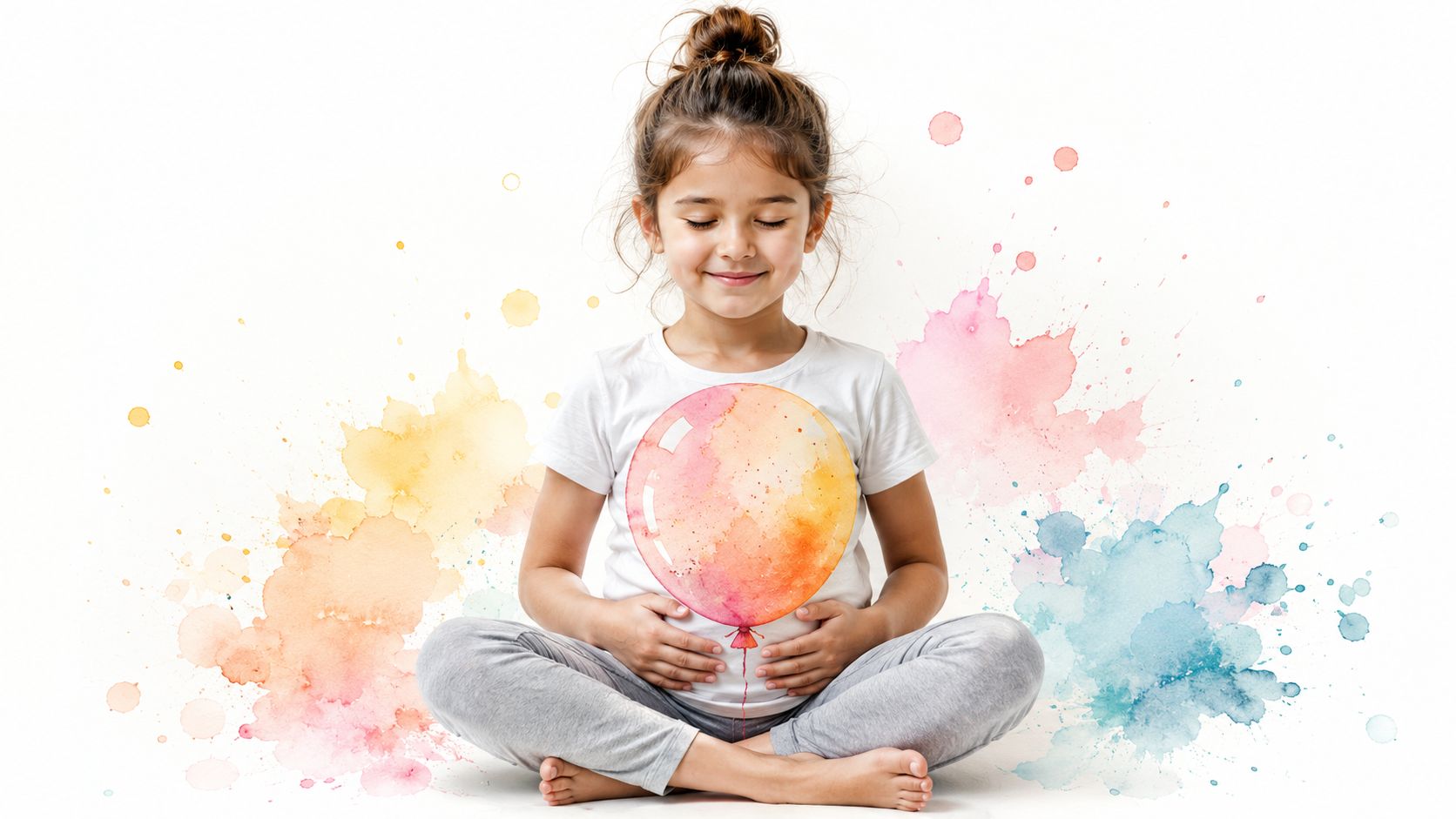
Have you ever noticed how a child's breath gets short and high when worry starts to rise? Deep belly breathing helps bring the breath lower, so the belly rises a little on the inhale, like a balloon filling, instead of the chest lifting toward the ears. That shift gives children a simple way to move out of panic breathing and into a steadier rhythm, which is why breathing stays central in calming routines and in breathing exercises for anxiety.
A child before a sports competition may use 4-count breathing, inhaling for 4 and exhaling for 4, to settle racing thoughts. A child with nighttime anxiety may use the same pattern before bed so the body begins to connect that rhythm with safety rather than fear. Some children do better with a longer exhale, such as 4-7-8 breathing, while others respond to a simple cue like “smell the flower, blow out the candle.”
The breath does not need to feel forced. It needs to feel clear and manageable.
Keep the breath playful and concrete
Young children usually do not need a lesson about the nervous system. They need one image they can remember when their body feels busy. A flower-and-candle cue, a stuffed animal resting on the belly, or a hand placed over the navel often works better than a long explanation about why breathing calms the body.
The same idea can be shaped by age:
- Toddler: One or two slow breaths with you, perhaps while a toy rests on their belly and rises and falls together with the breath.
- Young child: Three or four rounds of balloon breathing, counted out loud so the pattern feels steady and easy to follow.
- Teen: A quiet reset before class, sports, or sleep, with less coaching and more privacy so the practice does not feel watched.
A child usually learns this faster when the practice happens during a calm moment, not during a full upset. That is because the body learns by repetition, the same way it learns where the light switch is in a dark room.
If your child can feel the breath pattern during a calm moment, they are more likely to find it again when stress shows up.
A short video can help children who learn best by watching:
A few signs it may not be the right fit yet, the child gets more tense while trying to breathe slowly, starts to argue or giggle in a way that shows discomfort, or seems dizzy and off-balance. If that happens, pause the exercise, make it shorter, or switch to another grounding tool first. Some children need movement or touch before breath feels safe enough to use.
If your family uses Anxiety Checklist, breathing can fit naturally into SOS mode as the first calming step. Keep the prompt short, guide two or three slow rounds, and then check whether the child needs another grounding tool or a break. That works well at home, in the car, or before school, because the routine stays familiar even when the setting changes.
A few small habits help this stick:
- Practice in calm moments: The body learns the pattern more easily when nobody is already in distress.
- Use one cue word: “Balloon,” “flower,” or “slow out” is easier to remember than a long explanation.
- Show the rhythm: Put a hand on your own belly so the child can copy what the breath looks like.
- Keep it brief: A short, successful round teaches more than a long one that turns into frustration.
- Notice the response: If the child relaxes even a little, that is useful progress.
If your child says the exercise is boring, that does not mean it failed. It may mean the child needs a version that feels more playful, more visual, or less talk-heavy.
3. Progressive Muscle Relaxation
Progressive Muscle Relaxation helps children notice tension by tightening and releasing muscle groups on purpose. That contrast is powerful. When a child learns what “tight” feels like in the shoulders, jaw, hands, or legs, they can start catching stress earlier instead of only noticing it after a meltdown has already started.
A child with test anxiety might shrug their shoulders up hard for a few seconds, then let them melt down before the next question. A child with generalized anxiety might do a short PMR routine before bed, moving from feet to face and watching the body shift from braced to soft. That physical release can be a relief for kids who don't know how to explain what anxiety feels like, but can absolutely tell you when their body is “all knotted up.”
Make the body lesson feel safe
The trick is to keep it short enough that it feels doable. Many children don't need a full-body sequence every time. You can start with just the feet, hands, shoulders, and jaw, then build from there as they get used to the pattern. Some families like a silly script such as “tense like a superhero, then melt like ice cream,” because play lowers resistance.
A few signs PMR is a good fit:
- Your child holds tension in obvious places: clenched jaw, raised shoulders, curled hands.
- They like clear steps: some kids relax when there's a pattern to follow.
- They respond to routines: PMR before sleep or homework can become a predictable cue.
The clearest teaching point is simple. Tight muscles often keep sending “danger” signals to the brain, and relaxing them sends a different message. That's why this tool can feel so grounding.
If your child gets annoyed by body scanning, shorten the routine and make it concrete. A few rounds done regularly matter more than a perfect full-body script.
4. Grounding Through Movement
Some children cannot sit still when anxiety rises, and that is not defiance. Their bodies are trying to move stress out of the system, the same way a pressure valve releases built-up steam. Grounding through movement gives that energy somewhere safe to go, which is why walking, swinging, stomping, pressing feet into the floor, and other bilateral movements show up again and again in child calming resources, including play-based emotional regulation ideas.
A child with social anxiety might take a short walk before a birthday party and let the rhythm of their steps settle them. A child with separation anxiety might walk with a parent after drop-off, not to avoid the feeling, but to give their body a job while the big emotion passes through. That is often easier than asking a frightened child to sit still and explain what is happening inside.
Start with motion the child already trusts
Walking is often the easiest place to begin because it feels ordinary. Arm swinging can make it more regulating, and noticing trees, pavement, sounds, or textures can anchor the child's attention without turning the moment into a big event. The British Columbia child and teen grounding guidance also points toward broader sensory-and-body options, including pressure, rocking, wall pushes, and caregiver support, which gives you more ways to match the movement to the setting.
Useful question: Does this child need less talking and more motion right now?
That question matters in classrooms too. A quick lap in the hallway, a wall push, or a calm-down walk with an adult can help more than trying to explain the feeling in the middle of a spike. For toddlers, movement might be a few stomps and a short follow-the-leader game. For teens, a low-key walk after school may work better than direct questioning, especially when they want privacy and space.
Some children calm down fast with motion. Others get more revved up if the activity is too fast, too noisy, or too playful. If that happens, slow it down and make the pattern more predictable. Rhythmic and simple usually works better than busy. If you are already using the Anxiety Checklist's SOS mode, movement can fit there as the first body-based reset before you add any longer calming step. A colder sensory reset can help some older children too, and cold plunge anxiety benefits may be part of that conversation for families who are considering stronger body cues.
5. The Worry Box and Worry Time Technique
An anxious child often acts like every worry needs immediate attention. The Worry Box changes that pattern by teaching them that a thought can be acknowledged without taking over the whole day. They write the worry down, place it in a box, and agree to revisit it during a limited worry window later on.
A child with generalized anxiety might jot worries at breakfast, put them in the box, and save them for after school. A child with test anxiety might write down fears the night before an exam, then sleep better because the worries feel contained instead of floating around the room. That small ritual can be powerful because it turns an invisible thought into a visible object with edges.
Keep the boundary gentle, not rigid
Children usually do better when the box feels like a helper, not a punishment. Let them decorate it so it belongs to them. Set a consistent worry time, often 10 to 15 minutes, and keep the timing predictable. During the rest of the day, you can say, “That worry goes in the box until worry time.”
The best part is what often happens during that scheduled time. Some worries look smaller later. Some are already solved. Some don't feel urgent anymore, which teaches children that feelings change and thoughts don't always need immediate action. That approach fits well with ways to calm an overactive mind when a child's thinking keeps looping.
A few gentle guardrails help:
- Use paper, not speeches: kids need a place to put the thought.
- Keep the same time: routine makes the box feel reliable.
- Redirect outside worry time: return to play, reading, drawing, or walking.
- Praise containment: the skill is noticing and postponing, not never worrying.
If your child starts using the box to avoid everything, you may need to widen the conversation. The goal is containment, not suppression.
7. Mindfulness and Present-Moment Awareness Practice
What happens if your child can notice a feeling without getting swept away by it? That is the heart of mindfulness. It can be as simple as watching the breath, naming a few objects in the room, or noticing how the body feels before bed. The child learns that a thought is something they notice, not something that has to steer the whole moment.
A child with racing thoughts can rest in bed and scan the feet, legs, hands, and face without trying to fix anything. A child with social anxiety can notice nervous thoughts about peers at lunch and learn that the thoughts can come and go without turning into action. That shift, from “my anxiety is the truth” to “my anxiety is something I'm noticing,” often gives the child a little more room to breathe. If journaling helps your child slow down and name what is going on, the benefits of journaling for anxiety can fit well beside this practice.
For younger children, keep the exercise tiny and concrete. Two or three minutes is often enough, and it helps to use plain language like, “Let's watch your breath like it's a balloon slowly filling and emptying.” A teen may do better with a quiet body scan, a short guided audio, or a few minutes of sitting alone with no pressure to explain what they feel.
Keep it small, familiar, and safe
The practice works best when it is predictable. Same time, same spot, same simple cue. Many families use it before bed or after school, when the body is already carrying the day's stress and needs a clear landing place.
A few practical reminders help this stick:
- Model it yourself: children notice what adults do.
- Keep the tone light: curious works better than corrective.
- Use guided support if needed: kid-friendly meditations can help when a child is new to stillness.
- Add a tactile anchor if attention drifts: some children focus better when their hands hold something simple while they notice what is happening inside, and the benefits of fidget toys for kids can give you more ideas.
Mindfulness can also pair with a quick check-in from Anxiety Checklist's SOS mode when a child needs a fast reset before a harder part of the day. That makes the practice feel less like homework and more like a tool they can reach for in real life.
If a child seems more upset during mindfulness, shorten it or switch the format. Some children feel uneasy when they sit still with their thoughts, and that reaction can tell you the practice needs more support, more movement, or a different entry point.
7. Mindfulness and Present-Moment Awareness Practice
Mindfulness teaches children to notice what's happening without getting pulled under by it. That might sound abstract, but in practice it can be as simple as watching breath, noticing five objects in the room, or doing a body scan before bed. The child learns that a thought is a passing event, not a prophecy.
A child with racing thoughts can lie in bed and notice sensations in the feet, legs, hands, and face without trying to change them. A child with social anxiety can watch nervous thoughts about peers during lunch and learn that the thoughts can pass without becoming action. That shift, from “my anxiety is the truth” to “my anxiety is something I'm noticing,” is a big one.
Keep mindfulness short, plain, and repeatable
Very young children usually need a tiny dose. Two or three minutes is enough to start. A teen may prefer a quiet five-minute body scan or a guided audio they can use alone. The language matters too. “Watch your thoughts like clouds passing” often lands better than formal meditation terms.
The practice gets stronger when it's routine, not random. Same time, same place, same small cue. That's why some families use it before bed or right after school, when the body is most likely to carry the day's stress.
A few practical reminders:
- Model it yourself: kids copy what they see.
- Keep the tone light: curious, not corrective.
- Use guided support if needed: kid-friendly meditations can reduce friction.
Mindfulness can also help if your child likes a small fidget or tactile anchor. Some kids focus better when their hands have something simple to hold while they notice what's happening inside.
8. Creative Expression and Art-Based Grounding
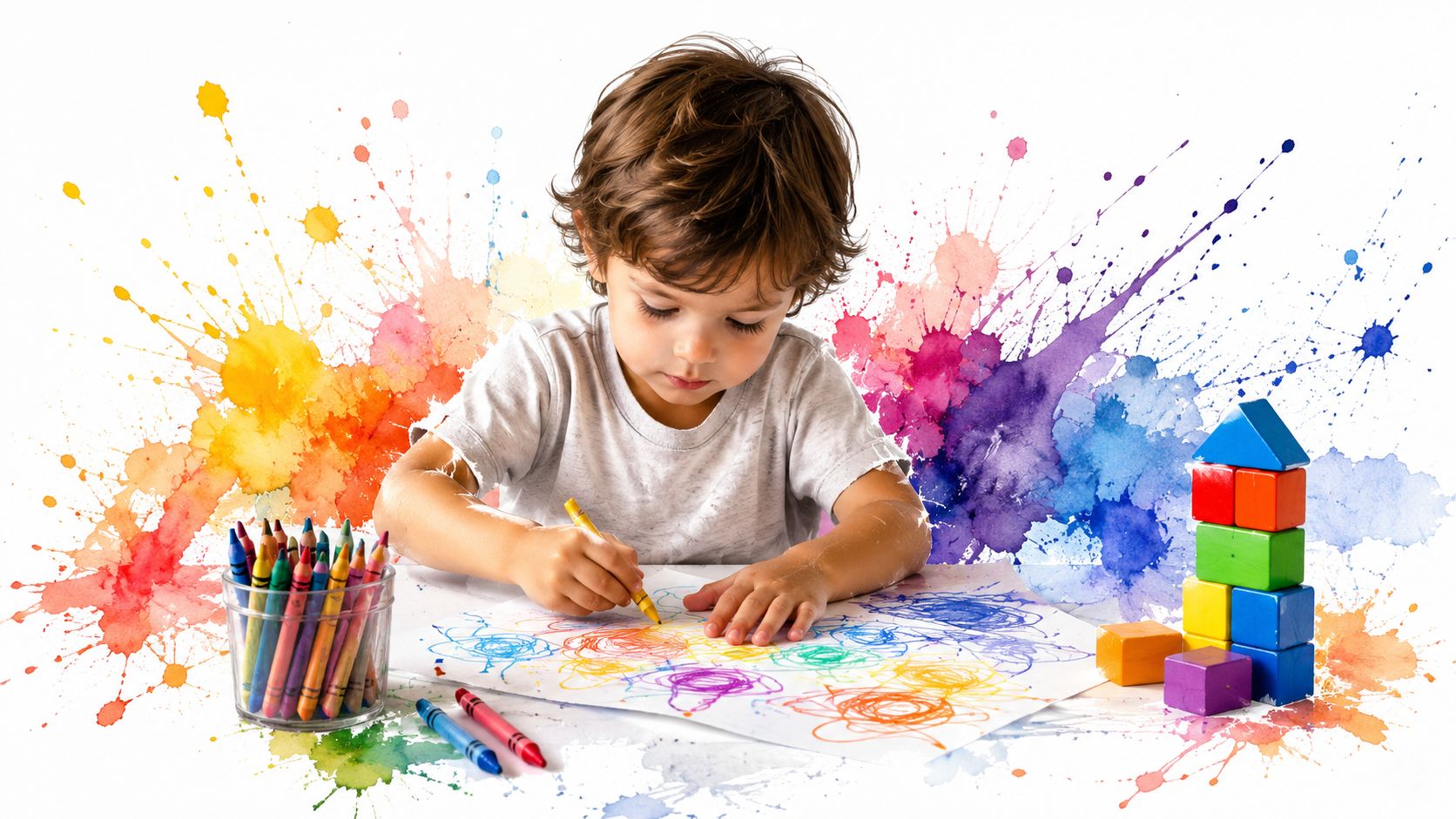
Drawing, coloring, building, and painting can ground a child because the hands get busy and the mind gets a concrete task. A page, a set of blocks, or a pile of crayons gives the brain something specific to organize, which can be calming for children who are visual or kinesthetic learners. If your child struggles to describe feelings out loud, art can become the bridge.
A child who feels self-conscious about their appearance might disappear into doodles and lose track of the anxious loop for a while. A child with separation anxiety may build a long block tower at home and feel proud of making something stable while their feelings are still wobbly inside. That's not a distraction in the shallow sense, it's a way of showing the brain that creation is possible even when emotions are hard.
Keep the focus on making, not explaining
The best art-based grounding often removes pressure. Don't ask for a perfect picture or a deep interpretation. Let the child color, scribble, stack, or build. If you want to add structure, keep a small kit nearby with crayons, paper, blocks, or markers so the activity is easy to start when emotions are high. You can also pair it with a familiar routine, such as music or quiet time, and for children who like reflection, benefits of journaling for anxiety can fit naturally alongside drawing.
Simple truth: The creation itself does the work. The child doesn't have to explain it to make it count.
This is a good option when a child resists direct calming language. The hands often get there faster than the words.
Comparison of 8 Grounding Techniques for Kids
| Technique | Implementation Complexity (🔄) | Resource Requirements (⚡) | Expected Outcomes (⭐ / 📊) | Ideal Use Cases (💡) | Key Advantages (⭐) |
|---|---|---|---|---|---|
| The 5-4-3-2-1 Sensory Technique | 🔄 Low, simple step sequence; ~3–5 min | ⚡ None, fully portable | ⭐⭐⭐ Immediate grounding; reduces rumination 📊 short-term focus | 💡 Quick anxiety spikes, tests, drop-offs, any environment | ⭐ Portable & evidence-based; 📊 concrete focus points |
| Deep Belly Breathing (Diaphragmatic Breathing) | 🔄 Low, easy to teach; needs practice | ⚡ None, no equipment | ⭐⭐⭐ Lowers physiological arousal quickly; cumulative resilience 📊 high | 💡 Acute panic, pre-performance, bedtime routines | ⭐ Scientifically proven; ⚡ fast-acting; builds self-regulation |
| Progressive Muscle Relaxation (PMR) | 🔄 Medium, guided progression; 10–20 min | ⚡ Minimal, quiet space or recording | ⭐⭐⭐ Strong reduction in muscle tension; aids sleep 📊 high for somatic symptoms | 💡 Bedtime routines, generalized tension, body-focused anxiety | ⭐ Teaches body awareness; 📊 produces measurable relaxation |
| Grounding Through Movement (Walking & Bilateral Stimulation) | 🔄 Low–Medium, simple movements; adaptation may be needed | ⚡ Low, space to move (indoor/outdoor) | ⭐⭐⭐ Immediate calming + long-term benefits with repetition 📊 moderate–high | 💡 Kinesthetic children, pre-event nerves, when sitting isn't possible | ⭐ Honors movement needs; ⚡ combines exercise + sensory regulation |
| The Worry Box & Worry Time Technique | 🔄 Medium, requires routine and discipline | ⚡ Low, box, paper, timer | ⭐⭐ Reduces rumination over time; improves meta-cognitive control 📊 moderate | 💡 Chronic worriers, rumination, planning intrusive thoughts | ⭐ Teaches cognitive separation; 💡 builds routine and control |
| Cold Water Immersion & Cold Compress Technique | 🔄 Low, simple to apply; may be startling | ⚡ Low, water/ice or compress | ⭐⭐⭐ Very fast transient panic reduction; vagal reset 📊 immediate | 💡 Acute panic attacks, high-arousal moments needing quick relief | ⭐ Extremely fast-acting; ⚡ physiological vagal activation |
| Mindfulness & Present-Moment Awareness Practice | 🔄 Medium, simple concepts but needs consistency | ⚡ None, optional guided audio/apps | ⭐⭐⭐ Builds long-term resilience; reduces rumination 📊 high over time | 💡 Ongoing anxiety management, attention training, school programs | ⭐ Builds sustained regulation; 📊 transferable mental skills |
| Creative Expression & Art-Based Grounding | 🔄 Low, accessible but needs supplies/time | ⚡ Low, paper, crayons, blocks (grounding kit) | ⭐⭐ Reduces anxiety via flow and distraction; boosts self-efficacy 📊 moderate | 💡 Visual/kinesthetic children, non‑verbal expression, emotional processing | ⭐ Engaging for creative kids; 📊 produces tangible evidence of coping |
Your Family's Roadmap to Lasting Calm
Healing from anxiety isn't one big breakthrough. It's a series of small, repeatable moments where your child learns, with your help, that their body can come back down. The more familiar these grounding techniques become during calm times, the easier they are to reach when the school morning goes sideways or bedtime turns into a spiral.
Pick one tool and practice it this week before anxiety shows up. Maybe it's the 5-4-3-2-1 exercise after dinner, a short belly-breathing routine before bed, or a quiet walk after school. You don't need to use every technique at once. You need one that your child can recognize, trust, and repeat.
Pay attention to the signs that a technique isn't working. If your child becomes more distressed, withdraws, or seems more afraid, stop and shift to something gentler, like movement, pressure, or a simpler sensory task. Children who are trauma-affected, sensory-sensitive, or avoidant often need the lowest-friction version first, not the fullest one.
If anxiety is interfering with sleep, school, friendships, or daily life for more than two weeks, or if trauma is part of the picture, bring in a qualified pediatric therapist. Children do better when home support and clinical support work together. For the moments in between, when your child's mind goes blank or panic spikes fast, Anxiety Checklist's free SOS mode can step in with guided grounding, breathing prompts, and affirmations so they're not trying to remember what to do while dysregulated. There is a way to heal from anxiety and live panic free, and you're already helping build it.
If you want a simple way to keep these grounding tools close, visit The Anxiety Checklist. It offers real-time support for panic and anxiety, including guided grounding, breathing prompts, and practical self-help tools that fit the techniques in this guide.