


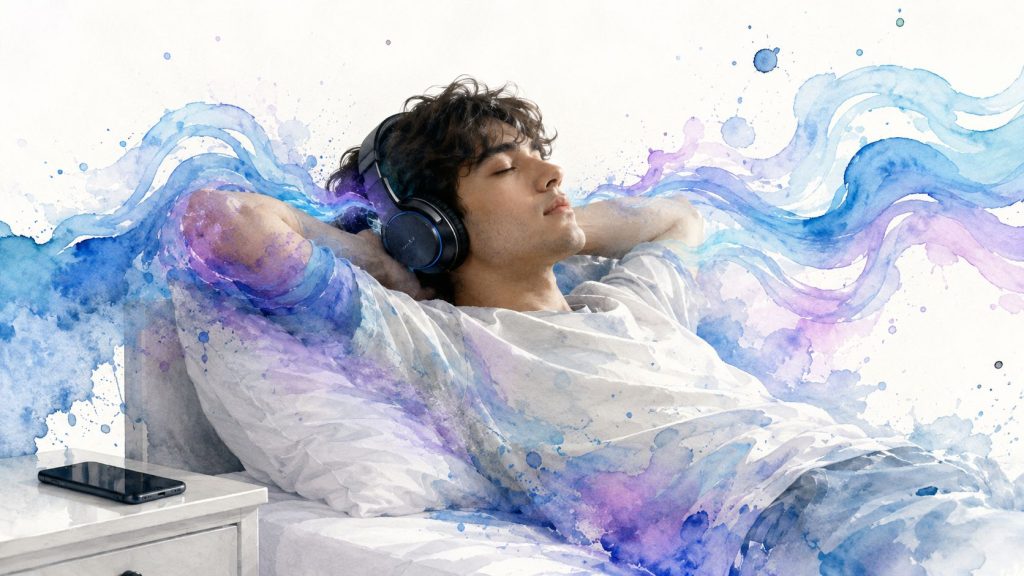
It's late, your body is tired, and your mind is acting like it missed the memo. Your heart feels a little too loud. Your thoughts keep circling. You try to sleep harder, and that only makes you more awake.
This is the part many people know intimately. The light is off, the room is quiet, but inside you there's a full conversation happening. You replay the day. You scan your body for danger. You wonder why something as basic as sleep feels so far away. If anxiety has been running the show at night, guided sleep audio can become more than background sound. It can become a steady way to teach your nervous system that it's safe to soften.
That matters because this struggle is widespread. The rising prevalence of sleep disorders, now affecting approximately 1.5 billion adults annually worldwide, is helping drive demand for non-pharmaceutical support such as guided sleep audio, according to sleep audio market reporting. You're not broken, and you're not alone. What's more, you're not stuck. Healing from anxiety is possible, and many people do reach a place where panic no longer dictates their nights.
Table of Contents
- The End of Anxious Nights Starts Here
- How Guided Audio Calms a Racing Mind
- Finding the Right Voice in the Quiet
- Creating Your Gentle Bedtime Ritual
- What to Do When It Does Not Work at First
- Integrating Audio into Your Long-Term Healing
The End of Anxious Nights Starts Here
When bedtime becomes a battleground
An anxious night usually doesn't begin at night. It often starts with a day spent pushing through stress, carrying tension in the jaw, chest, stomach, and shoulders, then expecting the body to switch off on command. It won't. A vigilant nervous system needs a transition, not an order.
Many people try to fix this by forcing sleep. They clamp down on movement, chase the “perfect” position, and monitor whether they're getting drowsy yet. That effort can backfire. The brain reads pressure as more evidence that something is wrong.
Practical rule: Don't make sleep the first goal. Make safety the first goal. Sleep often follows.
Guided sleep audio helps because it gives your mind something gentle to do instead of asking it to do nothing. That distinction is important. Anxious minds often don't respond well to a blank command like “just relax.” They respond better to structure, rhythm, and a clear focal point.
Why guided sleep audio can help
Used well, guided sleep audio becomes a cue for settling. It can redirect attention away from spiraling thought loops and toward breath, body sensations, imagery, or steady sound. For many people, that means less internal struggle and more willingness to let the night unfold without a fight.
I often encourage people to think of this as nervous system training, not a trick. The significant win isn't only falling asleep faster on a lucky night. The primary benefit is teaching your body that bedtime no longer equals alertness, dread, or panic. That's how healing begins to feel possible.
If you want to strengthen the basics around this practice, these strategies for better sleep and stress can support the audio work without making your routine more complicated. If anxiety has been affecting more than sleep, it also helps to keep trusted evidence-based anxiety resources nearby so you're not trying to figure everything out alone.
A peaceful night rarely arrives because you demanded it. It usually begins when your system starts to believe, little by little, that rest is allowed.
How Guided Audio Calms a Racing Mind
What changes inside the body
Guided sleep audio isn't magic. It works through familiar body processes. When the track uses slow pacing, breath awareness, mindfulness cues, or progressive relaxation, it can help shift you out of fight-or-flight and toward parasympathetic regulation, the state often described as rest and digest.
That shift matters at bedtime. A racing mind is usually paired with a racing body. The thoughts may look mental, but the experience is physical too. The chest tightens, muscles brace, breathing gets shallow, and the body behaves as if it needs to stay on watch.
Mindfulness-based audio approaches have been linked to reduced insomnia symptoms and improved sleep quality across multiple systematic reviews, and audio-visual relaxation training has significantly improved anxiety and sleep outcomes in research summarized through this PubMed record on relaxation training and related evidence. In plain terms, calming audio can help the mind slow down because it gives the body a path back to regulation.
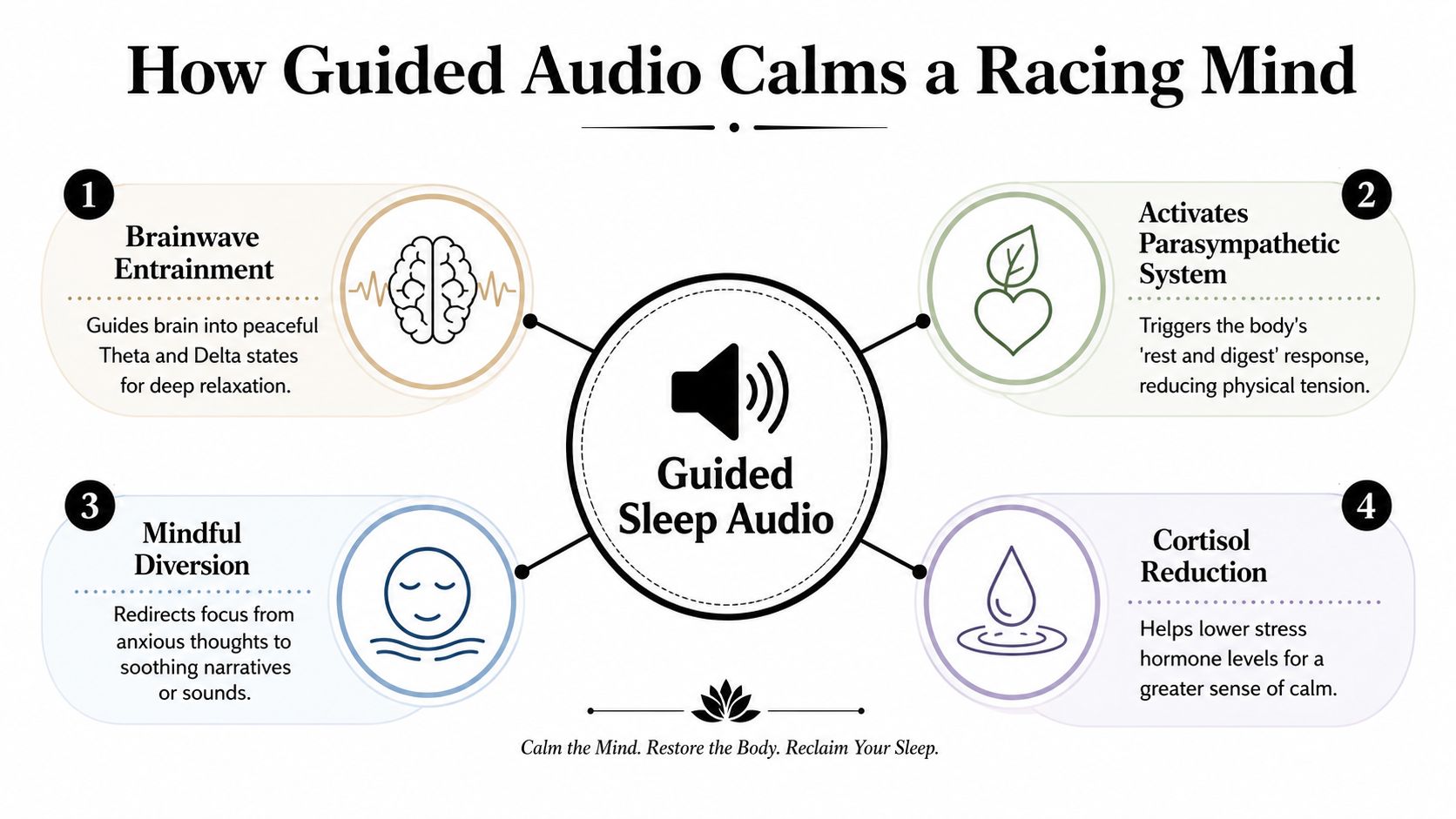
A useful way to understand this is through four mechanisms working together:
- Breath pacing: A steady voice or rhythm can slow your breathing without you forcing it.
- Attention anchoring: Instead of chasing every thought, you return to one simple cue.
- Muscle downshifting: Body scans and relaxation prompts reduce bracing and guarding.
- Threat reduction: Repetition tells the brain there's no emergency to solve right now.
How to listen in a way that helps
The best listening posture is receptive, not performative. Don't listen to evaluate whether it's “working” every minute. Listen as if you were resting beside a guide who already knows the route.
If you tend to overthink sensations, start with tracks that give frequent cues. If your mind rebels against too many words, choose simpler audio with longer pauses. People who understand their own stress patterns often do better, which is why learning more about understanding nervous system responses can make the practice feel less mysterious and more workable.
When your attention wanders, nothing has gone wrong. Returning is the skill.
Some nights you'll also need support for mental looping before bed. In that case, pairing sleep audio with other ways to calm an overactive mind can make the transition easier. The audio is not there to overpower your anxiety. It's there to give your nervous system enough repetition and predictability that it stops treating bedtime like a threat.
Finding the Right Voice in the Quiet
Why some voices soothe and others irritate
One of the biggest mistakes people make is assuming that if guided sleep audio didn't help, sleep audio isn't for them. Often the core issue is fit. The wrong narrator, the wrong pacing, or the wrong format can keep an anxious mind alert.
Research has pointed to an important trade-off here. For individuals with high anxiety, the cognitive load of processing a plot or voice in a narrated sleep story can maintain arousal rather than reduce it, which helps explain why music-based relaxation often shows more consistent efficacy for sleep quality in the academic discussion of narrated content and sleep. This is the narration paradox. The very thing that comforts one person can overstimulate another.
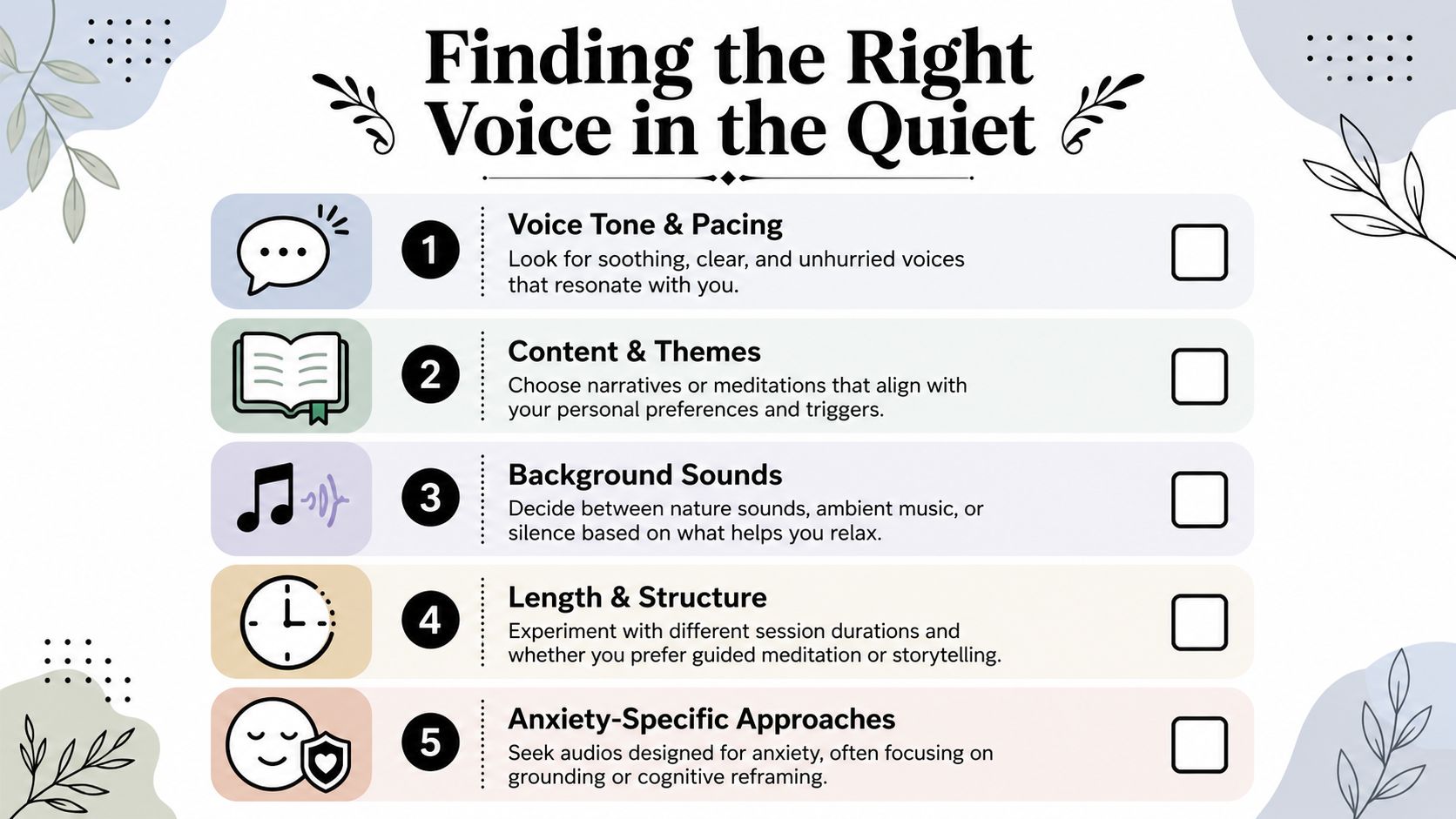
That doesn't mean narrated tracks are bad. It means anxious sleepers often need to choose with more precision. Voice tone matters. Pacing matters. Word density matters. A rich story with lots of imagery may be lovely for someone who likes to drift with language, but it can feel like homework to someone whose mind is already overloaded.
A simple matching guide for symptoms
Use your main nighttime symptom to choose the audio style. Don't start with what's popular. Start with what your nervous system is doing.
| Nighttime pattern | Audio type that often fits better | Why it may help |
|---|---|---|
| Racing thoughts | Body scan or sparse guided meditation | Gives the mind one place to land without adding plot |
| Physical tension | Progressive muscle relaxation | Releases clenched muscles in a structured sequence |
| Hypervigilance to sound | Soft continuous soundscape or low-stimulation music | Reduces startle and creates steadiness |
| Stress with mental fatigue | Simple breath-led track | Low effort, easy to follow |
| Irritation with voices | Non-verbal audio such as ambient music or gentle tones | Cuts down cognitive load |
If your body feels locked up, progressive muscle relaxation is often the strongest starting point. If your mind spins stories the moment the room gets quiet, a body scan can work better than a sleep story because it redirects attention into sensation instead of language. If every small noise in the house makes you brace, a soundscape may help create a more predictable auditory environment.
Later in your experiment, you can explore options like calming guided affirmations if you respond well to simple supportive statements. The key is not to combine too many elements at once. Start with one format and notice whether your body softens, your jaw unclenches, or your breathing deepens.
This short video can also help you reflect on the style of support you respond to at night.
A few practical tests make the choice easier:
- Test the first minute awake: If the voice irritates you immediately, don't force loyalty to it.
- Notice mental effort: If you have to “keep up” with the content, it's probably too demanding.
- Watch the body, not just the mind: A good track often shows up first as a slower exhale, heavier limbs, or less chest tension.
- Give each style a fair trial: Try the same type for several nights before switching, unless it clearly activates you.
Some people fall asleep to words. Some people fall asleep once the words stop. Both responses are normal.
The right audio often feels less impressive than people expect. It may be plain, repetitive, and almost boring. That's often a good sign. Sleep doesn't need entertainment. It needs enough safety and sameness for your body to stop scanning.
Creating Your Gentle Bedtime Ritual
Set up the room and device
A bedtime ritual works best when it removes decisions. If you're choosing a track, checking messages, adjusting brightness, and troubleshooting your headphones while tired and anxious, you're teaching your brain that bedtime is busy.
Keep the setup simple. Choose one device. Put it on airplane mode. Lower the light before you get into bed. If you can, queue the track before your wind-down begins so the last part of your evening doesn't involve scrolling.
A comfortable environment also matters more than people think. If your room feels chaotic or overstimulating, your body may stay guarded no matter how soothing the audio is. Practical changes such as dimmer light, comfortable bedding, and fewer distractions support the process. These simple steps for better rest can help you tighten up the basics without turning your bedroom into a project.
Follow a repeatable wind-down pattern
For anxiety-related sleep struggles, the most useful protocol is often a 10 to 30 minute guided session that uses a sequence such as body scan, progressive muscle relaxation, and diaphragmatic breath awareness with a 4-7-8 pattern, described in this review on audio approaches, relaxation methods, and sleep onset. The structure matters because repetition helps the nervous system predict what comes next.
Try this order at bedtime:
- Start before you're desperate: Begin your audio when you're tired but not already in a panic spiral.
- Settle the body first: Let your shoulders drop. Unclench your jaw. Soften your hands.
- Use the breath pattern gently: Inhale for 4 seconds, hold for 7 seconds, exhale for 8 seconds if that feels comfortable. If breath holding increases anxiety, shorten it and keep the exhale easy.
- Let the audio carry you: Follow the track instead of assessing yourself.
- Stay with one routine nightly: Your body learns through consistency more than intensity.
Clinical reminder: The job is to invite relaxation, not force unconsciousness.
This mindset protects you from one of the most common traps, performance anxiety about sleep. The moment you start checking whether the method is “making” you fall asleep, pressure rises. Pressure tells the brain to monitor. Monitoring keeps you awake.
The same review notes that meaningful nervous system change often requires a strict 6-week consistency protocol, and people who expect instant sleep results in the first few sessions are more likely to quit because of performance anxiety. That's not a sign the method failed. It's a sign your body needs repetition before trust deepens.
To support that consistency, it helps to pair your audio with a small cue that repeats nightly. A particular blanket. A lamp switched off in the same order. A familiar scent. One round of calming breathing exercises before pressing play. Tiny cues become signals of safety when used over and over.
What to Do When It Does Not Work at First
Common failure points that are not failure
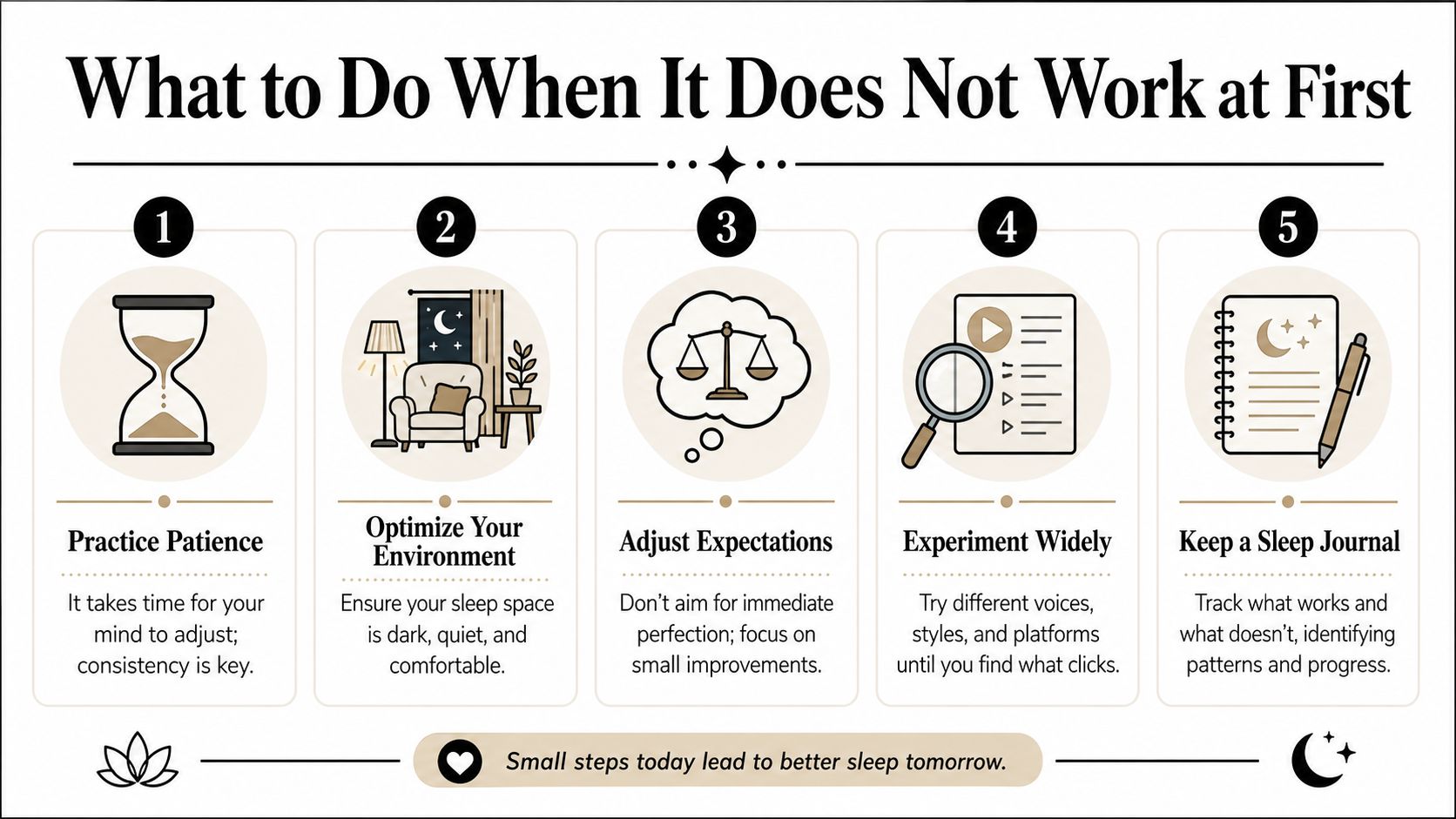
If guided sleep audio doesn't help right away, it's often assumed one of two things. Either they picked the wrong method, or they're too anxious for it to work. Usually neither is true.
Early friction is often useful information. Maybe the voice is too intimate and your system becomes more alert. Maybe the pacing is too slow and leaves room for rumination. Maybe the sounds are fine, but you're starting the track only after you're already flooded.
One important correction: common advice often points people toward white noise for nighttime restlessness, but there's a meaningful gap between that advice and symptom-specific guidance. Research discussion summarized in this science-backed guide to sleep audio choices suggests white noise has the lowest proportion of positive findings for sleep. So if white noise hasn't helped you, that doesn't mean you're doing it wrong.
Smart adjustments that change the outcome
Troubleshooting works best when you change one variable at a time.
- If your mind keeps wandering: Return to one cue only, such as the narrator's final phrase, the sensation of your chest rising, or the background tone. Wandering is normal.
- If the voice annoys you: Switch to non-verbal audio or a narrator with less emotional inflection.
- If the audio feels too busy: Choose simpler tracks with longer pauses and fewer descriptive details.
- If you wake in the night: Use a shorter, familiar track instead of hunting for something new in the dark.
- If thoughts turn dark or sticky: Don't argue with them in bed. Ground yourself, then seek broader support outside the moment.
A simple journal helps more than people expect. Write down the format, how your body responded, and what happened after ten minutes. Over a week or two, patterns usually appear. You may notice, for example, that your body relaxes with music but tightens with stories, or that earlier sessions work better than very late ones.
The first nights are not a final verdict. They're feedback from a nervous system learning a new pattern.
If your bedtime thoughts become especially intrusive or distressing, it may help to step beyond sleep tools and use a broader Anxiety Checklist resource for unwelcome thoughts. Sleep support is valuable, but it doesn't have to carry the whole burden by itself.
Integrating Audio into Your Long-Term Healing
Use sleep support as part of recovery
Guided sleep audio works best when you see it as one piece of healing, not the entire plan. Better nights can create the stability you need to work on daytime anxiety. When the body is less depleted, it's easier to question catastrophic thoughts, tolerate uncertainty, and practice exposure or CBT skills without feeling overwhelmed.
There's also reason to think consistency matters beyond bedtime itself. A standardized sleep playlist used over 4 weeks significantly improved sleep quality and partly eased anxiety in patients with insomnia and anxiety disorders, according to this academic report on a sleep playlist intervention. That fits what many clinicians observe. Repeated calming input at the same time each night can strengthen the expectation of safety.
Build a toolkit you can return to
The larger aim is not dependence on one track. It's building a toolkit that helps you regulate across different situations. Some nights you may need audio. Other nights a brief body scan, journaling, grounding, or a CBT thought check may be enough. Flexibility is a sign of progress, not inconsistency.
For people managing panic, I like to think in layers:
- Immediate relief: Grounding and breath support when the body is activated.
- Nighttime regulation: Guided sleep audio, muscle relaxation, or simple sound.
- Daytime retraining: CBT work, gradual exposure, and nervous system education.
- Maintenance: Repeating what works before you're in crisis.
This is how sleep support becomes part of a panic-free future. Not because one audio file fixes everything, but because steady regulation changes what your body expects.
You can heal from anxiety. You can teach your body that night is no longer a place of danger. And you can build a life where panic doesn't get the final word.
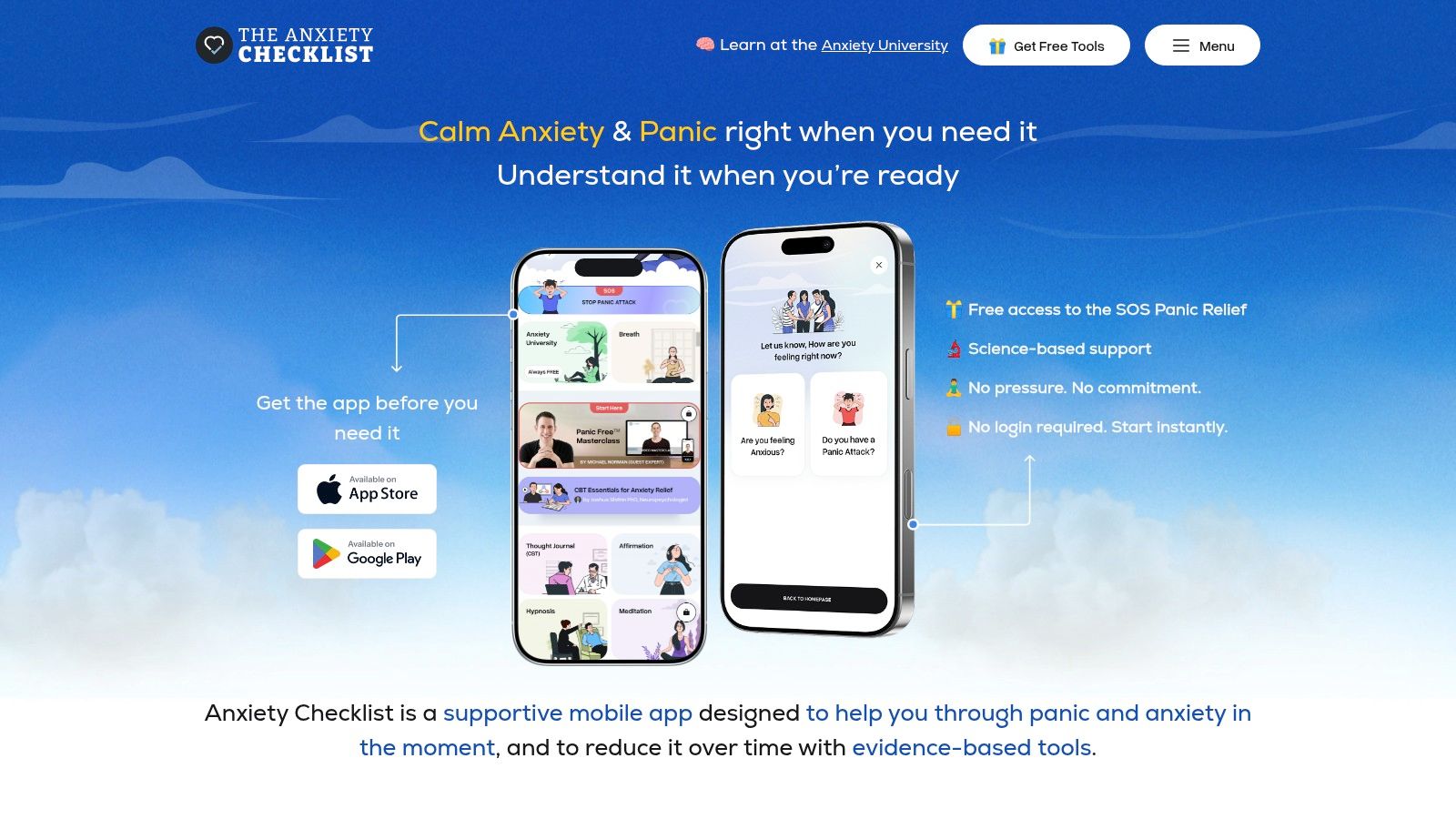
If you want one place to support both calmer nights and long-term recovery, The Anxiety Checklist is a practical next step. It offers guided sleep audios, grounding tools, affirmations, meditations, and CBT-based support in one app, so you can get help during a hard moment and keep building resilience over time.