

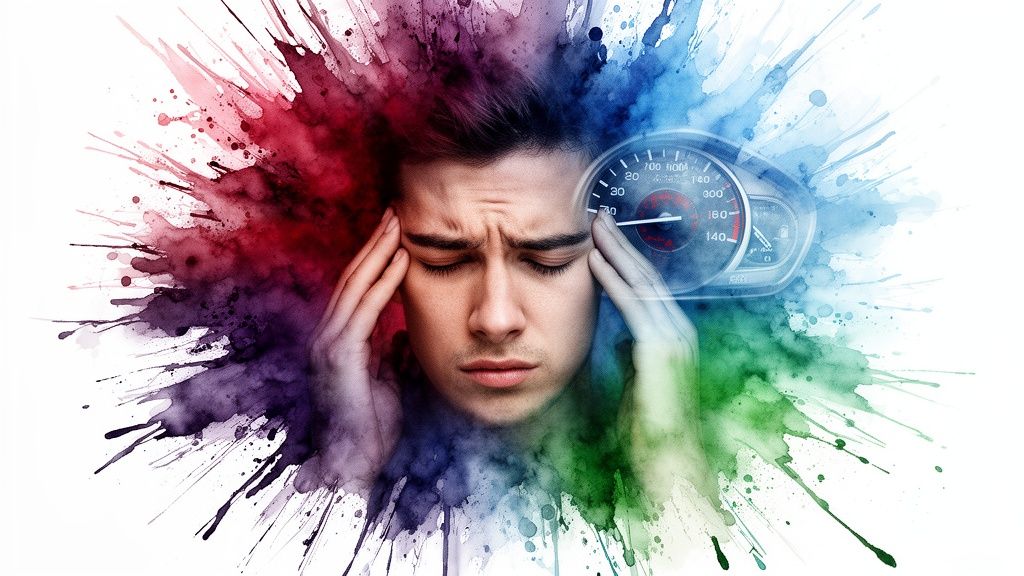
If you’ve ever been slammed with a throbbing headache after a panic attack, you’re not just imagining it. It’s a very real, very physical "echo" of the intense fight-or-flight response your body just went through. While it's confusing and deeply uncomfortable, understanding it is the first step toward healing and living a life with less fear.
Understanding Why Panic Attacks Cause Headaches
A panic attack feels like every alarm bell in your body is screaming at once. It’s an overwhelming storm that leaves both your mind and body reeling, and that throbbing headache is often part of the aftermath. But this isn't random—it's a direct, physiological consequence of what just happened.
Getting a handle on this process is a huge step toward not only managing the pain but also reclaiming your sense of control. More importantly, it helps you see the headache for what it is: a sign of a body working to recover, not a new threat to be feared. This knowledge is your first tool on the path to healing.
The Fight-or-Flight Flood
When panic hits, it triggers a massive surge of stress hormones, mostly adrenaline and cortisol. Think of it like suddenly flooring the gas pedal and redlining a car’s engine. This hormonal flood is designed for one thing: immediate survival. It primes your body to either fight a threat or run from it.
Every system is pushed to its absolute limit, creating a cascade of physical reactions that directly lead to that post-panic headache.
For a deeper dive into what’s happening under the hood, our guide on the fight-or-flight response demystifies the entire process. Turning the experience from something terrifying into an understandable biological event is a huge step toward feeling in control and realizing you can work with your body, not against it.
Muscle Tension and Vascular Changes
During that high-alert state, one of the first things that happens is intense muscle contraction. Without even realizing it, you clench everything. The muscles in your jaw, scalp, neck, and shoulders tighten like a vise. This sustained tension is a primary culprit behind the classic post-panic headache, which often feels like a tight band squeezing your head.
At the same time, your blood vessels are on a wild rollercoaster ride.
- Constriction: At first, blood vessels narrow (constrict) to shoot blood toward your major muscle groups, getting you ready for action. This can temporarily reduce oxygen flow to parts of your brain.
- Expansion: As the panic finally subsides and your body tries to return to normal, these same blood vessels rapidly dilate, or expand.
This whiplash of constriction to expansion can trigger a pounding, vascular-type headache, which can feel a lot like a migraine. It’s the combination of extreme muscle tension and these abrupt vascular shifts that creates the perfect storm for head pain.
To make this clearer, let's break down exactly how the panic attack translates into a headache.
How a Panic Attack Triggers a Headache
| Physiological Trigger | What Happens in Your Body | The Resulting Headache Symptom |
|---|---|---|
| Hormone Surge | Adrenaline & cortisol flood your system. | Increases overall sensitivity to pain. |
| Muscle Clenching | Jaw, neck, and scalp muscles tighten. | A tight, band-like tension headache. |
| Blood Vessel Constriction | Vessels narrow to divert blood flow. | Can reduce oxygen, causing initial dull pain. |
| Blood Vessel Dilation | Vessels expand rapidly during recovery. | A throbbing, pounding, or pulsating pain. |
| Hyperventilation | Rapid, shallow breathing alters CO2 levels. | Can cause dizziness and lightheadedness, adding to head pressure. |
Seeing it laid out like this shows that the headache isn't just "in your head"—it's a direct result of your body's powerful, built-in survival mechanisms firing on all cylinders.
Key Takeaway: A headache after a panic attack is a physical symptom, not a psychological one. It’s the direct result of hormonal surges, severe muscle clenching, and rapid changes in your blood vessels—all normal parts of the body's emergency response.
This physical aftermath, often called a 'panic attack hangover,' is your body's way of saying it's working hard to find its balance again. The pain is real and distressing, but it’s also temporary. By understanding where it comes from, you can start to see it not as another source of fear, but as a manageable symptom on your path to recovery and a panic-free life.
The Debilitating Cycle of Anxiety and Headaches
A headache after a panic attack feels like a cruel encore to an already exhausting show. Just when the storm of panic starts to clear, a painful throbbing begins in your head, leaving you feeling utterly defeated. This isn’t just bad luck; it’s a vicious cycle where anxiety and headaches feed each other.
This intense, two-way street can make you feel completely trapped. The panic attack brings on the headache, and the relentless pain—plus the fear of another headache—cranks up your background anxiety. This constant state of worry makes another panic attack more likely, and so the cycle continues.
Understanding this feedback loop is the first, most powerful step toward breaking it. When you can see the pattern, it loses its mystery and its hold over you. It’s no longer some terrifying, unknown force but a problem you can actually solve. This is validation that your struggle is real, and it’s where your journey toward a life with less panic and more peace truly begins.
The Panic Migraine Phenomenon
The connection between severe headaches and panic is so strong that researchers have even identified a specific type known as a "panic migraine." This isn't just your standard headache. It's an event where a full-blown panic attack erupts right at the peak of migraine pain.
This intense link was first highlighted in a 1999 study. Researchers documented cases where people experienced classic panic symptoms—like heart palpitations, shortness of breath, shaking, and a profound sense of fear—triggered directly by their migraines. This points to a deep connection between the systems that manage our automatic stress responses and our psychological state.
The "panic migraine" is far from mild and can seriously disrupt your quality of life, even on pain-free days. You can learn more about these pioneering findings and how they helped shape our understanding of this cycle. This research confirms what so many people feel: this is much more than just a headache. It's a tangled crisis of physical pain and mental distress.
The core message here is one of hope. This cycle, as vicious as it feels, has a mechanism. And anything with a mechanism can be understood, managed, and ultimately, broken. You have the power to step out of this loop.
How the Feedback Loop Works
Think of your anxiety as a small flame. A panic attack is like dousing it in gasoline, creating a huge flare-up. The physical fallout—the headache—is the smoke that hangs in the air long after, stinging your eyes and making you cough.
This visual shows the simple but powerful chain reaction that leads from panic to pain.
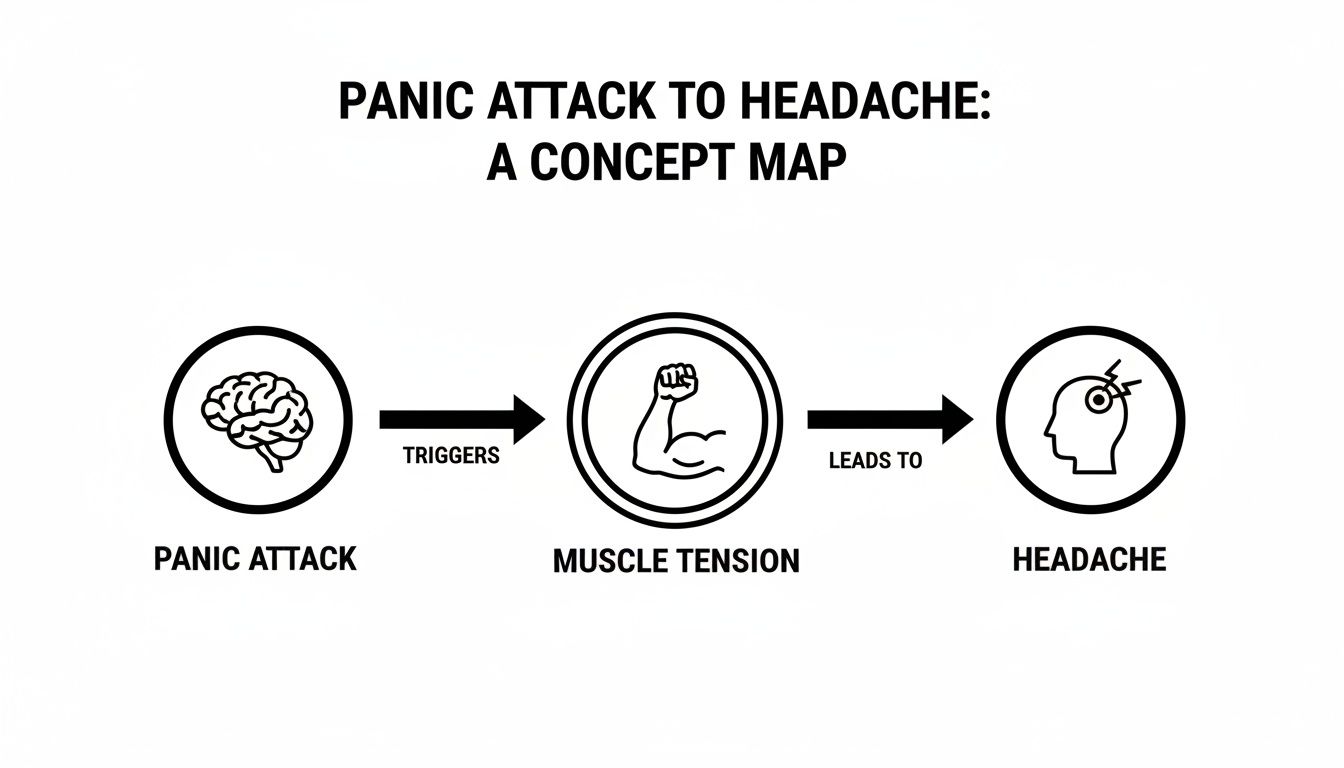
As you can see, the mental chaos of a panic attack leads to very real physical tension, which then blossoms into a headache. But it doesn't stop there.
This process then feeds back on itself, locking you into a self-sustaining loop of distress. Here’s how it usually plays out:
- Anticipatory Anxiety: The memory of that last awful headache makes you fearful. You start dreading the mere possibility of another one, which keeps your baseline anxiety level stuck on high.
- Hypervigilance: You become way too tuned in to normal body sensations. A tiny twinge in your neck or a brief moment of lightheadedness is no longer just a twinge—it feels like a siren warning of impending doom, signaling either another panic attack or a migraine.
- Lowered Threshold: Living in this constant state of high alert means your "panic trigger" becomes much more sensitive. It takes a lot less stress to push you over the edge into a full-blown panic attack.
- The Cycle Repeats: The new panic attack brings on yet another headache, which reinforces your belief that you’re trapped and cements the cycle even further.
Breaking free starts with seeing this loop for what it is: a conditioned response. It’s a pattern your brain and body have learned. And just like it was learned, it can be unlearned. Every step you take to manage your anxiety, relieve your headaches, and challenge your fearful thoughts is a step toward dismantling this cycle for good and building a life you love.
Actionable Steps for Immediate Headache Relief
When a headache hits right after the intense storm of a panic attack, you need more than just hope—you need a plan. That lingering, throbbing pain can feel like a cruel joke after what you’ve just been through. But there are things you can do, right now, to calm your system and start feeling like yourself again.
The key is to gently counteract the physical chaos that the fight-or-flight response just unleashed on your body. These steps are your first move toward taking back control and proving to yourself that relief is possible.
Soothe Inflamed Blood Vessels With Temperature
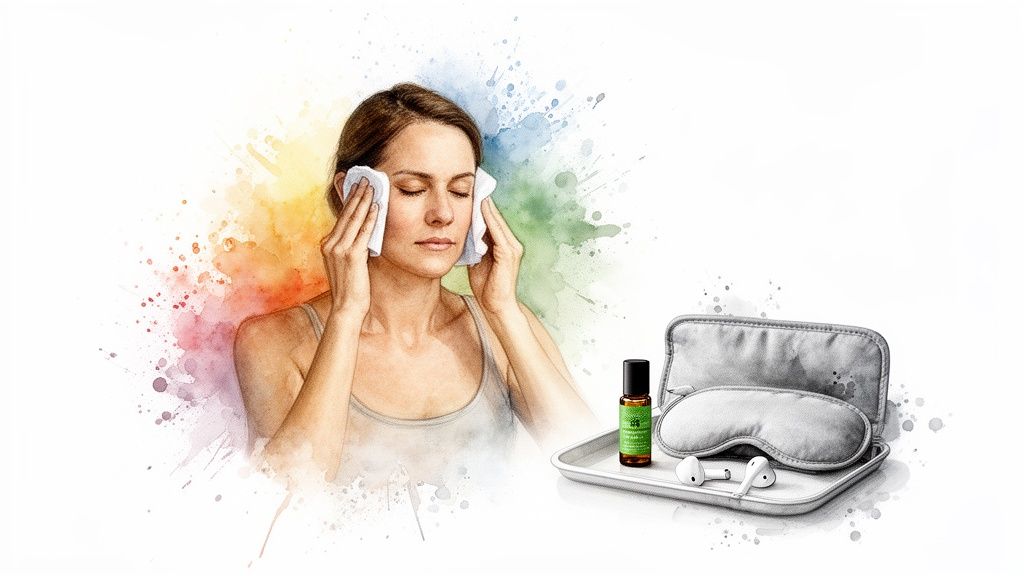
One of the fastest ways to tackle that pounding sensation is with a cold compress. The blood vessels in your head often swell up during a panic attack, and that expansion is a big contributor to the pain. Cold helps gently shrink them back to their normal size.
Just wrap a soft towel around a cold pack or a few ice cubes and rest it on your temples, forehead, or the back of your neck. The cool sensation isn’t just for direct relief; it also gives you a physical anchor, pulling your focus away from the pain and back into the present moment.
Release Lingering Muscle Tension
During a panic attack, your neck, shoulders, and jaw probably went into full-on armor mode, tensing up to protect you from a perceived threat. Releasing that tension is a critical step in easing the tight, band-like headache that often follows.
- Gentle Neck Stretches: Slowly and carefully tilt your head from side to side, as if trying to touch your ear to your shoulder. Hold for 15-20 seconds on each side, but don't push into any sharp pain.
- Shoulder Rolls: Gently roll your shoulders up toward your ears, then let them slide back and down. Repeat this five times. You can almost feel the tightness melting away.
- Jaw Release: Open your mouth as wide as feels comfortable, then slowly close it. This helps relax the powerful masseter muscle in your jaw, which often clenches down hard during intense stress.
These simple movements send a message to your nervous system: the danger has passed. It's safe to let go now. This is an active step you can take to guide your body back to peace.
Activate Your Body's Relaxation Response
Shallow, rapid breathing keeps your body on high alert. Deep, slow breathing does the exact opposite. This is where diaphragmatic breathing—or belly breathing—becomes your superpower for shifting your body out of stress mode.
Put one hand on your chest and the other on your belly. Breathe in slowly through your nose for a count of four, feeling your belly expand like a small balloon. Then, breathe out slowly through your mouth for a count of six. That longer exhale is key; it’s like a switch that activates your body’s built-in "rest-and-digest" system.
A headache after a panic attack is your body's cry for recovery. By intentionally slowing your breath and releasing physical tension, you are actively helping your system find its balance again. This is a powerful act of self-care and a skill you can master.
For more structured guidance, our guide on breathing exercises for anxiety can help you build a solid and reliable practice.
It's also worth exploring other techniques for general migraine and headache relief to add even more tools to your pain management toolkit.
Create a Post-Panic Comfort Kit
Being prepared can make all the difference, turning your response from one of fear into one of action. Think about putting together a small, pre-assembled bag with items specifically chosen to soothe you after an attack.
Consider including things like:
- A peppermint essential oil roller to apply to your temples.
- A weighted eye mask to block out light and provide gentle, calming pressure.
- A pair of earbuds with a pre-loaded playlist of calming music or a guided meditation.
- A small bottle of water and a simple snack to help stabilize your blood sugar.
Having this kit ready removes the mental load of trying to figure out what to do when you’re already feeling exhausted and overwhelmed. It's a tangible reminder that you have a plan, you know how to help yourself, and you have the power to bring yourself back to a place of comfort and calm.
Building a Lifestyle to Prevent Panic and Headaches
To truly break the cycle of panic and headaches, you have to shift your focus. It’s less about just reacting to the pain and more about proactively building a life where anxiety doesn’t have so much power over you.
This isn’t about following a rigid set of rules. Think of it as making small, gentle choices that support your nervous system. These lifestyle tweaks become powerful acts of self-care, creating a foundation for a calmer, more resilient you.
The path to a life with less panic is a hopeful one. When you focus on sustainable, long-term prevention, you start to take back control. Instead of just dealing with the aftermath of a headache after a panic attack, you’re getting to the root of the problem, making these episodes less frequent and much less intense. This is how you heal.
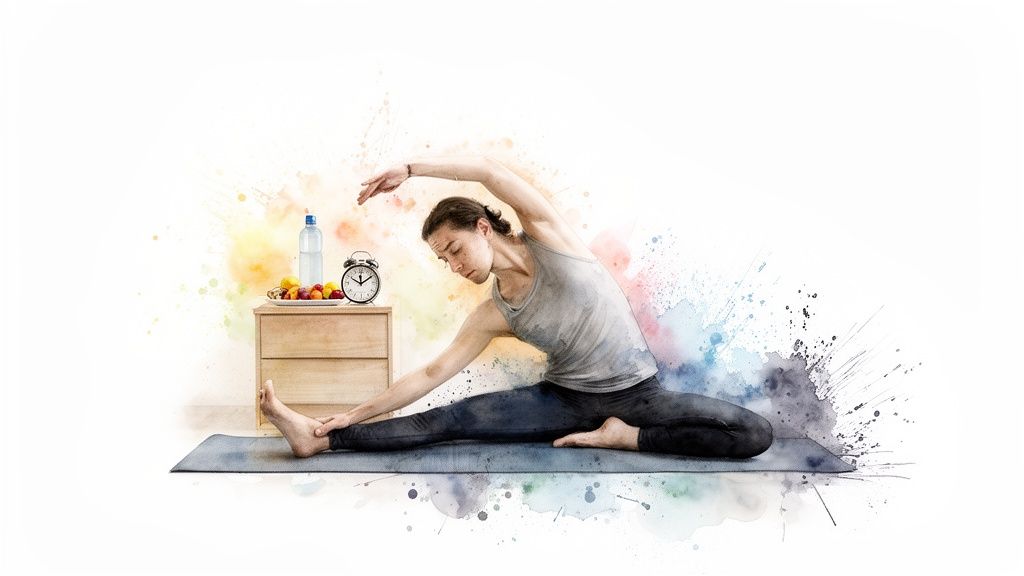
Stabilize Your System with Consistent Sleep
Sleep isn't a luxury—it’s a biological requirement for a stable mind. When you're running on empty, your body ramps up production of the stress hormone cortisol, leaving you far more vulnerable to anxiety and panic. An erratic sleep schedule is like trying to run your body’s operating system on a flickering power source. Sooner or later, it’s going to crash.
Try to stick to a consistent bedtime and wake-up time, even on the weekends. It sounds simple, but this routine is one of the most effective ways to regulate your body's internal clock and stabilize your hormones. A predictable sleep cycle creates a powerful buffer against daily stress and is a foundational step toward a calmer life.
Integrate Gentle Movement to Manage Stress
You don’t need to slam your body with high-impact workouts to manage anxiety. In fact, for a sensitive nervous system, gentle and mindful movement is often much more effective. Things like walking, restorative yoga, or tai chi help your body process stress hormones and release physical tension before it can escalate into a headache.
Think of it as turning down the volume on your body's stress response. Even a brisk 20-minute walk outside can work wonders, clearing your head and lowering cortisol. The goal here isn't exhaustion; it's about connecting with your body in a soothing, supportive way. Beyond the immediate fix, building long-term stability means learning actionable ways to regulate your nervous system.
Identify and Manage Your Dietary Triggers
What you eat and drink can have a direct line to your anxiety levels and headache frequency. When your system is in a state of recovery, it can become extra sensitive to things that either rev up your nervous system or trigger changes in your blood vessels.
A few common culprits to watch out for include:
- Caffeine: This powerful stimulant can easily mimic the jittery, on-edge feelings of anxiety, making you more susceptible to panic.
- Processed Foods & Sugar: The rapid spikes and crashes in blood sugar can send you on a roller coaster of mood swings and physical stress.
- Alcohol: It might feel like it calms you down at first, but alcohol is notorious for disrupting sleep and causing a rebound of anxiety the next day.
Figuring out how to make these adjustments can feel incredibly empowering. For a more structured plan, you might find our guide on lifestyle and diet changes for anxiety management helpful.
The link between anxiety disorders and headaches is profound. Research has shown that individuals with anxiety are significantly more likely to experience severe headaches, highlighting the need for a holistic approach to wellness that addresses both conditions.
The connection is startlingly clear in clinical settings. A landmark 2019 study looked at patients with diagnosed anxiety disorders and found that a staggering 67% also suffered from migraines. This is a massive jump from the 11-13% prevalence in the general population, showing that nearly two-thirds of people with anxiety were also battling these severe headaches. You can read the full research about these findings on anxiety and migraines to see just how deeply these two conditions are connected.
Building this kind of preventative lifestyle is your path to living with less panic. Every healthy meal, every good night's sleep, and every gentle walk is a deliberate step away from the cycle of fear and pain. It's a hopeful and achievable way to reclaim your peace and live panic-free.
Rewiring Your Response to Anxious Thoughts
Panic attacks often feel like they come out of nowhere, but they’re usually ignited by a storm of catastrophic thoughts. A single, unsettling thought can spiral, leaving you exhausted and often with a throbbing headache after a panic attack. But here’s the good news: just as you can learn what fuels this fire, you can also learn how to put it out.
The real path to feeling better isn't about just hoping the panic goes away. It's about building a set of mental skills that allow you to stop that spiral before it ever truly begins. This is about changing your automatic, fearful reaction and proving to yourself, through practice, that you have more control than you think. By changing your thoughts, you can absolutely change how your body feels—including those painful post-panic headaches. This is where real, lasting healing happens.

Catch, Check, and Change Your Thoughts
One of the most practical tools for this comes from a type of therapy called Cognitive Behavioral Therapy (CBT). It sounds complex, but it boils down to a simple, three-step process you can use anytime: Catch, Check, and Change.
Let’s walk through how it works right when that headache starts pounding after a panic episode.
- Catch the Thought: The first step is to simply notice the automatic thought that’s making things worse. It usually hits you in a split second. For instance: "This headache is a sign of something terrible."
- Check the Evidence: Now, take a step back and play detective. Question that thought like you’re examining a piece of evidence. Is it 100% true? What proof do you have for and against it? You might reason, "Actually, this feels just like the tension headaches I always get after a panic attack. My neck is stiff, and that always gives me a headache."
- Change the Thought: Finally, replace the initial thought with one that’s more balanced and realistic. This isn’t about pretending everything is perfect; it's about being accurate. A more helpful thought would be: "This is just an uncomfortable but harmless side effect of the panic. I know what it is, and the pain will ease up as my body calms down."
This exercise isn’t magic—it’s a skill. The more you practice it, the more you weaken the automatic link between panic, fear, and physical pain. This is how you actively rewire your brain for peace. If you're interested in digging deeper, our guide on understanding CBT for anxiety offers more strategies.
Grounding Yourself in the Present Moment
When panic starts creeping in, your mind immediately time-travels to future disasters. Grounding techniques are like an anchor, pulling you out of that chaotic what-if spiral and back to the safety of right here, right now. The 5-4-3-2-1 method is one of the simplest and most effective ways to do this.
No matter where you are, just pause and gently notice:
- 5 things you can see: The scuff on your shoe, a light switch on the wall, the texture of the table.
- 4 things you can feel: The fabric of your jeans, the cool air from a vent, your feet planted on the floor.
- 3 things you can hear: The low hum of a refrigerator, a distant siren, the sound of your own breathing.
- 2 things you can smell: The faint scent of coffee in the air or the soap on your hands.
- 1 thing you can taste: Take a sip of water or just notice the current taste in your mouth.
Grounding isn't a distraction. It's about re-engaging your senses to send a powerful message to your brain: You are safe in this present moment. It cuts the panic signal off before it can trigger the physical tidal wave that often ends in a headache.
The connection between our minds and bodies is undeniable. Research shows just how closely anxiety and chronic headaches are linked. One study found that a staggering 62.8% of people with primary headache disorders also had significant anxiety. This pattern holds true for both tension headaches and migraines, confirming that the physical pain you're feeling is a very real, and very common, part of the anxiety experience. You can discover more insights about these headache and anxiety findings to see just how prevalent this connection is.
By using these mental tools consistently, you start proving to yourself that you are not at the mercy of your thoughts. You can step in, change your response, and create a new normal where feeling calm and in control is the rule, not the exception. You can absolutely heal and live a life free from panic.
When You Should Talk to a Doctor
Learning to manage panic and build a calmer life is something you have incredible power over. But you don’t have to do it all alone. Knowing when to call in professional support isn't a sign of weakness—it's one of the smartest, strongest moves you can make on your journey to healing.
A headache after a panic attack is usually just your body’s way of saying it’s been through a stressful event. Think of it as a temporary side effect of all that tension. Still, there are times when a headache isn't just a headache, and getting a doctor's opinion is the best way to get peace of mind and confirm you're on the right path.
Key Red Flags to Discuss with a Doctor
Think of these signs as your body sending up a flare. They don't automatically mean something is seriously wrong, but they do mean it's time for a professional to help you read the signals so you can focus on healing without worry.
It's a good idea to seek medical advice if your headache is:
- Sudden and Severe: This isn't your typical tension headache. It's often described as a "thunderclap" or "the worst headache of your life."
- Accompanied by Other Symptoms: Pay attention if the headache comes with a fever, stiff neck, confusion, double vision, or seizures.
- Paired with Neurological Changes: If you notice any new weakness, numbness, or trouble speaking or walking, it's time to get it checked out.
- Worsening or Changing: Your post-panic headaches have a familiar pattern. If that pattern suddenly changes in location, intensity, or how it feels, a doctor should know.
These are simply signs to investigate, not to fear. Getting a clear diagnosis rules out other issues and gives you a solid, reassuring foundation to build your recovery on.
Partnering for a Comprehensive Plan
Working with a professional does two amazing things: it gets you an accurate diagnosis to rule out any other physical causes, and it gives you a personalized roadmap to feeling better. This teamwork confirms you’re on the right track and not on this journey alone.
A doctor can make sure there are no underlying physical reasons for your headaches. At the same time, a therapist can give you tools and strategies designed specifically for you. Learning how to connect with a psychiatrist who specializes in anxiety can be a game-changer, offering a combination of therapeutic support and, if needed, medication management.
Seeking help is an act of empowerment. It’s the brave choice to combine your own hard work with expert guidance, fast-tracking your path to a life where you are in control—not the anxiety.
This kind of partnership helps you move from just coping with symptoms to truly healing the root causes. It drives home the most important message: there is a clear, hopeful, and achievable path to living a life free from panic and its painful aftermath.
Frequently Asked Questions About Panic and Headaches
Once the storm of a panic attack passes, you're often left with questions and a pounding head. That’s completely normal. This section is here to give you straight answers and reinforce a truth we stand by: you can understand this connection, manage it, and get your life back. Knowing what's happening in your body is a huge step toward feeling in control again.
How Long Can a Headache After a Panic Attack Last?
It’s not unusual for a post-panic tension headache to stick around for a few hours, or even a day or two. Think about it: your body just went through an incredible amount of stress. The muscle clenching in your jaw, neck, and shoulders, plus the rush of stress hormones, takes time to wear off.
That ache is the physical echo of the panic. However, if a headache feels brutal, lasts for days without a break, or is just different from your usual ones, it's always smart to check in with a doctor. Getting it checked out can rule out other problems and give you some much-needed peace of mind so you can focus on recovery.
Can Certain Foods Make Post-Panic Headaches Worse?
Yes, absolutely. When your system is already on high alert from a panic attack, it becomes much more sensitive to common headache triggers. Things you might normally handle just fine can suddenly become a problem.
Be mindful of these usual suspects, especially in the hours after an attack:
- Caffeine: While a comfort for some, it can dial up that jittery, tense feeling.
- Alcohol: Red wine, in particular, is a well-known player in triggering headaches because of its effects on blood vessels.
- Aged Cheeses and Processed Meats: These are often high in tyramine and nitrates, which are classic headache culprits for many people.
Try keeping a simple food and symptom journal. It’s a surprisingly powerful way to pinpoint your personal triggers and gives you one more way to take control of your well-being.
Hopeful Takeaway: Recovery is all about learning your body’s language. Every time you figure something out, like a food trigger, it's a small victory. Each win builds your confidence and moves you closer to a life where you're in the driver's seat, not the anxiety.
How Can I Explain This to Someone Who Doesn't Understand?
Trying to explain the physical fallout of panic to someone who hasn't been there can feel impossible. They just don't get the intensity. Using a strong analogy can help build that bridge.
Try putting it this way:
"Imagine your body bracing for a car crash for ten straight minutes—every single muscle clenched as tight as it can go. The headache after a panic attack is the physical echo of that alarm. It’s not just 'in my head'; it's a real and painful result of my body going through a massive stress event."
Calling it a "physiological echo" helps shift the conversation from "you're just stressed" to "your body had a powerful, physical reaction." This small change in wording can make all the difference in getting the empathy and support you deserve on your healing journey.
Here at The Anxiety Checklist, we believe that understanding is the key to overcoming. Our Fearless Living system is designed to give you a clear, step-by-step path to dismantling the panic cycle for good. If you're ready to build a life with more calm and less fear, and truly heal, we invite you to explore The Anxiety Checklist.