

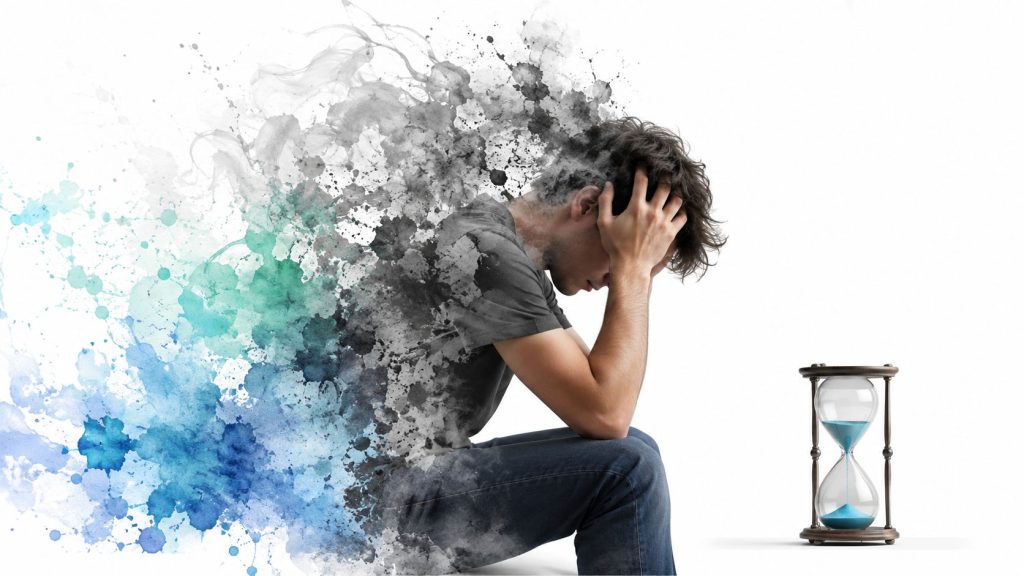
The acute panic attack itself usually peaks within about 10 minutes and most attacks last roughly 20 to 30 minutes. The panic attack hangover can then last hours, stretch into the next day, and sometimes run longer depending on what your body has been dealing with.
You may be reading this while the terror has passed but your body still feels wrong. Your heart might be calmer, yet your head feels thick, your muscles are sore, and every sound or thought still hits a little too hard. That after-state is real, and it has a name.
Table of Contents
- What a Panic Attack Hangover Actually Feels Like
- Why Your Body Feels Wrecked After the Panic Stops
- The Typical Timeline From Attack to Recovery
- What Makes One Hangover Last Hours and Another Last Days
- Immediate Relief Techniques That Actually Help
- Long-Term Habits That Shorten Future Hangovers
- When the Hangover Is a Signal to Reach Out
What a Panic Attack Hangover Actually Feels Like
You got through the worst part, but you don't feel like yourself yet. The racing heart has slowed, and the immediate fear has eased, yet your body still feels bruised by something you can't quite see. That's the part many people don't expect.
A panic attack hangover is the drained, foggy, emotionally raw period that follows the acute panic episode. The attack itself usually peaks in about 10 minutes and most attacks resolve in roughly 20 to 30 minutes, while the hangover phase can last hours to a full day, sometimes into the next day or longer when recovery is rougher, according to clinical and mental-health sources on panic aftereffects (recovery overview).
What people usually notice next
Some people feel wrung out, like they've been awake all night. Others feel emotionally thin-skinned, shaky, or weirdly detached from what just happened. If you've ever wanted a plain-language rundown of panic attack symptoms explained, that's useful too, because the hangover often starts right after those symptoms fade.
Practical rule: if the danger feeling has passed but your body still feels exhausted, foggy, or tender, you're probably in recovery, not in a new emergency.
A helpful resource that explains this same recovery window in a calm, practical way is the reVIBE Mental Health guide for panic recovery. What matters most is this, what you're feeling has a pattern, not a mystery. That makes it much less likely that you're “broken” and much more likely that your nervous system is unwinding after a surge.
Why Your Body Feels Wrecked After the Panic Stops
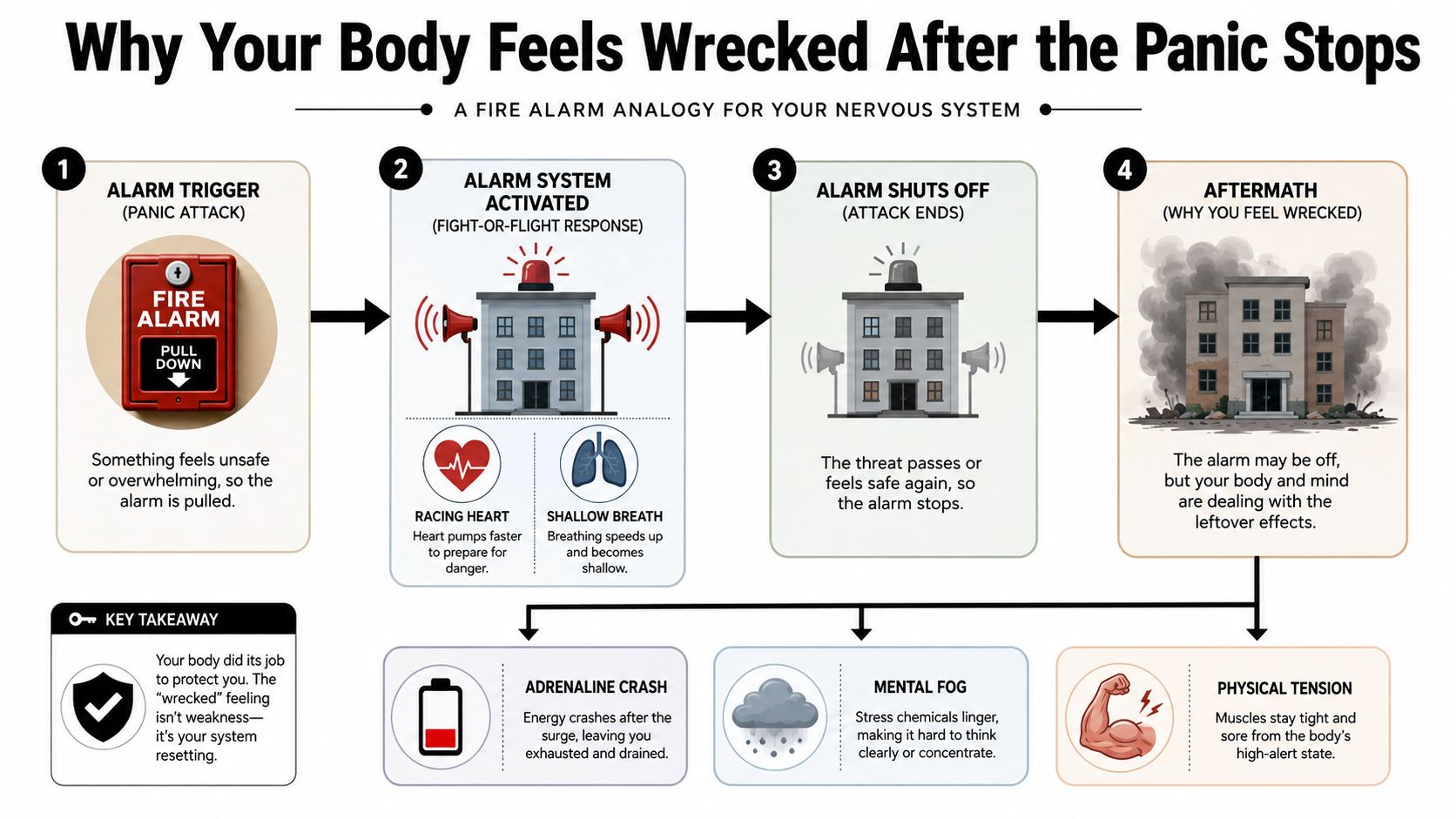
Think of a panic attack like a fire alarm going off in a building. The alarm is loud because the system thinks there's danger, then the alarm stops, but the building still needs checking, resetting, and clearing out the smoke.
During the attack, your body shifts into fight-or-flight, which is the stress response that pushes adrenaline and cortisol through your system. Afterward, those stress signals fall back down, and that drop can leave you feeling flat, sore, shaky, or mentally slow. That's why the hangover can feel so odd, your body was fully mobilized and now it has to settle.
The crash is the recovery
A clinical resource notes that the acute panic phase often resolves within 20 to 30 minutes, while lingering symptoms can remain 24 to 48 hours and sometimes up to 3 days when the nervous system stays activated (technical recovery guide). Another clinical explanation describes the aftereffects as a period where exhaustion, physical discomfort, and achiness can last for hours or even days because the stress response has just dropped back down (physiology overview).
Why that feels so physical
Your muscles tighten during panic, so soreness afterward isn't strange. Your brain also stays on alert for a while, which is why brain fog and emotional sensitivity can show up after the fear fades. The crash doesn't mean damage, it means your system is moving from emergency mode back toward baseline.
When the alarm finally stops, the body doesn't instantly act normal. It needs time to catch up.
The anxiety resource The Anxiety Checklist's fight or flight guide can help you make sense of that body state in plain language. Once you understand the mechanism, the aftermath stops feeling random and starts looking like a temporary recovery period.
The Typical Timeline From Attack to Recovery
The clearest way to answer how long does panic attack hangover last is to follow the clock. Recovery from full panic doesn't happen in one step; instead, people pass through a few recognizable stages.
What the next hours often look like
The first half hour usually belongs to the body coming down from the peak. After that, the next several hours can feel washed out, tender, or mentally slow. By the next morning, many people feel meaningfully better, even if they still don't feel fully restored.
| Time After Peak | Common Symptoms | What Is Happening |
|---|---|---|
| 0 to 30 minutes | Shaking, fatigue, lingering fear, tight chest, breath still uneven | The acute attack is ending and the stress response is settling |
| Several hours | Brain fog, soreness, irritability, emotional sensitivity, exhaustion | Stress hormones are dropping and the body is recovering |
| 24 hours | Feeling “off,” low energy, subtle anxiety, poor concentration | The nervous system is still recalibrating |
| 48 to 72 hours | Mostly improved, but sleepiness or rawness may linger if the attack was intense | Recovery is still happening if sleep, stress, or repeated attacks have slowed the reset |
This timeline fits the broader pattern seen in clinical guidance, where aftereffects can range from a couple of hours to a week, but are often same-day to next-day for many people (clinical recovery range). That same range is also echoed in educational material that describes lingering effects as lasting hours or days (panic hangover overview).
What should reassure you
If you feel worse for a few hours after the attack, that can still be within the expected window. If you're noticeably better by the next day, that's also a good sign. The hangover is often the body's recovery phase, not a new crisis.
What Makes One Hangover Last Hours and Another Last Days
The answer depends on the nervous system you brought into the panic attack. A person who was sleeping well, eating regularly, and dealing with one isolated episode may bounce back faster than someone who was already exhausted, stressed, or running on empty before the attack began.
The same panic event can leave two people with very different aftereffects. One may feel shaken for a few hours, while another feels raw, foggy, and overly sensitive well into the next day.
The main factors that stretch recovery
Attack intensity is one of the biggest reasons the hangover lasts longer. A stronger surge usually pushes the body farther from baseline, so the recovery phase has more ground to cover. Baseline chronic stress matters too, because a body that is already strained has fewer reserves to settle itself after panic.
Sleep can change the whole picture. Poor sleep before the attack often makes the next day feel heavier, and poor sleep after it can keep the nervous system from fully calming down. Food and hydration also matter, since many people stop eating or drinking normally during and after panic, then feel even more depleted later.
Underlying anxiety or panic disorder can stretch recovery when attacks happen repeatedly or when fear of another attack keeps the body on alert. The mind can also keep the alarm system switched on through worry and replaying the episode. If you want a clearer sense of that mental loop, why overthinking causes anxiety is a useful lens.
A panic attack hangover usually lasts longer when the body is recovering from more than the attack itself.
A quick self-check
A few plain questions can help you tell whether a longer hangover fits your situation. Did you sleep poorly before this? Have you been under stress for days or weeks? Was this your first attack, or one of several close together? If more than one answer is yes, a longer recovery makes sense.
That is why a single duration answer rarely helps much on its own. The more useful question is what your body was already carrying before panic hit, because that often explains why one hangover fades in hours and another lingers for days.
One educational resource notes that panic attacks affect a substantial share of people each year, which helps explain why this range shows up so often in real life. benchmark data can be helpful for context, but your own pattern still matters most. You are not alone in having to learn how your nervous system resets after panic.
The pattern can also vary in the same person from one episode to the next. A milder attack after a normal night of sleep may pass quickly, while a harder episode during a stressful week can leave you wiped out much longer.
Immediate Relief Techniques That Actually Help
Right after a panic attack, keep the plan simple. Don't try to fix everything, and don't ask yourself to make a lot of decisions while your body is still shaking off the alarm.
A calm sequence for the first hour
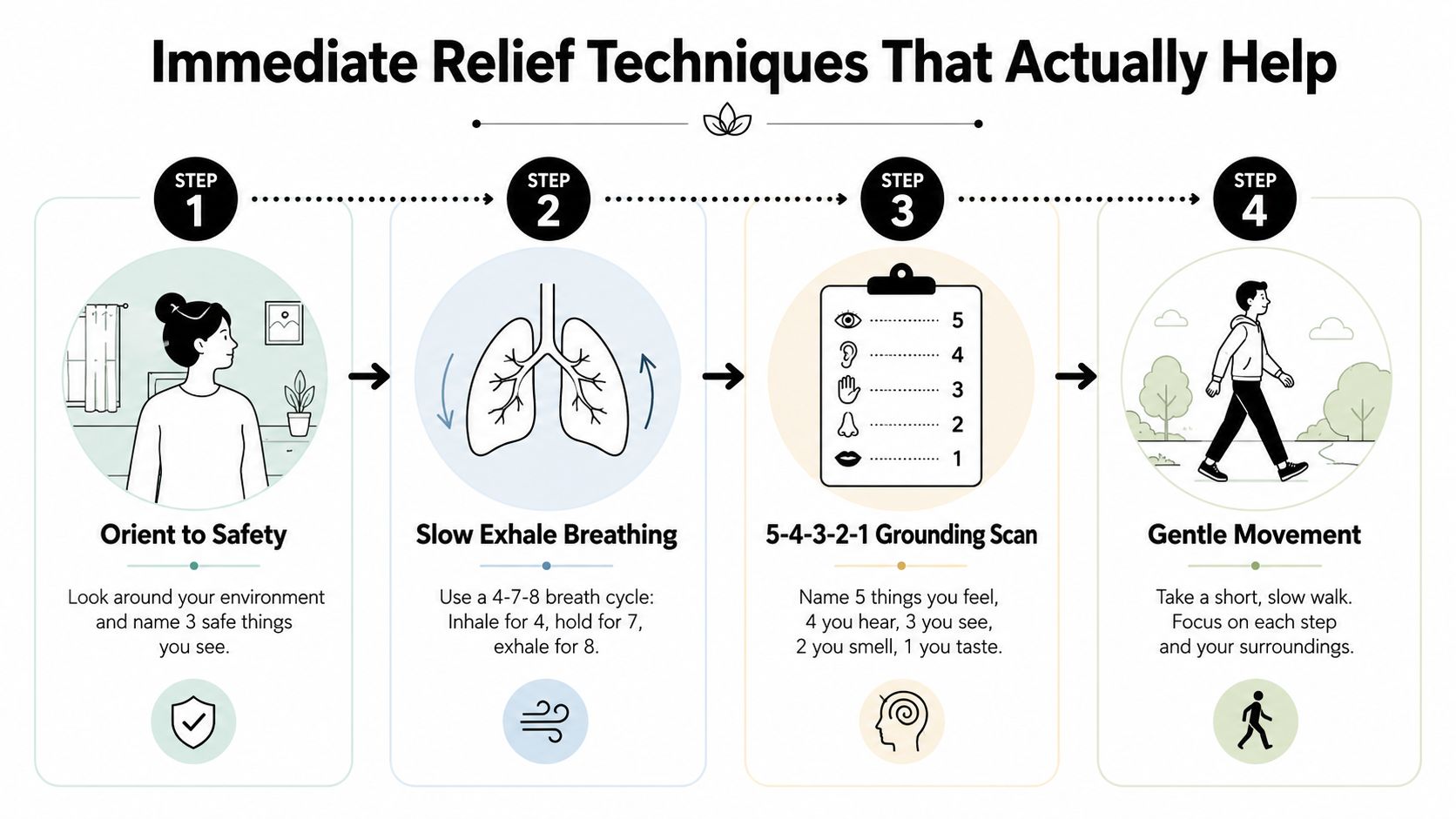
Start by orienting to safety. Look around and name three safe things you can see, like a lamp, a door, or your shoes. That tells your brain the threat has passed.
Next, use a slow exhale pattern. A steady exhale helps your body shift away from panic mode, and a simple 4-7-8 rhythm can be easier to remember when you feel scattered. If you need a quick reference, you can find breathing exercises for anxiety and use them when concentration is low.
Then do a 5-4-3-2-1 grounding scan. Name five things you feel, four you hear, three you see, two you smell, and one you taste. Finish with gentle movement, like a short slow walk or a few minutes of stretching.
The how chamomile tea eases cravings article from Addiction Resource Center LLC is a good example of how a soothing routine can support recovery without forcing the body. Water and a little food matter too, especially something with protein, because the body often feels less battered once blood sugar and hydration start to settle.
Here's the part many people skip, don't lie flat and doom-scroll for an hour if you can help it. A quiet room, steady light, and a short recovery routine usually do more for you than trying to out-think the sensation. If you forget the steps, tools like SOS grounding prompts or structured CBT exercises can carry some of the load for you.
Long-Term Habits That Shorten Future Hangovers
The recovery you build on ordinary days changes what happens after the next attack. A nervous system that gets regular sleep, regular meals, and regular movement usually has an easier time settling after stress.
What tends to help most
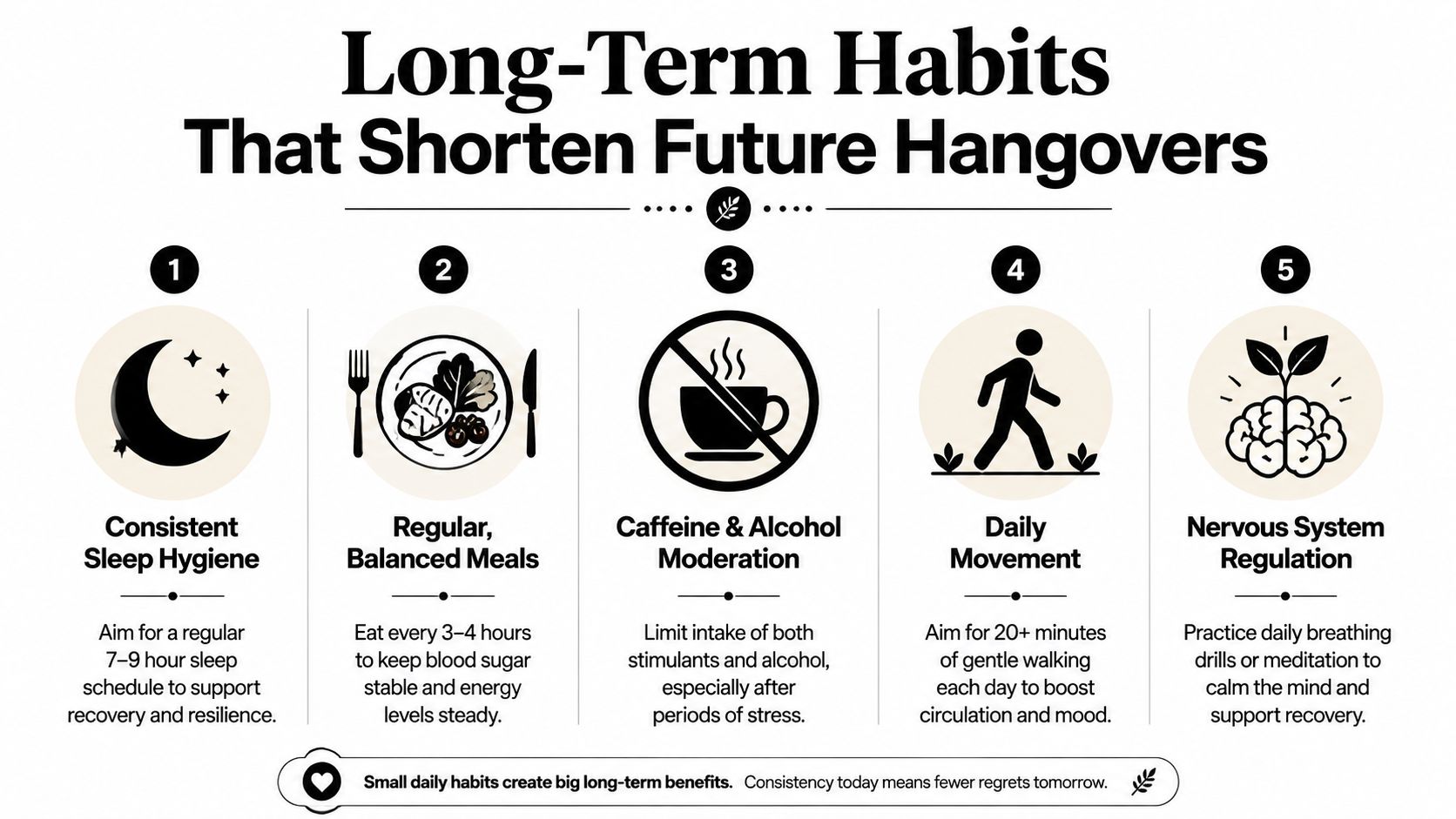
Consistent sleep hygiene gives your body a better baseline for recovery. Regular, balanced meals keep you from starting the day already depleted. Caffeine and alcohol moderation helps because both can make a sensitive nervous system feel less steady, especially after stress.
Daily movement doesn't have to be intense. A gentle walk can be enough to remind your body that motion is safe. Nervous system regulation practices, like breathing drills or meditation, help many people feel less overwhelmed when stress starts to build.
One option for people who want guided tools between attacks is The Anxiety Checklist. It includes SOS relief tools and CBT-based self-help features that can support the kind of daily regulation that makes recovery less jagged.
The goal isn't perfection. It's creating enough steadiness that the next panic episode doesn't knock you flat for as long. That shift can take time, but it's real, and it's one of the reasons recovery can keep getting easier.
When the Hangover Is a Signal to Reach Out
A panic attack hangover can feel like your system is still trying to recover after the danger has passed. If the heavy, shaky, or drained feeling keeps showing up, or keeps growing more intense, that pattern deserves attention.
Red flags that shouldn't be brushed off
Reach out if the symptoms last well beyond a week, or if the attacks are happening more often. Get support if you are avoiding places, people, or ordinary routines because you are worried another wave will hit. It also matters if sleep never seems to reset things, if your fear of the next attack keeps expanding, or if you start relying on alcohol or other substances just to get through the aftermath.
Physical symptoms deserve the same care. Chest pain, fainting, or any symptom that does not settle should be checked by a professional. If your mood sinks into hopelessness or you have any thought of self-harm, get help right away.
The Anxiety Checklist's expert insight can help you sort out when worry has crossed from uncomfortable into something that deserves outside support. Asking for help is not a failure. It is a practical step when your body keeps sending alarms that do not fully shut off.
You can heal from this, and panic attacks do not have to define your life. If you want calm, science-based support for panic in the moment and for the long run, visit The Anxiety Checklist and explore the tools built to help you feel steadier again.