


It's 2:13 a.m. The baby is finally asleep, but your mind isn't. You check the bassinet again. Then the breathing. Then the monitor. A tiny cough sends a bolt of fear through your chest. You know you're exhausted, but you still can't unclench. Part of you wonders whether this is just new-parent worry. Another part worries something is wrong with you.
If that sounds familiar, you're not broken, weak, or failing at parenthood. Many new parents live in this tense, hyper-alert state without realizing there's a name for it, and that help exists. Postpartum anxiety screening is one of the simplest ways to bring these feelings into the open so you can get support earlier, with less confusion and less shame.
Table of Contents
- You Are Not Alone and There Is a Path Forward
- What Postpartum Anxiety Screening Really Measures
- Comparing Common Postpartum Anxiety Screening Tools
- When and How Screening Happens in Your Care Journey
- Understanding Your Score and Finding the Right Support
- Your First Steps to Feeling Better Today
You Are Not Alone and There Is a Path Forward
A lot of parents expect tears, sleep loss, and emotional ups and downs after birth. What catches many off guard is the constant alarm feeling. You may love your baby very much and still feel unable to relax. You may look calm on the outside while your thoughts race through worst-case scenarios all day.
That experience is common enough that it deserves real attention. Postpartum anxiety screening reveals that approximately 1 in 4 women, or 25%, experience anxiety after childbirth, and this is more common than postpartum depression, which affects about 1 in 8 women, or 12.5% according to this postpartum anxiety screening research review.
What this can look like in daily life
Postpartum anxiety doesn't always look dramatic. Sometimes it sounds like:
- Repeated checking: going back to the crib over and over even when you know the baby is safe
- Body tension: a racing heart, shaky hands, nausea, or a sense that you can't settle
- Scary loops of thought: fear about illness, accidents, sleep, feeding, or whether you're doing everything wrong
- Avoidance: not wanting to leave the house, sleep, drive, or let anyone else help
You can be grateful for your baby and still need help for anxiety. Those two things can exist at the same time.
For some parents, these feelings are tangled up with birth trauma, body changes, or a sense of losing trust in their own body. Gentle, body-aware support can matter too. Resources like Strategies for vaginal wellness postpartum can help you think about healing in a broader way, especially if postpartum recovery feels emotionally loaded.
Screening is a first step, not a label
Screening doesn't mean someone is trying to put a permanent diagnosis on you. It means your care team is taking your distress seriously. That matters, because anxiety often hides behind “I'm just tired” or “all moms worry.”
If you want to start learning the language of anxiety before bringing it up at an appointment, Anxiety University offers a plain-language place to explore symptoms and coping concepts. Sometimes understanding what's happening takes some of the fear out of it.
The hopeful part is simple. Once anxiety is named, it becomes treatable. Screening is how many parents begin the move from surviving to healing.
What Postpartum Anxiety Screening Really Measures
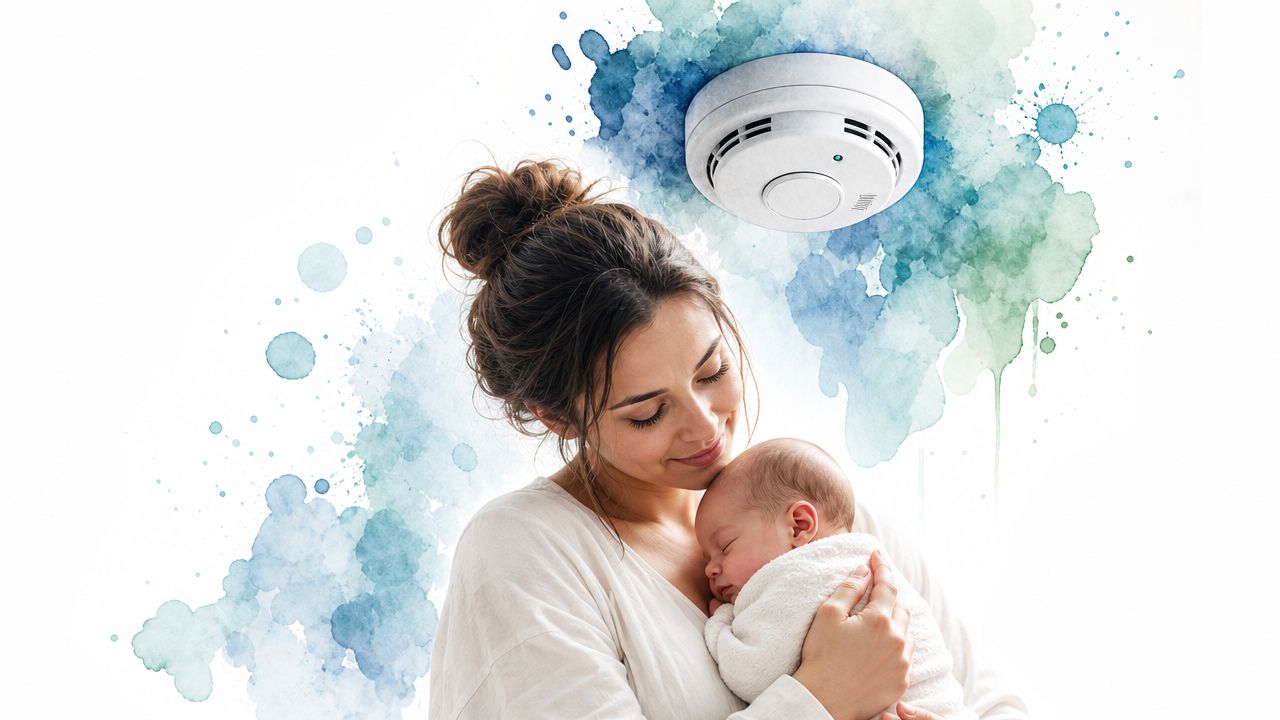
A screening tool is a lot like a smoke detector for the mind. It doesn't diagnose every detail of what's happening in your home. It alerts you that something deserves attention before it gets harder to manage.
That's what postpartum anxiety screening does. It looks for patterns in your thoughts, feelings, and body symptoms that suggest your nervous system is under more strain than ordinary adjustment would explain.
The questions are checking for more than worry
Most parents worry. Screening tries to tell the difference between expected concern and anxiety that keeps taking over. A questionnaire may ask whether you've been:
- Unable to stop the thought cycle
- Feeling dread even when nothing is immediately wrong
- Having physical symptoms like a pounding heart, restlessness, or trouble sleeping even when the baby sleeps
- Avoiding situations because they trigger fear
- Feeling panicky or on edge much of the day
Some tools also pick up perfectionism, a need for control, social fear, or sudden surges of panic. That matters because postpartum anxiety isn't always “I feel nervous.” It can show up as irritability, mental checking, or feeling constantly braced for disaster.
Screening is not pass or fail
Parents often tense up when handed a form because they think there's a right answer. There isn't. The best answers are the most honest ones.
Practical rule: Answer based on what your days actually feel like, not what you think a “good parent” is supposed to say.
If you had a few rough nights but feel mostly steady, that's useful information. If your mind never seems to turn off, that's useful too. Screening works best when it starts a conversation, not when it becomes a performance.
There's growing interest in how postpartum mental health affects the brain and body together. For a broader look at that connection, Lake City Physical Therapy PPD research is a thoughtful companion read.
Why a simple checklist can be such a relief
Naming symptoms often lowers fear. Many parents feel a wave of relief when they realize, “This pattern has been seen before. I'm not the only one.” A screening can also help you organize what has felt messy or hard to explain.
If you want a private way to reflect on anxiety symptoms before talking with a clinician, The Anxiety Checklist's assessment can help you put your experience into words. It's not a substitute for postpartum care, but it can make that first conversation easier.
The point of screening is clarity. Once you know what kind of anxiety patterns are showing up, you and your provider can choose the next right support.
Comparing Common Postpartum Anxiety Screening Tools
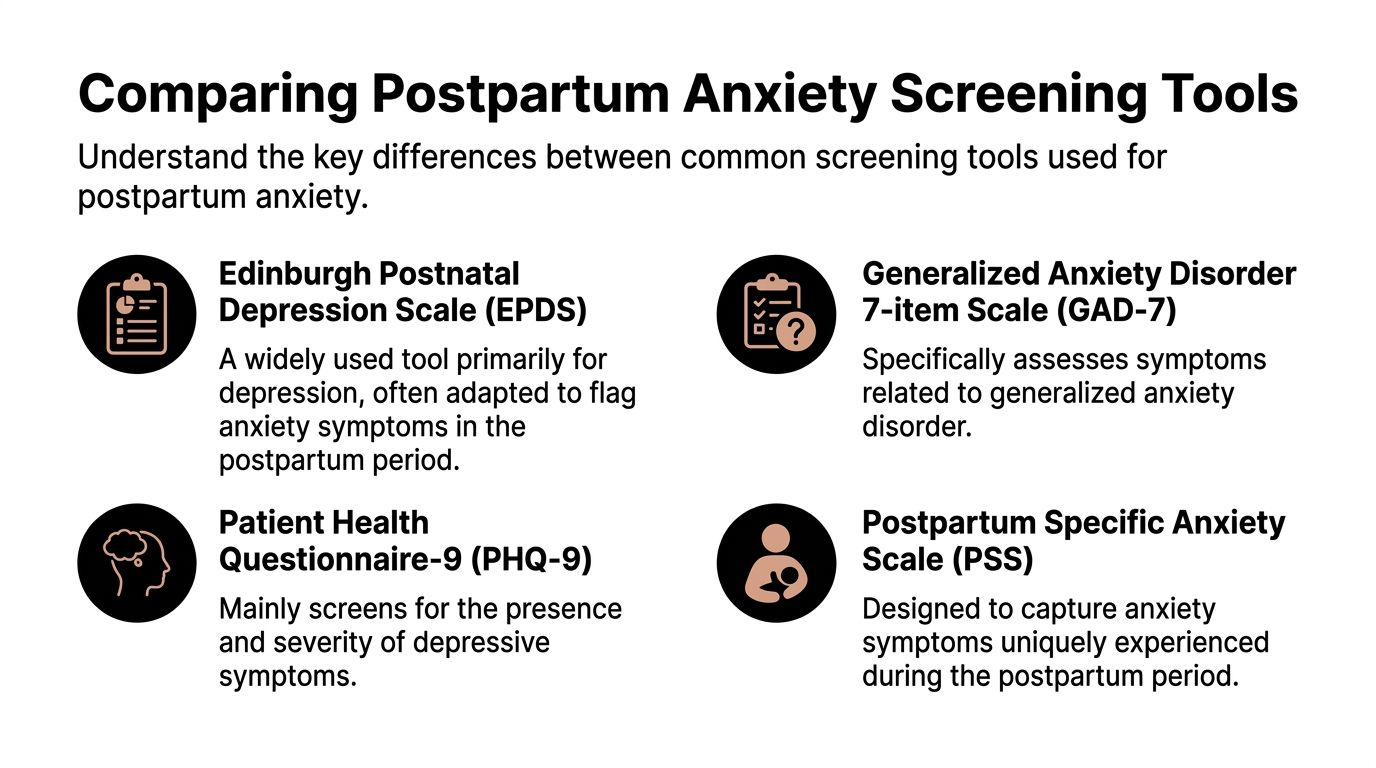
Different screening tools work like different camera lenses. One gives a wide view. Another zooms in on anxiety. Another mainly captures depression symptoms that can overlap with anxiety. Your provider may use more than one because no single questionnaire catches every version of postpartum distress.
Understand the key differences between common screening tools used for postpartum anxiety.
Four tools you might hear about
The Edinburgh Postnatal Depression Scale, or EPDS, is one of the most familiar tools in postpartum care. Even though it was built mainly for depression, many clinicians also look at its anxiety-related items to flag concern.
The GAD-7 focuses on generalized anxiety symptoms such as persistent worry, tension, and trouble relaxing. It's straightforward and often used in primary care and mental health settings. If you want to see the structure of that tool in a familiar format, The Anxiety Checklist's GAD-7 shows how those questions are commonly organized.
The PHQ-9 screens mostly for depression. It can still matter in postpartum care because anxiety and depression often overlap, and many parents experience both kinds of symptoms at once.
The PASS, short for Perinatal Anxiety Screening Scale, was designed specifically for perinatal anxiety. It looks more closely at the kinds of fears and physical alarm responses that broad depression tools can miss.
Why PASS often catches what others miss
The PASS is a 31-item self-report tool that measures four clinical domains: Excessive Worry, Perfectionism/Control, Social Anxiety, and Acute Anxiety according to the Perinatal Anxiety Screening Scale guide. The same source notes that a cutoff score of 26 classifies a patient as high risk, with severity brackets of 0 to 20 minimal, 21 to 41 mild to moderate, and 42 and above severe.
PASS identifies 68% of women with diagnosed anxiety disorders, compared with 36% detected by the EPDS-3A anxiety subscale in the same guide. That doesn't mean the EPDS is useless. It means some tools are better at finding anxiety specifically.
A short tool can open the door. A more specific tool can help your provider see the full picture.
Postpartum Anxiety Screening Tool Comparison
| Tool | Number of Questions | Primary Focus | Key Feature |
|---|---|---|---|
| EPDS | 10 | Postpartum depression, with some anxiety flagging | Common in postpartum settings and easy to administer |
| GAD-7 | 7 | Generalized anxiety symptoms | Brief and focused on worry-related anxiety |
| PHQ-9 | 9 | Depressive symptoms | Helps identify overlapping depression |
| PASS | 31 | Perinatal anxiety | Built specifically to capture anxiety patterns in pregnancy and postpartum |
How clinicians decide what to use
Sometimes the choice comes down to time. A quick visit may start with a brief screener. If your answers suggest anxiety, your provider may follow with something more detailed.
Other times the choice depends on your symptom pattern:
- If worry is broad and constant, GAD-7 may fit well.
- If panic, checking, or fear feel tied to the postpartum period, PASS may be more revealing.
- If low mood is mixed in, PHQ-9 or EPDS may help map that overlap.
What matters most isn't getting the “perfect” test on the first try. It's getting an honest read of what you're carrying so the support corresponds to your needs.
When and How Screening Happens in Your Care Journey
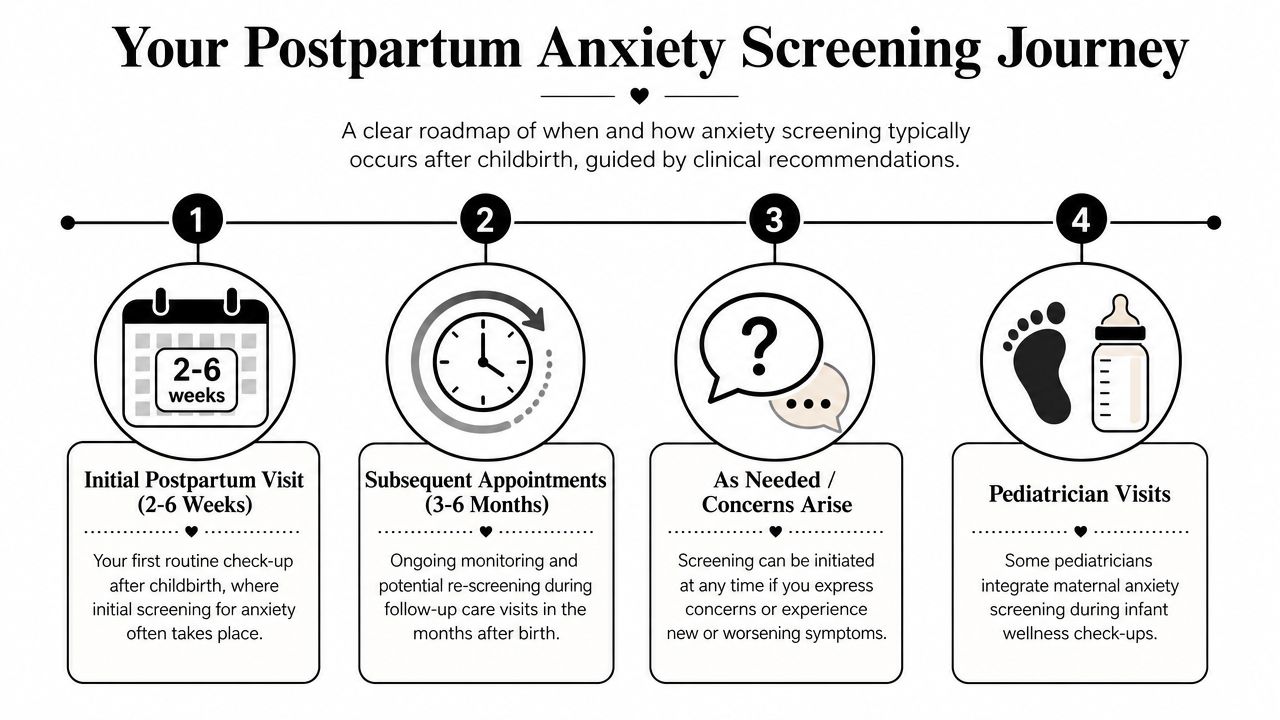
Many parents assume screening happens once, usually at the six-week visit, and that's it. In reality, the best care looks more like a series of check-ins across pregnancy and postpartum.
The standard screening timeline
Current guidance from ACOG and the USPSTF calls for screening at the initial prenatal visit, again in the late second or third trimester, and at the postpartum appointment, as summarized in this national guidance overview on screening for anxiety and depression.
That timeline matters because anxiety doesn't always appear right after birth. For some parents, symptoms start in pregnancy. For others, they rise later, once support fades, sleep disruption builds, or feeding stress intensifies.
A roadmap helps:
Early pregnancy check-in
This creates a baseline. If you already tend toward anxiety, your team can watch more closely.Later pregnancy screening
This catches symptoms that grow as labor, delivery, or health worries become more immediate.Postpartum appointment
This is the point many people expect, but it shouldn't be the only touchpoint.
Where the conversation might happen
Screening can happen in more than one place. Your OB or midwife may do it. A primary care clinician may do it. Some pediatric offices also ask about the parent's mental health during baby visits because they know family wellbeing affects infant care too.
If a provider asks about your mood, sleep, or worry level, that isn't small talk. It's part of your health care.
You can also bring it up yourself if no one has asked yet. That's not overreacting. It's good self-advocacy.
What to say if you're struggling
Sometimes parents know something is off but can't find the words in the appointment room. Try one of these plain sentences:
- “My worry feels bigger than I can manage on my own.”
- “I can't relax even when the baby is safe.”
- “I'm having intrusive thoughts and I need help understanding what they mean.”
- “Can we do postpartum anxiety screening today?”
If intrusive thoughts are frightening or confusing, this guide on what to do about intrusive thoughts can help you prepare for that conversation in a grounded way.
The process itself is usually simple. You fill out a questionnaire, your provider reviews the score, and then the two of you talk about what support fits. The part that feels hard is often not the form. It's speaking the truth out loud. Once that happens, the path tends to get clearer.
Understanding Your Score and Finding the Right Support
A score can feel intimidating at first. Many parents see a number and immediately worry it means something permanent or severe. It doesn't. A screening score is better understood as a signpost. It helps your provider judge how urgently you need support and what kind of support may fit best.
What a score usually leads to
If symptoms look mild, your clinician may recommend closer follow-up, practical coping strategies, or a referral to counseling. If symptoms are stronger or interfering with sleep, feeding, bonding, or daily functioning, you may be referred more quickly for therapy, medication discussion, or both.
The key is that the score guides action. It doesn't define your worth, your parenting, or your future.
Common next steps can include:
- Therapy: often a first-line option for understanding anxious thought loops and calming the nervous system
- Support groups: helpful when isolation is making symptoms louder
- Medication consultation: sometimes important when symptoms are intense, persistent, or affecting safety
- Partner and family planning: reducing overload at home so you can recover
For a plain-language overview of treatment approaches, The Anxiety Checklist's therapy insights can help you understand what therapy for anxiety may involve.
Partners need screening too
One of the biggest blind spots in postpartum care is the partner's mental health. Fathers and non-birthing partners can also develop significant anxiety, especially when sleep is broken, routines collapse, finances feel tight, or they feel pressure to “hold it together” for everyone else.
According to Postpartum Support International's screening guidance for professionals, fathers require a two-point lower cutoff score on the EPDS, 5/6 instead of 10 for mothers, to accurately detect anxiety. The same guidance notes that approximately 8.5% to 10.5% of fathers with perinatal anxiety may remain undiagnosed when maternal thresholds are applied instead.
When one parent is suffering quietly, the whole household feels it. Screening both parents supports the whole family.
Building a family support plan
A helpful question after any screening result is, “Who else needs to know what's going on?” That might include a partner, a close friend, a parent, or the person who can take the baby for an hour while you rest.
You don't need a dramatic intervention to start healing. Sometimes a family support plan begins with simple clarity:
- Who handles nights when anxiety spikes
- Who attends follow-up appointments
- Who notices when symptoms are getting worse
- Who can step in so the anxious parent gets protected sleep or therapy time
The score is only the beginning. Support is what changes daily life.
Your First Steps to Feeling Better Today
Healing is realistic. It isn't a vague hope. With appropriate treatment and support, up to 80% of individuals with postpartum anxiety and related mood disorders achieve full recovery, according to PostpartumDepression.org statistics.
That matters because anxiety lies. It tells you this is how life will feel forever. It tells you panic is your new normal. It tells you you'll never rest again. Those are symptoms talking, not facts.
A simple first-aid kit for an anxious moment
When anxiety surges, don't aim to solve your entire future. Aim to get through the next few minutes with your body feeling a little safer.
- Name what's happening: Say, “This is anxiety. My body is in alarm.” That small sentence can reduce the feeling that the danger is mysterious.
- Use the floor: Put both feet down and press gently. Notice the support under you. Look around and name a few ordinary things you can see.
- Short exhale breathing: Inhale gently, then make the exhale longer than the inhale. You're not trying to breathe perfectly. You're giving your nervous system a signal of safety.
- Lower the input: Hand the baby to a trusted adult for a few minutes if you can. Step away from nonstop searching, doom scrolling, or repeated checking.
- Text one honest sentence: “I'm having a hard anxiety moment and I need company.” Clear requests work better than trying to hide it.
When support should happen sooner
Sometimes anxiety comes with panic, hopelessness, or thoughts that feel scary to be alone with. If that's happening, reach out to your provider, a mental health professional, or an urgent support line right away. You deserve fast care, not a long stretch of white-knuckling.
You also don't need to wait until things are severe. Early help is often gentler, simpler, and easier to use.
Hold on to this
You are not failing because you need screening. You are caring for yourself and your family by getting honest about what hurts.
A panic-free life can return. Calm can feel familiar again. Many parents who once felt trapped by postpartum anxiety later describe the same turning point. They stopped trying to outlast it alone and let support in.
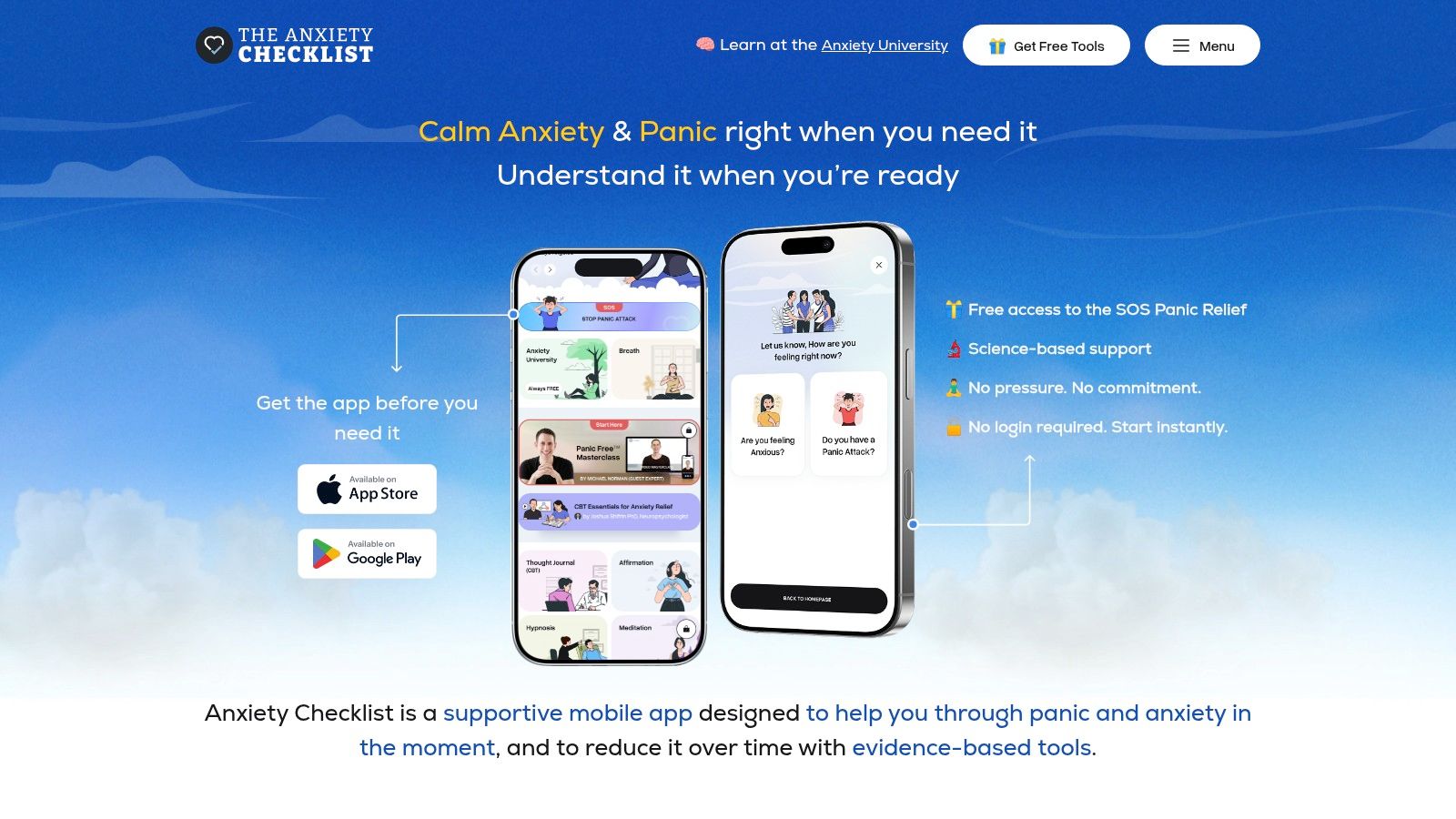
If you want practical support between appointments, The Anxiety Checklist offers an always-free SOS mode for anxious moments, along with guided tools for calming panic, understanding triggers, and building long-term recovery at your own pace.