



Paradoxical intention is a Viktor Frankl technique where you deliberately invite or exaggerate the feeling you fear. In insomnia care, the classic version is to try to stay awake while lying in bed, and a 2024 review found it improved several sleep outcomes, especially difficulty falling asleep.
If you're tired of wrestling with panic, sleeplessness, or that awful “what if it happens again” feeling, this approach can feel strangely relieving because it stops asking you to win a fight with your own body. Instead of bracing harder, you loosen the grip, and that's often where the panic cycle starts to break.
Table of Contents
- When Fighting Fear Makes It Stronger
- A Plain Language Definition of Paradoxical Intention
- Where It Came From and Why Frankl Invented It
- The Psychology Behind Why It Works
- Three Simple Exercises You Can Try Tonight
- How Paradoxical Intention Compares to Exposure and Acceptance
- Practical Tips, Cautions, and a Path Forward
When Fighting Fear Makes It Stronger
Your chest tightens. Your thoughts start sprinting. You tell yourself to calm down, but the more you try, the louder your body gets. Then comes the second wave, the fear that you're doing it wrong, and now you're not just anxious, you're anxious about being anxious.
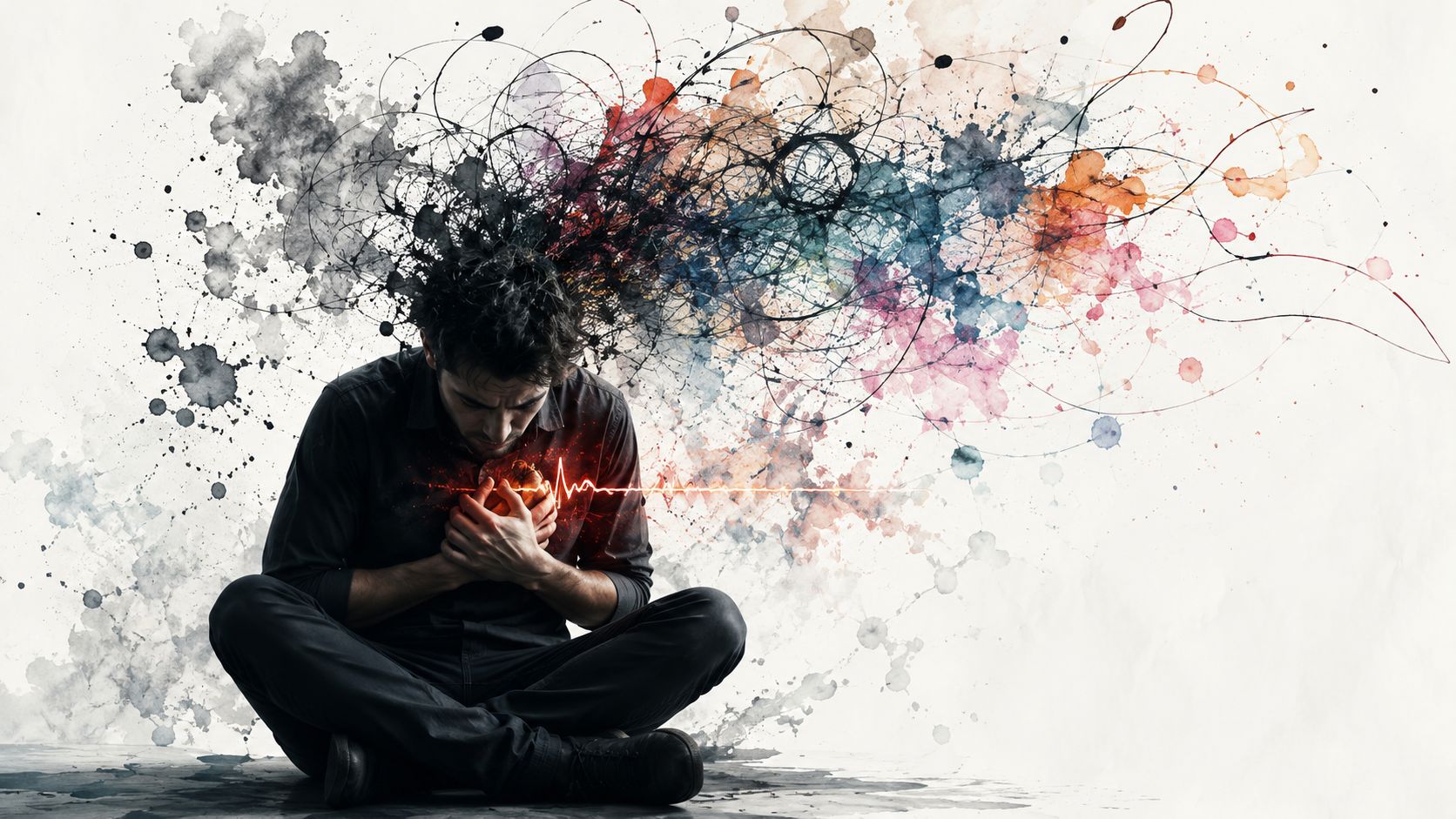
That loop is painfully familiar in panic, sleep anxiety, and performance fear. The mind says, “Don't blush. Don't shake. Don't lose it. Don't lie awake again.” The body hears all that pressure and often responds like a smoke alarm someone keeps tapping, louder, not quieter.
The trap of trying too hard
People often think the answer is more control. More effort. More monitoring. But with anxiety, constant self-checking can keep the alarm switched on. A person lying in bed may count the minutes, scan for sleepiness, and get more awake by the second. Someone speaking in public may monitor every breath and every facial twitch until the room feels like a spotlight.
A useful way to think about this is that fear becomes sticky when you keep trying to pin it down. That's why a method built around stopping the fight can feel like a relief, not a gimmick.
Practical rule: if your symptom gets worse the moment you demand it disappear, you may be dealing with a fear loop rather than a lack of willpower.
The idea connects well with everyday pressure. If you've ever read about why people get stuck trying to save money, the logic sounds similar, a lot of effort plus a lot of self-pressure can backfire instead of helping. A clear example is Koru app explains saving challenges, which shows how a hard chase can become its own obstacle.
For people dealing with panic, that recognition matters. You're not broken. Your nervous system may be responding to a command it can't obey on demand. If you've been told to “just relax,” and that advice made you feel more alone, the phobophobia symptoms and treatment page will likely feel familiar, because fear of fear is part of this same trap.
A Plain Language Definition of Paradoxical Intention
Paradoxical intention means deliberately wishing for, rehearsing, or even exaggerating the symptom you're afraid of instead of trying to suppress it. If panic has you bracing for a racing heart, you may be told to notice it and almost invite it. If sleep anxiety has you staring at the ceiling, the instruction is often to lie there and try to stay awake, rather than force sleep. That reversal sounds upside down, but it is meant to loosen the pressure that keeps the symptom stuck in place.
The method was originally developed by Viktor E. Frankl in the context of logotherapy, and it later became a formal insomnia intervention in the 1970s, with that stay-awake instruction at its center (source). The goal is not to “want” insomnia, panic, or blushing in some mystical way. It is to stop treating the symptom like a crisis that must be erased on command.
In one sentence: paradoxical intention tells the nervous system, “Go ahead, do the thing,” so the nervous system stops bracing against the thing.
Why the reversal makes sense
A swing goes farther when you push it at the right moment, but it stalls when you pull against it. Anxiety can work the same way. The harder you yank on the symptom, the more attention you give it, and attention is often fuel.
That is why the technique targets anticipatory anxiety, the dread that shows up before the symptom itself. A person who fears sleeplessness may lie there asking, “Am I falling asleep yet?” A person who fears panic may ask, “Is my heart racing yet?” That constant checking keeps the body on alert, like gripping a wet bar of soap so tightly that it keeps shooting out of your hand.
The idea also fits with some common cognitive distortions, especially catastrophizing and all-or-nothing thinking. If your mind says, “If I blush, everyone will know I'm weak,” you are not only reacting to a sensation. You are reacting to a story about the sensation. Paradoxical intention steps into that story and removes the demand that you must be flawless.
For people using an app to track panic or sleep patterns, this shift can feel very concrete. The app does not tell you to battle every symptom harder. It helps you spot the moment when you start monitoring, predicting, and tightening around the fear, so you can practice a different response instead.
The result is a change in relationship, not a trick. You stop wrestling your own body, and the struggle often loosens.
Where It Came From and Why Frankl Invented It
Viktor Frankl didn't build this idea from a lab bench alone. He was a psychiatrist and Holocaust survivor who spent his career thinking about suffering, freedom, and the ways people get trapped by their own expectations. That background matters, because paradoxical intention wasn't created as a clever trick. It was shaped by real human pain.
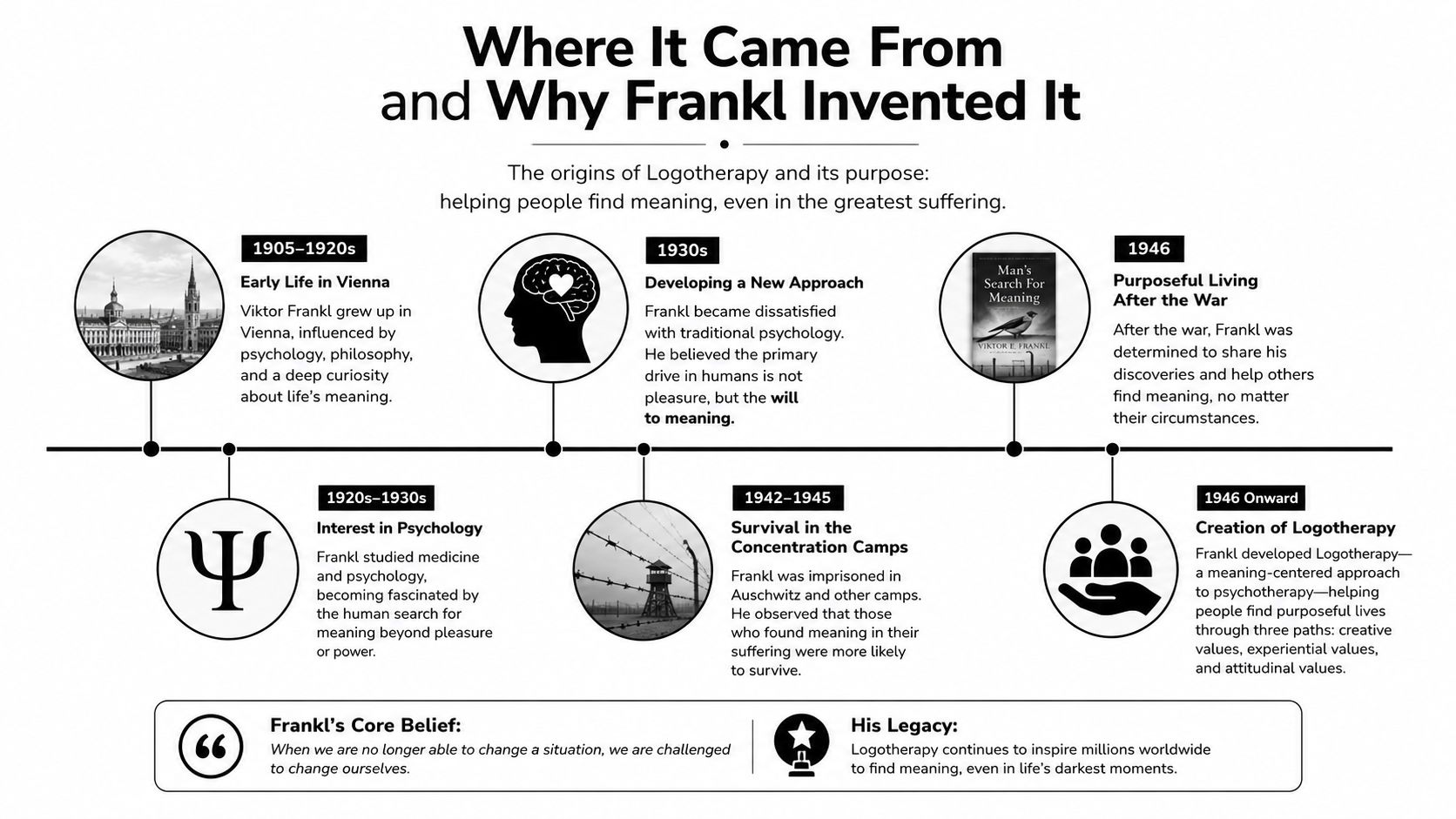
Frankl's insight was simple and sharp. When people are terrified of a symptom, they can become locked into monitoring, trying, and failing, which only feeds the symptom further. His logotherapy approach held that people can choose their attitude even when they can't control everything around them, and paradoxical intention grew out of that belief.
Why the idea lasted
A lot of mental health ideas fade because they sound neat but don't help real people. This one stayed around because it fit the kinds of problems clinicians kept seeing, especially insomnia, performance anxiety, and other problems where effort itself becomes part of the problem.
The technique also has a human side that's easy to miss if you only read a definition. It gives a person permission to stop performing recovery perfectly. That can feel like someone setting down a heavy bag they've been carrying all day.
Frankl's work still matters because it offers a way to think about recovery without pretending that fear is irrational in a cheap or dismissive sense. Fear is real. The struggle is real. The question is whether fighting the symptom is helping, or whether it's keeping the cycle alive. Frankl's answer was to interrupt the cycle by changing the person's stance toward it.
That's part of why this technique still gets attention in modern care. It isn't just history. It's a reminder that some symptoms ease when the pressure to control them eases first.
The Psychology Behind Why It Works
A panic spike can feel like a warning light that keeps getting brighter the more you stare at it. The same thing happens with performance anxiety. You blush, then check whether you are blushing. You worry about freezing, then monitor every thought for signs of a blank. You notice your heart racing, then you start counting each beat, and that extra checking tells the body to stay on alert.
Paradoxical intention breaks that loop by dropping the “this must not happen” rule. The person stops fighting the symptom and starts giving it permission to show up. That change sounds small, but it matters, because constant self-checking works like a hand on a smoke alarm, making the system more sensitive than it already was.
What modern sleep research found
A 2024 systematic review and meta-analysis found that paradoxical intention helped with sleep onset latency, difficulty falling asleep, number of awakenings, restedness, and total sleep time compared with passive comparators (source). The review also reported that the largest benefits appeared for difficulty falling asleep, while the smallest were for sleep onset latency. Across the studies it examined, the effects were large relative to passive controls and moderate relative to active comparators.
| Sleep outcome | Direction of effect | Relative magnitude |
|---|---|---|
| Sleep onset latency | Improved | Smallest benefit in the review |
| Difficulty falling asleep | Improved | Largest benefit in the review |
| Number of awakenings | Improved | Benefited compared with passive comparators |
| Restedness | Improved | Benefited compared with passive comparators |
| Total sleep time | Improved | Benefited compared with passive comparators |
That does not make the method magic. It suggests something more ordinary and more useful, the nervous system often settles when the demand to force sleep eases. The same pattern shows up in panic and performance anxiety. Once the mind stops treating every sensation as a test to pass, the body has less reason to stay braced.
Working model: less struggle can mean less symptom monitoring, and less monitoring can mean less arousal.
The fight or flight response guide fits here because paradoxical intention changes the body's emergency stance. When the brain is no longer sending constant signals that a feeling must be stopped at once, the system can begin to come down from high alert. That matters in panic, where fear of the sensation can become louder than the sensation itself. It also explains why app-supported recovery can help. A good app can give you a short script, a reminder to stop scanning, and a way to practice the new response when your own thoughts are moving too fast.
Three Simple Exercises You Can Try Tonight
These aren't about forcing progress. They're about testing whether a little playful invitation lowers the pressure that keeps anxiety hooked in place. Keep the tone light if you can, because grim determination can turn paradoxical intention into another performance.
1. The bedtime stay-awake practice
Lie down with the lights off and tell yourself, “I'm not trying to sleep. I'm going to stay awake as long as I can.” Keep your body still and your eyes closed if that feels natural, but don't chase sleep. The goal is not to win. The goal is to remove the frantic demand that sleep must arrive on command.
What to expect, often, is a drop in effort. People sometimes get drowsy sooner when they stop stalking sleep. If your mind wanders back to “Am I doing it right?”, just return to the same simple line.
2. The welcome-the-panic practice
When a wave of panic starts, try saying, “Okay, panic, come on in. Let's see what you've got.” You're not approving of panic. You're removing the internal wrestling match that makes it escalate. The script can be short, almost casual.
If you need a steadier on-ramp, guided breathing for panic can help you settle enough to try the exercise without feeling flooded. Then use the paradoxical line once your breath is a little less wild. The point is to notice that inviting the sensation often feels less dangerous than chasing it away.
3. The exaggerate-the-blush practice
If social fear has you scanning your face, say to yourself, “Good, let's blush harder. Let's make this as obvious as possible.” You don't need to perform theatrically. A small, dry bit of humor is enough. The aim is to change the meaning of the symptom from catastrophe to something less threatening.
A few practical guardrails help:
- Keep it genuine enough: the exercise works best when the invitation is real, even if it's playful.
- Stay brief at first: one or two minutes is enough for a first try.
- Skip self-attack: this is not about mocking yourself, it's about lowering the pressure.
If you've spent years trying to force calm, these exercises can feel odd at first. Odd is fine. Odd is often the doorway to relief.
How Paradoxical Intention Compares to Exposure and Acceptance
People often lump anxiety tools together, but they're not the same. Exposure therapy asks you to approach what you fear so your brain learns it's manageable. Acceptance asks you to let inner experience be there without fighting it. Paradoxical intention goes one step further and tells you to actively invite the symptom itself.
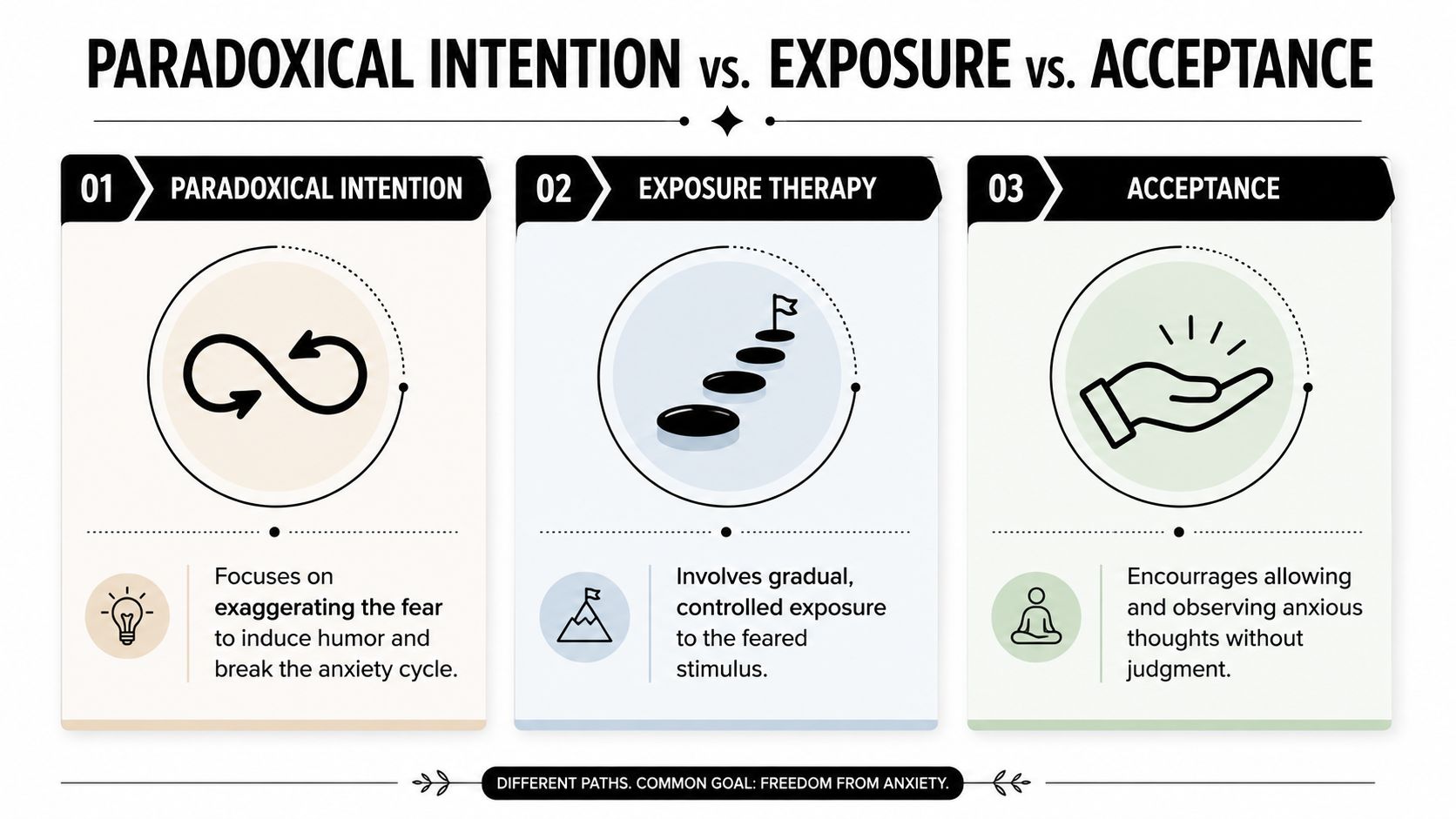
That distinction matters because the emotional feel of each method is different. Exposure is a gradual facing. Acceptance is a softening around experience. Paradoxical intention is more like a controlled reversal, a deliberate “bring it on” stance that can be especially useful when the symptom is being amplified by performance pressure.
Where each one tends to fit
Exposure therapy often makes sense when the fear is tied to a situation, an object, or a place, and the nervous system needs repeated practice to relearn safety. Acceptance makes sense when the person is fighting thoughts and sensations so hard that the fight itself becomes the problem. Paradoxical intention can be a better fit when the person's main struggle is fear of the symptom appearing at all, especially in sleep, panic, or blushing.
The exposure therapy for anxiety page is useful as a contrast because it shows the gradual approach side of the map. Paradoxical intention is not just exposure by another name. It's a direct challenge to the “I must not feel this” rule.
Simple distinction: exposure says, “Stay with it.” Acceptance says, “Let it be.” Paradoxical intention says, “Invite it, and watch what happens.”
Used well, these approaches can complement each other. Used carelessly, they can get confused. If a person with panic tries paradoxical intention as a joke but secretly spends the whole time checking whether it worked, they've slipped back into the old loop. The technique only helps when the pressure loosens.
Practical Tips, Cautions, and a Path Forward
Paradoxical intention tends to shine with sleep anxiety, panic, and social performance fear. It's less about brute force and more about changing the emotional stance that keeps the symptom alive. That said, it's not the right fit for every situation, and it shouldn't replace professional help when someone is dealing with trauma flashbacks, severe OCD, or active suicidality.
A useful way to keep it safe is to treat it as a gentle experiment, not a dare. The tone should be playful, not grim. If the exercise starts to feel like self-punishment, stop and reset.
For a broader picture of coping skills that build steadier resilience over time, the article on build resilience in kids is a helpful reminder that emotional flexibility is learned, not found all at once. Adults need that reminder too. Small, repeated practices matter more than dramatic breakthroughs.
If you want a practical next step, pick one symptom and test one short paradoxical intention script tonight. Keep it simple, track how it felt, and note whether the pressure changed, even a little. That's often where recovery starts, not with a perfect result, but with a different relationship to fear.
The Anxiety Checklist gives you calm, science-based tools for panic, sleep trouble, and anxious spirals, including SOS support, grounding prompts, and longer-term self-therapy features. If this idea of learning to stop wrestling fear feels like the kind of help you need, visit The Anxiety Checklist and try the tools that match your moment.