

In short
Nighttime anxiety often feels worse because daytime distractions stop, fatigue makes emotions harder to regulate, and lying quietly draws attention to heartbeat, breathing, or unresolved worries. The timing matters: anxiety before bed, while lying awake, or after a sudden awakening can point to different triggers and different next steps.
Key takeaways
- Anxiety that begins before bed often involves accumulated worry, stimulants, sleep pressure, or an inconsistent routine.
- Anxiety while lying down may reflect increased attention to body sensations, but reflux or breathing difficulty should not automatically be dismissed as anxiety.
- Healthy cortisol levels are normally low during the late evening and early night, so a nighttime episode does not prove that cortisol is surging.
- A familiar panic episode may respond to gentle breathing, grounding, muscle release, and leaving bed briefly if wakefulness becomes a struggle.
- New chest pain, severe breathing trouble, self-harm thoughts, repeated sleep disruption, or worsening daily function requires professional or emergency support.
Table of contents
- Why is my anxiety worse at night?
- What does the timing of nighttime anxiety tell you?
- Why does anxiety start before bed?
- Why does anxiety get worse when I lie down?
- Why do I wake up with anxiety in the middle of the night?
- How to stop night anxiety attacks?
- What changes can reduce nighttime anxiety over the next two weeks?
- When should nighttime anxiety be checked by a doctor or therapist?
- What else do people ask about nighttime anxiety?
- What should you do next tonight?
Nighttime anxiety is a description, not a diagnosis. The phrase can cover evening worry, fear of not sleeping, panic symptoms after lying down, or a sudden awakening caused by anxiety, a nightmare, reflux, a hot flash, a breathing problem, or another condition.
The first useful question is not simply why anxiety is bad at night. It is when the change begins and what happens immediately before it.
Why is my anxiety worse at night?
Anxiety can feel worse at night because several amplifiers arrive at once: less external input, more fatigue, a quiet body, and pressure to sleep. The increase may reflect attention and learned arousal rather than a new danger or a nighttime hormone surge.
During the day, conversations, work, errands, and movement compete with worry for attention. When those demands stop, an unresolved concern can become the loudest signal in the room even if the concern itself has not changed.
Fatigue adds another layer. The 2022 NHLBI overview of sleep deficiency explains that insufficient sleep can make decision-making, emotional control, and coping with change more difficult. One poor night can therefore make the next evening feel harder to manage. (nhlbi.nih.gov)
Physical stillness also makes internal sensations easier to notice. The 2025 NIMH guide to generalized anxiety disorder lists sleep difficulty, fatigue, muscle tension, trembling, sweating, lightheadedness, and shortness of breath among possible anxiety symptoms. A heartbeat or tight muscle that passed unnoticed at noon may become the focus of attention in a silent bedroom. (nimh.nih.gov)
Repeated nights of struggling can teach the brain that bed is a place for monitoring, frustration, and effort. Veterans Affairs guidance on CBT-I stimulus control describes how spending long periods awake and frustrated in bed can strengthen an association between the bed and alertness rather than sleep. Understanding the fight-or-flight response can help explain why that learned alarm feels physical. (veteranshealthlibrary.va.gov)
Cortisol is often blamed, but the usual pattern is more complicated. A 2021 review of sleep and circadian cortisol regulation reports that cortisol normally declines toward a low point in the late evening or early night, then begins rising during the second half of the night before waking. Chronic stress and disrupted schedules can affect hormone rhythms, but nighttime anxiety alone cannot show that a cortisol spike caused the episode. (pmc.ncbi.nlm.nih.gov)
Nighttime anxiety often reflects attention, fatigue, and learned sleep arousal acting together, not proof of a new danger.
What does the timing of nighttime anxiety tell you?
The timing does not provide a diagnosis, but it narrows the questions worth asking. Anxiety before bed, anxiety after lying down, and anxiety that wakes someone from sleep have overlapping symptoms but different first checks.
Which pattern fits?
| Timing pattern | Clues you may notice | Possibilities to consider | Best first move |
|---|---|---|---|
| Before bed or during the evening | Worry, dread about tomorrow, restlessness, repeated clock checking | Accumulated stress, caffeine, alcohol-related sleep disruption, fear of not sleeping | Move problem-solving earlier, review late stimulants, and use a simple wind-down routine |
| Soon after lying down | Heartbeat becomes prominent, chest or throat discomfort, urge to sit up, tense muscles | Attention to body sensations, conditioned arousal, reflux, restless legs, breathing difficulty while flat | Identify the exact sensation, change position if needed, and seek care for unexplained breathing trouble |
| After waking suddenly | Jolt of fear, racing heart, sweating, gasping, dream recall, heat, or sour taste | Nocturnal panic, nightmare, sleep apnea, reflux, menopausal symptoms, medication or substance effects | Check immediate safety, orient to the room, and record what woke you before assuming it was anxiety |
Patterns can overlap. Bedtime worry may delay sleep, sleep loss may increase emotional sensitivity, and a sudden sensation during a normal awakening may trigger a second wave of fear.
Use three questions to separate them: Was there a specific worry before sleep? Did lying flat change breathing, chest, throat, stomach, or leg sensations? Did the episode begin from sleep with a dream, gasp, hot flash, or unexplained jolt?
The clock pattern is a clue: before bed, lying down, and waking from sleep call for different first checks.
Why does anxiety start before bed?
Anxiety before bed often begins when postponed worries finally receive attention and the pressure to sleep turns wakefulness into a test. Late caffeine, alcohol, changing schedules, and some medicines can add physical alertness to the mental strain.
What changes when the day gets quiet?
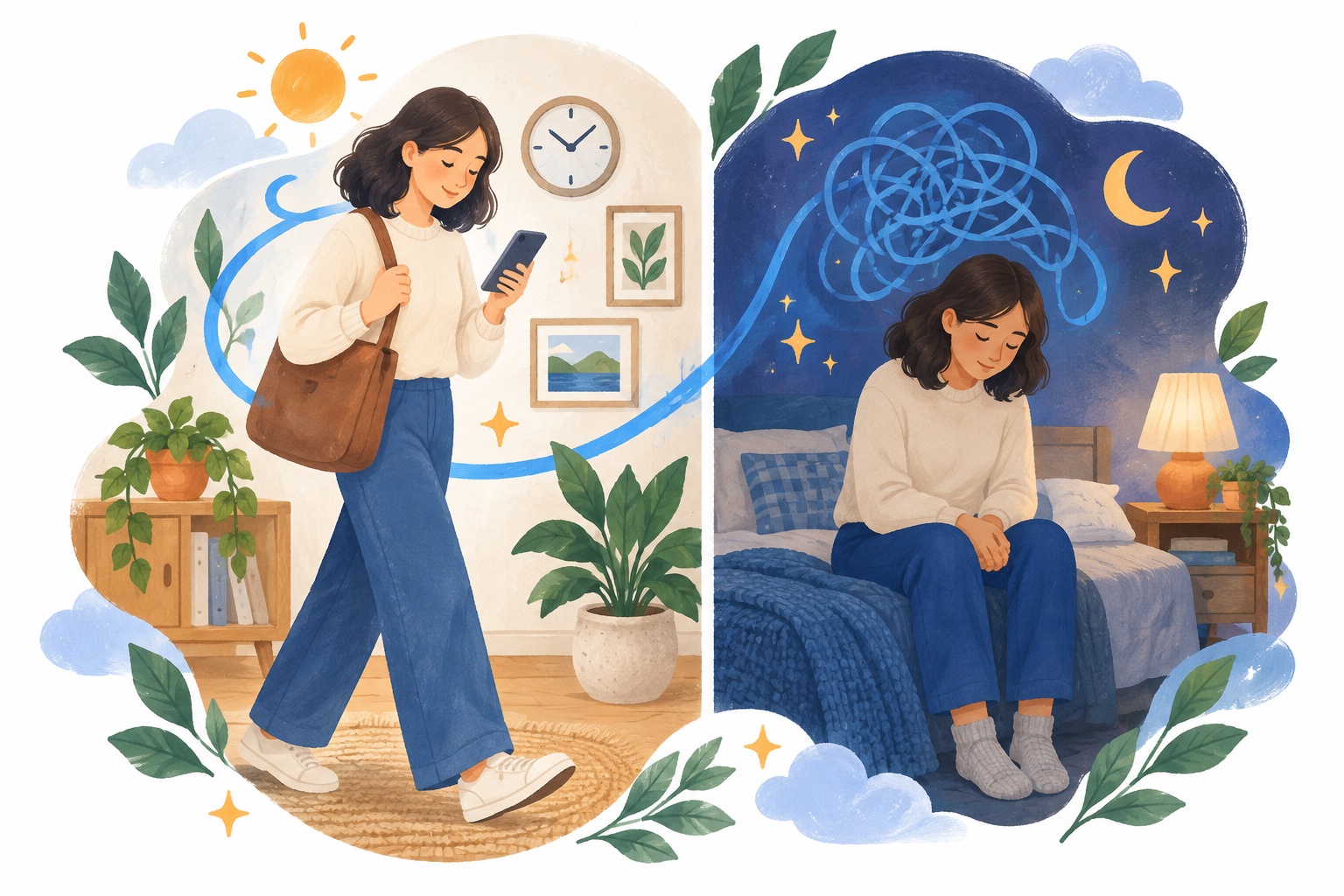
A concern that felt manageable while action was possible may feel larger when nothing can be solved until morning. A short planning period earlier in the evening can help separate problems that need an action from worries that only invite another mental rehearsal.
Caffeine is another common variable. The FDA's current caffeine guidance notes wide differences in sensitivity and lists anxiety, jitters, palpitations, insomnia, and sleep disruption among signs of excessive intake. The CDC's 2024 sleep guidance advises avoiding caffeine in the afternoon or evening. A practical test is to move the final caffeinated drink earlier for one week and record whether bedtime symptoms change. (fda.gov)
Alcohol may make sleep begin sooner but can contribute to later awakening and disturbed sleep. It should not be used as a treatment for nighttime anxiety. Review any new medicine, supplement, dose change, nicotine use, or energy drink with a pharmacist or clinician rather than stopping prescribed medicine independently. The MedlinePlus anxiety overview notes that caffeine, substances, certain medicines, thyroid problems, and arrhythmias can worsen or resemble anxiety symptoms. (cdc.gov)
Keep the final part of the evening predictable but not rigid. Dimmer light, a consistent wake time, and one quiet activity are more useful than building a complicated routine that creates another standard to fail.
If anxiety rises before bed, move stimulants and problem-solving earlier and make the final hour predictable rather than perfect.
Why does anxiety get worse when I lie down?
Lying down reduces external stimulation and can make heartbeat, breathing, muscle tension, stomach sensations, and tingling feel more prominent. Anxiety can amplify that attention, but symptoms that consistently change with body position deserve a medical check rather than an automatic anxiety label.
Which sensations deserve a second look?
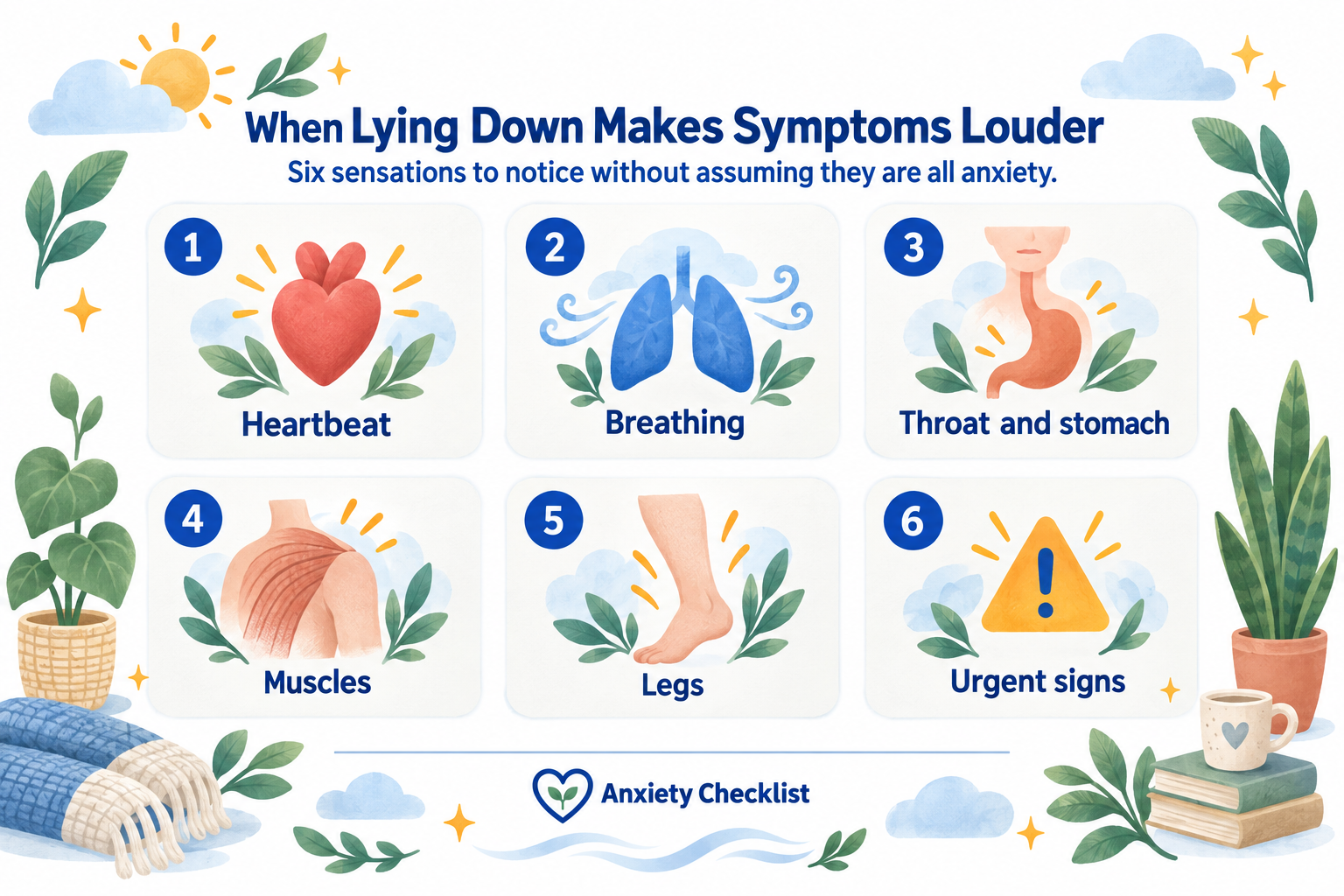
A pounding heart, tight chest, trembling, sweating, nausea, tingling, dizziness, and shortness of breath can occur during panic. NIMH's panic disorder guide also explains that a clinician may use a physical examination to make sure another health problem is not causing the symptoms. (nimh.nih.gov)
Reflux is one possible reason that discomfort appears after lying down. NIDDK guidance for nighttime reflux says that people with nighttime or lying-down GERD symptoms may improve them by eating at least three hours before bed. Burning behind the breastbone, a sour taste, coughing, or symptoms after a late meal are useful details to report. (niddk.nih.gov)
Breathing difficulty while lying flat is different from merely noticing the breath. MedlinePlus guidance on breathing difficulty while lying down describes it as abnormal and advises contacting a health professional when it is unexplained. Needing to sit up to breathe, using several pillows because breathing feels easier upright, or waking with severe breathlessness should not be self-diagnosed as anxiety. (medlineplus.gov)
An uncomfortable urge to move the legs that becomes worse while resting and improves temporarily with movement may fit restless legs rather than panic. MedlinePlus describes restless legs as a creeping, tingling, burning, or crawling sensation that can interfere with falling or staying asleep. (medlineplus.gov)
If the symptoms are familiar and have been medically assessed as anxiety, try naming the specific sensation instead of treating the whole body as dangerous. Gentle breathing and progressive muscle relaxation can reduce effort and help identify where the body is bracing.
Anxiety while lying down may be amplified attention, but reflux or breathing difficulty should not be dismissed.
Why do I wake up with anxiety in the middle of the night?
Waking in the night with anxiety can be nocturnal panic, but it can also follow a nightmare, breathing interruption, reflux episode, hot flash, pain, or substance-related sleep disruption. The safest approach is to describe what happened before using anxiety as the explanation.
Nocturnal panic means waking from sleep in a state of panic without an obvious external trigger. A 2005 Sleep Medicine Reviews paper explains that clinicians distinguish nocturnal panic from nightmares, sleep terrors, sleep apnea, and other sleep events. The review also notes that the research base is limited, so one sudden awakening cannot establish the diagnosis. (pubmed.ncbi.nlm.nih.gov)
Look for the clues that came with the awakening:
- A remembered frightening dream points toward a nightmare-related awakening rather than panic arising without dream recall.
- Loud snoring, witnessed breathing pauses, gasping, dry mouth, morning headache, or daytime sleepiness are reasons to discuss sleep apnea. The NHLBI's 2025 sleep apnea symptom guide lists breathing that starts and stops, loud snoring, and gasping during sleep among key symptoms. (nhlbi.nih.gov)
- Burning, coughing, sour taste, or symptoms after a late meal may point toward reflux.
- Sudden heat, sweating, chills, changing periods, or repeated sleep disruption during midlife may fit the menopausal transition. The National Institute on Aging's menopause sleep guidance explains that night sweats and mood changes can contribute to poor sleep. (nia.nih.gov)
- A recent medication, dose change, withdrawal, late caffeine, nicotine, or alcohol can provide another lead for a clinician or pharmacist.
Write down whether the episode involved dream recall, gasping, heat, pain, reflux, or a completely unexplained surge. Also record how long it took to feel settled and whether similar symptoms happen during the day.
A sudden anxious awakening is a description, not a diagnosis, so record whether there was a dream, gasping, reflux, heat, or unexplained panic.
How to stop night anxiety attacks?
A night anxiety attack may not stop the instant someone decides it should, but extra alarm can be reduced while the episode passes. Start with safety, then orient, breathe gently, release tension, and decide whether remaining in bed is helping.
What is the five-step reset?
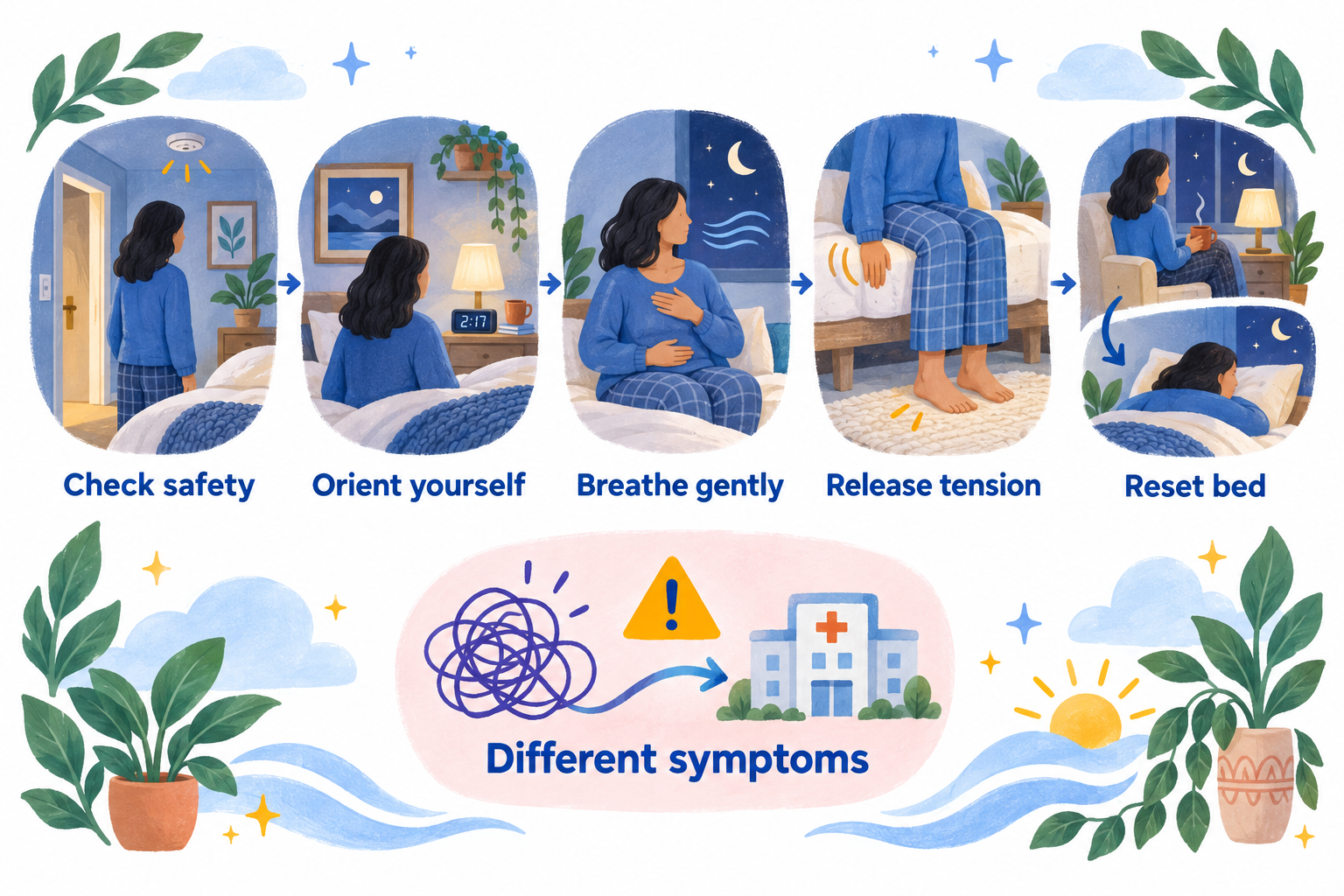
- Check whether the symptoms are familiar. Treat new severe chest pain, severe breathing difficulty, fainting, or symptoms that feel distinctly different from previous assessed panic as a possible medical problem. Do not use a breathing exercise to delay emergency care.
- Orient to the room. Place both feet on the floor if it is safe to stand or sit. Name the location, the approximate time, and several neutral details that can be seen, heard, or felt. This shifts attention from predicting danger to observing the present environment.
- Breathe gently rather than taking huge breaths. The NHS breathing exercise reviewed in June 2026 recommends comfortable, unforced breathing, with a gentle count during the inhale and exhale if that feels helpful. If counting increases distress, return to ordinary breathing and focus on the feet or hands instead. (nhs.uk)
- Release one source of tension. Use grounding techniques for anxiety to notice the senses, or tense and release one muscle group at a time. The aim is not to prove that nothing is wrong. The aim is to stop adding more effort to an already activated body.
- Reset the relationship with the bed. If the surge settles and sleepiness returns, remain or return to bed. If wakefulness turns into frustration, Veterans Affairs CBT-I guidance recommends leaving bed for a quiet, low-stimulation activity and returning when sleepy, without repeatedly checking the clock. (veteranshealthlibrary.va.gov)
Avoid trying ten coping techniques in rapid succession. Constantly switching methods can become another form of checking whether the anxiety has disappeared. Pick one body-based action and one attention-based action, then give them time.
Next step: Install the Anxiety Checklist mobile app while calm and open its always-free SOS Panic Relief mode once, so the controls are familiar if anxiety spikes overnight.
During a familiar panic surge, reduce extra alarm first; solve the larger pattern after the body settles.
What changes can reduce nighttime anxiety over the next two weeks?
The most useful short experiment combines a simple symptom log with a stable wake time and one or two targeted changes. Changing every habit at once makes it difficult to learn what is actually connected to the anxiety.
Which habits are worth testing?
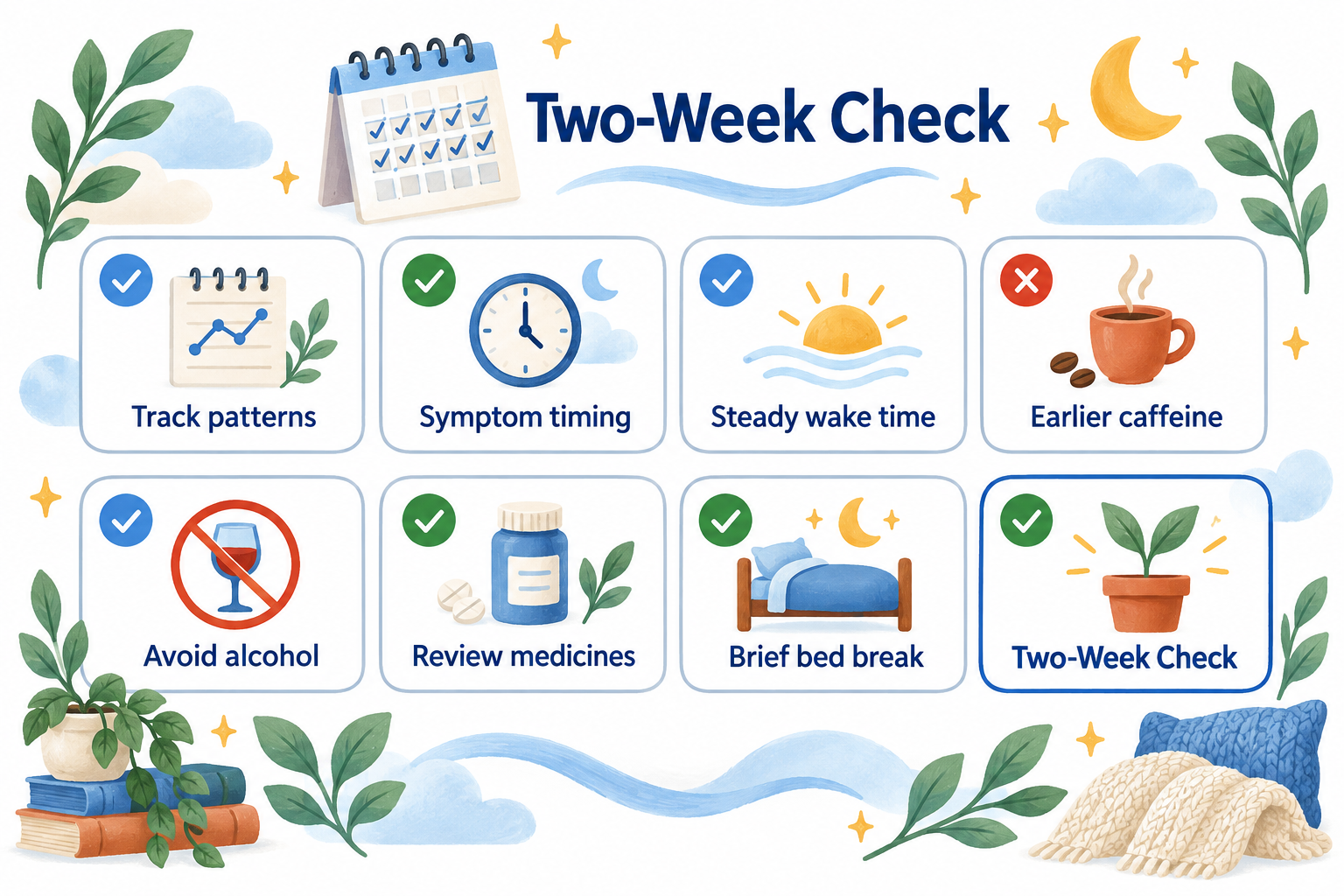
- Track the timing for 14 nights. Record when the anxiety began, whether it started before bed or from sleep, the main thought, the main physical symptom, caffeine and alcohol timing, medicines, and what helped. The CDC includes awakenings, caffeine, alcohol, exercise, and medication in its suggested sleep diary details. (cdc.gov)
- Keep the wake time steady. A consistent wake time helps stabilize the sleep schedule even after a poor night. Avoid compensating by staying in bed for long periods while awake and worried.
- Move worry into an earlier planning period. Write the problem, the next available action, and when that action can happen. If no action is possible, label it as uncertainty rather than continuing to rehearse it at bedtime.
- Test caffeine timing, not just total intake. Move the final coffee, tea, energy drink, chocolate, pre-workout product, or caffeinated medicine earlier. Sensitivity differs, so the symptom log matters more than a universal cutoff.
- Do not use alcohol as a sleep aid. Alcohol can make someone feel sleepy while still contributing to disrupted sleep and later awakening. Discuss regular evening alcohol use with a clinician if cutting back is difficult.
- Use bed when sleepy, not simply exhausted. Feeling physically drained is not always the same as being ready to sleep. If the bed has become a place for extended worry, consistent stimulus-control habits may gradually weaken that association.
- Address daytime anxiety. Nighttime techniques are less likely to hold if the daytime pattern remains untreated. CBT, appropriate professional care, and structured anxiety recovery steps can target the worry, avoidance, and fear of symptoms that continue outside the bedroom.
Bring the log to a primary care clinician, therapist, or sleep professional if the pattern continues. A record of timing and accompanying symptoms is more useful than the general statement that anxiety is worse at night.
A two-week log plus a stable wake time is more informative than changing five bedtime habits at once.
When should nighttime anxiety be checked by a doctor or therapist?
Nighttime anxiety should be assessed when it is new, repeatedly disrupts sleep, causes daytime impairment, or includes symptoms that could have a medical or sleep-related cause. Emergency symptoms and self-harm thoughts require immediate support rather than another home coping technique.
Call emergency services now for life-threatening danger, severe or new breathing trouble, or chest pain accompanied by shortness of breath or pain in the jaw or arm. MedlinePlus lists those chest-pain combinations as reasons to get medical help immediately. In the United States, call 911. (medlineplus.gov)
Get immediate crisis support for thoughts of suicide, urges to harm yourself or someone else, or an inability to stay safe. As of August 2026, the 988 Suicide & Crisis Lifeline provides free, confidential call, text, and chat support in the United States and its territories. Use the local crisis line or emergency number in other countries. (988lifeline.org)
Arrange a routine or prompt appointment if:
- The episodes are new, changing, or becoming more frequent.
- Anxiety or poor sleep interferes with work, relationships, driving, or basic daily tasks.
- There is repeated gasping, loud snoring, breathing difficulty while flat, reflux, night sweats, restless legs, or unexplained palpitations.
- Symptoms began after a medicine, supplement, substance, or dose change.
- Fear of another episode leads to delaying sleep, avoiding the bed, or staying awake for protection.
- Alcohol, sedatives, or other substances are becoming necessary to face bedtime.
- Self-help has not improved severe or distressing symptoms after about two weeks.
The 2025 NIMH help guide recommends professional help when severe symptoms last two weeks or more or interfere with usual tasks. A primary care clinician can assess possible physical contributors, while a mental health professional can evaluate panic, generalized anxiety, trauma-related symptoms, and fear of sleep. (nimh.nih.gov)
Nighttime does not make severe chest pain, breathing trouble, self-harm thoughts, or major impairment less urgent.
What else do people ask about nighttime anxiety?
These short answers address the questions most closely associated with nighttime anxiety. They are general guidance and cannot identify the cause of a specific episode.
Why is my anxiety worse at night?
Anxiety can feel worse at night when distractions fade, fatigue reduces emotional control, and lying still makes thoughts or body sensations more noticeable. Bedtime pressure and repeated nights of struggling can also teach the brain to associate bed with alertness. The exact cause depends on whether symptoms start before bed, while lying down, or after waking.
How to stop night anxiety attacks?
During a night anxiety attack, first check for unfamiliar or severe medical symptoms. If the episode matches previously assessed panic, orient to the room, breathe gently without forcing deep breaths, use grounding or muscle release, and stop watching the clock. If wakefulness turns into a struggle, leave bed for a quiet activity and return when sleepy.
What are some signs that anxiety is getting worse?
Signs anxiety may be worsening include attacks becoming more frequent or intense, avoiding sleep or normal activities, needing alcohol or other substances to cope, losing concentration, and being unable to complete usual tasks. Repeated sleep loss, persistent dread, or thoughts of self-harm are also reasons to seek professional help rather than relying only on self-help.
What should I do if I can't control my anxiety anymore?
If anxiety feels uncontrollable, contact a primary care or mental health professional and describe how often it happens, how it affects sleep, and any physical symptoms. In the United States, call or text 988 for immediate emotional crisis support. Call 911 for life-threatening danger. Outside the United States, use the local crisis line or emergency number.
Nighttime anxiety deserves self-help, professional care, or emergency support according to severity, not according to the clock.
What should you do next tonight?
Start by identifying the pattern: before bed, after lying down, or after waking from sleep. Choose one matching action rather than attempting every technique at once.
Write down when the episode started, the main thought, the main physical symptom, and what happened immediately beforehand. If the pattern is new, severe, positional, or repeatedly disruptive, use those notes to arrange an appropriate medical or mental health assessment.
Tonight, identify the timing pattern, choose one fitting action, and arrange care if the pattern is new, severe, or persistent.