


In short
Cognitive distortions are thinking biases or mental traps that can twist reality, encouraging negative assumptions, self-blame, unrealistic expectations, anxiety or self-doubt. You can challenge them by checking the evidence, considering other explanations, reframing rigid thoughts, noticing positives and focusing on what you can control. Mindfulness, gratitude, self-compassion and talking with someone trusted may also help break negative thought loops.
Key takeaways
- You cannot read minds or predict the future, so check what evidence supports an assumption.
- Feeling like a failure does not prove that you are one.
- Write down positive and negative details to see a situation more fully.
- Replace strict ‘should’ and ‘must’ statements with flexible language and realistic expectations.
- Focus on lessons and next steps instead of treating past mistakes as proof that everything is ruined.
What are Cognitive Distortions?
Keep reading to learn about these cognitive distortions in detail and take the next steps to overcome them.
14 Common Cognitive Distortions and Ways to Overcome Them
In this section, we’ll discuss some of the most common cognitive distortions and ways in which you can avoid or overcome them. You may not relate to all cognitive distortions, so look for the ones that seem familiar and work on overcoming them.
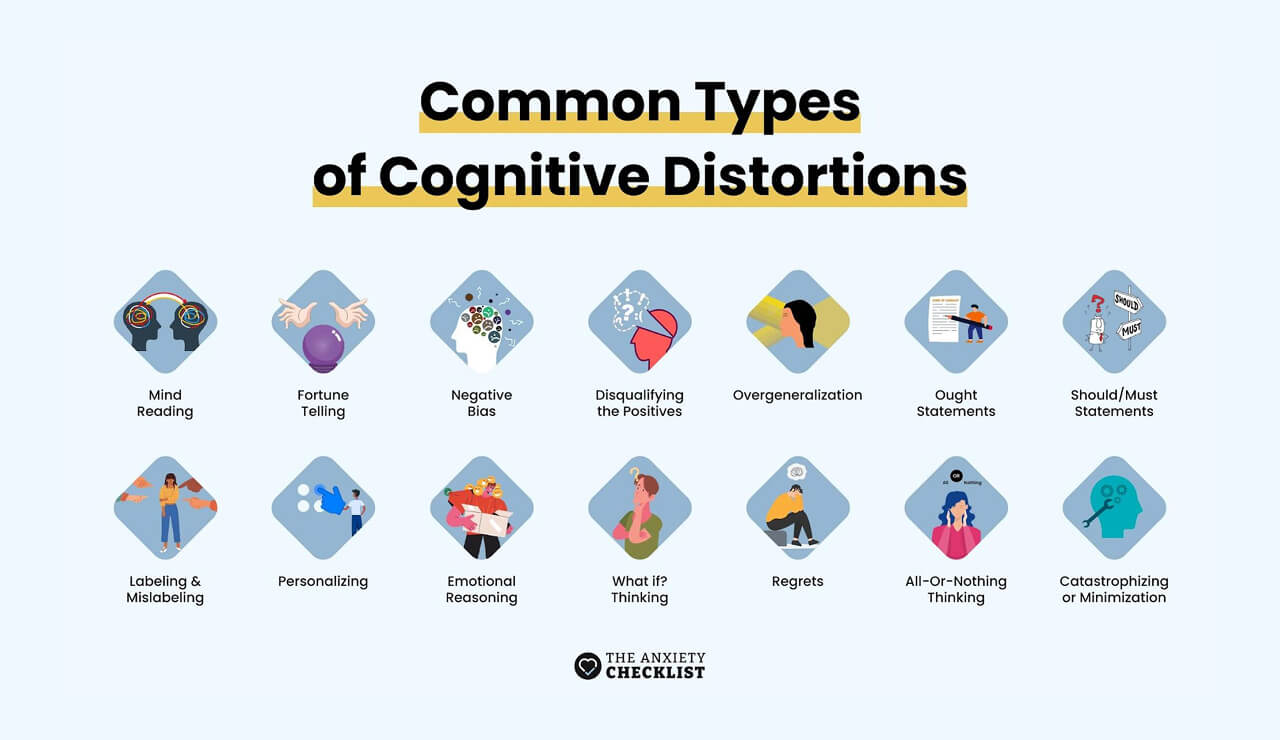
1. Jumping to a Conclusion: Mind Reading 🧠
2. Jumping to a Conclusion: Fortune-Telling 🔮
3. Jumping to Conclusions: Emotional Reasoning 🎭
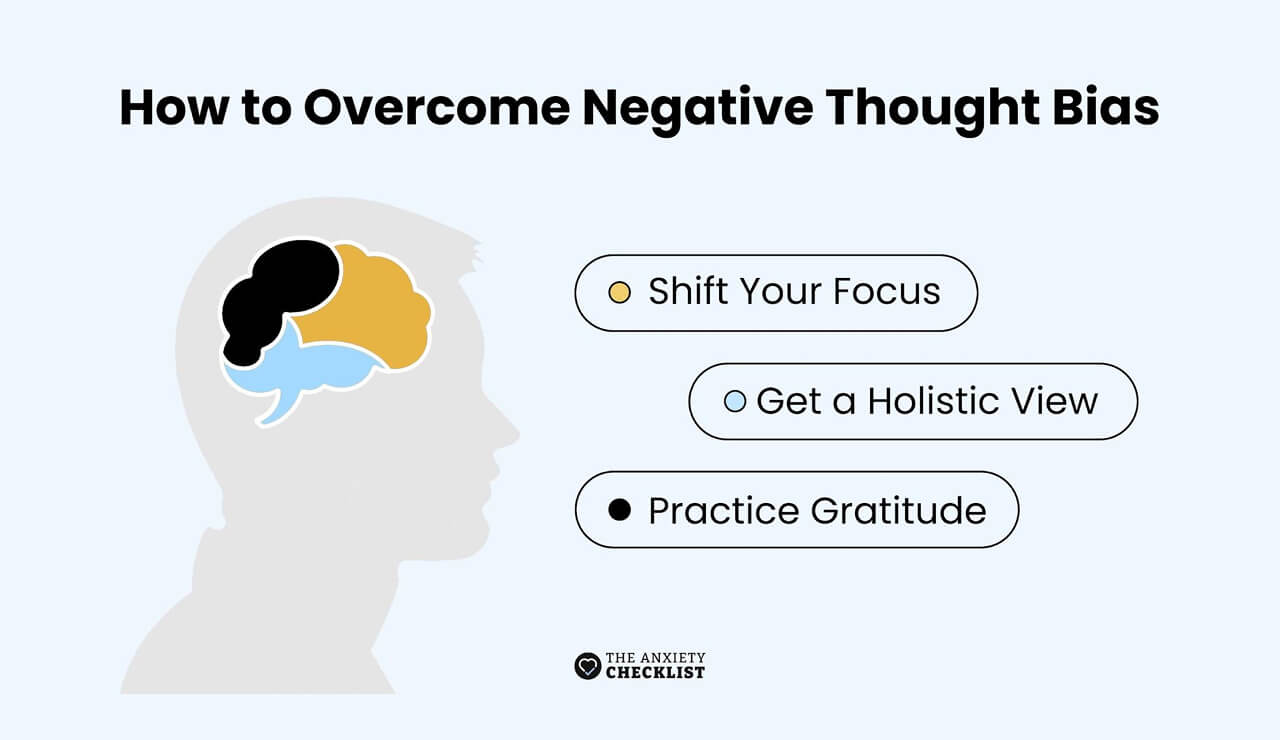
4. Negative Filtering: Negativity 👎🏼
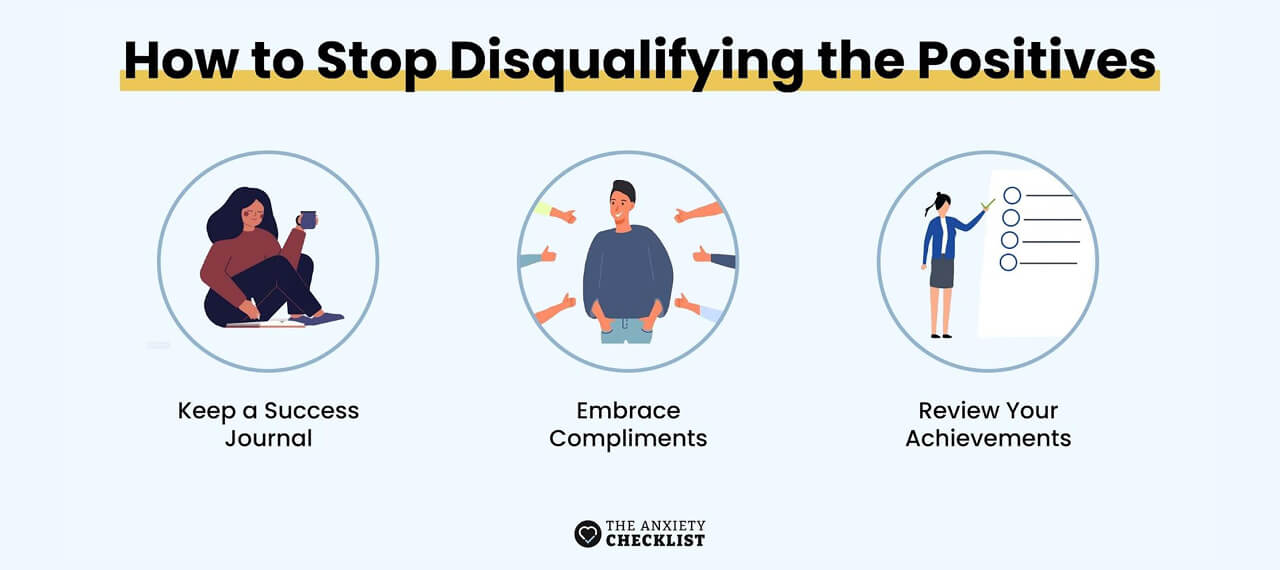
5. Negative Filtering: Disqualifying the Positive 👍🏼
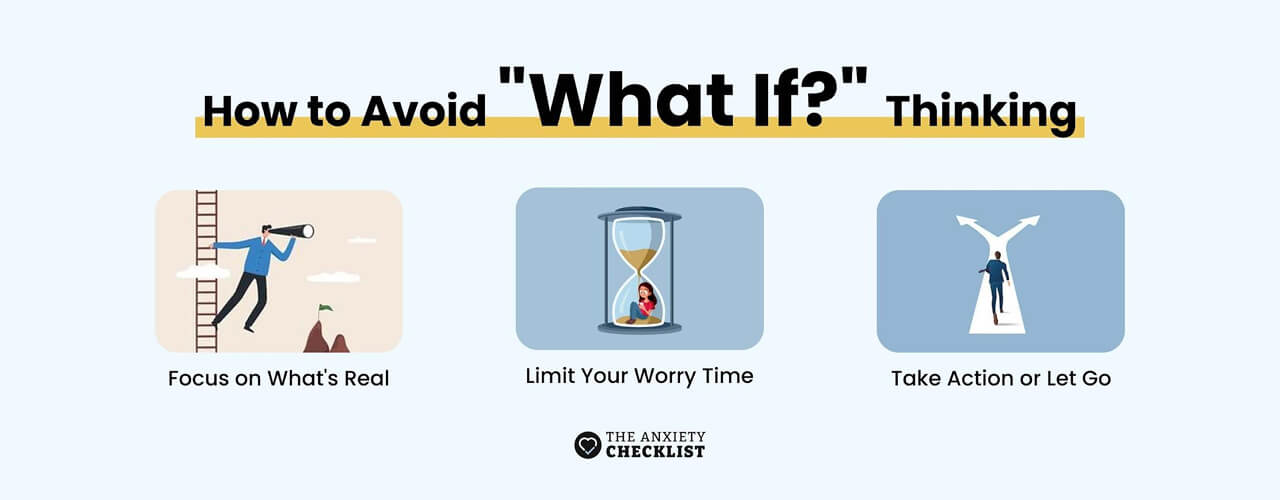
6. Negative Filtering: “What if?” Thinking 🙄
7. Unfair Expectations/Blaming: Ought Statements 🤷🏼♂️
8. Unfair Expectations/Blaming: Personalizing 
9. Unfair Expectations/Guilt: Should/Must Statements ✨
10. Unfair Expectations/Guilt: Regrets 
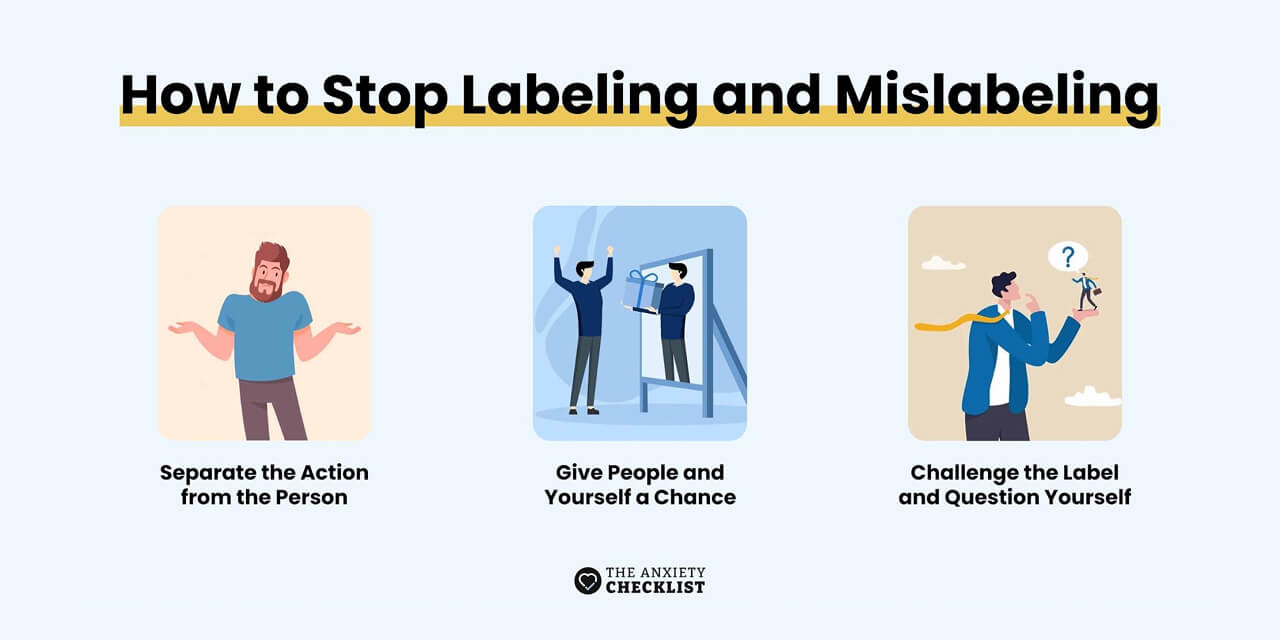
11. Rigid, Extreme Thinking: Labeling & Mislabeling 🏷️
12. Rigid, Extreme Thinking: Overgeneralization 🔁
13. Rigid, Extreme Thinking: All-Or-Nothing Thinking 🌓
14. Rigid, Extreme Thinking: Catastrophizing (Magnification) or Minimization 🤯
Frequently Asked Questions
Ready to Overcome Cognitive Distortions and Stop the Negative Thinking Loop?
Anxiety University
Explore the Anxiety University
Free guides to help you understand anxiety, one topic at a time.
- Getting StartedThe basics of anxiety and how it works
- Self-Assessments & Anxiety TestsCheck in on your symptoms with free tests
- Cognitive Traps & Thought PatternsSpot the thinking habits that fuel anxiety
- Stress ReductionPractical ways to calm your body and mind
- Common Anxiety PhobiasUnderstand specific fears and how they are treated
- Inspiring StoriesReal stories and words that remind you you are not alone