

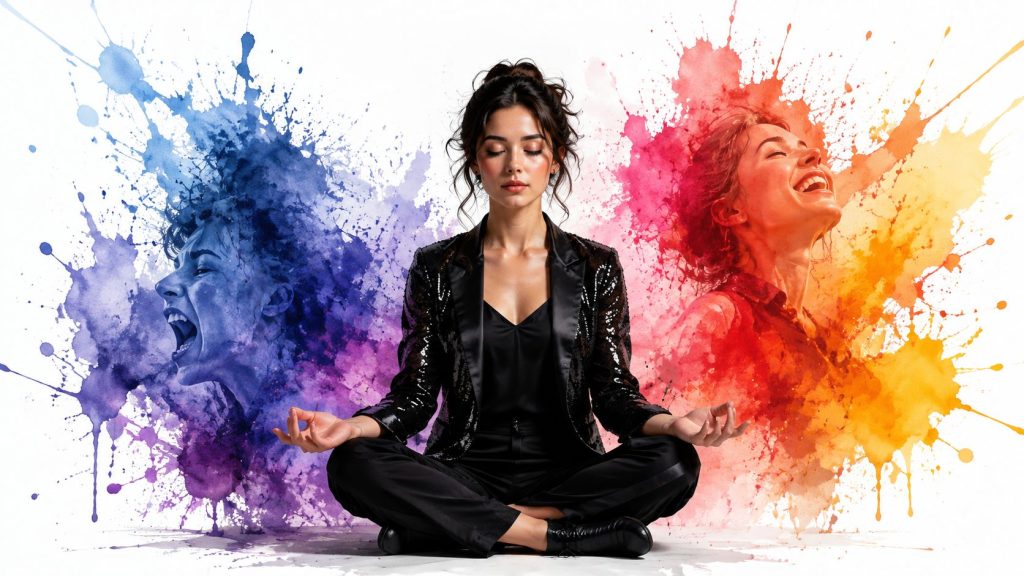
Your chest is tight. Your hands are cold or shaky. You know the material, the music, the lines, the pitch, the routine, the exam content. Then the moment gets close and your brain starts acting like danger is everywhere.
That experience can feel humiliating, lonely, and strangely physical. People with performance anxiety often say the worst part isn't just fear. It's the sense that their own mind turns against them right when they need it most.
There is a way through this. Meditation for performance anxiety isn't about becoming perfectly calm, blank, or Zen. It's about learning how to interrupt the spiral, steady your body, and train your attention so panic stops running the whole show. If you're also dealing with test-related pressure, this guide on how to overcome test anxiety can help you think through preparation and performance together. If you want broader day-to-day support, an anxiety self help platform can also make practice easier when your mind feels scattered.
Table of Contents
- You Can Overcome Performance Anxiety
- How Meditation Calms Your Anxious Brain
- Your Pre-Performance Anxiety Rescue Kit
- Daily Practices to Build Long-Term Confidence
- Creating a Consistent Practice Schedule
- Your Journey from Anxiety to Empowerment
You Can Overcome Performance Anxiety
If performance anxiety has been running your life, it's easy to assume something is wrong with you. It isn't. Your nervous system learned to treat visibility, evaluation, and uncertainty as threats. That pattern can change.
Meditation helps because it gives you something specific to do when your body surges into panic. You notice the breath. You anchor attention. You stop fighting every sensation. You practice coming back. Done consistently, that changes your relationship to stress.
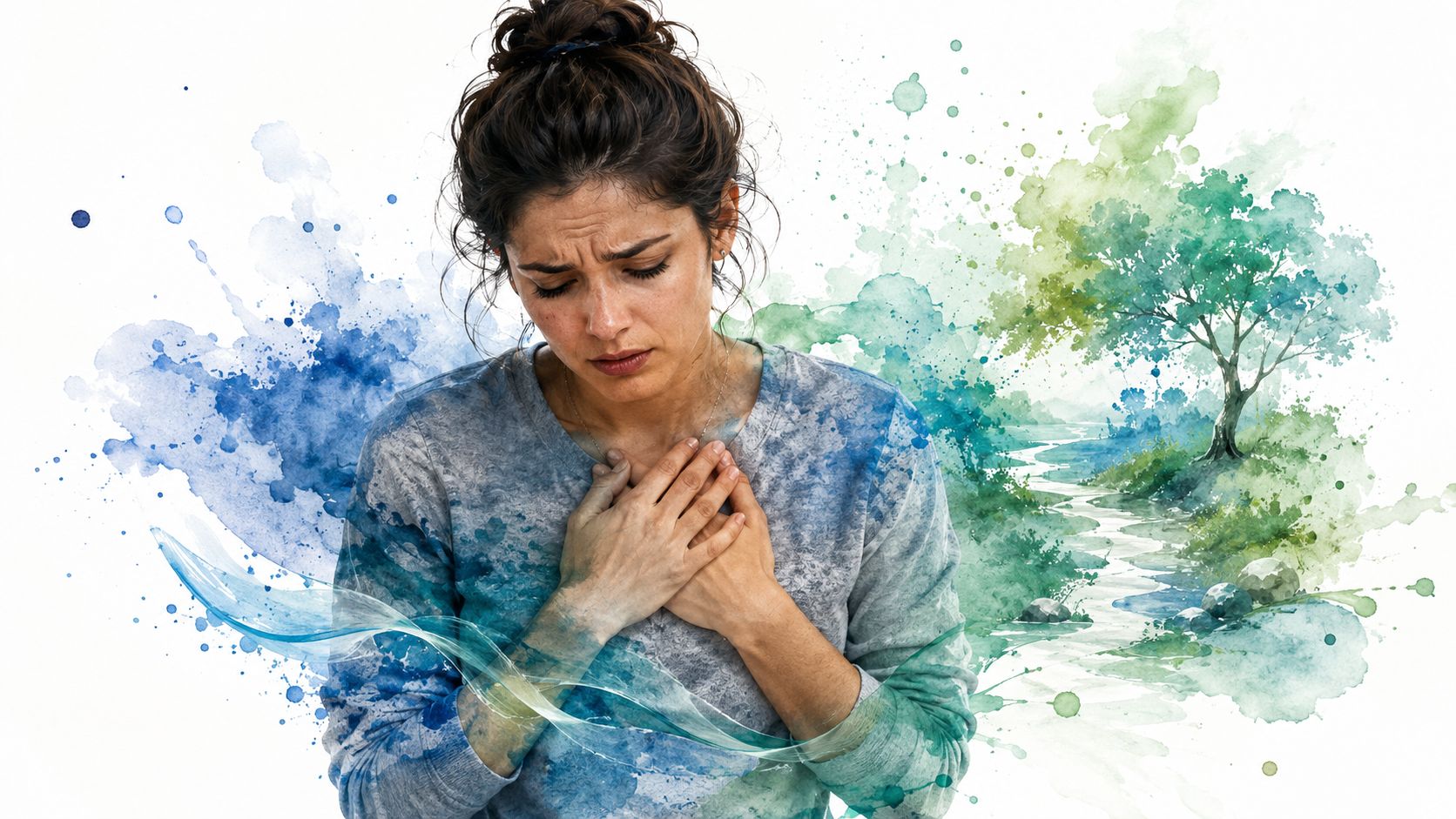
A lot of people already use meditation this way. In a U.S. nationally representative survey, 9.3 million adults had used meditation in the past 12 months, 29.2% of users reported doing so for feeling anxious, nervous, or worried, and 63.6% said meditation had helped a great deal with those health problems. The same dataset found that 11.8 million U.S. adults had ever practiced meditation for health reasons, which shows it has become a mainstream coping strategy for anxiety-related symptoms that often overlap with performance anxiety (U.S. survey data on meditation use).
Why hope is realistic
Your brain isn't fixed in its current panic pattern. It changes through repetition. Every time you feel activation and respond with steadier breathing, kinder self-talk, or grounded attention, you're teaching your system a different next step.
That matters because many individuals experiencing stage fright try one of two extremes:
- They fight the anxiety hard, which usually makes it louder.
- They avoid the trigger, which teaches the brain that the situation must have been dangerous.
Meditation offers a third path.
You don't need to erase adrenaline to perform well. You need a reliable way to stay present while adrenaline is there.
What healing actually looks like
Healing usually doesn't mean you never feel nervous again. It means the sensations stop feeling like proof that disaster is coming. Your heart can race without your mind collapsing around it. Your stomach can flutter without starting a full panic loop.
Look for signs like these:
- Shorter spirals: You recover faster when anxious thoughts start.
- Less fear of symptoms: A shaky hand or dry mouth doesn't feel catastrophic.
- More usable focus: You can return to the task instead of monitoring yourself nonstop.
That's real progress. It's also how people move toward living more freely and, over time, more panic-free.
How Meditation Calms Your Anxious Brain
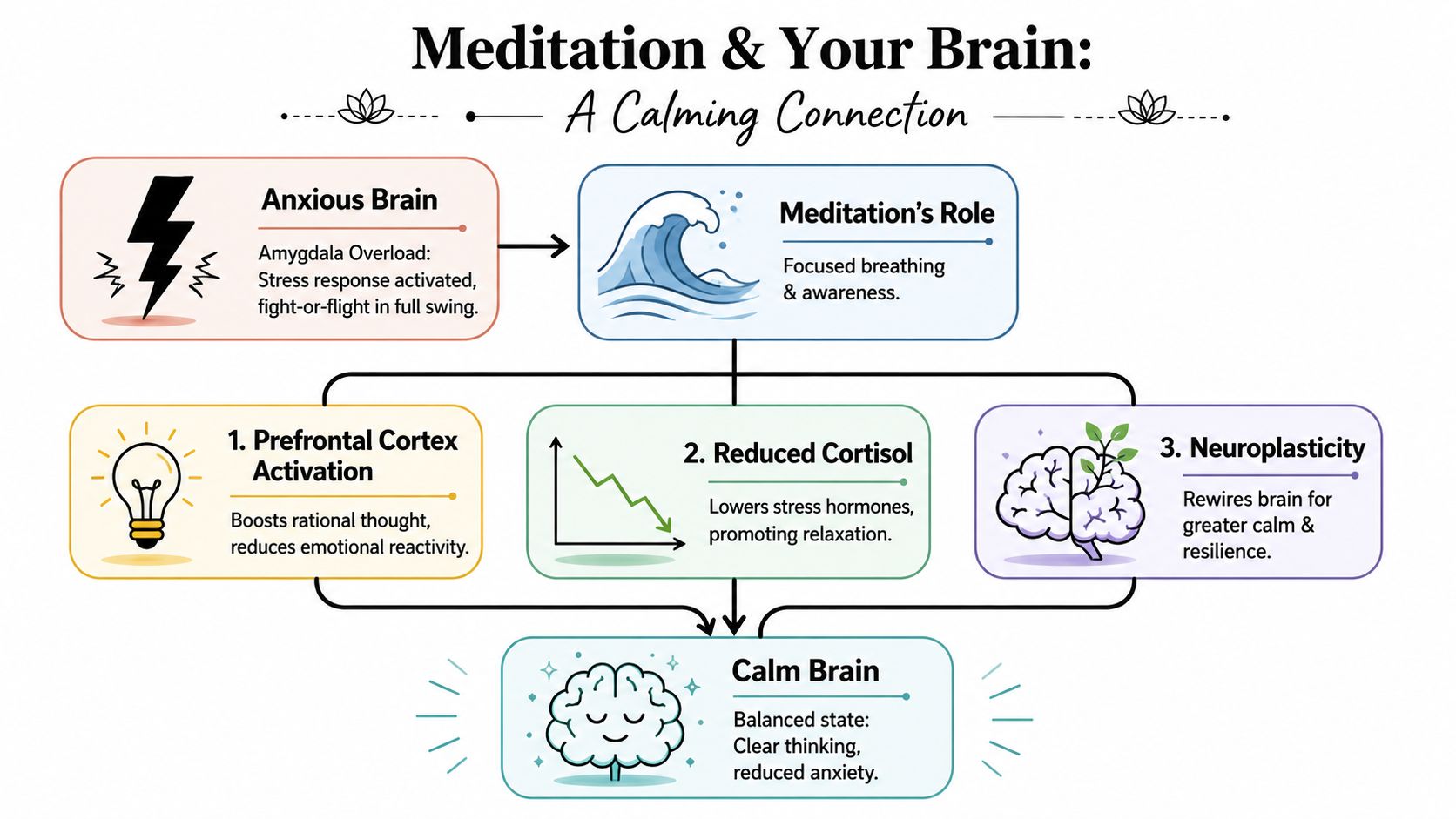
Performance anxiety feels irrational when you're in it, but the brain process is predictable. A simple way to understand it is this. Your amygdala acts like a smoke alarm. Your prefrontal cortex acts like the fire chief.
When performance pressure rises, the smoke alarm often fires first. It doesn't wait for nuance. It notices risk, judgment, uncertainty, or exposure and sends out danger signals fast.
Your alarm system is fast
That fast alarm can create the exact symptoms performers hate most. Your breathing gets shallow. Your muscles brace. Attention narrows. Thoughts become harsh and urgent. Then a second layer starts. You become anxious about being anxious.
A 2023 review of meditation for music performance anxiety found that 8 weeks of weekly meditation classes were associated with improved music performance anxiety versus a control group. The same review reported that a 9-week hatha yoga program, about 2 classes per week, improved both music performance anxiety and trait anxiety in 24 conservatory students. It also noted that body-centered and breathing-based meditations were especially common in the literature, which fits what coaches and clinicians often see in practice (2023 review of meditation for music performance anxiety).
Meditation trains the return to center
Meditation doesn't tell the smoke alarm to disappear forever. It trains the fire chief to respond sooner and more skillfully. In practical terms, you notice a threat thought, feel the body tighten, and then deliberately return attention to breath, posture, sound, or the next action.
That repetition matters more than intensity. A dramatic one-off meditation session usually won't change much. Repeated returns do.
Here is the mechanism in plain language:
- Attention gets redirected: You stop feeding the panic story every second.
- Breath gets steadier: The body receives a signal that it isn't in immediate physical danger.
- Self-observation improves: You notice sensations without treating them as commands.
Practical rule: Meditation works best when you use it as training, not as a last-second attempt to force calm.
Some people do feel more unsettled when they first turn inward. That's not failure. It usually means they notice internal sensations more clearly than before. If that sounds familiar, these strategies for meditation-induced anxiety can help you adjust the practice so it feels safer and more workable.
If you like adding sensory cues to a calming routine, some performers also explore essential oils for calm alongside breathwork and meditation. The key is to treat those supports as complements, not replacements for nervous system training.
Your Pre-Performance Anxiety Rescue Kit
Right before a performance, you don't need philosophy. You need a script.
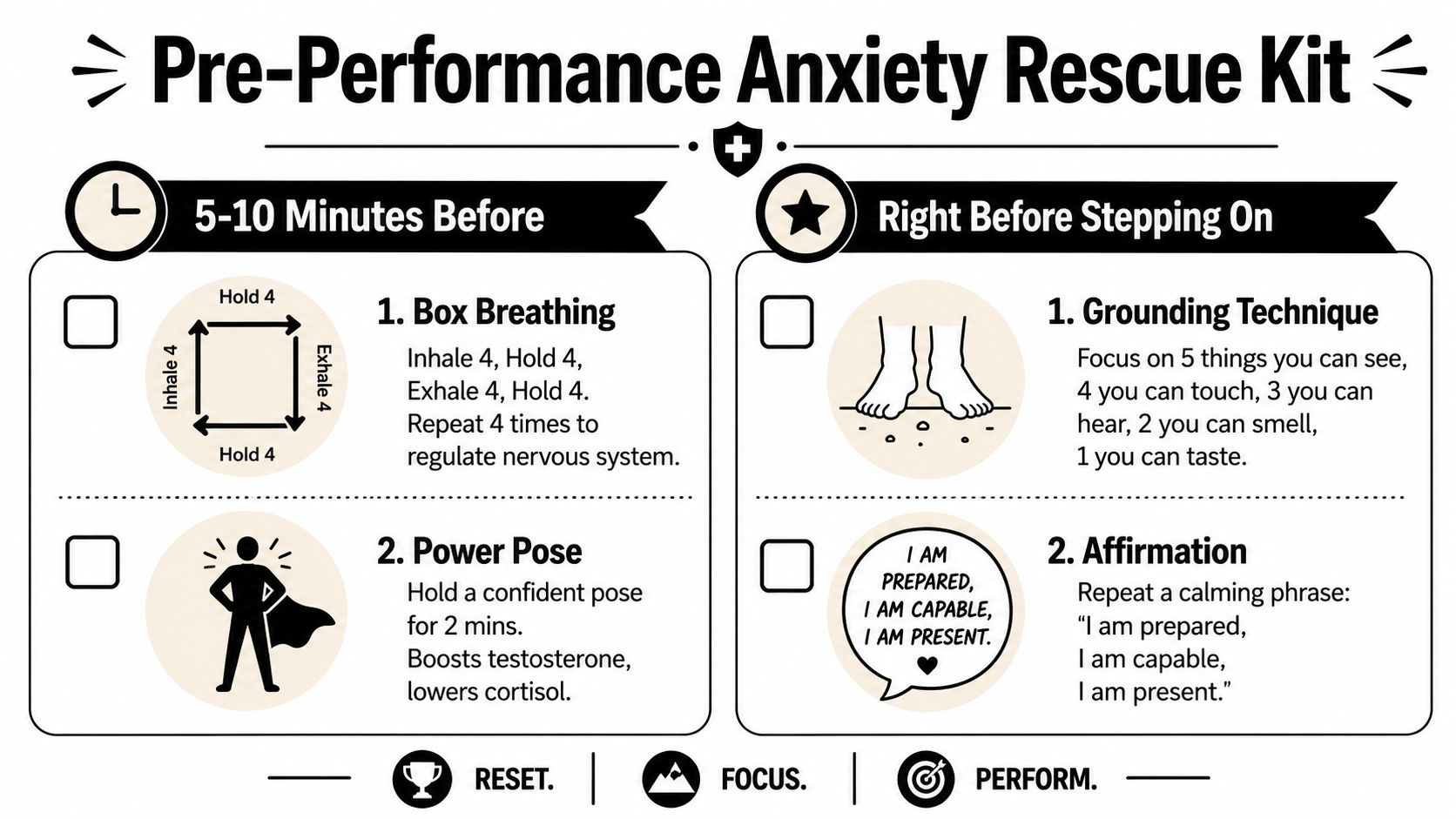
The most useful short-window approach is paced breathing plus visualization. Mayo Clinic recommends deep, even-paced diaphragmatic breathing, and performance-focused guided routines often add body scanning, grounding, and a brief mental rehearsal of calm, confident execution. A practical benchmark is 2–5 minutes of slow breathing or about 5 minutes of box breathing, followed by a short visualization using all five senses (Mayo Clinic meditation guidance).
If you want a separate walk-through for breath pacing, this guide to effective anxiety management breathing can help you practice before you need it in a high-pressure moment.
The 1 minute breath anchor
Use this when you're already activated and have almost no time.
Step 1. Plant your feet.
Press both feet into the floor. Feel the pressure in your heels and toes.
Step 2. Exhale first.
Don't gasp in. Let the first move be a slow exhale through the mouth.
Step 3. Breathe evenly.
Inhale gently through the nose. Exhale a little longer than you inhale. Keep the breath quiet, not dramatic.
Step 4. Use one sentence only.
Say, "I can feel this and still do the next thing."
This works because it lowers the urge to flee and gives your attention one job. It does not need to feel magical. It only needs to interrupt the acceleration.
The 5 minute calm and confidence routine
Use this when you have a short pre-event window and a private spot.
First, watch a guided example if you want a voice to follow:
Then use this sequence:
Minute 1, soften the body
Drop your shoulders. Unclench your jaw. Let your hands rest. Anxiety often hides in these spots.Minute 2, paced breathing
Breathe low into the belly. Keep the inhale and exhale smooth and even. If counting helps, count softly in your head.Minute 3, grounding
Name a few things you can see, feel, or hear. This shifts attention out of internal threat-monitoring.Minute 4, process visualization
Picture the first moments of the performance. See yourself walking in, settling, starting. Focus on actions, not applause or perfection.Minute 5, sensory rehearsal
Add the room, the sounds, the feel of clothing or equipment, the lighting, your voice, your pacing. End with one cue phrase such as, "Steady and present."
When visualization goes wrong, it's usually because people imagine the outcome too hard. Imagine the process instead.
Some people also like to pair this routine with a warm non-caffeinated drink. If that appeals to you, Jeeves & Jericho's anxiety tea picks offer options you can explore as part of a broader wind-down routine.
What not to do right before you perform
Last-minute meditation can help, but there are a few traps.
- Don't overcontrol the breath: Forcing huge breaths can make you feel more air hunger or lightheaded.
- Don't practice in chaos if you're a beginner: A quieter space usually works better when you're learning.
- Don't chase zero anxiety: If your goal is "I must feel nothing," you'll keep checking symptoms and feeding the loop.
- Don't use only reassurance: "I'm fine, I'm fine" often falls flat if your body doesn't believe it. Use grounding and process imagery instead.
The goal isn't to become tranquil. The goal is to become usable.
Daily Practices to Build Long-Term Confidence
The rescue kit helps in acute moments. Long-term change comes from practicing when the stakes are low.
Two forms of meditation are especially useful here. One helps you stop fearing your own physical sensations. The other helps loosen the inner critic that keeps performance anxiety alive.
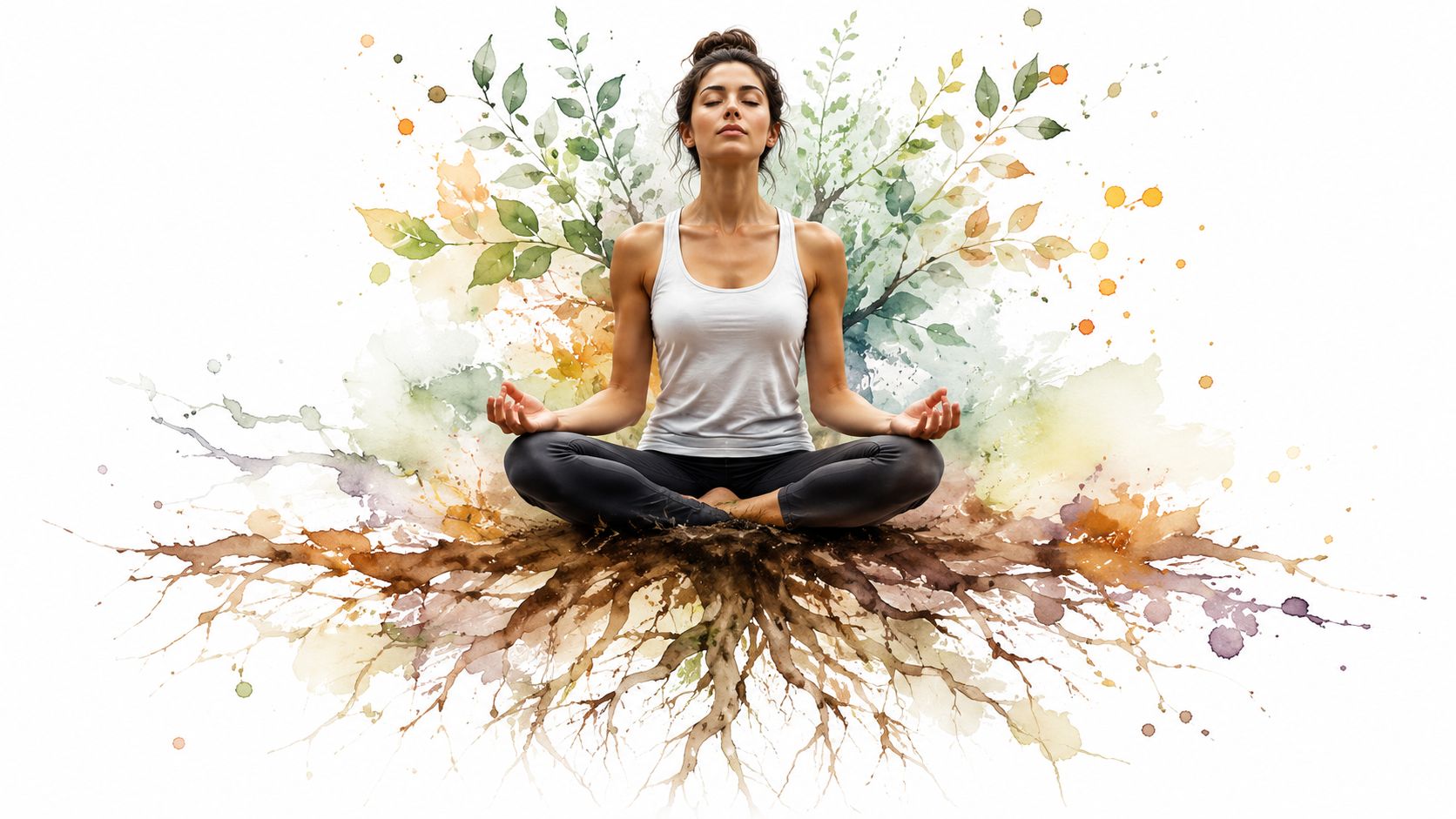
If you're trying to build a broader routine around these skills, this page on practical daily anxiety solutions can help you think in habits instead of one-off coping attempts.
A body scan for fear of physical symptoms
Many people with performance anxiety aren't only afraid of the event. They're afraid of what their body will do during the event.
A body scan helps because it teaches you to notice sensation without immediate alarm. You're building tolerance for fluttering, tightness, warmth, numbness, tension, and release. That matters because panic often grows when sensation gets interpreted as danger.
Try this for about 10 minutes:
- Start at the feet: Notice pressure, temperature, or tingling.
- Move slowly upward: Ankles, calves, knees, thighs, hips.
- Pause at common tension zones: Belly, chest, jaw, shoulders, hands.
- Use neutral language: "Tightness is here" works better than "This is bad."
If your mind starts predicting failure, don't argue with it for long. Label it gently as a thought and return to the next body area.
A body scan isn't for making discomfort vanish. It's for teaching your brain that discomfort can be observed without emergency action.
A compassion practice for the inner critic
Some performance anxiety is driven less by adrenaline and more by self-judgment. The mind says, "If I mess up, it proves something terrible about me." That's where compassion meditation becomes powerful.
Psychology Today describes a five-stage compassion practice that begins with nonjudgmental observation of your own performance-related weaknesses, then expands compassion more broadly. A practical benchmark is to rehearse the practice repeatedly before the event and pair it with a cue phrase such as "I accept, appreciate, and embrace…" to replace threat narratives with acceptance-based self-talk (compassion meditation for performance anxiety).
Use it like this:
- Sit and name the fear plainly. "I'm afraid I'll freeze."
- Notice the self-attack that follows. "If I freeze, everyone will see I'm not good enough."
- Replace judgment with compassionate observation. "This is a painful fear, not a verdict."
- Add the cue phrase. "I accept, appreciate, and embrace the part of me that wants to protect me."
- Picture yourself entering the feared setting anyway, with kindness and steadiness.
This practice works best when it isn't used as passive comfort. Pair it with real rehearsal, real exposure, and real performance imagery. Compassion helps most when it teaches your system that nerves and capability can exist together.
Creating a Consistent Practice Schedule
The missing piece for many performers isn't information. It's timing. They know meditation helps, but they don't know what to do on ordinary days versus the 24–72 hours before an event.
That gap matters. Existing advice is often too generic, while short-form guided meditations for last-minute preparation have become an emerging and useful tool (guidance on the 24–72 hours before performance). In practice, using both approaches often yields optimal results. A steady baseline routine plus a brief pre-performance script.
A simple weekly rhythm
Use this as a starting point, not a rigid rule.
| Day | Morning (10-15 min) | Midday / Pre-Meeting (1-3 min) | Pre-Performance Event (5 min) |
|---|---|---|---|
| Monday | Body scan | Breath anchor at desk or in car | Calm and confidence routine if needed |
| Tuesday | Compassion meditation | Grounding with slow exhale | Process visualization |
| Wednesday | Body scan | One-minute reset between tasks | Breath plus sensory rehearsal |
| Thursday | Compassion meditation | Quiet seated breathing | Calm and confidence routine |
| Friday | Body scan | Short grounding before evaluation or call | Process visualization |
| Saturday | Longer gentle sit or walk meditation | Optional reset | Rescue kit only if performing |
| Sunday | Compassion meditation and reflection | Optional reset | Brief rehearsal for the week ahead |
A few principles make this schedule work:
- Match the tool to the moment: Acute panic needs brevity. Baseline retraining needs repetition.
- Keep the entry barrier low: A short practice done consistently beats an ambitious plan you avoid.
- Tie practice to existing cues: After coffee, before commute, before rehearsal, after lunch.
Troubleshooting when practice falls apart
Three problems come up constantly.
"I can't quiet my mind."
You don't need to. Meditation isn't the art of having no thoughts. It's the skill of returning attention after thoughts appear.
"I don't have time."
Then shorten the practice instead of skipping it. One minute before a meeting still counts. Consistency beats ideal conditions.
"It only works when I'm calm."
That usually means you're asking too much from the tool in a crisis. Keep daily practice going, then use shorter scripts in high-pressure moments.
If you want a behavior plan that holds up when motivation drops, this guide on setting SMART goals to reduce anxiety can help you turn intention into a routine you can follow.
Your Journey from Anxiety to Empowerment
Performance anxiety can make your world smaller. It can convince you to hide, postpone, over-prepare, or leave opportunities untouched. It can also make you believe that every shaky moment means you're broken.
You're not broken. You're trainable.
What changes people most isn't one perfect meditation session. It's the repeated experience of feeling activation and discovering, again and again, that they can stay with themselves through it. They can breathe without forcing. They can notice fear without obeying it. They can perform with a pounding heart and still remain present.
Keep the standard realistic. Progress might look like fewer panic spirals, faster recovery, less dread the night before, or a kinder inner voice after a mistake. Those shifts are not small. They are the foundation of freedom.
Start with the shortest routine you know you'll actually do. Let success come from repetition, not intensity.
If you're in a rough season, be especially gentle with yourself. A shaky presentation, a tense audition, or a difficult exam doesn't erase your ability to heal. The goal isn't to become a person who never feels pressure. The goal is to become a person who knows what to do when pressure arrives.
Take one breath. Plant your feet. Pick one script from this page and practice it before you need it. That's how the path out of panic usually begins.
The Anxiety Checklist is a practical place to start if you want support between high-pressure moments. It offers an always-free SOS mode for immediate grounding, plus guided meditations, affirmations, sleep audios, and longer-term tools that help retrain your nervous system. If your mind goes blank when anxiety spikes, having one structured resource ready can make it much easier to respond with skill instead of fear.