

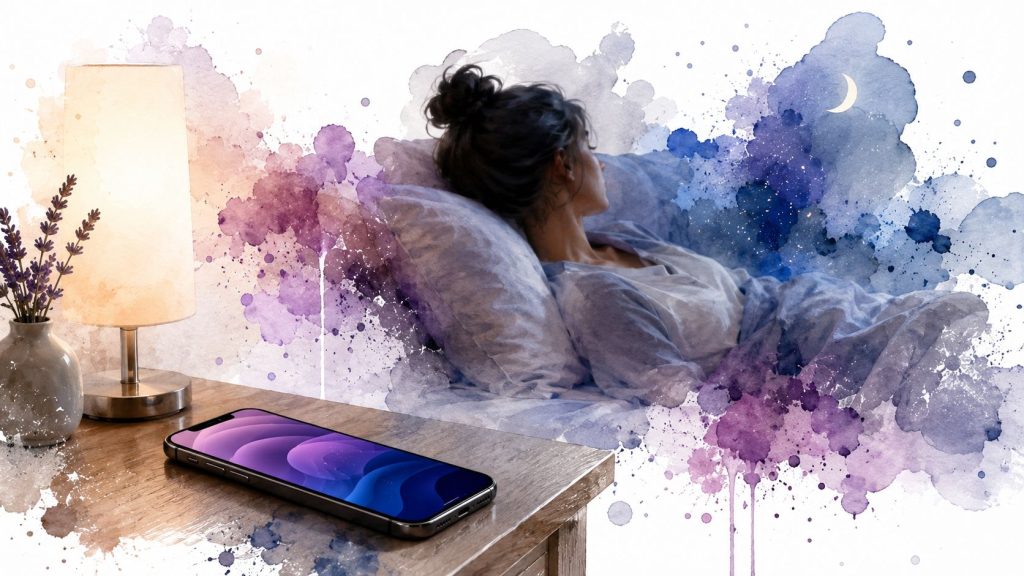
Your mind is finally still enough to notice the room. Then the thoughts start. Did I answer that message wrong? What if I don't sleep again? Why is my heart doing this right now? When anxiety hooks into bedtime, sleep can feel less like rest and more like a nightly test you keep failing.
You're not failing. Anxiety can train the brain to treat the dark, the quiet, and even the bed itself like a threat. The good news is that this pattern can soften. The best meditation app for sleep won't fix every sleep problem on its own, but the right one can help you interrupt panic, lower physical arousal, and rebuild a sense of safety at night.
This guide moves fast and stays practical. These apps aren't just for drifting off. They can also become part of a bigger recovery path, one where you stop fearing bedtime and start trusting your body again. If you also want a few non-app basics, these tips to improve sleep are a helpful companion.
Table of Contents
- 1. The Anxiety Checklist
- 2. Calm
- 3. Headspace
- 4. Insight Timer
- 5. BetterSleep
- 6. Breethe
- 7. Aura
- 8. Balance
- 9. Slumber
- 10. Pzizz
- Top 10 Sleep Meditation Apps: Feature Comparison
- Your First Step Toward a Panic-Free Night
1. The Anxiety Checklist
It is 2 a.m., your body is tired, and your mind is acting like danger is close. In that state, a sleep app needs to do more than play calming audio. It needs to interrupt the anxiety loop fast, then help you change the habits that keep bringing you back there.
That is why The Anxiety Checklist earns the top spot. It treats insomnia as a symptom of anxiety, especially the kind that shows up as panic, dread, racing thoughts, or repeated checking of your body and surroundings. For people whose nights feel hijacked by fear, that focus matters.
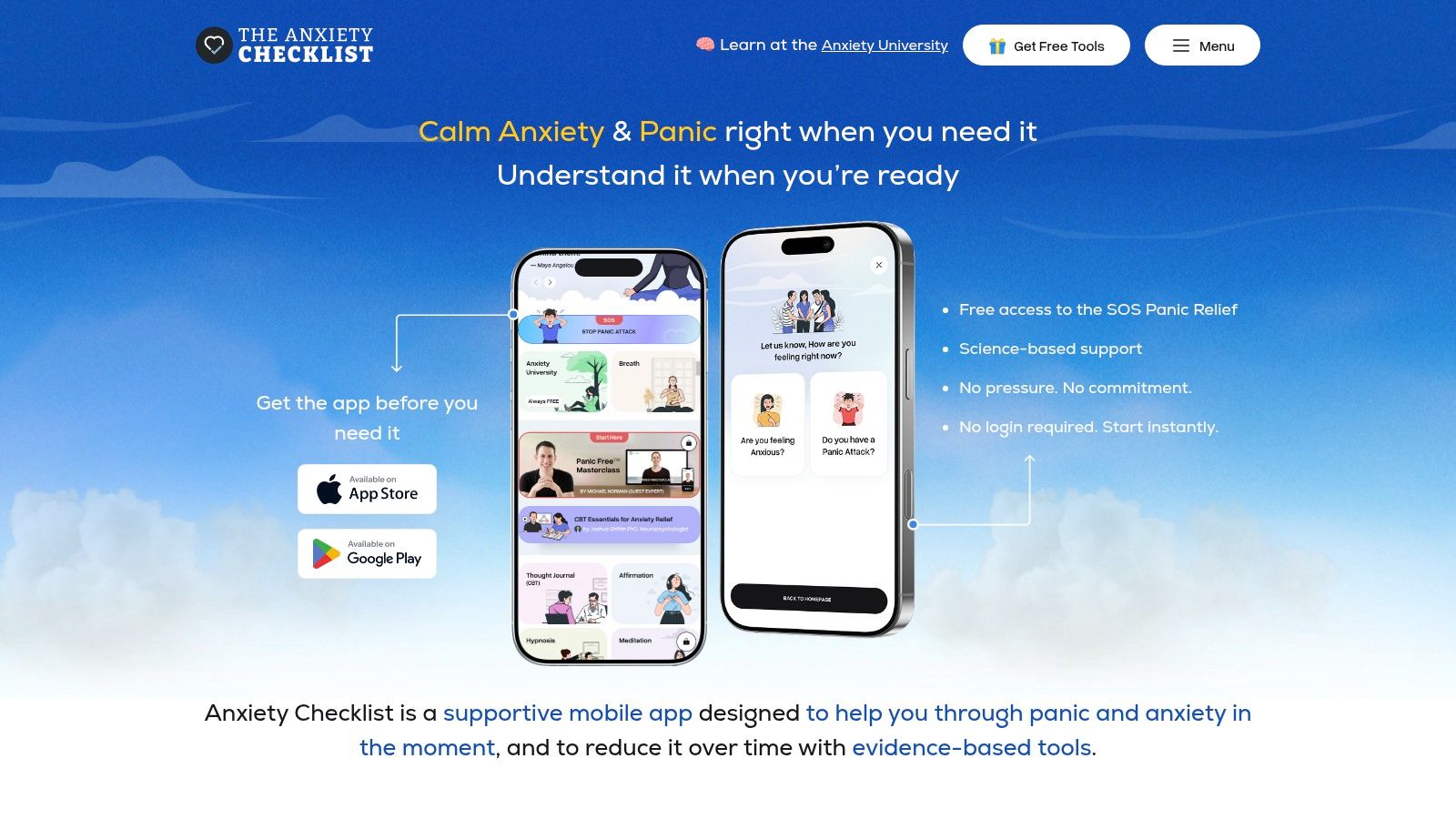
The first advantage is low friction. You can open the app and use its always-free SOS support without creating an account first. I put a lot of weight on that design choice because anxious wakefulness narrows your capacity. If your heart is pounding, even a sign-up screen can feel like one task too many.
Why it stands out at night
The app supports anxious sleepers on three levels. You get immediate tools for acute moments, including grounding exercises, affirmations, and short prompts that help you regain orientation. You also get ongoing support through sleep audios, guided meditations, hypnosis sessions, walking sessions, and affirmations. Then there is the layer many sleep apps skip: CBT-based work such as thought journaling, belief experiments, and exposure exercises.
That third layer is the difference-maker.
Sleep content can calm the surface. CBT tools help address the pattern underneath. If anxiety keeps waking you up, long-term relief usually comes from changing how you respond to catastrophic thoughts, uncertainty, and physical sensations, not from finding one perfect bedtime track.
For readers stuck in repetitive mental loops, their guidance on how to stop overthinking fits naturally with the app's broader approach to anxiety-driven insomnia.
Practical rule: If you wake in panic, skip the idea of doing sleep “correctly.” Use the shortest tool that helps your nervous system feel safe enough to settle.
There is also a strong educational side to the app. It includes a CBT introduction by Dr. Joshua Shifrin, PhD, the PanicFree Masterclass by Michael Norman, and the Anxiety University article library. That material gives people a path beyond symptom management while staying honest about limits. It is educational support, not a replacement for therapy or medical care.
Best for
- Panic-heavy nights: The always-free SOS mode gives clear direction when you are too activated for a long meditation.
- Anxiety recovery, not just sedation: CBT tools support lasting change in how you handle fear and wakefulness.
- People with low tolerance for app friction: No-account entry removes a common barrier during overwhelmed moments.
- Shared support: Family members, friends, and therapists can use the structure to support the same recovery plan.
The trade-off is straightforward. The deeper daily and long-term tools require premium access after the trial, and pricing is not listed clearly up front in this section of the experience. Even so, for sleep problems tied to anxiety, panic, and overthinking, this is the app on this list that most directly aims at healing the cause, not only softening the symptoms.
2. Calm
Calm fits the kind of night where you get into bed tired, turn off the light, and then your mind starts reviewing everything you said, forgot, or still need to handle. In that moment, polished audio can matter more than people expect. A steady voice, predictable pacing, and familiar bedtime routines often give an anxious nervous system enough safety to stop chasing thoughts.
Calm is strongest as a comfort-first sleep app. Its library gives you several ways to settle down, including Sleep Stories, guided meditations, breathing exercises, music, and ambient sound. That range helps if anxiety does not show up the same way every night. Some nights you need narration. Other nights, words are too stimulating and simple sound works better.
That flexibility is one reason Calm remains popular with people whose insomnia is tied to stress and rumination rather than full panic spirals. A widely cited survey of Calm subscribers found that many users felt the app helped them fall asleep, stay asleep, and get more restful sleep, with stronger perceived benefits among people who used it more often at night (study details here).
For anxiety healing, Calm works best as a stabilizer. It can lower the intensity of bedtime activation and help you build a repeatable wind-down routine. It is less focused on teaching you how to change the thought patterns that keep fear alive. If you are sorting out that difference, this guide on understanding meditation anxiety can help you choose practices that soothe you instead of making you feel more trapped with your thoughts.
The trade-off is clear. Calm is excellent at helping bedtime feel gentler and more predictable, but it is not the most targeted option for panic-specific support or CBT-style anxiety retraining. It also keeps many of its best features behind a paid subscription. For readers who want a reassuring, easy-to-use app they will return to consistently, Calm is still one of the better tools for reducing anxiety-driven wakefulness at the start of the night.
3. Headspace
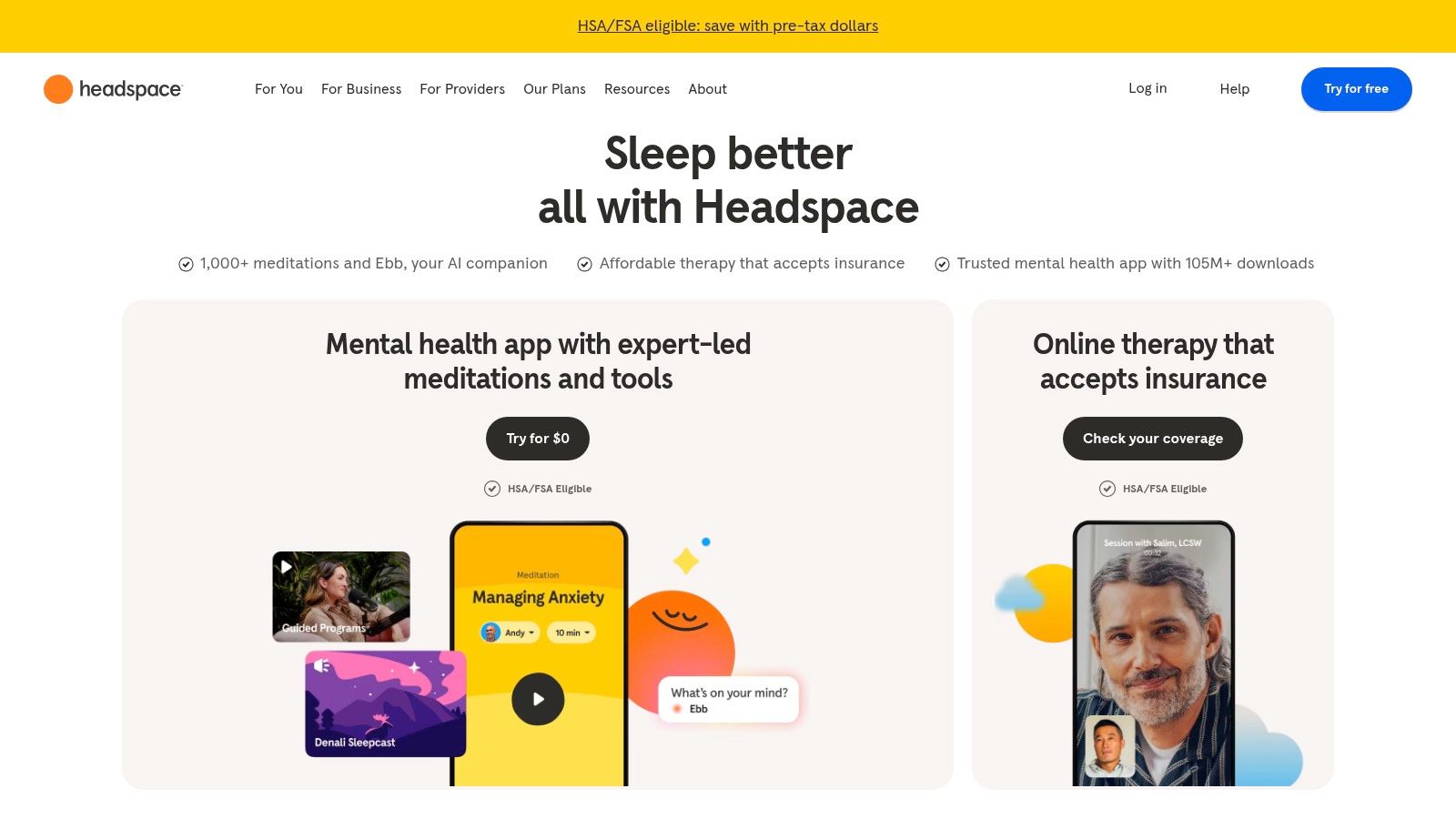
Headspace is for the person who wants guidance, not just atmosphere. Its sleep content feels structured and approachable, which helps if anxiety gets louder when you're left alone with your thoughts. The app's Sleep by Headspace section includes sleepcasts, wind-downs, sleep music, guided meditations, and a Nighttime SOS option for middle-of-the-night wakeups.
That Nighttime SOS feature is worth highlighting. Many sleep apps are designed for sleep onset only. Headspace at least acknowledges the problem a lot of anxious sleepers face, which is waking at 2 a.m. with a body that feels on high alert.
Best use case
Headspace works well when rumination is the main obstacle. Its sleepcasts are intentionally low-stakes and plot-light, which is a smart design choice for people who tend to spiral. If your brain grabs onto suspense, strong narrative arcs, or emotional themes, simpler audio often works better.
Independent clinical synthesis also gives app-based meditation more credibility than many people assume. A 2025 NIH-hosted review reported modest but consistent reductions in depression and anxiety across meditation apps, and it specifically noted a Calm-app trial where insomnia symptoms improved versus waitlist control with a large effect size, in a trial with n = 1,029. That doesn't make every meditation app equal, but it does support the category as a real sleep-support tool.
If racing thoughts are your nightly issue, pairing Headspace with active daytime work on how to stop overthinking can make the app more effective.
- Pros: Distinctive sleepcasts, broad mindfulness ecosystem, middle-of-the-night support option.
- Cons: Best features require payment, and some users find navigation changes annoying when they just want sleep content fast.
Website: Headspace
4. Insight Timer
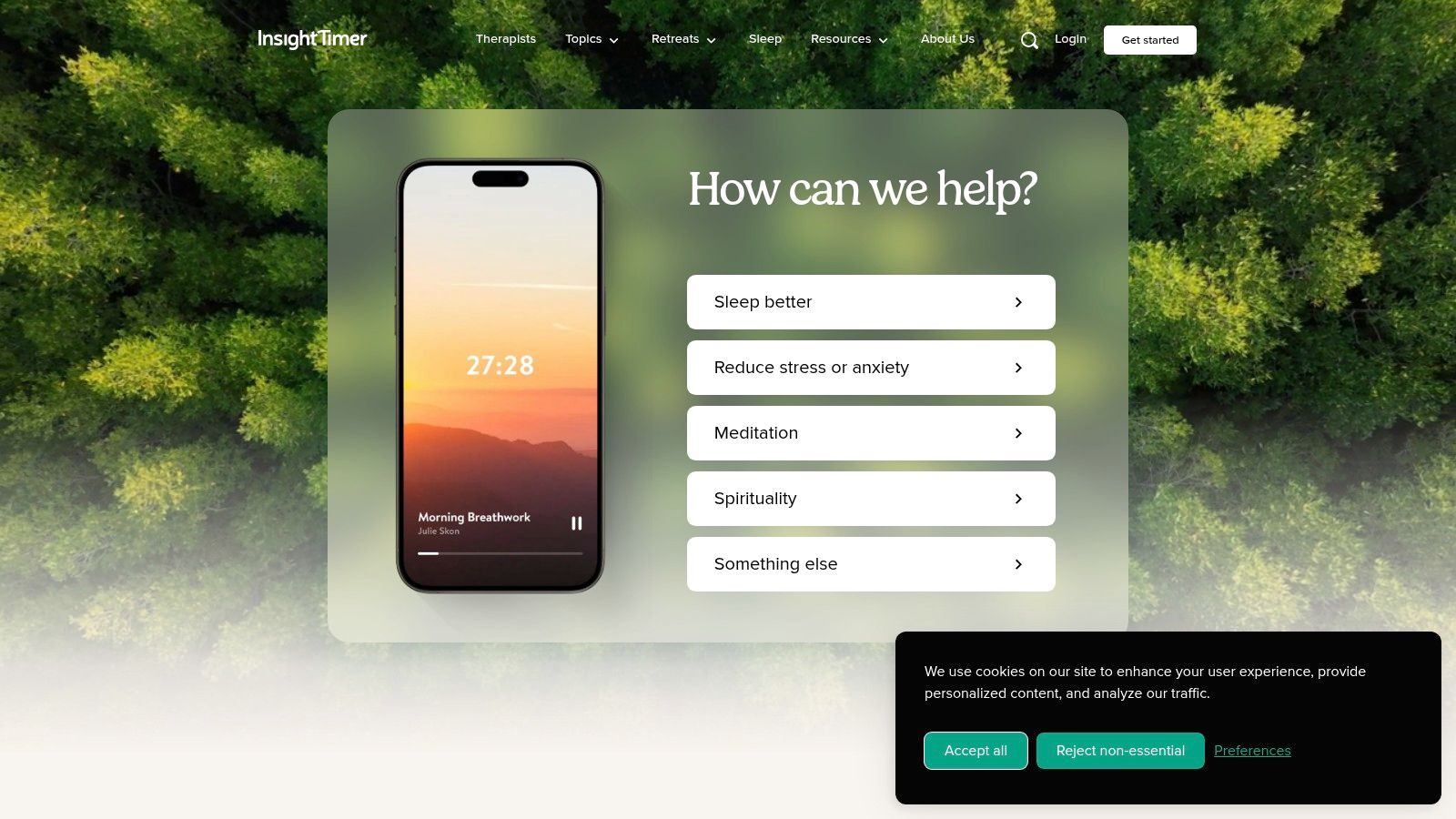
It is 12:47 a.m., you are tired, and the first voice you try irritates you within 20 seconds. That small reaction matters more than people think. When anxiety is already pushing your nervous system toward alertness, a sleep app has to feel tolerable before it can feel helpful.
Insight Timer works well for people who need options. Its library is huge, and that matters if anxiety-driven insomnia does not respond to one style of guidance. Some nights, a body scan settles the mind. On other nights, a simple ambient track or Yoga Nidra session works better because it gives the brain less to argue with.
What makes it different
Insight Timer is less tightly curated than Calm or Headspace, which creates a real trade-off. You get a wider range of teachers, tones, and sleep formats, but you also have to sort through more material to find what helps you at 1 a.m.
That freedom can be useful for anxious sleepers who feel misunderstood by one-size-fits-all meditation. The app gives you room to test different approaches, including secular practices, spiritually framed sessions, breathwork, bedtime stories, and longer overnight audio. Used well, that variety can help you learn an important anxiety skill. You start noticing which inputs settle your body, which ones make you more self-aware, and which ones keep you mentally active when you need less stimulation.
I have seen this pattern often. People who say, "meditation does not work for me," sometimes mean, "that teacher, that pacing, or that style did not work for me."
The downside is obvious. Too much choice can increase bedtime friction, especially if you are already tense and decision-fatigued. Insight Timer is best used as a practice library, not a late-night search engine. Save a short list of reliable favorites during the day so your nighttime self does not have to experiment while stressed.
For anxiety recovery, that point matters. A sleep app should not only knock you out for one night. It should help you build a repeatable sense of safety around bedtime. Insight Timer can support that process if you treat it as a place to identify your calming patterns, then turn those patterns into a stable routine.
- Best for variety: Strong choice if you are particular about voice, pacing, music, or meditation style.
- Best for budget-conscious users: Free content is more generous than many competing apps.
- Less ideal for overwhelmed users: The large library can feel messy if you want a simple, guided path.
Website: Insight Timer
5. BetterSleep
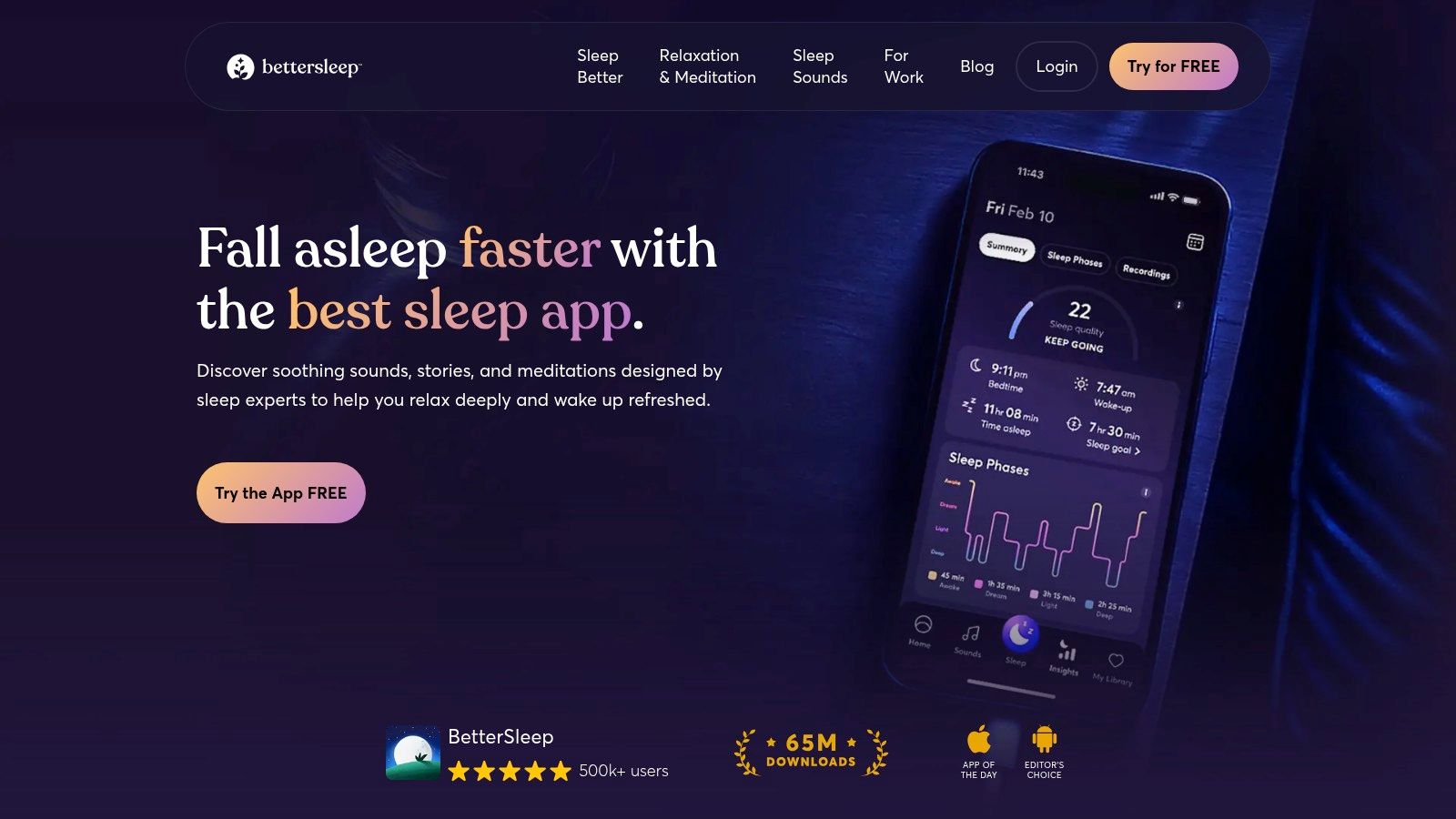
BetterSleep is a strong pick when meditation alone doesn't do it for you. Some anxious sleepers don't need more insight. They need a bedroom environment that feels predictable, muffled, and physically calming. BetterSleep leans into that practical side of sleep support.
Its strength is customization. You can build your own mixes from noise colors, nature sounds, and music, then pair those with sleep meditations, breathing exercises, and stories. If you're noise-sensitive or easily pulled awake by small environmental changes, this app gives you more control than a meditation-first platform usually does.
Who it helps most
This app works well for people whose sleep anxiety is partly sensory. Maybe silence makes your thoughts louder. Maybe random house noises keep snapping you back to alertness. Maybe your body relaxes more easily when there's a consistent sound bed in the room.
That's where BetterSleep often beats more famous meditation apps. It treats sleep as a full environment, not just a mindset problem.
- Best for sound customization: Strong option for white noise, brown noise, rain, fan-like ambience, and layered soundscapes.
- Best for routine builders: Helpful if your nervous system responds to repetition and consistent cues.
- Less ideal for CBT-style anxiety work: It can settle you, but it won't teach you much about fear patterns or thought habits.
The main frustration is that pricing and free-versus-premium boundaries can feel inconsistent depending on where you access it. Still, for tactile, sensory sleepers, BetterSleep can be more effective than a pure meditation app.
Website: BetterSleep
6. Breethe
Breethe sits in the middle between a sleep app and a broader emotional wellness app. It offers sleep stories, guided meditations, hypnosis-style tracks, soundscapes, and personalized suggestions through its in-app assistant. If choosing content at bedtime stresses you out, that recommendation layer may help.
The biggest reason to consider Breethe is format variety with less digging. You don't have to decide in advance whether you're a “meditation person” or a “sleep story person.” You can try both, plus hypnotherapy-style sessions, inside one calmer-feeling environment.
The trade-off
Breethe is useful for anxious sleepers who get overloaded by too many menus. It narrows the path a bit. That can make it easier to stick with a routine, especially if decision fatigue is part of your nightly stress.
Where it's weaker is transparency and precision. Pricing can vary by store or promotion, and some people may prefer a platform with a more clearly defined evidence-based identity. Breethe feels supportive, but not as structurally targeted as an anxiety-specific tool.
A good way to think about it is this. Breethe is a gentle guide, not a deep therapeutic framework.
If bedtime browsing keeps you awake longer, an app with recommendations can work better than one with a huge open library.
Website: Breethe
7. Aura
Aura makes sense for people whose nighttime anxiety starts long before they get into bed. If daytime stress spills into the evening, a platform that includes short meditations, sleep tracks, stories, and optional coaching-style features can feel more supportive than a sleep-only tool.
One thing Aura does well is flexibility of length. Some nights you need a quick nervous-system downshift. Other nights you need a longer story or sound track because you're too activated to settle quickly. Aura gives you both styles.
Why Aura can help anxious sleepers
Aura is especially appealing for people who want family sharing or a broader household wellness tool. If more than one person in the home deals with stress or sleep issues, that can matter. The shorter sessions also make it easier to practice before anxiety becomes overwhelming.
This app is less about deep specialization and more about broad support. That's useful if your goal is general emotional steadiness, not just emergency sleep help.
For people who want more psychoeducation alongside meditation, pairing Aura with outside anxiety learning resources can fill that gap.
- Pros: Short and long formats, family-friendly options, broad wellness feel.
- Cons: Premium features and coaching-style add-ons can increase overall cost, and the app may feel less focused if you want a very specific sleep protocol.
Website: Aura
8. Balance
Balance is one of the best choices for people who want less clutter. If a busy interface wakes your brain up instead of calming it down, Balance has a cleaner, more directed feel than many competitors. That matters when you're trying to decide on audio while already half-tired and irritable.
Its personalization is the main selling point. The app adapts based on your goals and responses, then guides you toward relevant meditations and sleep content. For anxious users, that can reduce the mental friction that comes from sifting through too many options.
What Balance gets right
Balance understands that decision fatigue is real. A simple sleep tab, concise wind-downs, and straightforward sound content can be more useful than an enormous library you never learn how to use. The app tends to feel practical rather than performative.
It also fits people who want meditation to become a skill, not just a sleep aid. The goal-driven plans can support daytime calm, which often improves nights indirectly.
The downside is that offers and promotions can vary, which can make the subscription picture feel a little inconsistent. But if you want a straightforward answer to the best meditation app for sleep, Balance is one of the easiest to live with nightly.
Website: Balance
9. Slumber
Slumber is for people who don't want a giant wellness ecosystem. They want sleep content, simple controls, and as little fuss as possible. In that narrow lane, Slumber does a lot right.
Its focused design helps when you're already drowsy or overstimulated. Sleep stories, guided meditations, ASMR, kids' stories, and background-sound controls all stay close to the main problem. Sleep.
Where Slumber shines
The delayed ending option is a thoughtful feature. If narration helps you settle but silence wakes you back up, keeping ambient sound playing after the voice ends can smooth that transition. Small details like that matter more than flashy branding when anxiety makes your sleep fragile.
Slumber is also a good match for people who know they mainly want stories and atmosphere, not daytime self-development content. It stays in its lane.
Its limitation is the same thing that makes it appealing. Outside sleep, there isn't much ecosystem depth. If your insomnia is tightly tied to panic, catastrophic thinking, or daytime hyperarousal, you may eventually want a second tool for the deeper anxiety work.
Website: Slumber
10. Pzizz
Pzizz is a smart option if you're too wired to browse. It focuses on dynamic dreamscape-style audio that changes over time, which can help if repeated tracks stop working for you or start blending into your anxiety pattern.
The appeal here is low decision demand. Open it, choose sleep, nap, or focus, adjust a few settings if you want, and start. That simplicity can be a relief on nights when even choosing a meditation feels like another chore.
Best fit
Pzizz often works well for people who don't necessarily want “meditation” in the traditional sense. They want intrusive thoughts to lose volume. The layered voice, music, and sound design can do that without requiring much effort or concentration.
The sound style is more utilitarian than luxurious, so some users won't love the aesthetic. But effectiveness at bedtime often comes down to whether you'll use the thing.
If you're curious about audio-based calming tools beyond standard narration, The Anxiety Checklist's guide adds helpful context.
Website: Pzizz
Top 10 Sleep Meditation Apps: Feature Comparison
| App | Core Features | User Experience ★ | Price & Value 💰 | Target Audience 👥 | Key Differentiator ✨ |
|---|---|---|---|---|---|
| 🏆 The Anxiety Checklist | Always-free SOS mode; CBT self-therapy; hypnosis, meditations, sleep audios | ★★★★☆, fast, low-friction relief | 💰 Freemium + 7‑day premium trial; SOS always free | 👥 People needing instant panic relief & long‑term tools | ✨ Zero‑login SOS + expert CBT courses (Dr. Shifrin, PanicFree) |
| Calm | 100+ Sleep Stories, guided meditations, soundscapes | ★★★★☆, high‑production, polished UI | 💰 Subscription; lifetime option available | 👥 Users wanting premium sleep stories & celebrity narrators | ✨ Deep, cinematic sleep catalog |
| Headspace | Sleepcasts, wind‑downs, Nighttime SOS, meditations | ★★★★☆, evidence‑informed, consistent UX | 💰 Subscription required for best features | 👥 Users seeking structured mindfulness + sleepcasts | ✨ Distinctive plot‑free sleepcasts |
| Insight Timer | 300k+ practices; huge free sleep library; custom timer | ★★★★☆, vast but sometimes cluttered | 💰 Extremely generous free tier; premium for courses | 👥 Explorers wanting variety & long‑form tracks | ✨ Massive creator ecosystem & free overnight content |
| BetterSleep | Mixable soundscapes; guided meditations; sleep tracking | ★★★★☆, customizable bedtime toolkit | 💰 Freemium; pricing varies by platform | 👥 Users who need tailored ambient audio | ✨ Highly customizable sound mixes & timers |
| Breethe | Sleep stories, hypnotherapy audios, in‑app assistant “Bree” | ★★★★☆, personalized recommendations | 💰 Subscription; regional pricing/promos | 👥 Users overwhelmed by choice who want personalization | ✨ In‑app assistant curates bedtime picks |
| Aura | Short rotating sessions, sleep meditations, family plan | ★★★☆☆, simple, short‑form focus | 💰 Premium for full library; family plan option | 👥 Families & users preferring short preps | ✨ 3‑minute rotating free sessions; family sharing |
| Balance | Personalized plans, sleep singles, goal‑driven UI | ★★★★☆, streamlined, minimal decision fatigue | 💰 Subscription with variable promos | 👥 Users wanting tailored programs & simple UX | ✨ Adaptive plans based on check‑ins/feedback |
| Slumber | Sleep stories, ASMR, mix‑in sounds, delayed ending | ★★★★☆, very sleep‑focused, drowsy‑friendly UI | 💰 Freemium/in‑app purchases; promotions vary | 👥 Users who want a simple, sleep‑only app | ✨ Delayed ending & flexible ambience controls |
| Pzizz | Algorithmic “dreamscapes”; Sleep/Nap/Focus modes | ★★★★☆, minimal decision, reliable audio | 💰 Free Classic; Pro subscription with 7‑day trial | 👥 Users wanting low‑effort, nonrepetitive audio | ✨ Ever‑changing remixed sessions to avoid repetition |
Your First Step Toward a Panic-Free Night
Finding the best meditation app for sleep is personal. The app that helps one person drift off may do very little for someone else who wakes in a full-body panic at 3 a.m. That's why the smartest choice isn't always the biggest library or the prettiest interface. It's the app that matches the kind of anxiety you're dealing with.
If your nights are mostly about trouble winding down, Calm, Headspace, and Slumber are strong options. If you want variety without paying immediately, Insight Timer is hard to ignore. If your body reacts strongly to sound and environment, BetterSleep can be more practical than a classic meditation platform. If decision fatigue is part of the problem, Balance and Breethe make bedtime feel simpler.
But if anxiety is the primary cause behind your sleep struggle, not just a side note, a more targeted tool usually helps more. That's why The Anxiety Checklist stands out. It doesn't just help you pass the time until you're tired enough to crash. It gives you tools for acute panic, daily regulation, and longer-term CBT-based change. That combination is what many anxious sleepers need.
There's also an important mindset shift here. Sleep meditation works best as a support, not a test. You don't need to “do it right.” You don't need to clear your mind perfectly. And if you wake up and can't fall back asleep quickly, it helps to stop treating the bed like a battleground. The NHS and Mayo Clinic guidance discussed earlier supports a simple principle. If you've been awake for a while, get up and do something quiet instead of forcing sleep. An app can then become a calming companion rather than another source of pressure.
Healing from anxiety often starts with small repetitions. One grounding exercise. One shorter spiral. One night where you respond with kindness instead of fear. Those moments build trust. Over time, that trust can change your relationship with sleep.
So pick one app. Try it consistently. Keep your expectations gentle. If one style doesn't help, that doesn't mean you're broken. It means your nervous system needs a different kind of support. Restful nights can come back, and a calmer life is possible. If you want a few extra foundations beyond apps, this guide on how to get better sleep is a useful next read.
If anxious nights have started to feel bigger than simple sleep trouble, The Anxiety Checklist is a strong place to begin. It offers immediate SOS support when panic spikes, plus daily calming tools and deeper CBT-based exercises to help you build lasting resilience. If you want more than a soothing voice at bedtime, and you're ready for a tool that supports real anxiety recovery, it's worth trying.