

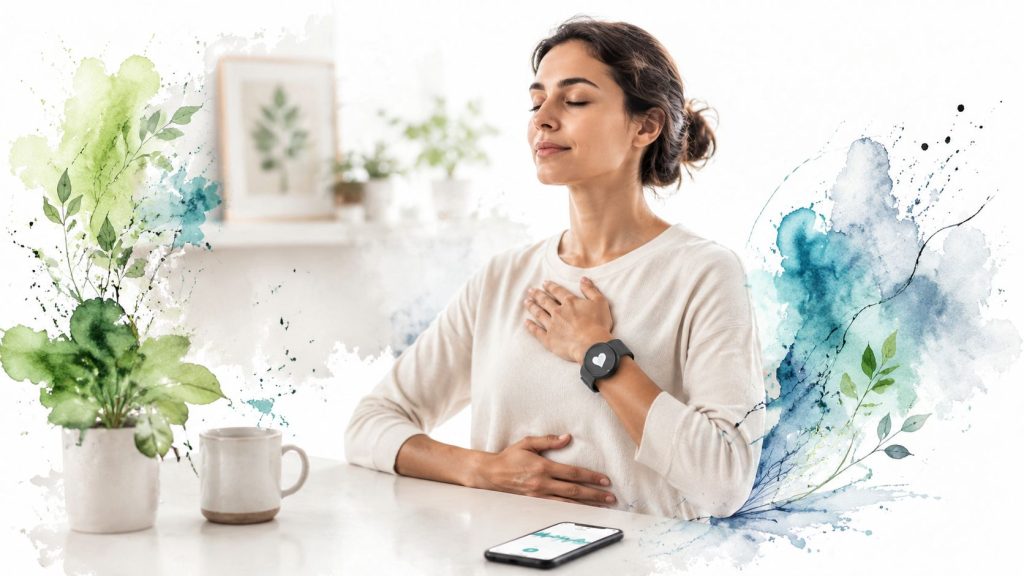
You're lying awake with a racing chest, trying to slow your breathing while your mind keeps scanning for danger. You've probably already told yourself to calm down, but anxiety doesn't listen to a command. Biofeedback therapy at home gives you something different, a way to see your body's stress signals in real time and practice changing them with guidance, not guesswork.
The hopeful part is that this isn't about forcing yourself to “think positive.” Biofeedback is a mind-body technique that helps people influence functions that usually happen automatically, including heart rate, breathing, muscle tension, and related stress responses, and Mayo Clinic notes that a typical session lasts 30 to 60 minutes while the long-term aim is to use those skills at home without a machine or sensors (Mayo Clinic). If anxiety has made your body feel like it's always bracing for impact, this approach can feel less like advice and more like retraining.
One reason people keep coming back to it is simple. When your nervous system is stuck in fight-or-flight, feedback turns an invisible struggle into a visible, repeatable skill. That shift can make healing feel possible again, especially for people who are tired of white-knuckling every breath.
Table of Contents
- What Biofeedback Therapy at Home Actually Means for Your Anxiety
- Setting Up Your First Home Biofeedback Session
- Choosing the Right Biofeedback Devices and Apps
- Mastering Resonance Frequency Breathing for Anxiety Relief
- Tracking Progress and Troubleshooting Common Challenges
- When to Practice on Your Own and When to Seek Professional Support
What Biofeedback Therapy at Home Actually Means for Your Anxiety
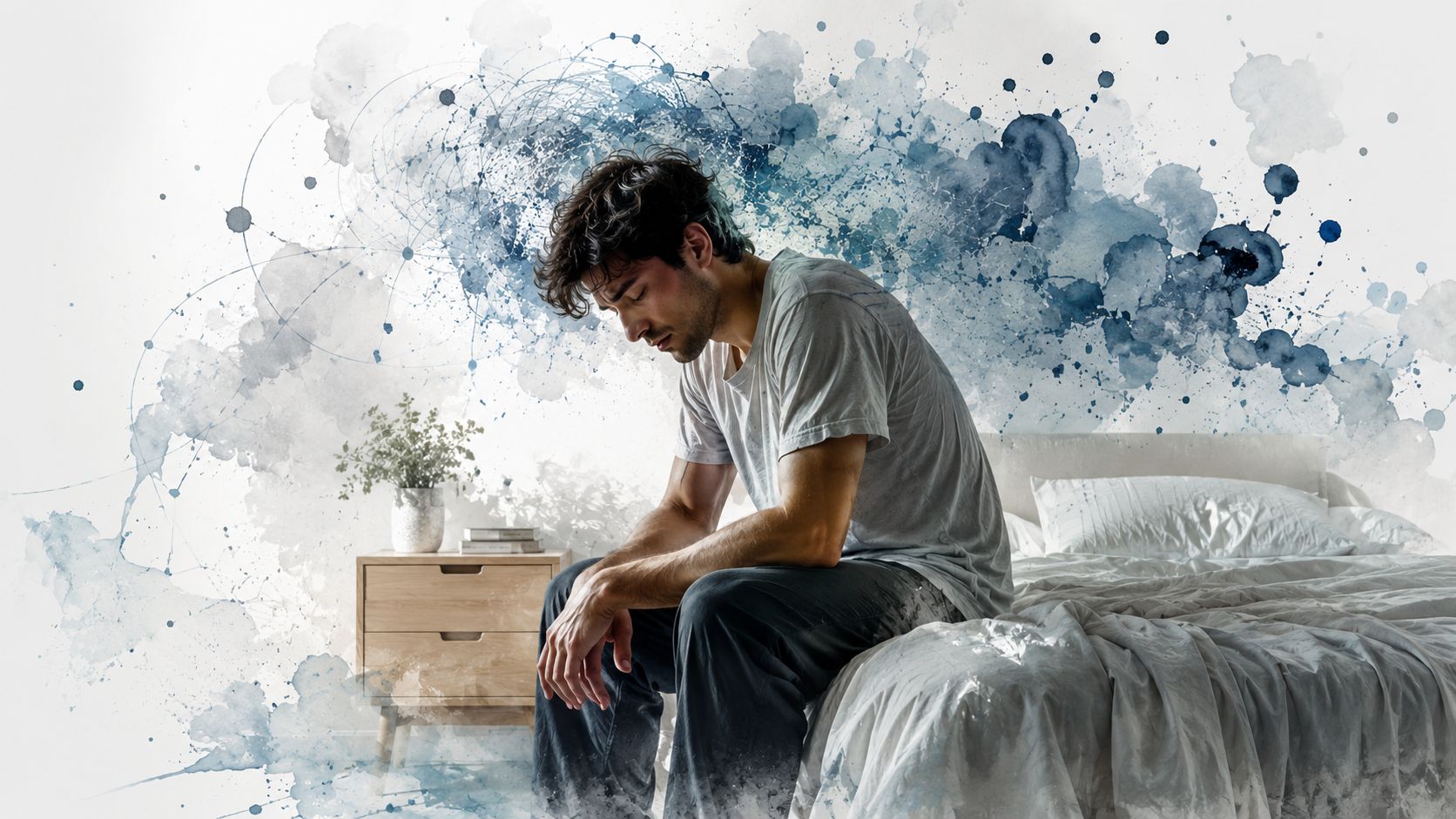
A client I'd think about here is someone who gets through the workday, then lies down at night with a tight jaw, shallow breathing, and the constant feeling that something is about to go wrong. They have tried distraction, scrolling, herbal tea, and telling themselves it is “just anxiety,” but their body still will not unclench. Biofeedback therapy at home offers a concrete next step because it teaches you to notice the signal, respond, and watch the body answer back.
What the technique is really doing
Biofeedback helps you learn control over functions that are normally involuntary. It can help with anxiety, depression, PTSD, insomnia, and chronic pain, and it can target heart rate, breathing patterns, and muscle responses (Cleveland Clinic). That matters for anxiety because panic and chronic stress often show up first in the body, not in the thoughts.
Practical rule: if you can see the body change, you can learn from the change. That is the promise of biofeedback.
The best way to understand it is as nervous-system training. You are not trying to push fear away with willpower. You are teaching your physiology what calm feels like, then repeating it until the response becomes easier to access.
If you want broader support while you learn these skills, the education library at https://anxietychecklist.com/anxiety-university can be a useful companion, especially if you are trying to understand panic patterns without getting overwhelmed.
Why home practice can feel so relieving
Home practice gives you privacy, repetition, and a sense of ownership. Anxiety often makes people feel helpless, and helplessness keeps the body on alert. When feedback shows that your breathing or muscle tension is shifting, your brain gets evidence that change is possible.
The clearest home evidence in the material here comes from pelvic-floor rehabilitation. A randomized trial in adults with chronic constipation and dyssynergic defecation found that home biofeedback was as efficacious as office biofeedback, and both treatments relieved symptoms in 70% of patients overall (PMC). Different condition, same underlying lesson, structured self-regulation at home can work when the method is practiced correctly.
That is why this approach can feel emotionally important, not just technical. It gives you a way to work with your body instead of battling it.
Setting Up Your First Home Biofeedback Session
Start with less than your anxiety asks for. You do not need the perfect room, the perfect device, or the perfect mindset. You need a quiet place, a few minutes, and enough attention to notice what your body is doing before you try to change it.
Set the scene before you start
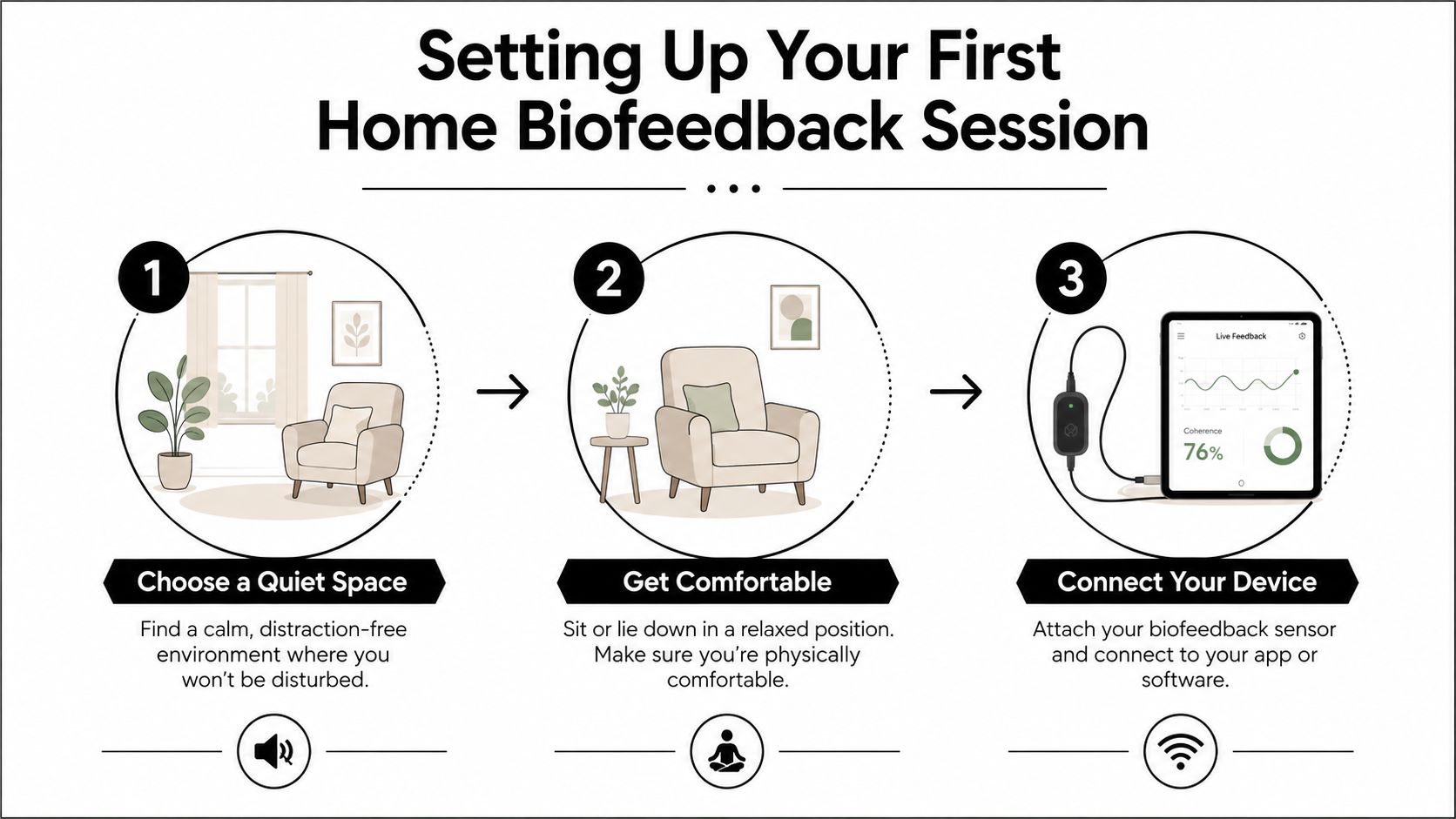
Choose a calm, predictable spot where you will not be interrupted. Sit in a chair that lets your shoulders drop, place both feet on the floor, and keep your hands resting comfortably. If you are using a sensor, check that it is connected and working before you begin so you do not spend the session fixing a setup problem.
A home session usually works best in a simple order. Start in a quiet setting, notice your baseline, then use paced breathing or muscle relaxation while you watch the feedback shift. That basic loop matters because it gives your body a before-and-after comparison, and that is how learning sticks. The same principle shows up in many forms of home practice, including tools that help you stay calm between sessions, such as an app for anxiety affirmations.
Helpful standard: begin by noticing, not by fixing. If you rush past the baseline, you will miss the feedback that teaches your nervous system what to do next.
Follow the feedback loop
Your baseline can be as simple as counting your pulse or reading the sensor before you begin. Then apply one calming technique, such as paced breathing or progressive muscle relaxation, and watch for the measured response to move in the direction you want. Repeat that cycle a few times so your body has a chance to connect the action with the result.
A first session usually feels plain, not dramatic. That is a good sign. Biofeedback works through repetition, not intensity, and the goal is to teach your body a new default, not to chase a perfect outcome on day one. If you want a wearable that can show more of that response in real time, a guide to health smartwatches can help you compare options without overcomplicating the process.
If anxiety makes you feel scattered, keep the process short and predictable. The more ordinary the session feels, the more likely you are to come back tomorrow.
Choosing the Right Biofeedback Devices and Apps
The device market can make this feel more complicated than it is. Some tools give you useful real-time data, some mainly add convenience, and some are just dressed-up breathing timers. The key question is whether the tool helps you practice better or just makes practice look more advanced.
Compare the main options
A major review in Frontiers in ICT found that HRV biofeedback and multimodal biofeedback systems are the most commonly used stress-management approaches, and screen-based visual displays are the most common interface (Frontiers in ICT). That tells you something important, the core of home biofeedback is usually real-time feedback, not passive education.
| Feature | Wearable HRV Device | App-Based Breathing Tool |
|---|---|---|
| Feedback | Real-time heart-rate variability data | Guided breathing prompts, often without sensor feedback |
| Ease of use | Often more setup, but more detailed data | Simpler to start, easier for quick sessions |
| Best for | People who want measurable self-regulation practice | People who want a low-friction entry point |
| Limits | Can feel fiddly if you don't use it consistently | May improve breathing practice without proving the signal adds more value |
If you're comparing consumer wearables, a guide to health smartwatches can help you separate general wellness tracking from tools that are useful for structured breathing practice. The distinction matters because not every smartwatch is built for meaningful biofeedback.
What matters more than marketing
Look for real-time HRV feedback, clear visuals, app integration that doesn't get in your way, and support for resonance frequency training. If a device is hard to use, you'll avoid it. If the app is clunky, the habit will break.
The best tool is the one you'll actually use on an anxious day, not the one with the most features.
There's also a real evidence gap. Current consumer content makes devices sound appealing, but the strongest question for anxiety remains open, whether the feedback signal itself meaningfully beats simpler breathing or relaxation training for durable home use. That's why a free or low-cost app can be a smart first step, especially if it helps you build consistency before you spend money on hardware.
For readers who want a gentle companion while practicing, an app for anxiety affirmations can sit alongside breathing work without making the routine more complicated.
Mastering Resonance Frequency Breathing for Anxiety Relief
For many anxious clients, this is the point where breathing work starts to feel less abstract. Resonance frequency breathing is the breathing rate that tends to produce the highest heart rate variability, so it often becomes a practical target for calming the nervous system. If anxiety has pushed your breathing into a fast, shallow pattern, this gives you a steady rhythm to come back to.
Find your breathing rate
One home protocol suggests beginning at 7 breaths per minute for 2 minutes, then testing the same pattern at 6.5, 6, 5.5, 5, and 4.5 breaths per minute. You watch for the HRV peak, then use that rate for future practice, as described in Counselling BC. The process is straightforward, your body is giving feedback, and you are learning how to read it.
Once you identify the peak, use that rate for daily sessions. A common home practice benchmark is 10 to 15 minutes per day, and the same source emphasizes consistency because irregular practice can slow baseline HRV gains and make resonance frequency harder to identify reliably (Counselling BC).
Use the rhythm that calms your system
This method helps because it gives anxiety something specific to do. You are not trying to breathe “better” in a vague way. You are matching your breath to the rate your body responds to most efficiently, then repeating that pattern until it starts to feel more familiar.
When the counting feels awkward, a short instructional video can make the pacing easier to follow.
If you want a broader comparison of techniques, breathing exercises for anxiety can help you sort out which practices feel realistic enough to keep using. A separate look at Buteyko breathing evidence may also help if you are trying to understand how different breathing methods are discussed in practice.
Small but important: consistency beats intensity here. A short daily session done regularly usually helps more than a long session you skip for days at a time.
The emotional shift can be just as meaningful as the physical one. Each calm breath becomes evidence that your body can learn a different pattern, and that matters when anxiety has taught you to expect the worst.
Tracking Progress and Troubleshooting Common Challenges
Progress often appears before confidence does. You may notice that sleep feels a little less fractured, your body seems less on edge at rest, or your anxiety spikes do not last as long. Those changes can be easy to miss in the moment, which is why tracking matters. It gives you a way to notice small wins before your mind dismisses them.
Watch the right signs
Use a simple log for resting heart rate trends, HRV baseline changes, sleep quality, and your own anxiety rating after practice. You do not need an advanced dashboard to see whether the work is helping. You need enough repetition to tell the difference between a rough day and a real pattern. A paper notebook, a notes app, or a basic spreadsheet can all work if you keep the format consistent.
The strongest home-based numbers in the material here come from a constipation study, not anxiety, but they still show what structured self-training can do. Among all starters, correction occurred in 72% of the home-based group versus 80% of the office-based group, and among study completers, at-home success was 92% versus 84% for office-based therapy (The Lancet30266-8/fulltext); ScienceDaily). A related analysis reported a median cost per patient of $1,112.39 for home biofeedback versus $1,943 for office biofeedback, a difference of $830.11, with an incremental cost-effectiveness ratio of $20,752.75 in favor of home treatment. That evidence does not prove the same numbers for anxiety, but it does show why home practice can be taken seriously as a structured method rather than a casual habit.
Troubleshoot without quitting
If the feedback signal feels erratic, slow down and shorten the session. If anxiety is too high for a full practice, do a shorter version and count that as success. If you hit a plateau, keep going, because skill-building often looks flat before it changes again. A nervous system that has spent years bracing for danger usually does not learn calm in a straight line.
For readers who want to check where they are starting from, a science-based anxiety assessment can offer a clearer baseline than memory alone. That can be especially helpful when progress feels invisible, because a written snapshot often shows changes your mood has already forgotten.
Practical reminder: your job is not to feel calm every time you practice. Your job is to keep returning to the exercise until your body recognizes the pattern.
The deepest benefit of tracking is emotional. It replaces the question “Is this working?” with evidence you can see. That evidence can be quiet at first, but quiet evidence still matters when you are rebuilding trust in your own body.
When to Practice on Your Own and When to Seek Professional Support
Home practice can be a steady way to learn your body's signals, but it is not the right starting point for everyone. If anxiety feels severe, panic is making daily life harder, trauma is part of the picture, or you are struggling to function, a clinician should be part of the plan. Self-guided tools work best when they are used with judgment, not as a way to sidestep care.
Devices are helpful, but not always necessary
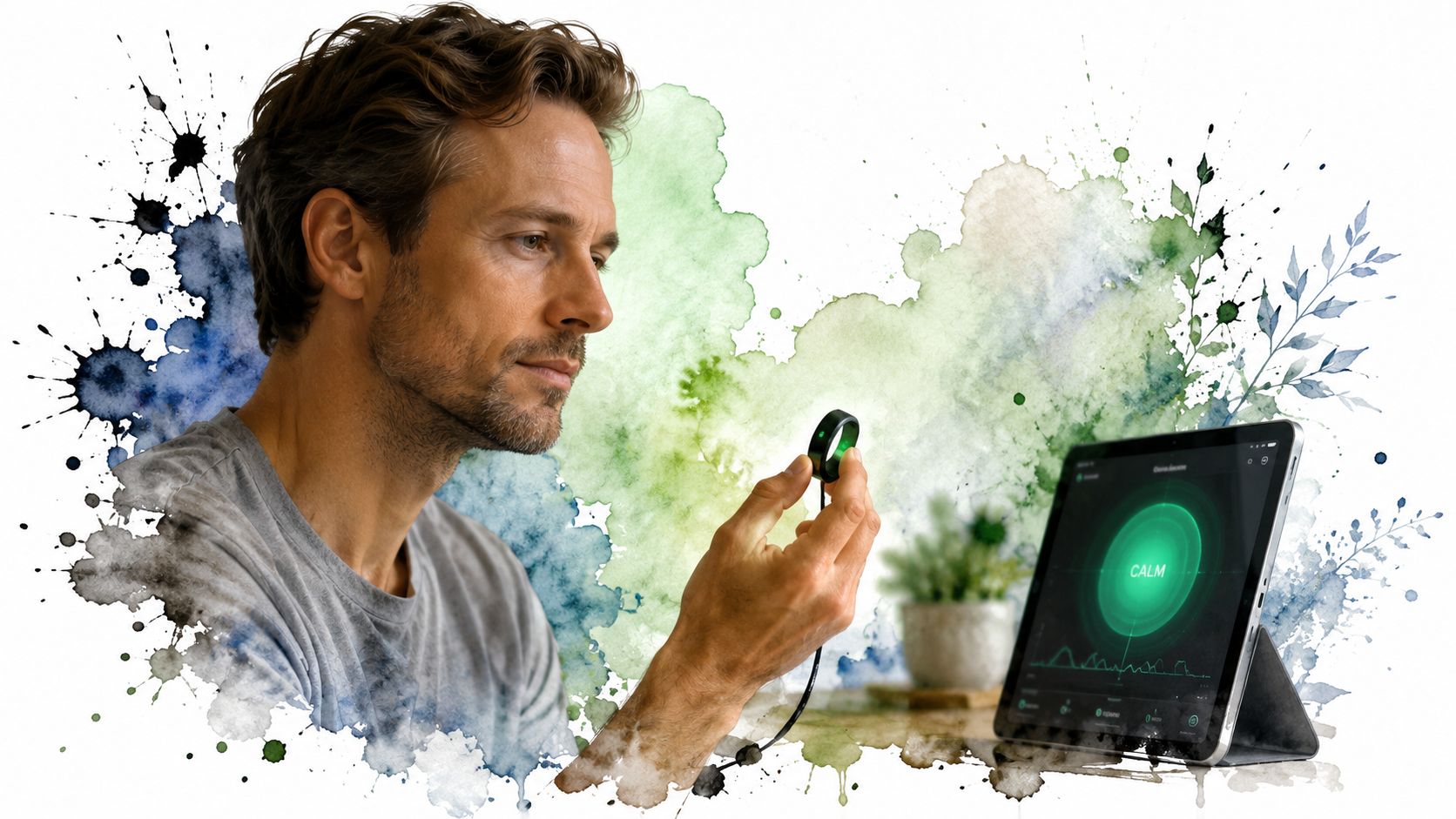
The key question is whether you need a device at all. The strongest home biofeedback evidence in the material here is still narrow, especially in a clinical area such as dyssynergic defecation, while the evidence for consumer home use in anxiety is still developing. A device can make feedback easier to notice and practice more consistent, but slow breathing on its own can still be a valid place to begin.
Biofeedback is meant to teach your body a skill, then gradually make the machine less important. Mayo Clinic explains that people can learn to use the method at home without sensors over time. That idea can be comforting if you have been waiting for the “right” device, because the tool is there to guide learning, not to become a permanent requirement.
There is also a point where inner experience matters more than technique. If your anxiety brings thoughts or feelings that feel too heavy to handle alone, it can help to find support for unwelcome emotions. Reaching out does not mean you failed. It means you are treating your nervous system with care, and giving it more support than a home session can provide on its own.
The path can stay simple. Start with breathing, add feedback if it helps you notice patterns more clearly, and bring in professional support when the weight of anxiety is too much to carry alone.