


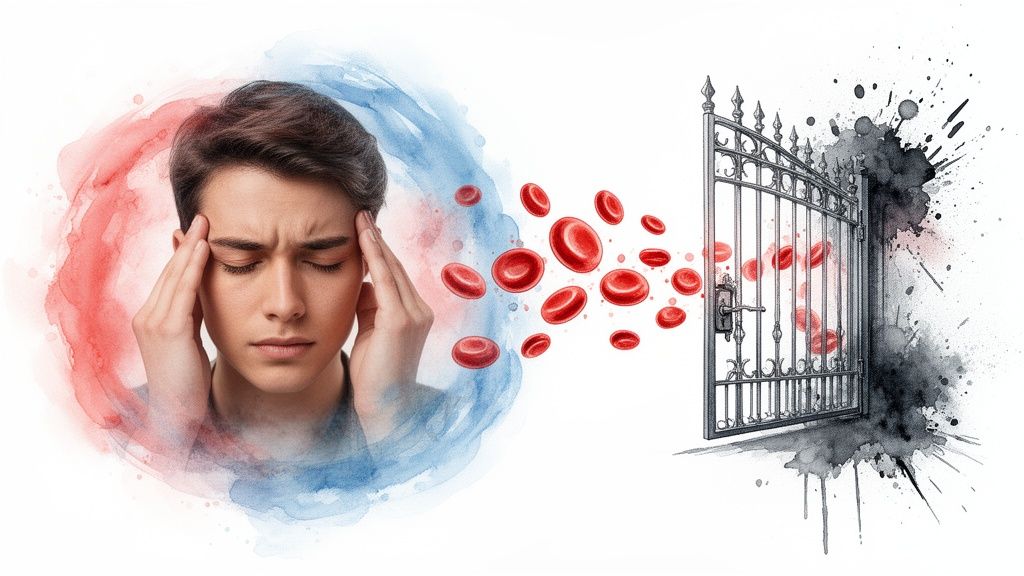
So, can stress and anxiety actually cause anemia?
The short answer is yes, they can be powerful contributors. While it's not an overnight process, the relentless grind of chronic stress can throw your body's systems off balance, making it harder to maintain healthy red blood cells. The result? That deep, physical exhaustion that feels like more than just being tired.
If you’ve been struggling with both overwhelming anxiety and a debilitating fatigue that just won’t quit, you're not imagining the connection. But here is the most important message: there is so much hope for healing. Understanding this link is the first step toward reclaiming your energy and building a life free from panic.
This isn't a message to add more fear to your plate. Far from it. Understanding how your mental state affects your physical health is the first real step toward reclaiming your energy and well-being. By learning to soothe the anxiety that keeps your system on high alert, you create the internal space your body needs to heal itself.
Validating Your Experience
Living with chronic anxiety often feels like an invisible battle. When physical symptoms like extreme tiredness, dizziness, or a racing heart show up, it’s all too easy to chalk them up to "just more anxiety." But here's the thing: those are also classic signs of anemia. This confusing overlap can leave you wondering what’s real and what’s "all in your head."
Your experience is valid. The link between sustained psychological stress and physical illness isn’t just a theory; it’s a documented physiological process. Recognizing this is not a cause for despair, but a powerful key that unlocks the right path to recovery.
The ripple effects of long-term stress and anxiety don't stop at your mental state. They often manifest in a wide range of physical symptoms. You can see just how deeply these are connected in discussions about things like ADHD, Anxiety, Stress, and Back Pain.
Before we dive into the nitty-gritty of how this works, here's a quick snapshot of the primary ways chronic stress can pave the way for an anemia.
How Stress Contributes to Anemia at a Glance
This table summarizes the main biological pathways linking chronic stress to different forms of anemia, giving you a quick overview before we explore each one in more detail.
| Stress-Related Pathway | Biological Impact | Potential Anemia Type |
|---|---|---|
| Chronic Inflammation | Disrupts iron absorption and recycling | Anemia of Chronic Disease |
| HPA Axis Dysregulation | Alters hormone levels (e.g., cortisol) that affect blood cell production | Multiple types, including Iron-Deficiency |
| Dietary & Digestive Issues | Poor appetite or GI upset reduces nutrient intake (iron, B12, folate) | Iron-Deficiency Anemia, Vitamin-Deficiency Anemia |
| Behavioral Changes | Neglecting self-care, poor sleep, and unhealthy coping habits | Worsens all contributing factors |
As you can see, stress isn't just a feeling—it's a cascade of physical events. Now, let's unpack exactly what's happening inside your body.
Your Path to a Panic-Free Life
This guide is designed to walk you through the science, explaining exactly how stress can interfere with your iron levels and energy. But more importantly, it will give you a clear, hopeful roadmap for taking back control. You’ll learn practical, actionable strategies to calm your nervous system, which in turn helps your body get back to doing its job correctly.
This journey is about more than just boosting your iron; it's about reclaiming your vitality and building a life that isn’t dictated by panic. For those ready to dive deep into structured techniques for overcoming anxiety, programs like Anxiety University offer comprehensive tools to support you every step of the way. A panic-free life is possible, and it starts with understanding how to heal.
Let’s start by exploring how this process unfolds inside your body.
How Your Body's Alarm System Disrupts Your Iron Supply
Think of your body’s stress response as an emergency alarm in a factory. When it goes off for a real, short-lived threat, it's a lifesaver. But what happens when chronic stress and anxiety keep that alarm blaring 24/7? The entire production line gets thrown into chaos—and in this case, that production line is your body’s ability to make healthy red blood cells.
This constant state of high alert is run by your HPA axis, the body's central stress response system. When it’s always on, it floods your body with stress hormones like cortisol. Over time, this hormonal surge tells your body it's in a perpetual crisis, sparking a cascade of low-grade, persistent inflammation.
This isn't the kind of inflammation you see with a cut or an injury. It’s more like a subtle, simmering fire that smolders throughout your system, creating problems in the background. You can learn more about how this works by reading our detailed fight-or-flight response guide.
This flowchart breaks down the process, showing how chronic stress can set off a chain reaction that messes with your iron levels and can eventually lead to anemia.
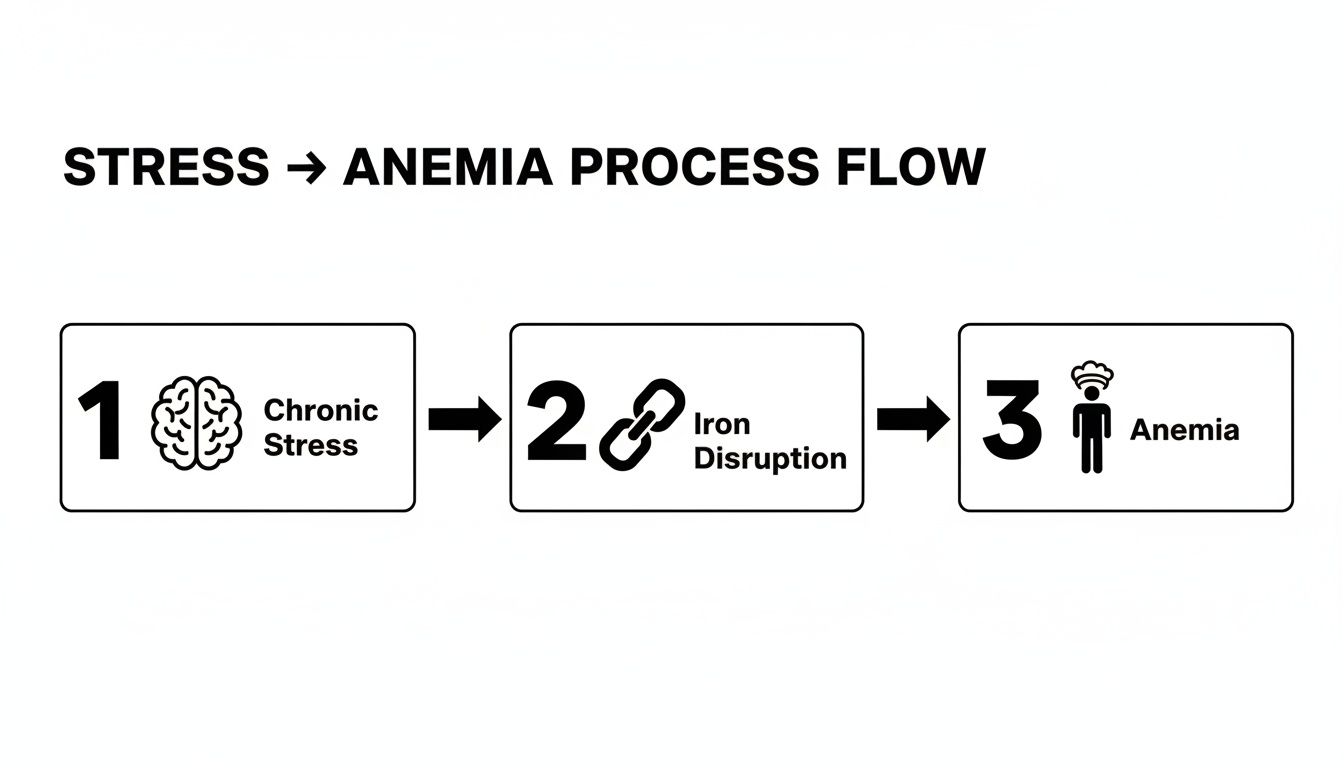
As you can see, the path from a stressed-out mind to physical fatigue isn't just in your head—it's a direct biological route.
The Role of The Iron Gatekeeper
This stress-induced inflammation has a crucial knock-on effect. It signals your liver to ramp up production of a powerful hormone called hepcidin.
Think of hepcidin as a very strict "gatekeeper" for your body's entire iron supply. Its primary job is to decide how much iron gets in and where it's allowed to go.
But when you're chronically stressed and inflammation is high, this gatekeeper goes into total lockdown. It essentially slams the gates shut on your small intestine, blocking you from absorbing iron from the food you eat. It doesn't matter if you're eating plenty of iron-rich steak or spinach; hepcidin stops it from ever entering your bloodstream.
At the same time, hepcidin also traps the iron that’s already stored in your body's cells, like in your liver and spleen. This hoarding prevents your bone marrow from accessing the iron it desperately needs to make hemoglobin—the essential protein in red blood cells that carries oxygen. The result is what’s known as a functional iron deficiency, which can lead to iron-deficiency anemia and leave you feeling profoundly weak and exhausted.
The science is clear: when psychological stress becomes chronic, it dysregulates the HPA axis and sparks inflammation. This ramps up hepcidin production, which acts like a gatekeeper to block iron absorption in the gut and trap it in storage cells, starving your red blood cells. A striking study showed that after just 14 days of induced psychological stress, key markers like hemoglobin dropped by 12.8% and red blood cell counts fell by 9.8%. You can discover more insights from this compelling research on psychological stress and iron metabolism.
The Vicious Cycle of Anxiety Fatigue and Low Iron
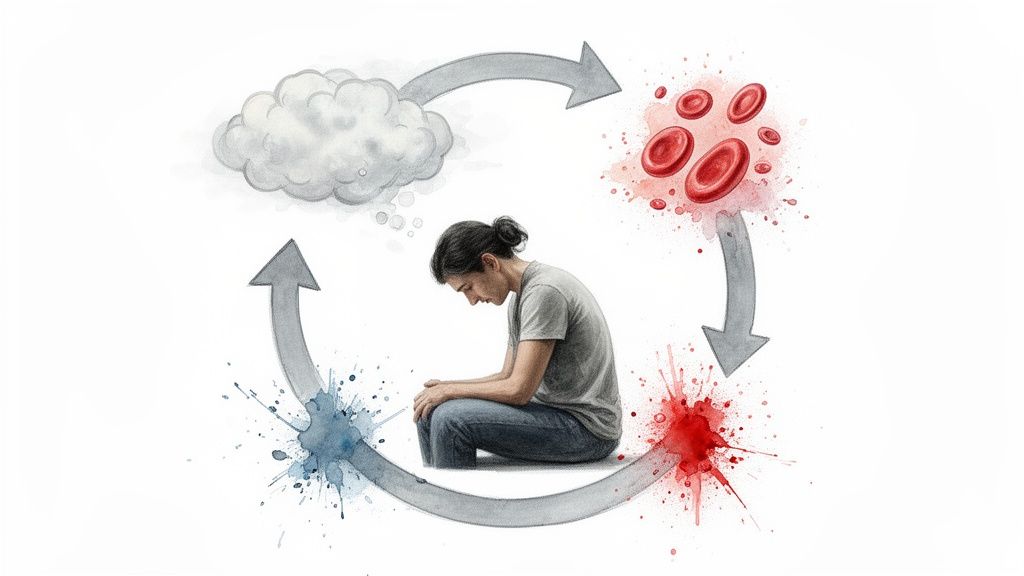
Do you ever feel trapped in a frustrating loop of exhaustion and worry? You’re not alone. It's not a one-way street where stress simply causes physical problems. It’s a true vicious cycle. While chronic stress can contribute to anemia, having low iron levels can turn around and directly fuel even more anxiety and fatigue.
This isn’t just “all in your head.” It’s a very real, physiological process happening in your body. Iron is so much more than just a mineral for carrying oxygen; it’s absolutely critical for your brain health. Specifically, it helps your brain produce key neurotransmitters like dopamine and serotonin—the very chemicals that regulate your mood, focus, and overall sense of well-being.
When your iron stores are low, your brain’s ability to manage these mood regulators is thrown off balance. This can crank up feelings of anxiety, irritability, and that frustrating 'brain fog' that makes it even harder to cope with everyday stressors. The more anxious and stressed you become, the more it disrupts your body's ability to use iron correctly. And so the cycle spins.
Validating Your Lived Experience with Science
It’s easy to feel defeated when your mind and body both feel completely drained. But understanding the science behind this cycle can be incredibly empowering. It validates your experience and shows that your mental and physical symptoms are deeply intertwined.
Recognizing that low iron can genuinely make anxiety worse—and that anxiety can worsen low iron—is the first crucial step toward breaking free. This isn't about weakness; it's about biology. And the beautiful thing about understanding biology is that it gives us a clear path to healing.
Clinical evidence backs this up. In a study of 200 people, individuals struggling with depression and iron issues often had blood cells that were small and pale, a classic sign of an iron shortage. Researchers found a direct link between lower iron markers and more severe mood symptoms. This suggests that the less iron your body has, the harder it can be to manage your mental health.
This connection provides real hope. It means that addressing your physical health—like working to improve your iron levels—can be a powerful strategy for finding more mental peace.
By making simple but effective lifestyle and diet changes for anxiety management, you can begin to give your body the support it needs. This isn't about finding a quick fix, but about creating a solid foundation for lasting well-being where both your mind and body can finally start to heal. This is how you start to unwind the cycle and reclaim your energy.
Fatigue, a racing heart, shortness of breath, crippling brain fog—sound familiar? If you live with anxiety, you know these feelings all too well. But here’s the tricky part: they’re also classic signs of anemia.
This frustrating overlap can leave you wondering what’s really going on. Is it "just" anxiety, or is there something else happening? Trying to figure it out on your own is a recipe for more stress.
Getting a clear, professional diagnosis isn't about confirming a fear. It’s about trading uncertainty for a solid action plan. It's the first real step toward feeling like yourself again.
How to Talk to Your Doctor
When you're dealing with both anxiety and physical symptoms, it’s easy to worry that everything will be brushed off as "just anxiety." To make sure you’re truly heard, you need to be specific.
Instead of saying, "I'm tired all the time," describe what that actually looks like. Try something like, "I'm so exhausted by midday that I can't get through my workday without needing to nap."
Before your appointment, spend a week or two keeping a simple log of your symptoms. It doesn’t have to be complicated. Just note:
- What you're feeling: Be specific. Are you dizzy, short of breath, have cold hands, or a pounding heart? Write it all down.
- When it happens: Do the symptoms pop up after you eat, during a stressful meeting, or are they there all day long?
- How it impacts you: How does this get in the way of your work, your relationships, or just getting through the day?
Bringing this information helps your doctor see the full picture, moving the conversation beyond your existing anxiety diagnosis.
Advocating for your own health takes courage. Your physical symptoms are real, and they deserve a real investigation. A good doctor will partner with you to find answers, not dismiss your experience. That partnership is the foundation of getting better.
Understanding Key Blood Tests
To get to the bottom of things, your doctor will likely run a couple of simple but powerful blood tests. Knowing what they’re looking for can help you feel more in control of the process.
The two most common tests are the Complete Blood Count (CBC) and an iron panel.
A Complete Blood Count (CBC) is the first step. Think of it as a broad snapshot of your blood's health. It counts your red blood cells, checks their size, and measures the amount of hemoglobin they're carrying. This test is the fastest way to see if you are, in fact, anemic.
An iron panel goes a level deeper to figure out why you might be anemic. It measures things like ferritin, which shows how much iron your body has in storage, and other markers that tell the doctor how much iron is available to make new, healthy red blood cells.
Together, these tests give you and your doctor the clarity needed to build the right treatment plan so you can finally start feeling better.
A Holistic Path to Recovery for Mind and Body
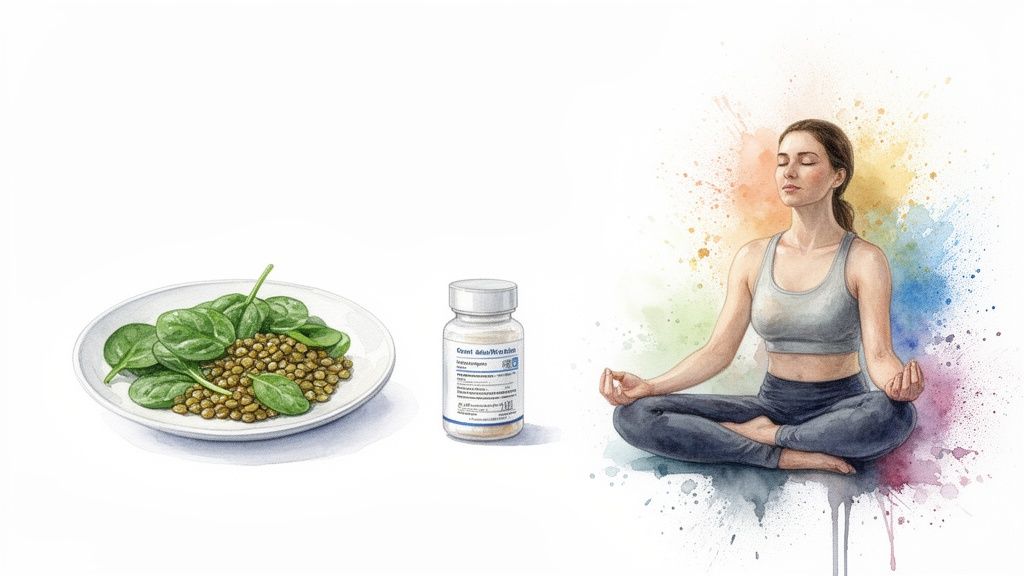
This is where everything we've talked about starts to click into place. Knowing that stress and anemia are connected can feel heavy, but it also hands you back a tremendous amount of power. It means that by actively caring for your mental state, you are directly supporting your body's ability to heal.
True recovery isn’t about picking one lane—mind or body. It's about seeing them as a team. Living with the weight of chronic anxiety and its physical side effects is exhausting, but there is so much reason for hope. The path forward involves a smart, two-part approach: pairing necessary medical support with empowering lifestyle habits.
Bridging Medical and Lifestyle Strategies
While medical treatments like iron supplements are often non-negotiable for getting your levels back up, they only address one piece of the puzzle. Think of it like this: supplements are the delivery truck dropping off iron, but managing your stress is what gives your body the key to unlock the warehouse door and actually use it.
If your body’s alarm system is constantly blaring, you can struggle to absorb and utilize that iron effectively, no matter how much you take. This is where you come in. By weaving simple, practical anxiety-management techniques into your daily life, you can begin to lower the inflammation that’s putting up a roadblock. You create an internal environment that’s ready for healing, allowing both medical treatments and your body's natural processes to finally do their job.
Here are a few core areas where you can start making a real difference:
- Mindful Breathing: Simple, deep breathing exercises can flip the switch on your nervous system, moving it from "fight or flight" to "rest and digest." This immediately lowers the stress hormones that fuel inflammation.
- Cognitive Reframing: It's time to become the editor of your anxious thoughts. Learning to spot, challenge, and reframe the worries that keep your body on high alert can break the biological stress cycle.
- Stress-Resilient Routines: Building consistency into your life with a solid sleep schedule and gentle, regular movement gives your body the stability and predictability it craves to recover.
Here's the most hopeful part of this whole story: You have the power to influence your own biology. Every small, consistent step you take to manage anxiety is actively dismantling the very barriers that stop your body from getting well. This isn't just about managing symptoms; it's about building lasting wellness from the inside out.
From Stress Triggers to Healing Habits
A huge part of this is getting honest about how our daily behaviors feed the cycle. A holistic path to recovery must include an understanding of how nutrition affects mental health and our physical well-being. When we consciously swap out habits that fuel stress for ones that promote healing, we support both our minds and our bodies.
The table below shows how some common stress reactions can make anemia worse, and how you can replace them with habits that foster recovery.
Stress Triggers vs Healing Habits
| Stress-Inducing Behavior (Exacerbates Anemia Risk) | Anxiety-Management Habit (Supports Recovery) |
|---|---|
| Reaching for caffeine or sugar for a quick energy boost. | Eating a small, protein-rich snack to stabilize blood sugar. |
| Skipping meals due to stress or lack of appetite. | Planning simple, iron-rich meals ahead of time. |
| Pushing through exhaustion instead of resting. | Scheduling short, 10-minute rest periods throughout the day. |
| "Doomscrolling" or watching stressful news before bed. | Practicing a 5-minute guided meditation or deep breathing. |
| Isolating yourself when feeling overwhelmed. | Sending a quick text to a supportive friend or family member. |
Making these shifts isn't about being perfect; it's about making kinder, more supportive choices for yourself, one moment at a time.
For those interested in exploring complementary approaches, learning about Naturopathic Treatments Anxiety can offer even more tools for your wellness toolkit.
This journey is about creating a compassionate, supportive internal state where your body and mind can finally work together. You can heal from anxiety, and you can live a vibrant, panic-free life. It all starts with believing recovery is possible and taking that first small step today.
Your Action Plan for a Vibrant and Fearless Life
Let's pull all of this information together into a clear, manageable plan you can start using today. This isn’t about some massive, overwhelming life overhaul. It’s about taking small, consistent steps that create the momentum you need for real, lasting change.
Here’s the core message to take with you: you are not fighting two separate battles against anxiety and anemia. You’re on a single, unified journey toward holistic wellness. By getting a handle on your anxiety, you’re actively creating the conditions your body needs to heal itself.
This approach paves the way for a vibrant, energetic life, free from the weight of constant fear.
Small Wins Create Big Momentum
The goal here is simple: start with small, achievable actions that give you an immediate win. That’s what builds the confidence and energy to keep pushing forward. Here’s where to begin:
Prepare for Your Doctor's Visit: Don't just walk in and hope for the best. Take a few days to track your symptoms—fatigue, dizziness, brain fog—and jot down how they mess with your daily life. This specific info is crucial for making sure you're heard and getting the right tests done.
Make One Simple Dietary Shift: You don’t have to flip your entire diet overnight. For this week, just focus on adding one iron-rich food to your daily routine. It could be as simple as a handful of spinach in your smoothie or some lentils with your lunch. Pair it with a Vitamin C source, like a few orange slices, to supercharge absorption.
Practice the 4-7-8 Breathing Technique: This is a seriously powerful tool for calming your nervous system on the spot. Just inhale through your nose for 4 seconds, hold it for 7 seconds, and then exhale slowly through your mouth for 8 seconds. Do this for one minute whenever you feel that familiar stress creeping in.
You are the most important person in your own healing. Every time you choose a calming action, you're sending a powerful signal to your body that it is safe. You're chipping away at the very stress response that can feed into issues like anemia.
This whole journey is about reclaiming your power. If you’re looking for more structured support, a comprehensive anxiety checklist can give you a clear roadmap and practical tools to guide you every step of the way.
Frequently Asked Questions
It’s completely normal to have questions when you’re trying to connect the dots between how you feel mentally and what's happening in your body. Let's walk through some of the most common ones to give you a bit more clarity and peace of mind.
Can Reversing My Anxiety Cure My Anemia?
Think of it this way: managing your anxiety is like clearing a blocked road. It helps calm the inflammation and hormonal chaos that's preventing your body from absorbing iron properly. But if your iron reserves are already running on empty, you’ll still need to refuel.
So, while tackling anxiety is a huge part of the solution, you'll almost certainly need medical treatment, like iron supplements, to get your levels back up. They're a team, and they work best together. Managing your anxiety creates the right conditions for the medical treatment to succeed, giving you the best chance at a full recovery.
How Quickly Can Stress Cause Anemia to Develop?
This isn't an overnight thing. Anemia from stress tends to creep up on you over time. Research shows that it can take several weeks of sustained psychological stress before we see noticeable drops in iron and hemoglobin.
The exact timeline really depends on your starting point—your initial iron levels, your diet, and just how intense the stress has been. The key takeaway is that this is usually driven by chronic, ongoing strain, not a single bad day. The good news is that you can start reversing these effects by managing stress today.
What Is More Important: Iron Supplements or Stress Management?
That’s like asking if the engine or the fuel is more important for a car. You need both, and they're completely dependent on each other.
Iron supplements are the fuel your body is crying out for. But stress management is what fixes the engine so it can actually use that fuel. If you don't address the stress, your body will keep struggling to absorb and use the iron you’re putting in. A combined approach isn't just better; it’s the only way to find lasting recovery.
You are on a single, unified journey toward holistic wellness, not fighting two separate battles. By managing anxiety, you unlock your body's natural ability to heal, paving the way for a vibrant life unburdened by panic.
Can I Still Get Stress-Induced Anemia If I Eat Iron-Rich Foods?
Unfortunately, yes. This is one of the most frustrating parts of the connection between stress and anemia.
As we've talked about, chronic stress can ramp up the production of a hormone called hepcidin. Hepcidin acts like a bouncer at the door of your gut, blocking iron from getting in. So even if you're eating a perfect, iron-rich diet, that essential mineral might not make it into your system. This is precisely why getting to the root of the stress is so critical for your well-being. But there's tremendous hope here: by calming your stress response, you can re-open that gateway, allowing your body to benefit from the healthy food you eat.
At The Anxiety Checklist, we believe you deserve the tools to build a life free from fear. Our system offers a practical, step-by-step path to help you manage your anxiety and get your energy back. Discover how you can start your journey to fearless living today.