

Your Path from Panic to Peace Begins Now
Does your heart pound when there's no danger? Does your mind race with what-ifs that leave you breathless? If you're reading this in the middle of tension, dread, or that familiar sense that your body has turned against you, pause for a second and hear this clearly. You're not broken, and you're not alone.
What you're feeling often points to a dysregulated nervous system. Your body has learned to stay on alert, even when your thinking mind knows you're safe. That mismatch is exhausting. It can make ordinary moments feel threatening, and it can convince you that panic is always waiting around the corner.
The good news is that regulation is a skill. Your body can learn safety again. Healing from anxiety isn't only about enduring symptoms better. It's about changing the patterns underneath them so you can live with more steadiness, more confidence, and far less fear. That hope matters for every season of anxiety, including early parenthood. If that's part of your story, Bornbir's postpartum anxiety guide may help.
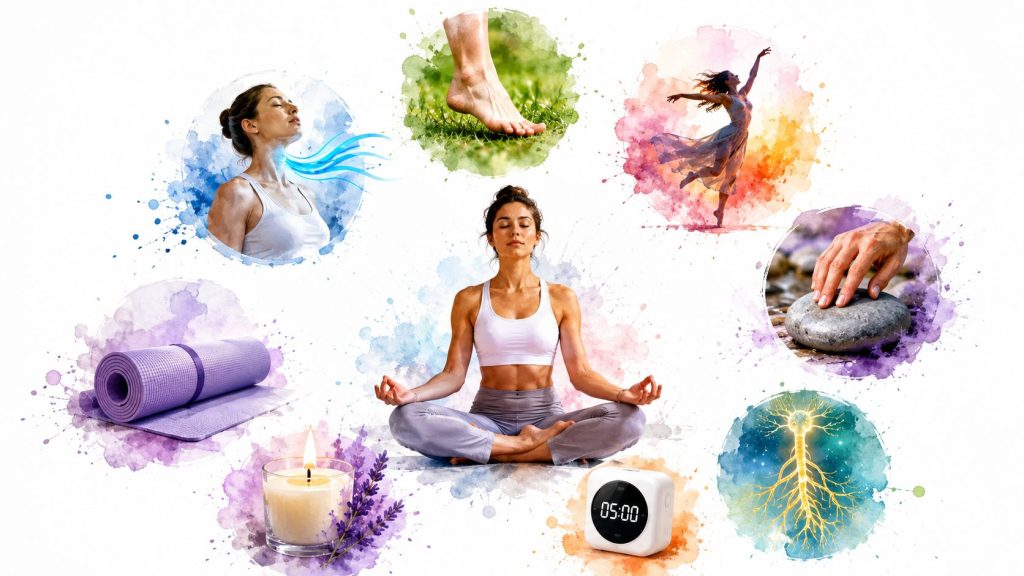
These eight nervous system regulation exercises are a practical starting point. Some help in the moment when panic rises fast. Others work best as daily maintenance, because regulation is often strongest when practiced before crisis, not only during it. Choose one. Practice it often. Let your body discover that calm is possible.
Table of Contents
- 1. Box Breathing
- 2. Progressive Muscle Relaxation
- 3. The 5-4-3-2-1 Grounding Technique
- 4. Vagus Nerve Stimulation and Humming
- 5. Guided Meditation and Body Scan
- 6. Cold Water Exposure and the Mammalian Dive Reflex
- 7. Walking and Movement-Based Regulation
- 8. Cognitive Reframing and Thought Journaling
- 8-Method Nervous System Regulation Comparison
- Build Your Toolkit for a Resilient Nervous System
1. Box Breathing
Box breathing is one of the most practical nervous system regulation exercises because it gives your body a simple rhythm to follow when everything feels chaotic. You inhale for four counts, hold for four, exhale for four, and hold empty for four. That predictable pattern can interrupt the rush of fight-or-flight and give your mind something concrete to do.
Research on controlled breathing supports the broader principle behind it. Slow breathing practiced at about six breaths per minute has been shown to increase heart rate variability power and low-frequency power, while also increasing EEG alpha power and decreasing EEG theta power in healthy subjects, changes associated with enhanced psychophysiological flexibility and emotional control in this review of breathing and autonomic regulation.
Why It Works
This is why box breathing can help during a panic spike in a waiting room, before a difficult conversation, or when you wake up with adrenaline already surging. It's structured enough to keep you anchored, but simple enough to use anywhere. U.S. Navy SEALs and elite athletes are known for using the 4-4-4-4 pattern under pressure, and that tells you something important. Simple doesn't mean weak.
If four counts feels tight, start with three. If holding your breath increases panic, shorten the holds and lengthen the exhale instead. You don't get extra credit for forcing it.
- Start smaller if needed: Use 3-3-3-3 until your body trusts the pattern.
- Build muscle memory early: Practice during calm moments, not only in emergencies.
- Add a visual cue: Trace a square with your finger if counting slips away.
- Use guided support: The Anxiety Checklist app includes anxiety breathing techniques when your brain feels too scrambled to lead itself.
Practical rule: If a breathing exercise makes you feel trapped, modify it. A useful tool should help your body feel safer, not more cornered.
Healing Message
You do not have to stop anxiety with force. You can guide your body out of alarm, one breath at a time. Every calm exhale teaches your system that panic isn't permanent.
2. Progressive Muscle Relaxation
You crawl into bed exhausted, then notice your jaw is clenched, your shoulders are lifted, and your legs still feel ready to run. That is the kind of anxiety PMR addresses. Progressive muscle relaxation teaches your body the difference between gripping and releasing by working through one muscle group at a time.
Here's a visual of the kind of settled posture this practice can support:
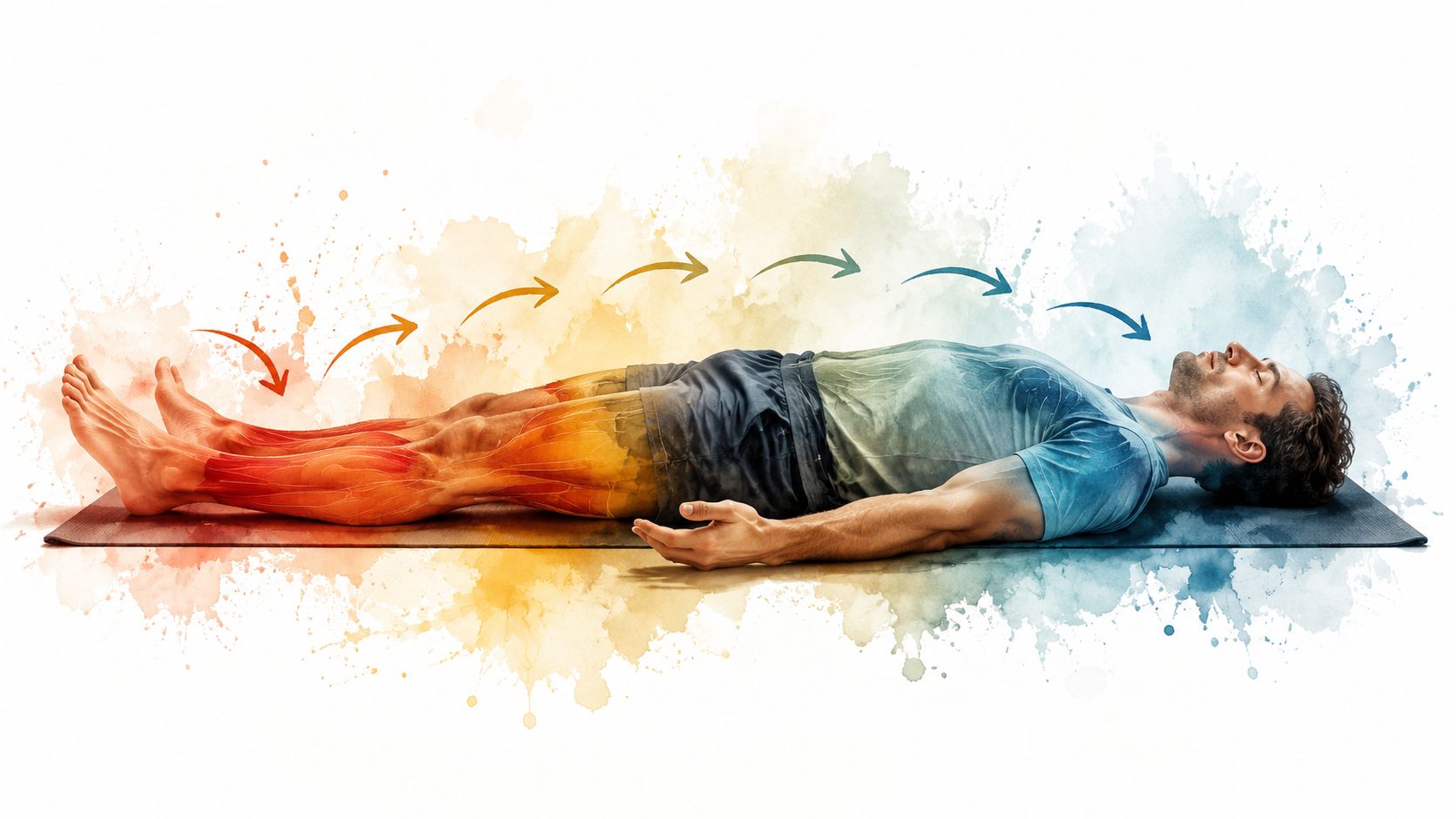
PMR has been studied for anxiety and stress reduction across clinical settings, including a systematic review of relaxation interventions that examined progressive muscle relaxation outcomes. The reason it helps is practical. Many anxious people do not notice how much effort their body is spending on bracing until they create contrast on purpose.
Start with a small area. Feet are often easiest. Tense for a few seconds, release, and pause long enough to feel what changes. Then move to calves, thighs, hands, arms, shoulders, and face. Some people prefer to go from head to toe because forehead and jaw tension are the loudest signal. Either direction works if the pace stays slow enough for your nervous system to register the shift.
I often suggest PMR to people who say, "My mind knows I'm safe, but my body is still acting like something is wrong." That mismatch is common in fight-or-flight states. The Anxiety Checklist's guide explains that response clearly, and PMR gives you a way to interrupt it through the body instead of arguing with it.
A few adjustments make it more effective:
- Use moderate tension: About 30 to 50 percent effort is enough. More force can backfire, especially if you live with pain, migraines, or a trauma history.
- Pause after each release: The reset happens in the noticing, not in racing through the sequence.
- Skip injured or painful areas: Work around them. PMR should reduce strain, not add it.
- Practice before sleep or after work: Those transition points tend to reveal hidden tension.
- Use guided support when focus is low: The Anxiety Checklist app has PMR exercises for calming anxiety when you do not want to remember the order yourself.
If you want a follow-along version, this guided video can help you settle into the pace:
Healing Message
Your body is not overreacting to annoy you. It learned to hold tension for a reason. Each time you soften a muscle on purpose, you teach your system that release is possible, and safety can be felt instead of just understood.
3. The 5-4-3-2-1 Grounding Technique
When panic climbs, your mind usually races into prediction. Grounding brings you back to what's here. The 5-4-3-2-1 technique does that through the senses: five things you see, four you can touch, three you hear, two you smell, and one you taste.
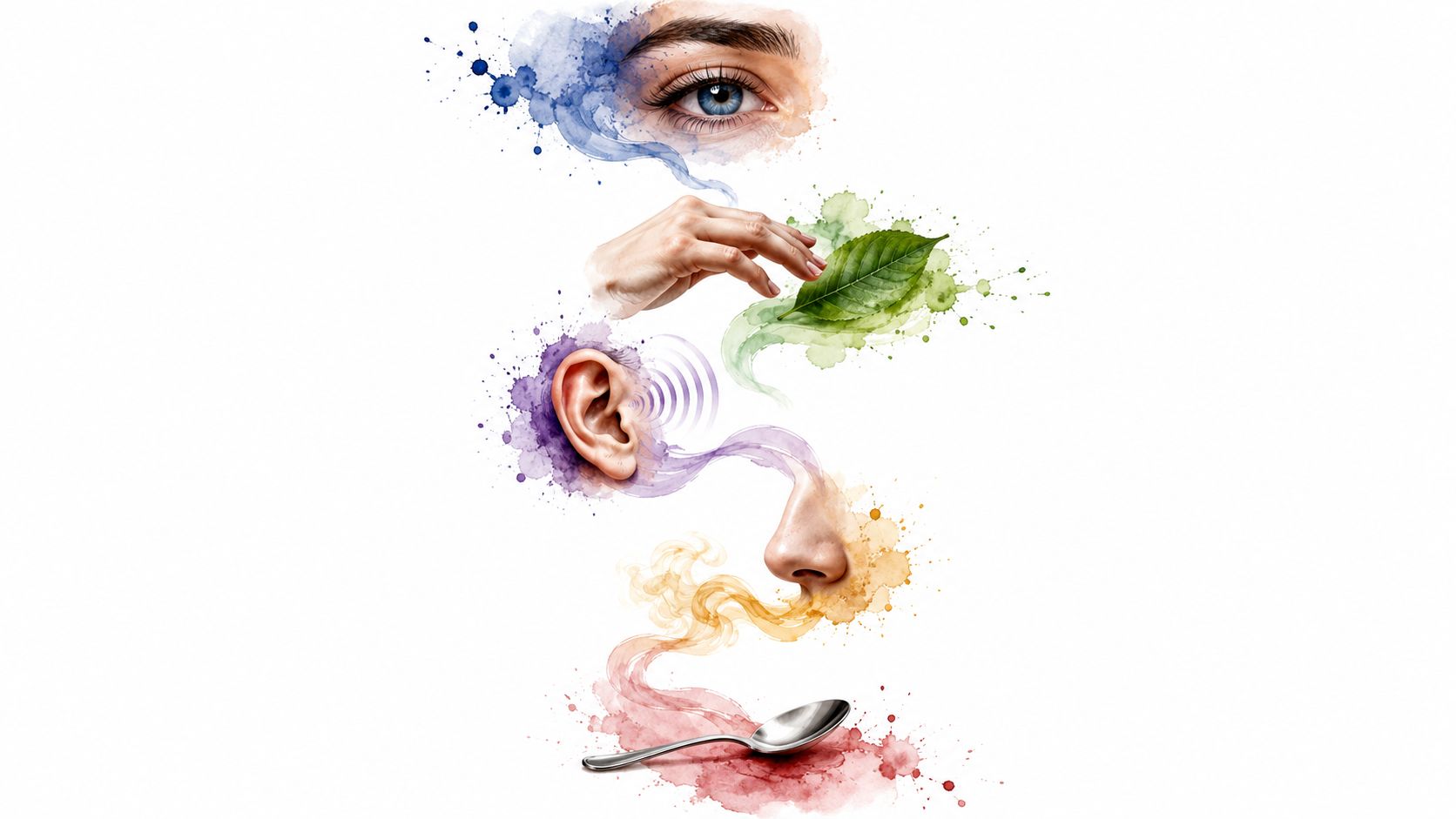
This is one of the best nervous system regulation exercises for dissociation, spiraling thoughts, and the surreal feeling that you've left the room even though your body is still in it. In trauma-informed settings, therapists often teach grounding early because anxious brains need verifiable reality, not more debate.
How To Make It Work Under Stress
The trick is specificity. Don't say “chair.” Say “blue chair with one loose thread on the arm.” Don't say “I hear traffic.” Say “a truck passing, a distant dog, the hum of an air vent.” Specific detail recruits the present moment more effectively than vague labeling.
This also works better when you start before panic peaks. If you wait until you're fully flooded, language can disappear. That's where the Anxiety Checklist app can help, especially its always-free SOS mode and Anxiety Checklist grounding strategies, which give you prompts when your mind goes blank.
Slow is part of the method. Rushing through the senses turns grounding into another task. Lingering with each detail turns it into regulation.
Try this in ordinary life too. Use it in the grocery line, in the car before going inside, at your desk after a stressful email. Grounding practiced outside crisis becomes easier to access inside crisis.
Healing Message
Panic tries to pull you into a frightening future. Grounding reminds you that you are here, now, in this moment. Safety often returns one small sensory detail at a time.
4. Vagus Nerve Stimulation and Humming
Your chest is tight, your thoughts are racing, and another breathing exercise feels like one more thing to get right. Humming can work better in that moment because it gives the exhale a job. The sound creates vibration in the throat, face, and chest, which many people experience as more settling than silent breathwork.
The mechanism is simple. A longer exhale tends to support parasympathetic activity, and the added vibration gives your brain a concrete sensory signal to follow. Research on slow-paced breathing and vagal-related regulation has linked these patterns with shifts in autonomic state in this review of heart rate variability biofeedback and resonance breathing.
Humming is especially useful for people who get irritated by counting, feel trapped by stillness, or start monitoring every sensation the second they close their eyes. I often suggest it as a bridge tool. It is active enough to hold attention, but gentle enough to lower intensity.
Best Use Cases
Use a low-effort hum, not your biggest voice. A soft "mmm" or "vvv" usually works well.
Try it in places where anxiety tends to spike but full meditation is unrealistic. In the car before walking into an appointment. In the bathroom at work after a stressful conversation. In the kitchen while waiting for the kettle to boil. Repetition matters more than performance.
- Choose comfort over technique: Pick a pitch that does not strain your throat.
- Let the exhale lengthen on its own: Stop before you feel air hunger.
- Track the vibration: Notice your lips, sternum, sinuses, or jaw.
- Use it during early activation: It usually works better at a 4 out of 10 than at a 9.
- Pair it with learning: If you want to understand why your body flips into alarm so fast, start with The Anxiety Checklist's guide.
Some people love humming right away. Others feel self-conscious or oddly emotional the first few times. Both reactions are normal. The trade-off is that this tool is discreet and portable, but it may not be enough on its own during a full panic spiral. In those moments, combine it with movement, cold water, or a guided prompt in the Anxiety Checklist app so you are not relying on one method alone.
Quiet tools often work because you can repeat them often enough for your nervous system to learn from them.
Healing Message
You do not need to force calm. Your body responds to small signals practiced consistently. A steady hum can remind your system that safety is still available, even before your mind fully believes it.
5. Guided Meditation and Body Scan
Meditation helps many anxious people, but only when it's used wisely. A guided meditation or body scan gives your attention a gentle place to rest. Instead of fighting every sensation, you practice observing breath, tension, warmth, pressure, and thoughts without treating them like emergencies.
For many people, guided audio is better than silent meditation at first. Silence can leave too much room for rumination. A calm voice can keep the practice contained and help you stay with the body rather than disappearing into mental loops.
When Meditation Helps and When It Doesn't
Body scans are especially good for people who feel detached from themselves. You bring attention slowly through the forehead, jaw, throat, shoulders, chest, belly, hips, and legs. The point isn't to feel perfect calm. The point is to notice without bracing.
That said, meditation isn't the best first tool for everyone. If closing your eyes makes you more activated, keep them open. If stillness feels unsafe, try walking meditation or humming first. Many existing guides overfocus on crisis tools and skip preventive practice, but a 2024 discussion of somatic self-care emphasizes that regulation works best when practiced outside crisis, with multiple daily grounding moments building resilience over time in this overview of preventive nervous system regulation.
Use the Anxiety Checklist app for this kind of repetition. Its guided meditations, hypnosis sessions, and sleep audios are useful when you want support without having to generate calm on your own.
Healing Message
You are not your thoughts, and you are not every sensation passing through your body. Meditation helps you relate to anxiety differently. That shift can be the beginning of real freedom.
6. Cold Water Exposure and the Mammalian Dive Reflex
Some techniques are for gentle maintenance. This one is for sharp interruption. Cold water on the face can trigger the mammalian dive reflex, a survival response that helps slow and steady the body when panic is escalating fast.
That's why many people keep an ice pack in the freezer or run very cold water over their face during a surge. It's immediate, physical, and doesn't require much concentration.

Use It Carefully
This is a useful emergency tool, but it's not a complete healing plan. Cold helps interrupt acute arousal. It usually doesn't resolve the underlying pattern that keeps your system primed for alarm. After the cold stimulus, follow up with grounding, humming, or slower breathing so your body has a path into steadier regulation.
A practical version is simple:
- Use the face, not a full shock response: Splash very cold water on your cheeks or hold a cold pack there briefly.
- Practice when calm first: Learn your body's response before you need it in distress.
- Pair it with a second tool: Grounding or an extended exhale helps stabilize the shift.
- Reserve it for strong spikes: This is most useful when you need a fast downshift.
Some people love this method. Others find it too abrupt. That's normal. Matching the tool to the moment matters more than forcing yourself to like a technique because it worked for someone else.
Healing Message
If panic rises fast, you are not helpless. Your body has built-in calming reflexes. Sometimes healing starts with learning how to access them on purpose.
7. Walking and Movement-Based Regulation
Your thoughts are racing, your chest feels tight, and sitting still makes the anxiety louder. This is often the moment a walk works better than another attempt to force calm.
Walking gives an activated nervous system a job. The steady, repetitive pattern of steps can organize excess energy, widen attention, and reduce the trapped feeling that often comes with anxiety. For some people, this works faster than seated practices because the body is already asking for motion.
Research supports that effect. A review in the Journal of Clinical Psychiatry found that physical activity can reduce anxiety and improve stress regulation through several pathways, including shifts in arousal, attention, and mood, especially when the activity is done consistently over time (review here).
The dose matters. A hard workout can help some people, but if your system is already on high alert, intense exercise may feel too activating. Brisk, moderate movement is often the better fit. You should still be able to speak in short sentences. That pace tends to settle the body instead of pushing it further into alarm.
A few ways to make walking more regulating:
- Keep the rhythm steady: Consistency helps more than speed.
- Add sensory orientation: Notice the ground under your feet, the temperature of the air, and three sounds around you.
- Use a familiar route: Predictability lowers friction and gives the brain fewer things to scan.
- Let your arms move naturally: Full-body rhythm can help discharge tension.
- Use support if your mind loops: If walking turns into rumination, the Anxiety Checklist guide on overthinking symptoms and solutions can help you spot that shift early.
I often suggest this to people who say meditation makes them feel cornered inside their own head. That response makes sense. A body that does not feel ready for stillness may find safety through movement first. The goal is not to perform exercise. The goal is to help your system experience motion without danger.
Healing Message
You do not need to force stillness to prove you are healing. Your nervous system can relearn safety one step at a time. Sometimes a walk is not avoidance. It is the most honest way back into your body.
8. Cognitive Reframing and Thought Journaling
Not every anxious state begins in the body. Sometimes a thought lights the fuse. Cognitive reframing and thought journaling help when your mind keeps feeding your nervous system the same threat story.
Write the thought exactly as it appears. “I'm going to panic in the meeting.” “Something is wrong with my heart.” “If I feel this way, I won't cope.” Then question it. What's the evidence for it? What's the evidence against it? What would be a more accurate statement?
How To Journal Without Spiraling
This works best when the alternative thought is believable. Don't replace fear with a slogan your nervous system rejects. “Nothing bad will ever happen” won't land. “I'm anxious, and I've gotten through this before” often will.
Use structure, not endless introspection:
- Capture the exact thought: Don't soften or summarize it.
- Check the evidence: List what supports it and what does not.
- Rate your belief: Use a 0 to 100% scale before and after if that helps you notice shifts.
- Choose accuracy over positivity: A grounded thought regulates better than a forced one.
- Get extra support: If repetitive thinking is your main trigger, the Anxiety Checklist article on overthinking symptoms and solutions can help you spot the pattern faster.
This technique won't stop a full body panic response in its peak moment as quickly as cold water or grounding. That's the trade-off. But it is excellent for weakening the thought habits that keep reactivating your system day after day.
Your first thought isn't always your truest thought. Journaling gives you enough distance to choose a better one.
Healing Message
Anxious thoughts can sound convincing, especially when you've heard them for years. But thoughts are not commands, and they are not destiny. You can learn to answer fear with something steadier and more true.
8-Method Nervous System Regulation Comparison
| Technique | Implementation Complexity 🔄 | Resource Requirements 💡 | Speed / Efficiency ⚡ | Expected Outcomes 📊 | Key Advantages & Ideal Use Cases ⭐ |
|---|---|---|---|---|---|
| Box Breathing (4-4-4-4) | Low, simple timed inhale/hold/exhale | None, can be done anywhere | Fast, calming within minutes | Lowers heart rate/cortisol; rapid reduction of acute anxiety | Immediate panic relief, portable, easy to teach; used in emergency and first-responder settings |
| Progressive Muscle Relaxation (PMR) | Medium, systematic sequence, guided practice | Quiet space, ~15–20 min, optional audio | Moderate, full effect in a session | Lasting relaxation; reduced muscle tension; improved sleep | Best for tension-based anxiety, pre-sleep routines, clinical therapy use |
| 5-4-3-2-1 Grounding | Low, simple sensory counting steps | None, fully portable | Fast, 5–10 minutes or under | Interrupts rumination/dissociation; reorients attention to present | Effective during panic or dissociation, usable in any environment |
| Vagus Nerve Stimulation / Humming | Low, vocal vibration practice | None, voice comfort required | Very fast, seconds to minutes | Increases parasympathetic activity and HRV | Rapid downregulation, discreet practice, builds vagal tone with repetition |
| Guided Meditation & Body Scan | Medium, needs guidance and habit formation | App/recording, quiet space, 10–30 min/session | Slow, benefits compound over weeks | Reduces baseline anxiety; improves sleep and resilience | Best for long-term change, MBSR and therapeutic programs |
| Cold Water Exposure (Dive Reflex) | Low, simple face splash/ice application | Cold water/ice pack, sink or freezer access | Very fast, often <30 seconds | Immediate heart-rate deceleration and rapid calming | Emergency SOS for severe panic or agitation; reliable quick reset |
| Walking / Movement-Based Regulation | Low, rhythmic mindful movement | Safe walking space or treadmill, 15–30 min ideal | Moderate, benefits accrue during session | Mood elevation, processing of emotions, improved sleep | Daily prevention and emotional processing; accessible to most people |
| Cognitive Reframing & Thought Journaling | Medium–High, structured cognitive work | Journal/app, time, may require therapist support | Slow, structural change over weeks to months | Reduces catastrophic thinking; improves reality-testing and resilience | Core CBT tool for long-term anxiety management; less suitable during acute panic |
Build Your Toolkit for a Resilient Nervous System
At 2 a.m., your chest is tight, your thoughts are racing, and you cannot remember which exercise is supposed to help first. That is why a toolkit matters. In an anxious moment, decision-making gets harder. A small set of practiced skills gives you something steady to return to.
These exercises do more than get you through one bad stretch. Repetition teaches your body that activation can rise and fall without taking over your whole day. That is the real shift. You stop relying on hope alone and start building evidence, through practice, that you can influence your state.
A useful toolkit has different jobs. Box breathing, grounding, and cold water tend to work best for acute spikes. Walking, humming, meditation, and progressive muscle relaxation are better for daily regulation and recovery. Thought journaling helps with a different layer of the problem by addressing the interpretations that keep setting your nervous system off. The strongest plan usually includes both fast-acting tools and slower, pattern-changing ones.
Practice outside of crisis matters most.
Skills learned only during panic often feel unavailable when you need them. Skills rehearsed in calmer moments come online faster because the sequence is familiar. Repeated regulation practice is also consistent with what clinicians aim for in anxiety treatment: improving flexibility in the autonomic nervous system, not chasing a perfectly calm state all day. A review in Frontiers in Psychiatry describes this broader goal in the context of anxiety and autonomic regulation in this overview of heart rate variability and anxiety disorders.
Digital support can make that repetition easier, especially for people who freeze, forget steps, or struggle to stay consistent on their own. The point is not to collect more wellness tools. The point is to reduce friction between knowing what helps and doing it.
The Anxiety Checklist app fits well here because it supports both immediate relief and long-term practice. Its always-free SOS mode can guide you through grounding when your mind goes blank. Its guided meditations, hypnosis sessions, walking sessions, affirmations, and CBT tools give you a place to rehearse the same skills often enough that they start to feel familiar. If poor sleep keeps your system more reactive, it can also help to improve your sleep quality, because an overtired nervous system has less room to absorb stress.
Start smaller than your ambition tells you to.
Pick one method that feels realistic this week. Use it once a day, even when anxiety is low. Add a second tool only after the first starts to feel automatic. That is how resilience usually develops in practice. Not through doing all eight perfectly, but through repeating a few good tools until your body trusts them.
Each exercise in this list carries its own healing message. Keep the ones that speak to your nervous system. You do not need a perfect routine. You need a reliable one.