



You got everyone dressed. You found the missing shoe, cut the sandwich into the right shape, wiped the spill before it spread, answered the same question six times, and smiled when someone snapped a photo. From the outside, the day may even look sweet. Inside, you feel thin, brittle, and strangely far away from yourself.
That gap can be terrifying. Many mothers tell themselves, “I wanted this. I love my kids. Why do I feel so empty?” Then the guilt rushes in. Then the fear. Then the worry that maybe this is just who they are now.
It isn't. What you're feeling can have a name, a pattern, and a path forward. Stay at home mom burnout is real. It can stir up anxiety, intensify overwhelm, and for some women, push daily stress into panic. But healing is possible. You are not broken, and you are not beyond help.
Table of Contents
- You Are Not Just Tired You Are Not Alone
- What Is Stay-at-Home Mom Burnout Exactly
- Recognizing the Warning Signs in Your Daily Life
- Why Burnout Happens The Hidden Pressures of Motherhood
- Your First Steps Toward Relief Daily Coping Rituals
- Building a Stronger Foundation for Lasting Change
- Your Roadmap from Burnout to Balanced and Panic-Free Living
You Are Not Just Tired You Are Not Alone
You might be reading this during nap time, in the bathroom with the door locked, or while half-listening for someone to yell “Mom!” again. Maybe the day looks manageable on paper. Breakfast happened. The kids are safe. The laundry is moving. But your body feels heavy, your patience is frayed, and small problems land like emergencies.
That experience can feel isolating because motherhood is often presented as something you should be grateful for every second of the day. So when you're struggling, it's easy to assume the problem is your attitude, your resilience, or your love.
It's not.
A major population study on maternal burnout found that among 17,000 respondents, 55% of stay-at-home moms said they were “always” or “frequently” exhausted, which was substantially higher than working mothers in the same study, according to this maternal burnout research paper. If that number catches in your chest, it may be because it tells the truth your shame has tried to hide. Many mothers are functioning on the outside while feeling depleted on the inside.
What this feels like in real life
You love your child fiercely, but the sound of one more request makes your shoulders tense.
You know a trip to the park is “good for everyone,” but getting shoes on feels like climbing a mountain.
You want rest, not because you don't care, but because you care so much and have been giving from an empty place for too long.
You can be devoted to your children and still be overwhelmed by the structure of full-time caregiving.
Why this matters
When burnout goes unnamed, moms often call it laziness, irritability, or failure. Naming it accurately changes the story. It moves you from self-blame to understanding. It also opens the door to the right kind of support.
If anxiety has started to mix with your exhaustion, quiet education can help you feel less lost. A good place to start is this free anxiety education hub, especially if your stress has begun to feel bigger than “normal mom overwhelm.”
For now, hold onto this: if you've been telling yourself to just try harder, please stop for a moment. You may not need more effort. You may need recovery, support, and a life that doesn't ask one person to carry everything alone.
What Is Stay-at-Home Mom Burnout Exactly
It often starts in an ordinary moment. Your child asks for help with one small thing, the dishwasher is half unloaded, someone is whining, and your body reacts like an alarm has already been pulled. You are still standing there, still doing what needs to be done, but inside, it feels like your system has lost its reserve.
That state has a name. Stay-at-home mom burnout is a pattern of ongoing emotional exhaustion, mental overload, and reduced capacity caused by chronic caregiving stress and too little recovery. The World Health Organization describes burnout as a syndrome that grows out of chronic stress that has not been managed successfully, and that framework helps explain why full-time caregiving can wear a mother down when the demands are constant and the breaks are thin (WHO on burnout).
A useful comparison is a car that is always being driven on low fuel. It may keep moving for a while. The warning light stays on. The engine runs hotter. Small hills start to feel steep. That is what burnout does to a nervous system. Tasks that used to feel manageable begin to cost more than they should.
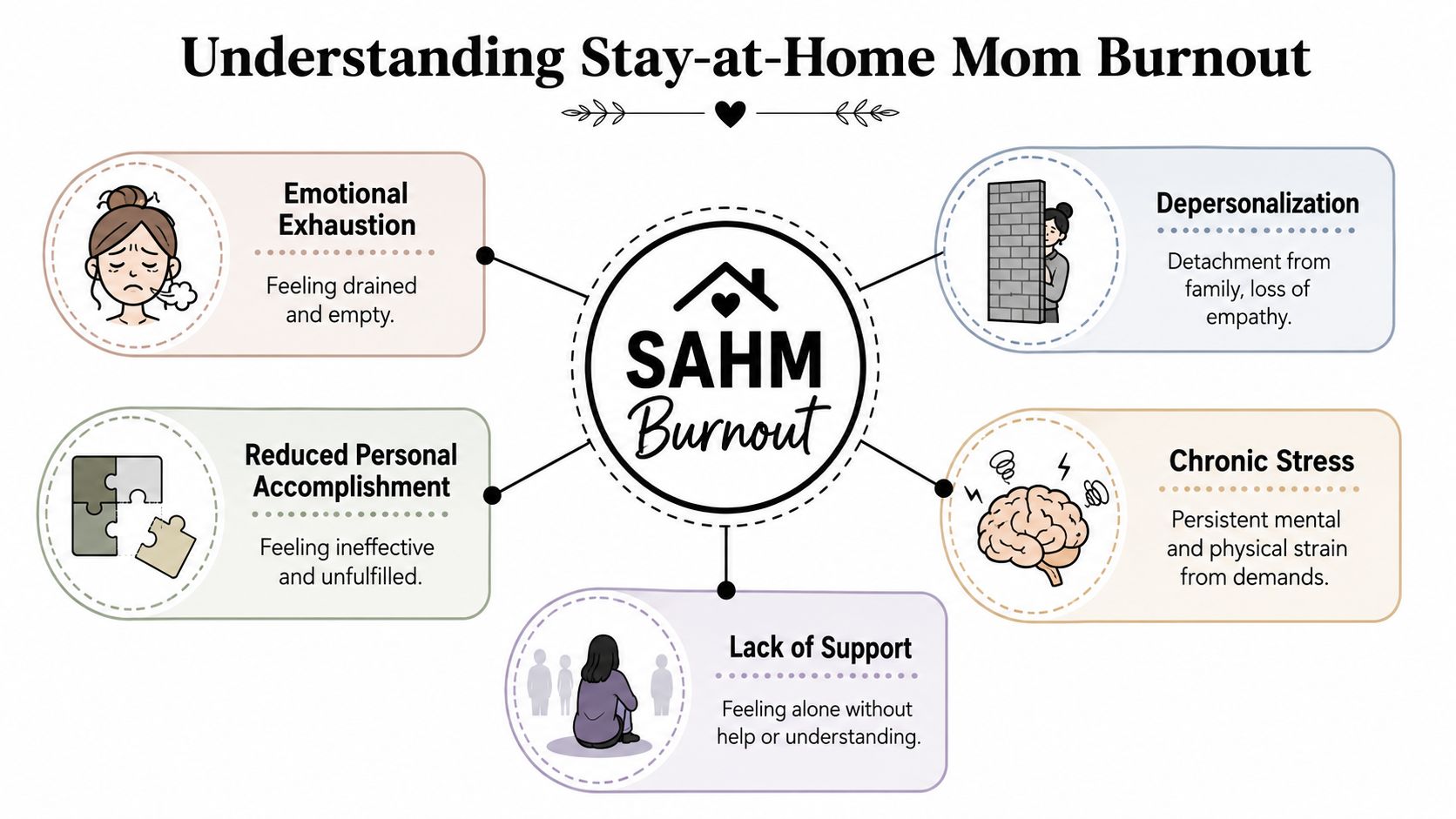
Burnout means your recovery is no longer keeping up
The word that matters here is chronic. A hard week can leave anyone tired. Burnout is different because the strain keeps outpacing the repair. You pour out energy through planning, anticipating, soothing, cleaning, teaching, remembering, and emotionally holding the household together. Then the next wave arrives before your mind and body have settled.
That is why burnout can feel so confusing. You may sleep and still wake up depleted. You may love your family and still feel emotionally flat. You may get an hour alone and notice that it barely touches the exhaustion. None of that means you are weak. It means the load has become too heavy for too long.
For many mothers, anxiety starts wrapping around that depletion. When the nervous system spends too much time on alert, ordinary stressors can trigger a disproportionate response. If that pattern sounds familiar, learning about common anxiety causes can help explain why your body feels keyed up even during everyday routines.
Burnout is related to depression and anxiety, but it is not identical
These experiences can overlap. They can also feed each other, which is one reason moms often struggle to sort out what is happening. Burnout usually centers on prolonged overload and the absence of real recovery. Depression may include persistent hopelessness, loss of interest, or numbness that reaches beyond caregiving stress. Anxiety often adds racing thoughts, dread, physical tension, and difficulty calming down.
A simple comparison can help:
| Experience | What it often feels like |
|---|---|
| Ordinary stress | “Today drained me. I need rest.” |
| Burnout | “I keep giving and never refill.” |
| Anxiety layered onto burnout | “My body stays on edge, even when nothing big is happening.” |
This distinction matters for one reason. If you call burnout a personal failing, you will probably respond with more pressure and more guilt. If you recognize it as chronic overload inside a system that asks one person to carry too much invisible labor, the path changes. You can begin to reduce the load, increase recovery, ask for targeted support, and make changes that fit the problem.
A grounded rule of thumb: if rest brings only brief relief because your responsibilities restart before your system recovers, you are likely dealing with burnout, not simple tiredness.
Stay-at-home mom burnout is real. It is not proof that you are doing motherhood badly. It is often the predictable result of sustained care without enough support, margin, or relief. That means recovery is possible, and it usually starts with understanding the problem clearly instead of blaming yourself.
Recognizing the Warning Signs in Your Daily Life
Burnout rarely announces itself in a clean, clinical way. It tends to show up in small moments that keep repeating until they become your normal. You may notice it in your tone, your body, your thoughts, or the strange sense that you are present in the room but not fully in your life.
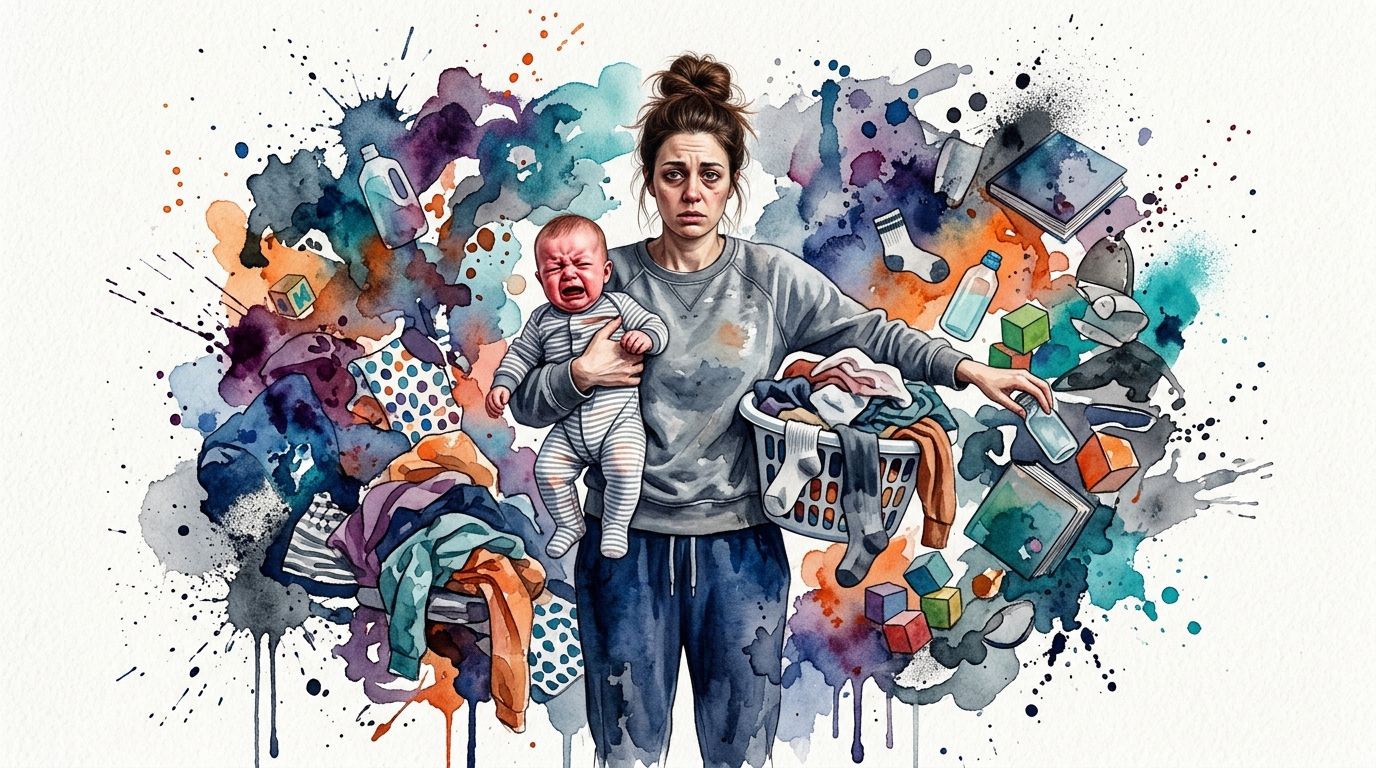
Emotional exhaustion at home
This is more than being sleepy. It's the feeling that every request scrapes against already raw nerves.
You might hear yourself snapping over tiny things and then feel immediate guilt. Or you may cry over something small because your system is already overloaded. Sometimes exhaustion looks like irritability. Sometimes it looks like wanting everyone to stop touching you for ten minutes.
Common signs in daily life include:
- Short fuse: You react faster and more sharply than you want to.
- Dread before ordinary tasks: Morning routines, dinner, and bedtime feel emotionally expensive.
- No true reset: Sleep or a quiet hour helps a little, but not enough.
Detachment and the feeling of going numb
One of the most confusing parts of stay at home mom burnout is that it can create distance where you want closeness. You may adore your child and still feel emotionally flat. Some moms describe it as watching themselves parent from behind glass.
That doesn't mean your bond is gone. It often means your nervous system is trying to conserve energy.
If anxiety has become part of the picture, a brief online anxiety screening can help you put words to what's happening and decide whether you need more support.
Sometimes the warning sign isn't constant sadness. It's the loss of access to warmth, patience, or pleasure that used to come more easily.
The painful sense that nothing you do counts
Burnout often attacks your sense of competence. You work all day and still feel behind. The house resets into chaos. Meals disappear in minutes. The same conflict happens again tomorrow. It can leave you thinking, “I do everything, yet nothing stays done.”
Watch for this pattern:
- You keep moving but feel ineffective.
- You compare yourself to other mothers and come up lacking.
- You start believing the problem is you, instead of the load you're carrying.
If several of these feel familiar, take that seriously. Not dramatically. Just truthfully. Awareness is often the first turning point because it helps you stop fighting yourself and start responding to what your body and mind have been trying to say.
Why Burnout Happens The Hidden Pressures of Motherhood
People often talk about motherhood as if the hard part is just being busy. But stay at home mom burnout usually grows from something more specific. It comes from living inside a role with constant demand, low recognition, and very little protected recovery.
That structure matters.
Independent research on maternal burnout found that employed mothers had significantly lower emotional exhaustion scores than housewives, with a mean difference of 5.85 points, according to this maternal burnout study. The same research also connected high parenting stress with high emotional exhaustion and depersonalization, and found positive associations between maternal burnout and depression, anxiety, and perceived stress. That doesn't mean working mothers have it easy. It means the design of the stay-at-home role can carry unique strain.
The role itself can wear you down
At home, the work repeats without a clean stopping point. You don't “finish” caregiving. You cycle through it. Feed, clean, soothe, plan, mediate, repeat. Much of it is important, but little of it feels complete.
That creates a particular kind of depletion. Your body gets tired, but so does your identity. There may be no colleague saying, “Great job.” No commute to mark the end of the shift. No uninterrupted lunch. No transition from work mode to self mode.
A few hidden pressures often stack together:
- Invisibility: Much of what you do prevents problems, which means other people may never notice it.
- Perfection pressure: Modern parenting culture can make ordinary human limits feel like moral failure.
- Identity squeeze: When every hour serves someone else, it's easy to lose contact with your own preferences, interests, and pace.
Invisible labor drains energy you can't easily name
Invisible labor is the mental load. It's remembering the appointment, noticing the milk is low, anticipating the meltdown, planning the meal, monitoring the nap, and keeping track of what everybody needs before they ask. This kind of strain is one reason moms can feel exhausted even on days that don't look dramatic from the outside.
It also feeds anxious thinking. When your brain becomes the family's command center, it can get stuck in constant forecasting. What's next? What did I forget? What might go wrong? If that loop sounds familiar, this guide on how to stop overthinking and worrying can help you recognize the pattern.
The problem often isn't that you're weak. The problem is that your role may demand constant output without enough relief, recognition, or shared ownership.
When you understand burnout this way, shame loosens. You can start asking a more useful question. Not “What's wrong with me?” but “What about my daily life has become unsustainable?”
Your First Steps Toward Relief Daily Coping Rituals
When you're depleted, big self-care plans can feel insulting. A long morning routine, a perfect meal plan, a new workout schedule. Those ideas may sound nice, but burnout usually responds better to smaller actions that are easy to repeat.
Think of these as micro-deposits into an overdrawn account. They won't solve the whole problem, but they can reduce the sense of drowning and help your body remember what calm feels like.
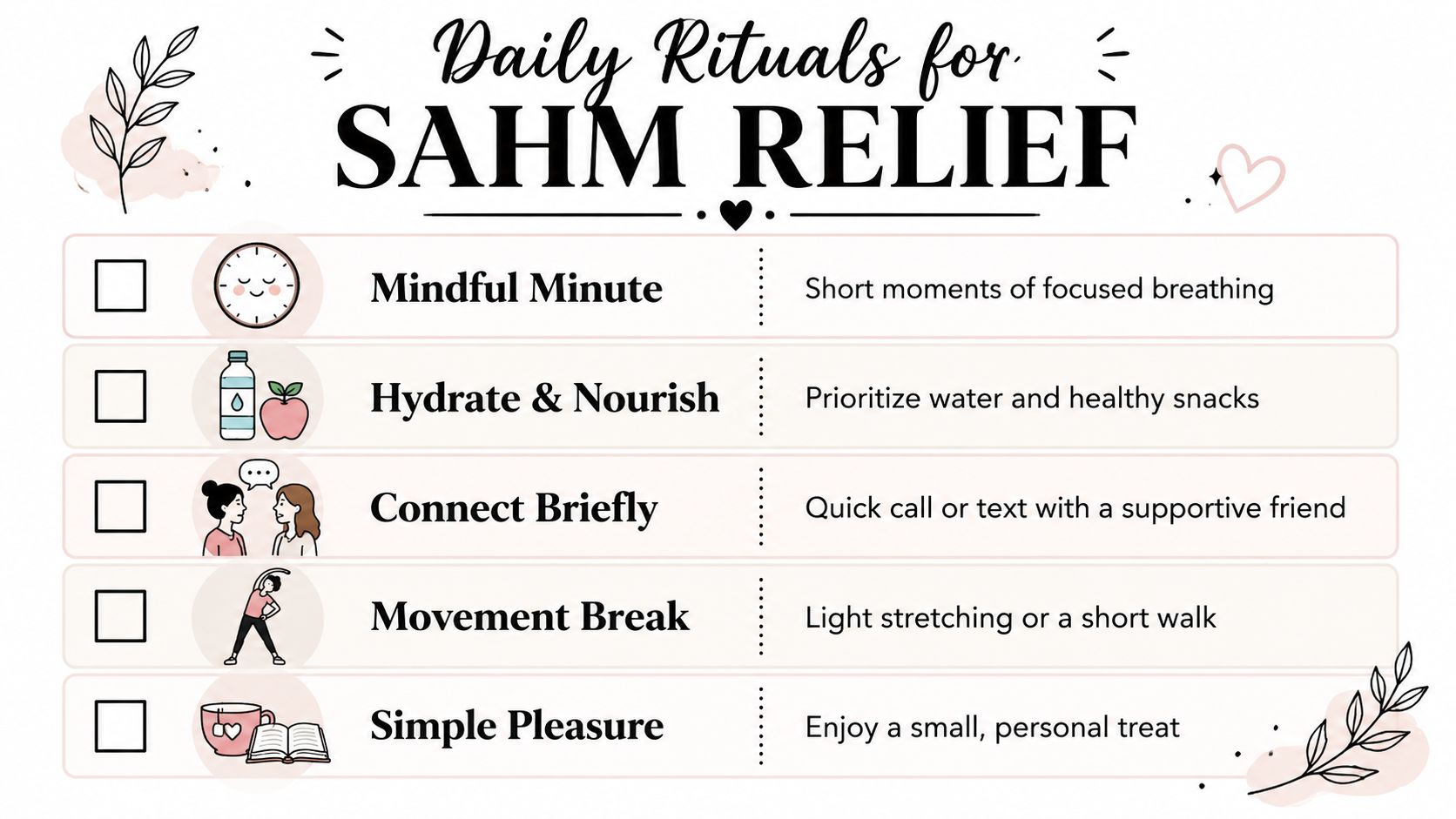
Think tiny not perfect
A coping ritual should be so simple that you can do it on a hard day, not just an ideal one.
Try attaching relief to moments that already exist:
- First sip pause: Before you check your phone, take three slower breaths with your coffee or tea.
- Bathroom reset: Close the door, place one hand on your chest, and exhale longer than you inhale for one minute.
- Tantrum grounding: Press both feet into the floor and name five things you can see.
- Nap time protection: Spend the first few minutes resting your nervous system before doing chores.
If your baby's crying has become a major trigger, practical support matters. This Grow With Me's guide for calming infants offers soothing ideas that can lower the intensity of the moment and reduce the panic that can rise when you feel trapped by nonstop crying.
A low-energy relief menu
You don't need to “deserve” relief. You need access to it.
Pick one or two options from this menu and repeat them daily for a week:
| Moment | Simple ritual |
|---|---|
| Before the kids wake | Sit upright in bed and take ten slow breaths |
| During screen time | Stretch your neck, shoulders, and jaw instead of multitasking |
| While making lunch | Drink water before serving everyone else |
| After a hard moment | Put a hand on the counter and say, “This is hard, and I'm still safe” |
Some mothers also benefit from private, low-friction support they can use without appointments. Tools like app-guided anxiety support can be especially helpful when your mind goes blank and you need a prompt, not another task.
Relief often starts with repetition, not intensity. Small practices calm the nervous system when you do them often enough that your body begins to expect care.
These rituals are not the whole answer. They are the first handhold. They help you get enough steadiness back to make bigger changes possible.
Building a Stronger Foundation for Lasting Change
You finally get through the dishes, settle one child, answer a text, wipe a counter, and start planning dinner in your head. Nothing is on fire, but your body still feels braced. That is often the clearest sign that daily coping is no longer enough. The system around you is still asking for more than one person can carry.
Burnout recovery gets stronger when the structure of family life changes, not only your stress response. Research on parental burnout has linked recovery with reducing chronic overload, increasing support, and restoring space for rest and autonomy, as discussed by the American Psychological Association's overview of parental burnout. That matters because burnout is not a character flaw. It is what can happen when the demands stay high and the replenishment stays low for too long.
A helpful way to picture this is a house with a cracked foundation. You can keep mopping the floor after every leak, and those quick fixes do help in the moment. But the floor keeps getting wet until the structure underneath is repaired.
Redistribute labor by assigning ownership
Many mothers ask for help and still end up managing the help. That happens because visible chores are only one layer of labor. The other layer is planning, remembering, anticipating, and noticing. That invisible load drains energy just as much as the task itself.
Clear ownership works better than broad requests.
Try language like this:
- For mornings: “I need you to fully handle breakfast and getting the kids dressed on Tuesdays and Thursdays.”
- For logistics: “I need one entire category off my plate, including planning, supplies, and follow-through.”
- For recovery time: “I need a set block each week when I am not the default parent unless there is a true emergency.”
If this feels hard to say, that makes sense. Many women were taught to be grateful for help instead of expecting shared responsibility. Shared responsibility is the healthier standard.
Set boundaries that reduce strain
Boundaries protect your nervous system from avoidable drain. They also protect your time, which is one of the first things burnout steals.
This can look ordinary from the outside. You decline hosting. You stop volunteering for the extra school task. You let the group chat wait. You choose a simpler dinner without apologizing. You decide that nap time, quiet time, or the first 20 minutes after bedtime belong to recovery, not more unpaid labor.
A few scripts can make this easier:
- “I can't take that on this week.”
- “I'm keeping that time open for rest.”
- “Good enough is enough for today.”
- “I'm not available during that window.”
Short is often kinder to your tired brain.
Build connection before you hit a breaking point
Isolation feeds burnout because it makes every hard moment feel private and endless. Support does not need to be impressive to help. It needs to be reliable.
Choose one form of connection you can repeat without a lot of effort:
- One honest person: someone you can text, “Today was rough, can you remind me I'm not failing?”
- One repeating contact: a weekly walk, porch visit, voice memo exchange, or playground meetup
- One reminder of identity: something that reflects your worth apart from output, like this piece on qualities of a mom
That last part matters more than it may seem. Burnout often shrinks a mother's identity until she feels like a machine for meeting other people's needs. Recovery includes becoming a full person again.
Lasting change begins when care is built into the week, not squeezed in after everyone else is done.
A stronger foundation does not require a perfect partner, a spotless house, or a total life overhaul. It asks for three things repeated over time: less solo burden, more protected rest, and steadier support. When those pieces begin to shift, your body gets a new message. You are no longer carrying all of this alone.
Your Roadmap from Burnout to Balanced and Panic-Free Living
If you feel overwhelmed by everything you've read, keep it simple. Recovery can be held in three words: breathe, build, broaden.
A simple way to think about recovery
Breathe means using immediate tools when your body is activated. Slow breathing, grounding, a one-minute reset, stepping outside, or pausing before reacting all count.
Build means changing the structure of daily life. Shared labor, firm boundaries, and scheduled recovery time are what help burnout loosen over time.
Broaden means adding support beyond your own willpower. That may include a therapist, a doctor, a mothers' group, trusted family, or practical help. If sleep deprivation is crushing your mental health during the newborn season, outside support can be part of healing. Some families explore overnight care options, and this guide to night nurses for newborns can help you understand what that kind of support looks like.
When panic starts to creep in, hearing a calm voice can help regulate your system. This brief video may feel grounding in that way.
When to reach for more support
Please don't wait for a total collapse to get help. If burnout is sliding into persistent hopelessness, intense anxiety, panic symptoms, sleep disruption, or a sense that you can't cope safely, professional support matters. If you ever have thoughts of harming yourself or your child, seek urgent help right away.
You do not need to prove that things are “bad enough.” If your inner world feels frightening, treatment is appropriate. Many mothers recover not by becoming tougher, but by becoming more supported, more honest, and more gently responsive to their own nervous systems.
A calm, present, panic-free life may feel far away today. It is still possible. Healing often begins the moment you stop calling your pain a personal failure and start treating it like something real, workable, and worthy of care.
If you want a private, practical place to start, The Anxiety Checklist offers real-time help for anxious spirals and panic, along with guided tools for long-term recovery. It's a gentle next step when you need support in the moment and a steadier path back to feeling like yourself again.