


In short
Research suggests float therapy can temporarily reduce anxiety during and shortly after a single session, while also promoting relaxation. However, the evidence is promising rather than conclusive: studies are small, mostly unblinded, and do not establish float therapy as a treatment for anxiety disorders. Greater awareness of bodily sensations may also increase anxiety or trigger panic in some people.
Key takeaways
- A typical visit takes about 90 minutes, with roughly 60 minutes spent floating.
- Open pools and float rooms may feel easier than enclosed pods for people concerned about claustrophobia.
- Epsom salt provides buoyancy; the article does not attribute benefits to magnesium absorption.
- Floating can heighten awareness of heartbeat, breathing and muscle tension, which may feel unsettling.
- People with seizure disorders, open wounds or a history of hallucinations should consult a clinician first.
Quick Summary
Float therapy is a relaxation practice. You lie back in shallow, body-temperature saltwater in a dark, quiet space while outside sensory input decreases.
People read about float tanks and wonder whether an hour in one could quiet their anxiety. Others worry that being alone in the dark is the last thing their mind needs. Both reactions make sense, and the research speaks to both.
Research on float therapy is still growing. The results so far have been promising but not conclusive. In this article, we’ll talk about what the studies have found and what they haven't tested yet.
You’ll also discover which individuals must consult with a clinician first before trying float therapy and what to do or how to stay calm while you’re alone in the tank.
What Is Float Therapy?
Float therapy is a session spent lying back in shallow water saturated with Epsom salt, warmed to roughly skin temperature. You float inside a dark, sound-attenuated pool, pod or cabin, and the salt holds you up. Researchers call it flotation-REST, which is short for Reduced Environmental Stimulation Therapy.
In 2026, a scoping review examined eight studies involving 401 participants who received flotation-REST. The review found improvements in pain and sleep difficulties. Anxiety and depression were also reduced in most studies, according to PubMed.
Different sources use different names for the same treatment. Sensory deprivation tank and isolation tank are also names for float therapy. Some people also refer to it as floatation therapy or floating therapy.
Some names describe hardware rather than a different treatment. Float pod, float cabin, and float room are vessel types. Chamber-REST means a dark, quiet room with no water at all. Chair-REST means reclining in a zero-gravity chair, and researchers use both to see what the water adds.
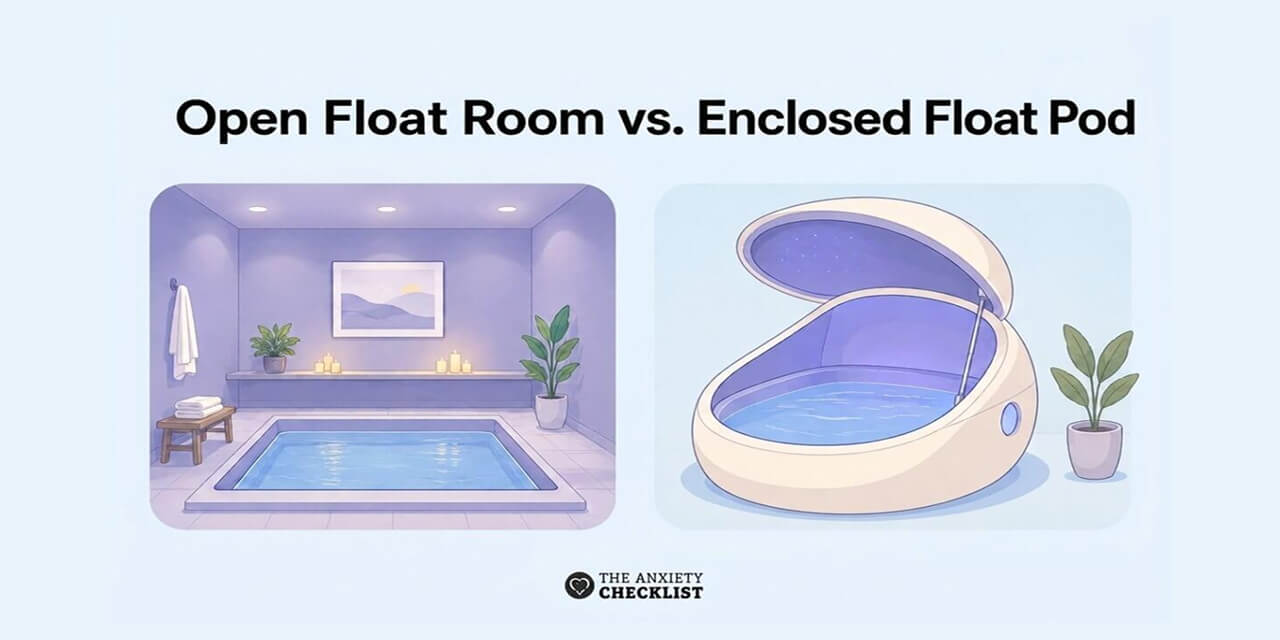
An open pool and an enclosed pod are different float therapy set-ups, not different treatments:
Is a Float Tank the Same as a Sensory Deprivation Tank?
Yes, they're the same thing under two names. Researchers prefer the term flotation-REST because the older label implies your senses are switched off. They're turned down, not removed.
How Does Float Therapy Work?
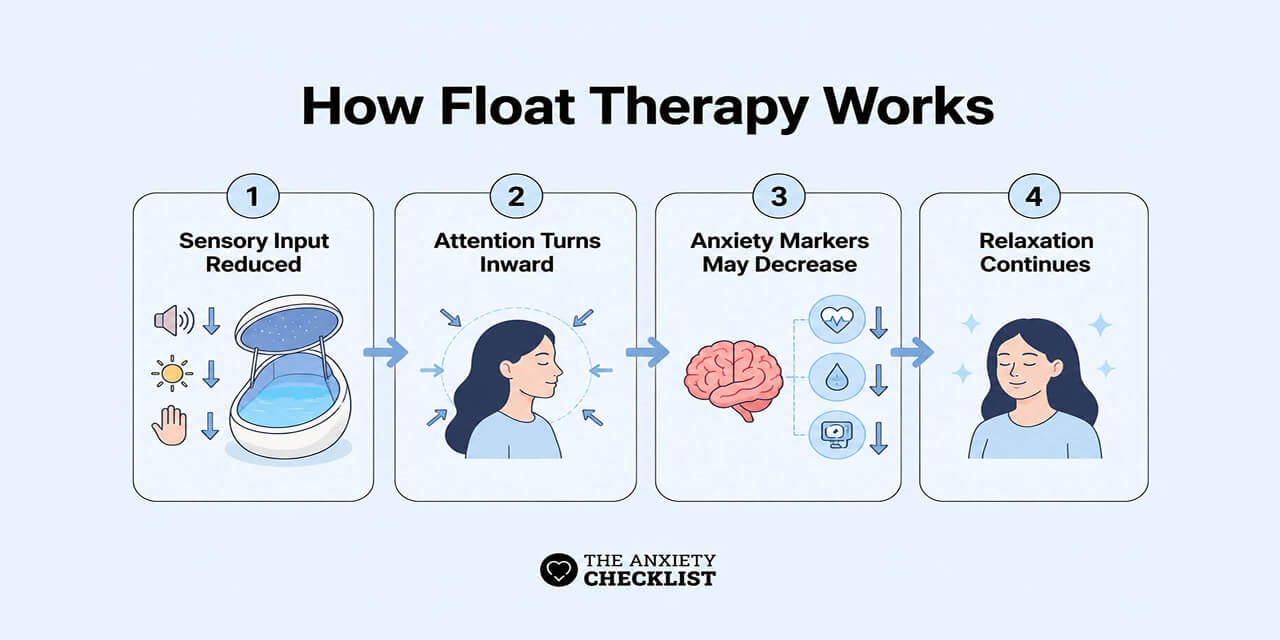
Float therapy works by limiting outside stimulation while your body rests in warm, buoyant water. The process involves reducing sensory input and turning your attention to your breathing or heartbeat.
Researchers also look at changes in anxiety markers during the session and how you feel after it ends. Here’s a breakdown of this process:
The process looks like this:
When you experience stress, your sympathetic nervous system triggers the fight-or-flight response. Your heart rate increases, breathing speeds up, and your brain is on high alert.
Float therapy reduces external stimulation, which can support a calmer environment for the body. This relates to the parasympathetic nervous system. It helps regulate the body's stress response and also supports the “rest and digest” state.
Does Float Therapy Work Through Magnesium Absorption?
No. The Epsom salt mainly makes the water dense enough to support your body while you float.
Float therapy works by reducing outside stimulation, allowing you to rest in a quiet, weightless environment. This leads to greater relaxation, which can help reduce anxiety.
What Happens During a Float Therapy Session?
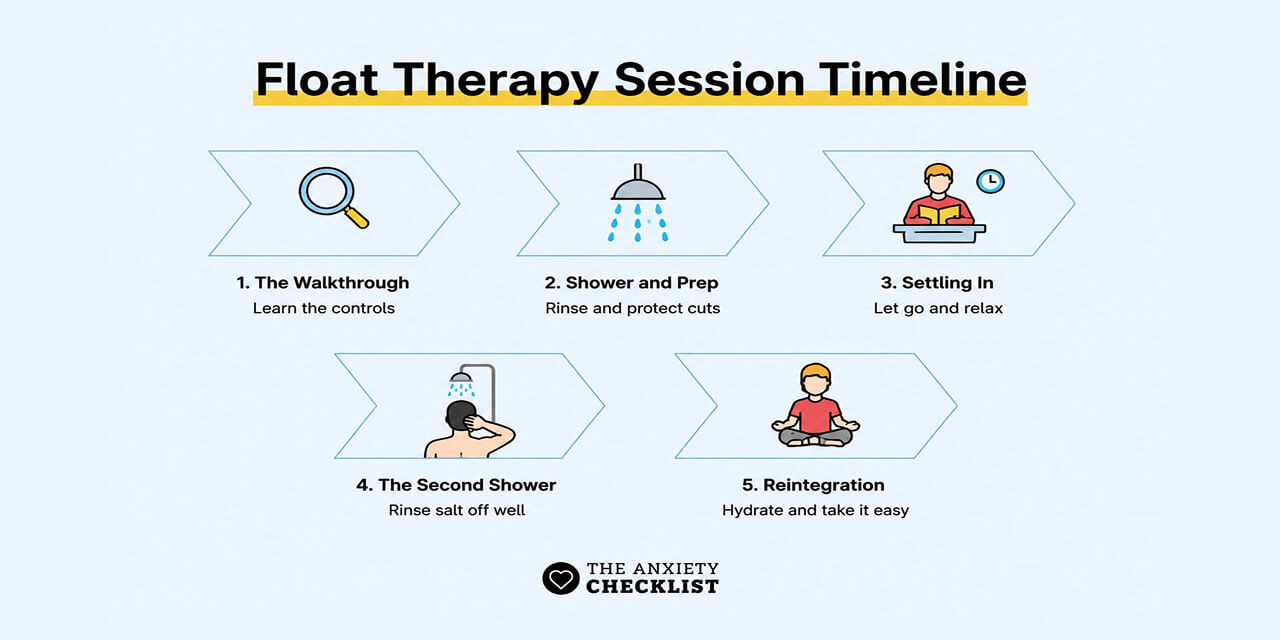
A first visit runs about 90 minutes door to door, with roughly 60 of those in the water. A float therapy spa gives you a private room with its own shower. Knowing the sequence in advance takes a surprising amount of the edge off.
The vessel matters more than most float therapy guides let on, especially if enclosed spaces worry you. Here’s how the different float therapy formats compare:
Float therapy prices vary widely by city and session length, so ask when you book.
If breath is your usual anchor, take it in with you. The same breathing exercises work perfectly well in the dark.
Here's how the 90 minutes of a float therapy session break down:
What Should You Expect During a Float Therapy Session?
A typical session lasts about 90 minutes, including preparation, float therapy, showering, and time to readjust afterward. You can choose from several float therapy setups, including open pools, rooms, cabins, and pods.
Research suggests that float therapy may provide short-term relief from anxiety and improvements in mood and relaxation, although the evidence is still developing.
Studies also suggest potential benefits for stress,sleep, pain, and overall well-being, but more research is needed to confirm these effects.
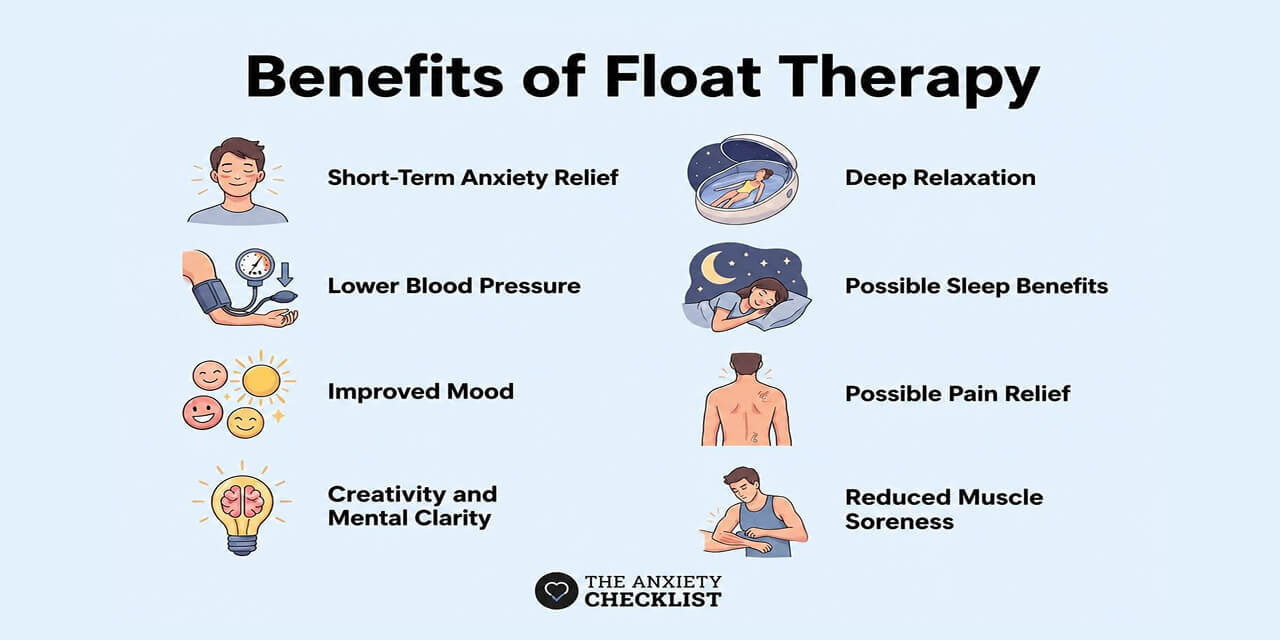
Here are the eight benefits of float therapy at a glance:
For example, in 2025, researchers collected 2,319 post-float responses from 97 athletes. 98.7% reported a positive experience, while 85.3% said they felt better afterward. This included less soreness, stress, and fatigue, according to PubMed.
Much of what floating delivers may be an undisturbed hour of warm, quiet rest. None of that makes float therapy worthless. It’s still a promising, pleasant, unproven hour. That's a fair reason to try it and a poor reason to expect treatment.
If you want a baseline, a free anxiety self-assessment beats trying to remember how you felt. One session and a course of treatment aren’t the same claim.
What Are the Benefits of Float Therapy?
The key benefits include short-term anxiety relief, deep relaxation, improved mood, and reduced blood pressure. Research also points to possible benefits for sleep, pain, creativity, mental clarity, and muscle soreness.
However, the evidence is stronger for some benefits than others. For example, around 98.7% of athletes report feeling more relaxed after float therapy.
Can Float Therapy Make Anxiety Worse?
Float therapy can make anxiety feel worse for some people. This is because it amplifies interoception. The quiet setting makes internal sensations, such as your heartbeat, more noticeable.
This heightened awareness is how panic attack symptoms escalate. A heartbeat gets noticed, read as danger, and fear makes the sensation stronger.
A 2024 study found that float therapy also changes how people experience their bodies. Participants reported weaker body boundaries. Meaning, the usual sense of where their body began and ended became less clear. The same change was linked with lower anxiety during the session.
These unusual sensations aren’t necessarily a sign of harm. They can include feeling less aware of your body or noticing changes in how time passes. This may feel relaxing to one person but uncomfortable to another.
If you live with depersonalization or derealization, this distinction matters. The research does not tell us whether float therapy is safe for people with DPDR, because those participants were not specifically studied.
If that describes you, talk it through with your therapist before trying a session.
Can Floating Trigger Anxiety or Dissociation?
Yes, it can. Floating heightens awareness of internal sensations. A 2024 study found that participants also experienced weaker body boundaries while floating, Meaning, they felt less aware of where their bodies ended.
This can feel unsettling for some people. People with DPDR, psychosis, or bipolar disorder haven’t been studied.
Float Therapy & Claustrophobia: How Do You Float on Your Terms?
Start by controlling the lid, light, music, door, and clock. Choosing the vessel before booking also gives you more control over the experience. Most float therapy guides treat claustrophobia as a reason not to float, but the setup you choose matters.
If a fear of enclosed spaces is your worry, ask for a float room or an open pool instead of a pod. Book a shorter first session.
Before you book, ask how the lid or door opens from the inside, and ask to open it yourself before you undress.
If anxiety climbs in there, you're not trapped. Here’s what you can do:
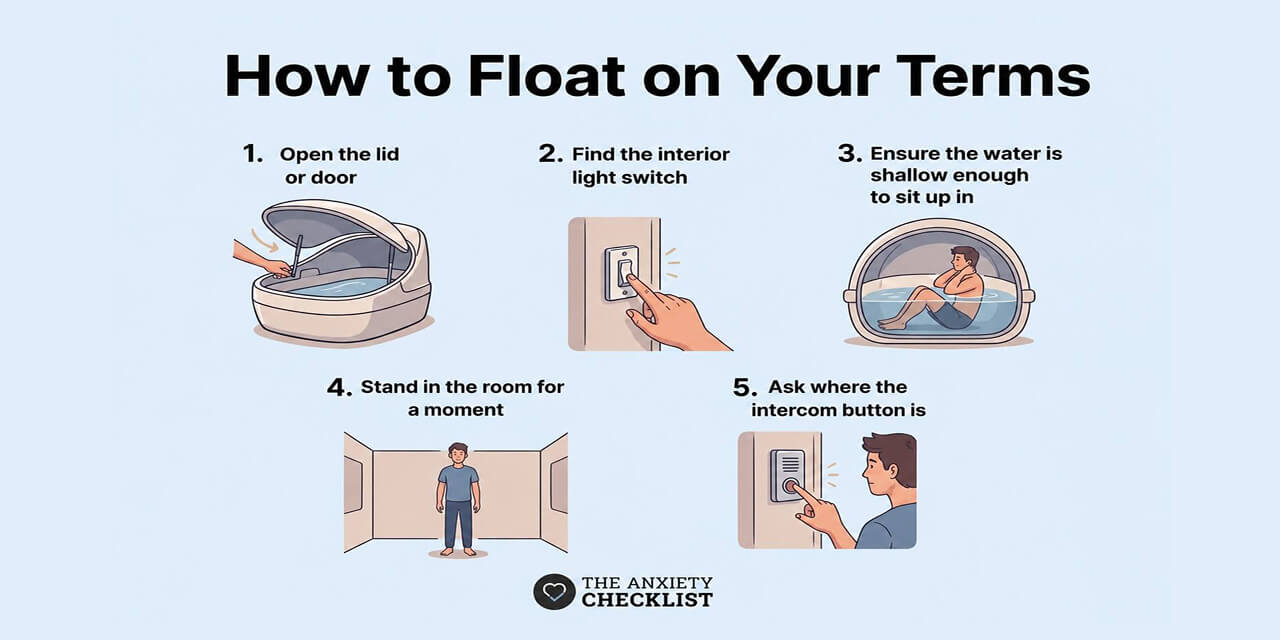
If anxiety rises, acknowledge it rather than fighting it. Simple grounding techniques can help bring your attention back to the room and your surroundings.
The goal is to keep the experience within your control, from the lighting to the exit. Learning anxiety coping skills can also help you handle anxious moments once you step out of the floating tank.
How Can You Manage Claustrophobia During Float Therapy?
Ask during the walkthrough how the lid opens, where the light switch is, and where the intercom button sits. Those three answers are what make the float therapy session yours.
If you feel uncomfortable during the session, you can open the lid, sit up, and step out.
Who Should Not Try Float Therapy?
People with open wounds, infectious illnesses, or certain neurological or mental health conditions may need to avoid float therapy or take extra precautions. This also includes people experiencing depersonalization or derealization. Always speak with a clinician before trying float therapy to make sure it’s appropriate for you.
Here’s a list of conditions and situations to consider at a glance:
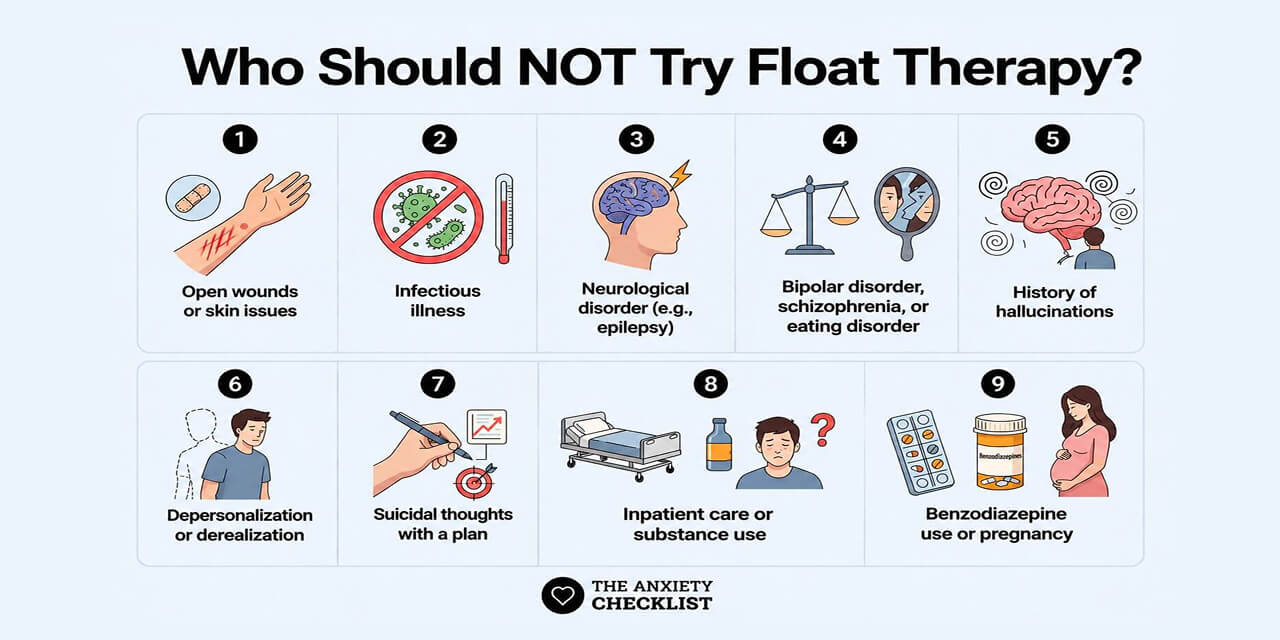
The table below breaks down each situation and what to consider before booking. It also explains who to talk to about your condition before a float therapy session:
Float therapy is worth trying if you’re:
Wait before trying float therapy if you:
Ask a clinician first if: Anything in the table above describes you
Skip it if: Enclosed water in the dark sounds actively frightening rather than interesting.
Who Should Talk to a Clinician Before Floating?
People with certain medical and mental health conditions or open wounds should check with a clinician before booking. A float center can explain its own rules. But your clinician can help you decide whether floating is appropriate for you.
When Should You Talk to a Professional About Anxiety?
If anxiety is affecting your sleep or disrupting your daily life, talk to a professional. Avoiding things you normally do is another sign that it’s time to seek help. Float therapy can support relaxation, but it shouldn’t replace professional care.
Many people experience regular feelings of worry, nervousness, or anxiety. The CDC reports that 12.5% of U.S. adults had these feelings regularly in its 2025 data.
The treatment gap for anxiety disorders is why some people look elsewhere for relief. You’re not alone. Our guide to psychotherapy for anxiety explains what a first session involves.
A few signs are worth taking seriously:
When Should You Seek Professional Help for Anxiety?
Talk to a professional when anxiety starts affecting daily life, sleep, or activities you normally enjoy. Float therapy can be part of your relaxation routine, but it isn’t a treatment for anxiety disorders.
FAQ
Conclusion
Anxiety University
Explore the Anxiety University
Free guides to help you understand anxiety, one topic at a time.
- Getting StartedThe basics of anxiety and how it works
- Self-Assessments & Anxiety TestsCheck in on your symptoms with free tests
- Cognitive Traps & Thought PatternsSpot the thinking habits that fuel anxiety
- Stress ReductionPractical ways to calm your body and mind
- Common Anxiety PhobiasUnderstand specific fears and how they are treated
- Inspiring StoriesReal stories and words that remind you you are not alone